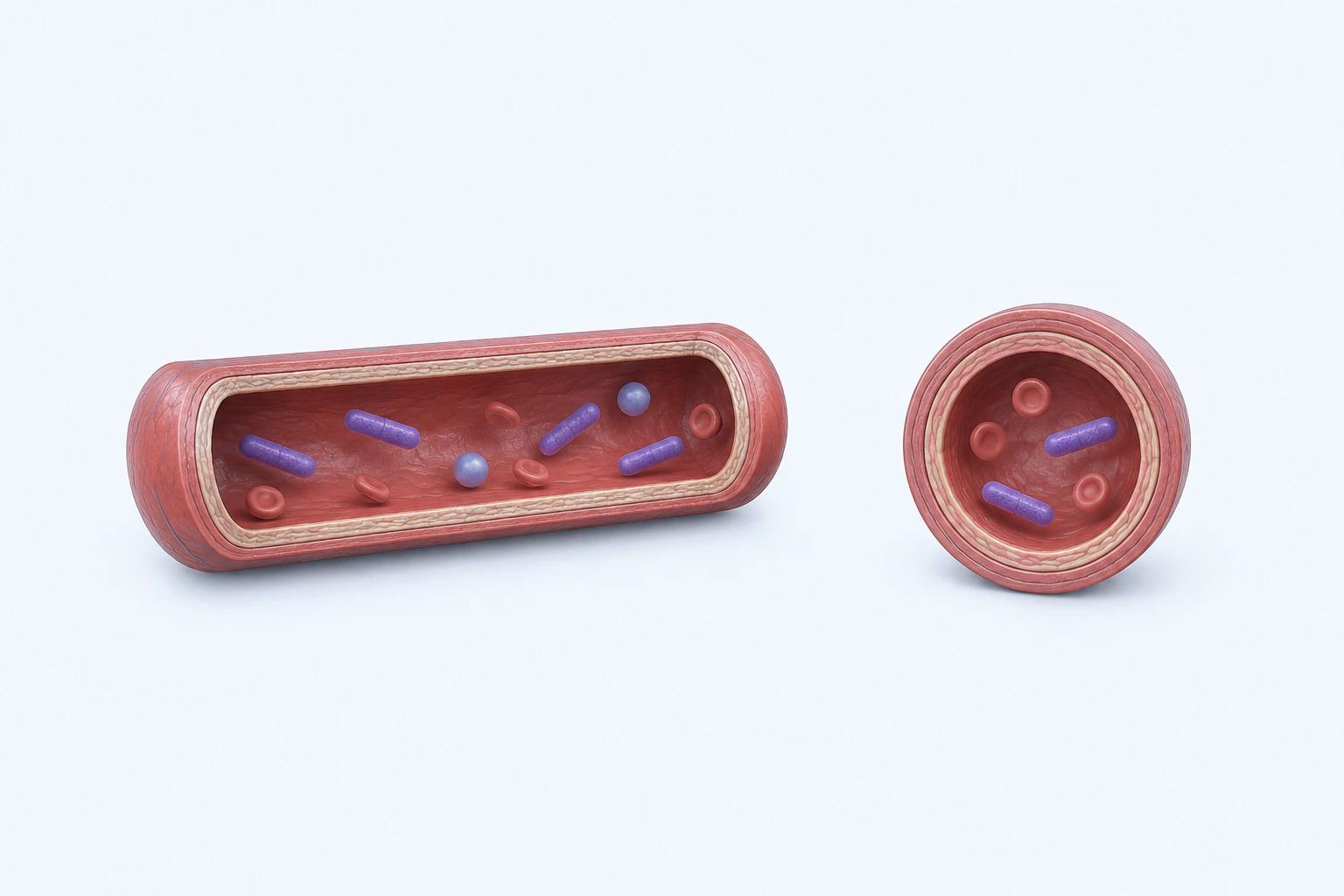
Bacteremia
This knowledge-base record is being expanded from WikiBiome’s evidence graph.
WikiBiomeThe human microbiome encyclopediaRanked matches across titles, topics, categories, and article introductions.
This knowledge-base record is being expanded from WikiBiome’s evidence graph.
Warning: Clinical Disclaimer: This STOP page represents a hypothesis based on mechanistic evidence and should NOT replace clinical judgment. Always consult with a qualified healthcare provider before modifying any treatment plan. Evidence quality ratings reflect the str…
This knowledge-base record is being expanded from WikiBiome’s evidence graph.
Warning: Clinical Disclaimer: This STOP page represents a hypothesis based on mechanistic evidence and should NOT replace clinical judgment. Always consult with a qualified healthcare provider before modifying any treatment plan. Evidence quality ratings reflect the str…
This knowledge-base record is being expanded from WikiBiome’s evidence graph.
A Gram-negative, aerobic, non-fermenting coccobacillus and a member of the ESKAPE group of priority pathogens (Enterococcus, Staphylococcus, Klebsiella, Acinetobacter, Pseudomonas, Enterobacter). Acinetobacter baumannii is among the most problematic nosocomial pathogens…
WHO Priority 1: Critical. A Gram-negative, strictly aerobic coccobacillus and one of the most dangerous nosocomial pathogens on the planet. A. baumannii belongs to the ESKAPE group and causes ventilator-associated pneumonia, wound infections, and bloodstream infections …
A Gram-negative obligate anaerobe identified as a histamine-producing bacterium enriched in dysbiotic microbiota associated with obesity, metabolic syndrome, and metabolic endotoxemia. Allisonella is a minor but functionally significant genus whose primary clinical rele…
Candida auris is an emerging multidrug-resistant fungal pathogen first identified in 2009 (Satoh et al. 2009, from a Japanese patient's ear canal) and now classified as a critical-priority pathogen by the WHO (WHO Fungal Priority Pathogens List 2022) and CDC (CDC 2019 A…
A haploid, asexual yeast and the second most common cause of invasive candidiasis after Candida albicans. Recently reclassified into the genus Nakaseomyces (as N. glabratus), though the name C. glabrata remains in widespread clinical use. Unlike C. albicans, C. glabrata…
This knowledge-base record is being expanded from WikiBiome’s evidence graph.
A progressive loss of kidney function affecting approximately 850 million people worldwide (10–14% of adults), causing 1.2 million deaths annually. CKD is unique among diseases in this wiki because it occupies both sides of the metal-disease equation: heavy metals (Cd, …
Cirrhosis is end-stage liver fibrosis characterized by nodular regeneration, portal hypertension, and progressive hepatic failure. The gut-liver axis is central: portal venous blood delivers gut-derived LPS, bacterial DNA, and viable bacteria directly to the liver, and …
This knowledge-base record is being expanded from WikiBiome’s evidence graph.
Enterobacter is a genus of Gram-negative, facultatively anaerobic bacteria in the enterobacteriaceae family. Key species include enterobacter cloacae (the most clinically relevant) and E. hormaechei. Like other Enterobacteriaceae, Enterobacter possesses iron-dependent s…
This knowledge-base record is being expanded from WikiBiome’s evidence graph.
Enterococcus faecalis is a Gram-positive, facultatively anaerobic coccus that inhabits the gastrointestinal tract, oral cavity, and genitourinary tract of humans. It is a commensal in the healthy gut at low abundance but is one of the most clinically significant opportu…
Alphabetical definitions of specialist terms used throughout this wiki. Where a full concept page exists, the term links to it. --- AhR (aryl hydrocarbon receptor) -- A ligand-activated transcription factor that senses microbial metabolites (especially indoles from tryp…
The master regulator of systemic iron homeostasis. Hepcidin is a 25-amino-acid peptide hormone produced primarily by hepatocytes that controls iron absorption, recycling, and distribution by binding to and degrading ferroportin (SLC40A1/FPN) -- the only known cellular i…
The most abundant transition metal in the human body and arguably the most consequential metal in biology. Iron sits at the center of a paradox that drives pathology across virtually every disease domain: organisms need it for oxygen transport, energy metabolism, DNA sy…
Research summary — not medical advice. This page synthesizes published research on a mechanism-level intervention. It is not a clinical recommendation. Consult a qualified healthcare provider before making any changes to diet, supplementation, or treatment.
Leptin is an adipokine (hormone produced by adipose tissue) that signals satiety to the hypothalamus — suppressing appetite and increasing energy expenditure. Leptin resistance (elevated leptin with impaired signaling) is a hallmark of obesity, paralleling insulin resis…
This knowledge-base record is being expanded from WikiBiome’s evidence graph.
Post-acute sequelae of SARS-CoV-2 infection (PASC), affecting an estimated 10-30% of COVID-19 survivors (WHO and CDC post-acute surveillance estimates) with symptoms persisting 12 weeks. Characterized by fatigue, cognitive dysfunction ("brain fog"), exercise intolerance…
Major depressive disorder (MDD) is a psychiatric condition characterized by persistent depressed mood, anhedonia, and cognitive/somatic symptoms. In the WikiBiome framework, MDD is a paradigm case for the gut brain axis: gut dysbiosis drives systemic inflammation and ne…
This knowledge-base record is being expanded from WikiBiome’s evidence graph.
Methylobacterium is a genus of methylotrophic alpha-Proteobacteria (phylum Pseudomonadota) predominantly found in soil, water, plant surfaces, and air environments. It is a methylotroph — capable of using one-carbon compounds such as methanol as a carbon and energy sour…
--- title: Neisseria meningitidis type: entity subtype: microbe created: 2026-04-09 updated: 2026-04-16 lastsubstantiveupdate: 2026-04-16 sources: [maier-2019-nickel-microbial-pathogenesis, patil-2021-infection-metallomics-critical-care, patil-2021-infection-metallomics…
This knowledge-base record is being expanded from WikiBiome’s evidence graph.
Parvimonas micra is a small (0.5–1.0 µm), Gram-positive, obligately anaerobic coccus originally isolated from the human oral cavity that has emerged as one of the most consistent and universally enriched pathobionts in colorectal cancer across all geographic regions, ag…
This knowledge-base record is being expanded from WikiBiome’s evidence graph.
Sepsis is life-threatening organ dysfunction caused by a dysregulated host response to infection. In the WikiBiome framework, sepsis represents the catastrophic failure of both colonization resistance (pathogen invasion) and nutritional immunity (metal restriction). Inf…
Serratia is a genus of Gram-negative, facultatively anaerobic bacteria in the Enterobacteriaceae family. The primary species is S. marcescens, famous for its red pigment prodigiosin and its role as a nosocomial opportunistic pathogen. In the WikiBiome vault, Serratia ap…
This knowledge-base record is being expanded from WikiBiome’s evidence graph.
Research summary -- not medical advice. This page synthesizes published research on why a commonly prescribed intervention may be counterproductive in this specific clinical context. Consult a qualified healthcare provider before making any changes to treatment.
Warning: Clinical Disclaimer: This STOP page represents a hypothesis based on mechanistic evidence and should NOT replace clinical judgment. Always consult with a qualified healthcare provider before modifying any treatment plan. Iron-deficiency anemia in colorectal can…
Harm potential: YELLOW — True iron deficiency anemia requires supplementation regardless of inflammatory state.
Warning: Clinical Disclaimer: This STOP page represents a hypothesis based on mechanistic evidence and should NOT replace clinical judgment. Always consult with a qualified healthcare provider before modifying any treatment plan. Evidence quality ratings reflect the str…
Harm potential: YELLOW — True iron deficiency anemia requires supplementation.
A Gram-positive, facultatively anaerobic bacterium formerly classified as Streptococcus bovis biotype I that holds a unique position in clinical medicine as a sentinel organism for colorectal cancer. The detection of S. gallolyticus in blood cultures (bacteremia or endo…
This knowledge-base record is being expanded from WikiBiome’s evidence graph.
Iron deficiency is common and clinically significant across multiple conditions: postpartum anemia increases PPD risk 1.89-fold (RR = 1.887), low ferritin (<1 ug) increases PPD risk 3.98-fold azami 2019 anemia ppd meta analysis, iron deficiency impairs thyroid peroxidas…
This knowledge-base record is being expanded from WikiBiome’s evidence graph.