

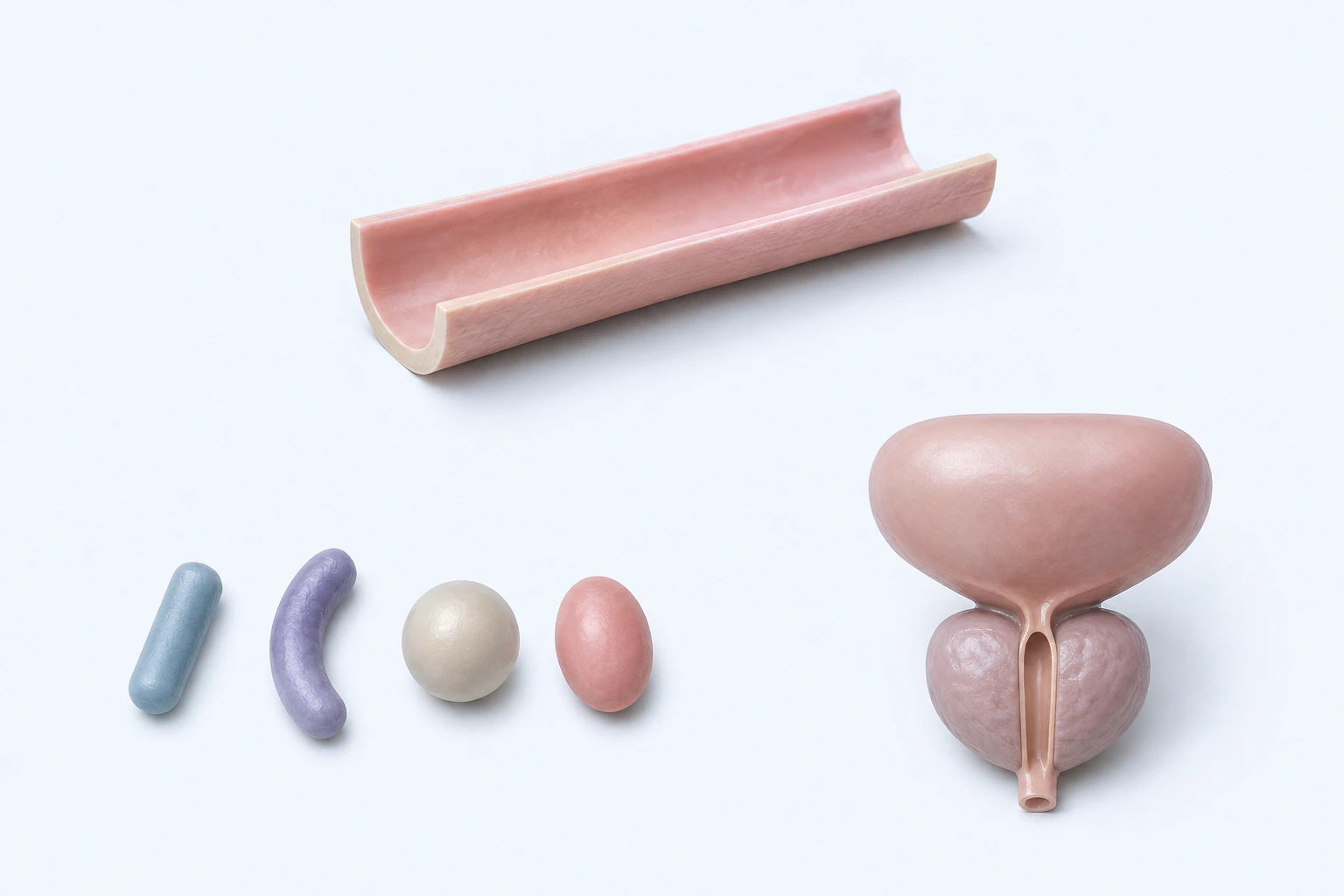
Separated gastrointestinal, non-taxonomic microbial, and normal bladder-neck/prostate component models for the emerging gut-prostate research domain. This reconstruction does not show translocation, a microbial signature, prostate disease, diagnosis, biomarker, or treatment response.
Scientific media record4 verified identifiers
- Subject
- Gut-Prostate Axisbiological-process
- Identifiers
- WikiBiome:gut-prostate-axisrelated-MeSH:D000069196related-MeSH:D011467related-UBERON:0002367
- Review
- Editorial review completeIdentifiers authority-verified · Accessibility validated · · gut-prostate-axis|gut-prostate-axis-mechanism-v1.webp
- Digital source
- Trained-algorithmic mediaCreated with a trained generative algorithm and reviewed by WikiBiome for subject identity, scientific framing, identifiers, provenance, and accessibility.
- Scientific basis
- Gut-Prostate AxisGastrointestinal Microbiome — Medical Subject HeadingsProstate — Medical Subject Headingsprostate gland — UBERONThe Firmicutes/Bacteroidetes ratio of the human gut microbiota is associated with prostate enlargementExploring the Association between Gut and Urine Microbiota and Prostatic DiseaseProbiotics in the Management of Chronic Bacterial Prostatitis PatientsExploring the Gut-Prostate Axis: Microbial Signatures Linked to Prostate Volume and Bladder Function
- License
- CC BY-SA 4.0Created
The gut-prostate axis describes the bidirectional communication between the Gut Microbiome and the prostate gland. Gut-derived microbial metabolites, inflammatory mediators, and immune signals influence prostatic health, while prostatic disease states alter systemic Metal-Driven Inflammation and, reciprocally, gut microbial composition.
Systematic review evidence supports gut microbiome involvement in benign prostatic hyperplasia (BPH), with specific taxonomic shifts—including enrichment of pro-inflammatory Proteobacteria and depletion of SCFA-producing Firmicutes—consistently observed across BPH cohorts ([1]Xu 2026 — The Gut-Prostate Axis in Benign Prostatic Hyperplasia: Systematic Review of Microbial Dysbiosis and Pathogenic MechanismsYuanzhao Xu, Lingyue An, Jiling Xie et al. · 2026Open reference 1 ↓).
The mechanistic pathways implicated include microbial translocation through a compromised gut barrier, systemic endotoxemia, and androgen metabolism by gut bacteria.
Evidence map2 cited passagesInspect provenance +
Systematic review evidence supports gut microbiome involvement in benign prostatic hyperplasia (BPH), with specific taxonomic shifts—including enrichment of pro-inflammatory Proteobacteria and depletion of SCFA-producing Firmicutes—consistently observed across BPH cohorts (). The mechanistic pathways implicated include microbial translocation through a c
Probiotic interventions targeting the gut-prostate axis have shown clinical benefit in chronic bacterial prostatitis, with randomized controlled trial evidence demonstrating reduced symptom scores and inflammatory markers (). Broader reviews position the gut microbiome as both a preventive and therapeutic target across the spectrum of prostatic diseases, fro
Therapeutic Implications#
Probiotic interventions targeting the gut-prostate axis have shown clinical benefit in chronic bacterial prostatitis, with randomized controlled trial evidence demonstrating reduced symptom scores and inflammatory markers ([2]Vocca 2025 — Probiotics in the Management of Chronic Bacterial Prostatitis: A Randomized, Double-Blind Trial to Evaluate a Possible Link Between Gut Microbiota Restoring and Symptom ReliefCristina Vocca, Diana Marisol Abrego-Guandique, Erika Cione et al. · 2025Open reference 2 ↓).
Broader reviews position the gut microbiome as both a preventive and therapeutic target across the spectrum of prostatic diseases, from prostatitis through BPH to prostate cancer ([3]Cao 2024 — Gut Microbiome: A Novel Preventive and Therapeutic Target for Prostatic DiseaseHongliang Cao, Difei Zhang, Pengyu Wang et al. · 2024Open reference 3 ↓).
Cross-References#
- Gut-Testis Axis—parallel gut-reproductive communication in males
- Semen Microbiome—reproductive tract microbial communities
- prostatitis—chronic bacterial prostatitis and gut Dysbiosis
- Short-Chain Fatty Acids (SCFAs)—SCFA depletion in prostatic disease
References 3
Numbered by first appearance in the article, then reconciled with its declared source list.
- 1
Yuanzhao Xu, Lingyue An, Jiling Xie et al. (2026). Xu 2026 — The Gut-Prostate Axis in Benign Prostatic Hyperplasia: Systematic Review of Microbial Dysbiosis and Pathogenic Mechanisms. BMC Urology.
- 2
Cristina Vocca, Diana Marisol Abrego-Guandique, Erika Cione et al. (2025). Vocca 2025 — Probiotics in the Management of Chronic Bacterial Prostatitis: A Randomized, Double-Blind Trial to Evaluate a Possible Link Between Gut Microbiota Restoring and Symptom Relief. Microorganisms.
- 3
Hongliang Cao, Difei Zhang, Pengyu Wang et al. (2024). Cao 2024 — Gut Microbiome: A Novel Preventive and Therapeutic Target for Prostatic Disease. Frontiers in Cellular and Infection Microbiology.
Article network
Connect the evidence
Publicly readable discussion by ORCID-authenticated researchers. Questions, interpretation, methods, corrections, and new evidence stay attached to this record.
No discussion yet. Start with a precise question or a source-backed observation.
Published page changes
This record shows only material changes published on this page, including changes to its content, evidence, conclusions, or author context. Internal processes and discussion activity are excluded. Pending, declined, and withdrawn proposals remain private.
- published revision
Created “Gut-Prostate Axis”: The gut-prostate axis describes the bidirectional communication between the gut microbiome and the prostate gland. Gut-derived microbial metabolites, inflammatory mediators, and immune signals…
Created “Gut-Prostate Axis”: The gut-prostate axis describes the bidirectional communication between the gut microbiome and the prostate gland. Gut-derived microbial metabolites, inflammatory mediators, and immune signals… Published sections: Overview; Therapeutic Implications; Cross-References. · WikiBiome Deploy Bot · +33 −0
Inspect exact Git diff ↗