
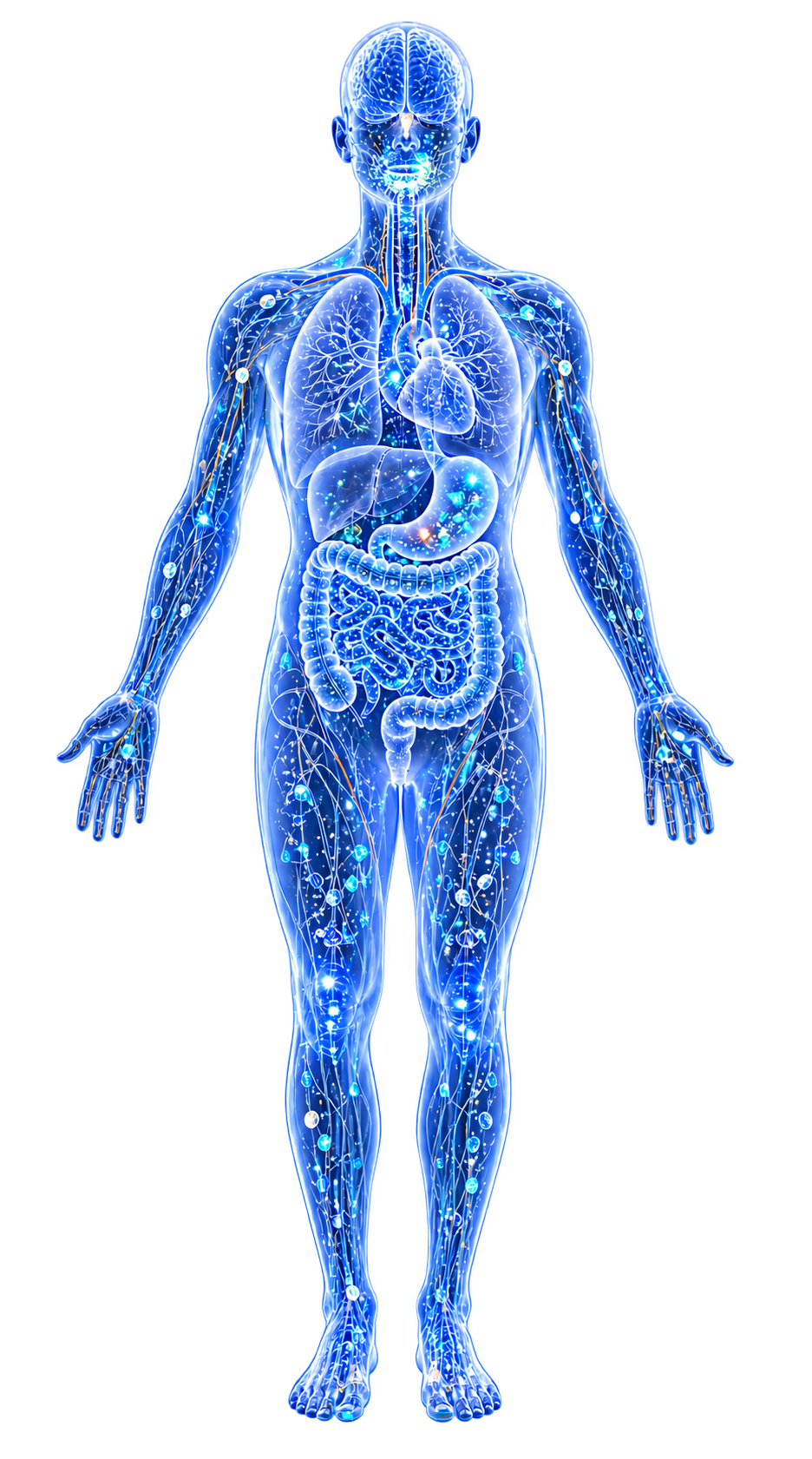
The most extensively referenced missing concept in this wiki. SCFAs—acetate (C2), propionate (C3), and Butyrate (C4)—are the primary metabolic products of anaerobic bacterial fermentation of dietary fiber in the colon. They serve as the critical molecular link between diet, the Gut Microbiome, and host physiology.
Their depletion is a near-universal feature of every disease covered in this wiki.
Evidence map6 cited passagesInspect provenance +
GPR41 (FFAR3): Activated by propionate and butyrate. Expressed on enteric neurons and sympathetic ganglia. Regulates gut motility, energy expenditure, and blood pressure via Olfr78 counter-regulation.
Butyrate modulates neuroinflammation by reducing microglial activation and shifting microglia from pro-inflammatory M1 to anti-inflammatory M2 phenotype.
SCFAs signal to the brain via vagal afferents (GPR41/43 on enteric neurons) and via systemic circulation crossing the blood-brain barrier.
Reduced fecal SCFAs documented in ASD, with altered profiles correlating with GI symptoms and behavioral severity, ].
Metal exposure (Cd, Ni, Pb, Hg, As) selectively eliminates SCFA-producing bacteria—Roseburia, faecalibacterium prausnitzii, bifidobacterium—which are metal-sensitive obligate anaerobes.
Net effect depends on SCFA concentration and receptor balance; SCFA depletion from dysbiosis generally associates with hypertension.
Contents
1. Production and Producers2. Receptor Signaling3. Epigenetic Mechanism: HDAC Inhibition4. Gut Barrier Maintenance5. SCFAs in Neuroinflammation and the Gut-Brain Axis6. The Metal-SCFA Vicious Cycle7. SCFAs and Blood Pressure Regulation8. ConnectionsProduction and Producers#
Acetate (C2)#
Most abundant SCFA in the colon (~60% of total); produced by many genera including Bifidobacterium, Bacteroides, Prevotella, and Ruminococcus via the Wood-Ljungdahl pathway or pyruvate decarboxylation.
Enters systemic circulation and is used as substrate by peripheral tissues and as a precursor for butyrate via cross-feeding.
Propionate (C3)#
Produced primarily via the succinate pathway by Bacteroides, Dialister, Veillonella, and Phascolarctobacterium; also via the acrylate and propanediol pathways by Akkermansia muciniphila and Roseburia inulinivorans.
Absorbed and largely cleared by the liver; regulates gluconeogenesis and cholesterol synthesis.
Butyrate (C4)#
The most biologically potent SCFA. Produced via butyryl-CoA:acetate CoA-transferase pathway by Faecalibacterium prausnitzii, Roseburia, Blautia, Eubacterium rectale, and Coprococcus. Primary energy source for colonocytes (~70% of their energy); maintains epithelial integrity.
Receptor Signaling#
GPR43 (FFAR2): Activated by acetate and propionate. Expressed on immune cells, enteroendocrine cells. Drives anti-inflammatory responses; stimulates GLP-1 and PYY secretion.
GPR41 (FFAR3): Activated by propionate and butyrate. Expressed on enteric neurons and sympathetic ganglia. Regulates gut motility, energy expenditure, and blood pressure via Olfr78 counter-regulation.[1]Emerging therapy targets to modulate microbiome-mediated effects evident in cardiovascular diseaseDorothea Katharina Hoffelner, Tim Hendrikx · 2025Open reference 1 ↓
GPR109A (HCAR2): Activated by butyrate and niacin. Expressed on colonocytes, macrophages, dendritic cells. Promotes Treg differentiation and IL-10 production; suppresses NF-kB.
Epigenetic Mechanism: HDAC Inhibition#
Butyrate is the most potent SCFA inhibitor of histone deacetylases (HDACs), particularly class I and II. This produces broad anti-inflammatory and anti-proliferative effects.
Upregulates Foxp3 expression, driving naive T cell differentiation into regulatory T cells (Tregs) that suppress autoimmunity and Metal-Driven Inflammation. Inhibits NF-kB activation in macrophages, reducing TNF-alpha and IL-6 production. Promotes expression of tight junction proteins (claudins, occludin, ZO-1) in colonocytes.
Inhibits cancer cell proliferation and induces apoptosis—the basis of butyrate's protective role against Colorectal Cancer.
Gut Barrier Maintenance#
SCFAs—especially butyrate—are essential for intestinal barrier integrity. Provide 60-70% of colonocyte energy via beta-oxidation, maintaining the metabolic health of the epithelium. Stimulate mucin production by goblet cells.
Upregulate tight junction protein expression via HDAC inhibition and AMPK activation.
Maintain the hypoxic environment of the colonic crypt necessary for anaerobic commensal survival (see Hypoxic Signaling (HIF-1α Pathway)).
SCFAs in Neuroinflammation and the Gut-Brain Axis#
Butyrate modulates Neuroinflammation by reducing microglial activation and shifting microglia from pro-inflammatory M1 to anti-inflammatory M2 phenotype.[2]Sodium Butyrate Attenuates Microglia-Mediated Neuroinflammation by Modulating the TLR4/MyD88/NF-kB Pathway and Microbiome-Gut-Brain Axis in Cardiac Arrest MiceJianfei Sun, Liping Lu, Yingtao Lian et al. · 2025Open reference 2 ↓
SCFAs signal to the brain via vagal afferents (GPR41/43 on enteric neurons) and via systemic circulation crossing the blood-brain barrier.[3]Mechanism of Iron Ion Homeostasis in Intestinal Immunity and Gut Microbiota RemodelingHonghong Bao, Yi Wang, Hanlin Xiong et al. · 2024Open reference 3 ↓
Reduced fecal SCFAs documented in ASD, with altered profiles correlating with GI symptoms and behavioral severity.[4]He 2023 — Altered Gut Microbiota and Short-Chain Fatty Acids in Chinese Children with Constipated Autism Spectrum DisorderJianquan He, Xiuhua Gong, Bing Hu et al. · 2023Open reference 4 ↓[5]Liu 2019 — Altered Gut Microbiota and Short Chain Fatty Acids in Chinese Children with Autism Spectrum DisorderSimeng Liu, Enyao Li, Zhenyu Sun et al. · 2019Open reference 5 ↓
The Metal-SCFA Vicious Cycle#
This is the most critical metal connection in the wiki:
- Metal exposure (cadmium (Cd), nickel (Ni), lead (Pb), mercury (Hg), arsenic (As)) selectively eliminates SCFA-producing bacteria—Roseburia, Faecalibacterium prausnitzii, Bifidobacterium—which are metal-sensitive obligate anaerobes.[6]Heavy Metals, Microbial Metallomics, and the US Obesity Epidemic: A Mechanistic Examination of a Population-Level Metabolic DisruptionKaren Pendergrass · 2026Open reference 6 ↓
- SCFA depletion compromises gut barrier integrity (reduced butyrate for colonocytes, reduced tight junction expression).
- Barrier failure increases paracellular permeability to bacterial LPS, food antigens, AND the metals themselves.
- Increased metal absorption further damages SCFA producers, completing the vicious cycle.
- Systemic consequences: LPS translocation can activate inflammation via TLR4/NF-kB Signaling Pathway; reduced Treg induction permits autoimmunity; loss of colonocyte energy shifts metabolism.
This cycle operates in virtually every disease in the wiki—from Inflammatory Bowel Disease (IBD) and Cardiovascular Disease to Alzheimer's Disease, Parkinson's Disease, Autism Spectrum Disorder, and Obesity.
SCFAs and Blood Pressure Regulation#
SCFAs regulate blood pressure through opposing receptor systems. GPR41: propionate binding causes vasodilation and BP reduction. Olfr78: propionate/acetate binding on renal juxtaglomerular cells stimulates renin release, raising BP.
Net effect depends on SCFA concentration and receptor balance; SCFA depletion from Dysbiosis generally associates with Hypertension.[1]Emerging therapy targets to modulate microbiome-mediated effects evident in cardiovascular diseaseDorothea Katharina Hoffelner, Tim Hendrikx · 2025Open reference 1 ↓
Connections#
- Gut-Metal-Microbiome Interactions—the ecosystem where metal-driven SCFA depletion occurs
- dysbiosis—loss of SCFA producers is the functional consequence of dysbiosis
- inflammation—SCFA depletion removes anti-inflammatory brake (Tregs, HDAC inhibition)
- Gut-Brain Axis—SCFAs are key mediators of gut-to-brain signaling
- Ferroptosis—butyrate depletion contributes to the gut-barrier failure arm of the ferroptosis cascade
- Faecalibacterium prausnitzii, Bifidobacterium, Blautia—primary SCFA producers
- Insulin Resistance—SCFA depletion impairs GLP-1 secretion and glucose homeostasis
References 9
Numbered by first appearance in the article, then reconciled with its declared source list.
- 1
Dorothea Katharina Hoffelner, Tim Hendrikx (2025). Emerging therapy targets to modulate microbiome-mediated effects evident in cardiovascular disease. Frontiers in Cardiovascular Medicine.
- 2
Jianfei Sun, Liping Lu, Yingtao Lian et al. (2025). Sodium Butyrate Attenuates Microglia-Mediated Neuroinflammation by Modulating the TLR4/MyD88/NF-kB Pathway and Microbiome-Gut-Brain Axis in Cardiac Arrest Mice. Molecular Brain.
- 3
★Honghong Bao, Yi Wang, Hanlin Xiong et al. (2024). Mechanism of Iron Ion Homeostasis in Intestinal Immunity and Gut Microbiota Remodeling. International Journal of Molecular Sciences.
- 4
Jianquan He, Xiuhua Gong, Bing Hu et al. (2023). He 2023 — Altered Gut Microbiota and Short-Chain Fatty Acids in Chinese Children with Constipated Autism Spectrum Disorder. Scientific Reports.
- 5
Simeng Liu, Enyao Li, Zhenyu Sun et al. (2019). Liu 2019 — Altered Gut Microbiota and Short Chain Fatty Acids in Chinese Children with Autism Spectrum Disorder. Scientific Reports.
- 6
★Karen Pendergrass (2026). Heavy Metals, Microbial Metallomics, and the US Obesity Epidemic: A Mechanistic Examination of a Population-Level Metabolic Disruption. Zenodo Preprint.
- 7
Camila Sanchez Cruz, Anahi Rojas Huerta, Jesus Lima Barrientos et al. (2024). Inflammatory Bowel Disease and Cardiovascular Disease: An Integrative Review With a Focus on the Gut Microbiome. Cureus.
- 8
Jinxuan Zhao, Wei Cheng, He Lu et al. (2022). High fiber diet attenuate the inflammation and adverse remodeling of myocardial infarction via modulation of gut microbiota and metabolites. Frontiers in Microbiology.
- 9
Wenjie Ma, Long H. Nguyen, Mingyang Song et al. (2021). Dietary fiber intake, the gut microbiome, and chronic systemic inflammation in a cohort of adult men. Genome Medicine.
Article network
Mentioned here 18
Pages linking here 106
Connect the evidence
Publicly readable discussion by ORCID-authenticated researchers. Questions, interpretation, methods, corrections, and new evidence stay attached to this record.
No discussion yet. Start with a precise question or a source-backed observation.
Activity and accepted changes
Accepted researcher context, editorial status, public discussion, and upstream Git revisions are shown together. Pending, declined, and withdrawn proposals remain private.
- published revision
Strengthen TLR4 and link high-leverage contexts
Karen Pendergrass · +1 −1
Inspect exact Git diff ↗ - published revision
Backfill gut microbiome concept links
Karen Pendergrass · +1 −1
Inspect exact Git diff ↗ - published revision
Backfill inflammation concept links
Karen Pendergrass · +3 −3
Inspect exact Git diff ↗ - published revision
Complete corpus-wide Dysbiosis linking
Karen Pendergrass · +1 −1
Inspect exact Git diff ↗ - published revision
Complete Tight junctions contextual coverage
Karen Pendergrass · +1 −1
Inspect exact Git diff ↗ - published revision
massive wiki expansion: 149 stubs fixed, 100+ new pages, Rule 15 scan, keystone papers
WikiBiome Deploy Bot · +10 −10
Inspect exact Git diff ↗ - published revision
nightly maintenance: 94 stub demotions, 181 source_count fixes, 22 auto-discovered stubs, 5 adversarial audits, 3 boundary fixes, 3 evidence-level corrections
WikiBiome Deploy Bot · +1 −0
Inspect exact Git diff ↗ - published revision
pre-overnight checkpoint 2026-04-18
WikiBiome Deploy Bot · +3 −1
Inspect exact Git diff ↗ - published revision
WikiBiome update — 2026-04-15 17:23
WikiBiome Deploy Bot · +0 −1
Inspect exact Git diff ↗ - published revision
WikiBiome update — integrity fixes, metallomic diet pages, cross-condition analyses
WikiBiome Deploy Bot · +15 −6
Inspect exact Git diff ↗ - published revision
WikiBiome update — 2026-04-10 15:45
WikiBiome Deploy Bot · +83 −0
Inspect exact Git diff ↗