
 metals · microbes · host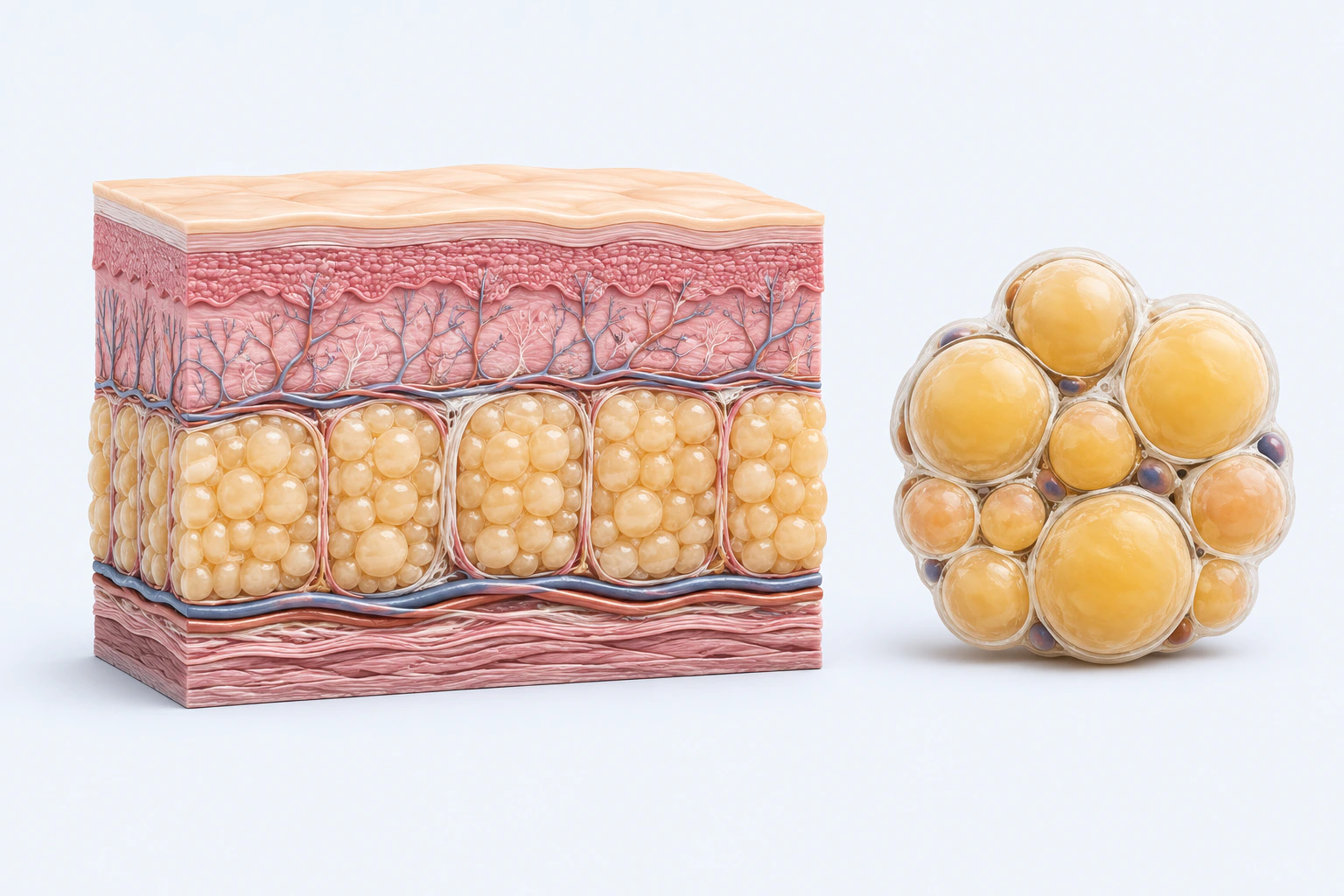
Neutral, non-stigmatizing adipose-tissue orientation for obesity education. The plate contains no person or body-size comparison and cannot establish BMI, health status, behavior, cause, severity, or diagnosis.
Scientific media record1 verified identifier
- Subject
- Obesitycondition
- Identifiers
- MeSH:D009765
- Review
- Editorial review completeIdentifiers authority-verified · Accessibility validated · · obesity|obesity-pathology-v1.webp
- Digital source
- Trained-algorithmic mediaCreated with a trained generative algorithm and reviewed by WikiBiome for subject identity, scientific framing, identifiers, provenance, and accessibility.
- Scientific basis
- Obesity — MeSHDefinition & Facts for Adult Overweight & Obesity
- License
- CC BY-SA 4.0Created
A chronic metabolic condition affecting over 1 billion people globally, characterized by excess adipose tissue accumulation, systemic low-grade Metal-Driven Inflammation, and Gut Microbiome disruption.[1]Heavy Metals, Microbial Metallomics, and the US Obesity Epidemic: A Mechanistic Examination of a Population-Level Metabolic DisruptionKaren Pendergrass · 2026Open reference 1 ↓
From a Metallomics perspective, obesity is increasingly understood not merely as a caloric imbalance but as a condition with significant environmental metal contributions—particularly the Pendergrass framework positioning Heavy Metals as upstream permissive factors in the obesity epidemic.[1]Heavy Metals, Microbial Metallomics, and the US Obesity Epidemic: A Mechanistic Examination of a Population-Level Metabolic DisruptionKaren Pendergrass · 2026Open reference 1 ↓
Evidence map70 cited passagesInspect provenance +
A chronic metabolic condition affecting over 1 billion people globally, characterized by excess adipose tissue accumulation, systemic low-grade inflammation, and gut microbiome disruption. From a metallomics perspective, obesity is increasingly understood not merely as a caloric imbalance but as a condition with significant environmental metal contributions
The original observation (Ley et al. 2006): obese individuals have elevated Firmicutes/Bacteroidetes (F/B) ratio compared to lean controls.
This remains the most cited microbiome-obesity finding, though it is now recognized as an oversimplification—individual genera and species matter more than phylum-level ratios.
Weight loss shifts the F/B ratio toward that of lean individuals.
Obese microbiome has increased capacity for energy harvest from dietary polysaccharides.
Depleted short chain fatty acids producers, particularly butyrate-producing Roseburia, faecalibacterium prausnitzii, and Oscillospiraceae.
Akkermansia muciniphila depletion is a hallmark obesity signature; restoration improves mucin layer integrity, reduces metabolic endotoxemia, and ameliorates adipose inflammation.
Enriched Enterobacteriaceae and LPS-producing gram-negative species.
Reduced microbial diversity correlates with metabolic dysfunction severity.
Gut barrier disruption permits LPS translocation (“metabolic endotoxemia”), which can activate TLR4/nf kappa b on adipose-tissue macrophages.
tmao contributes to vascular inflammation and cardiovascular disease risk in obese individuals.
59.7% of overweight women (BMI 26) are nickel-allergic, compared to 12.5% in the general female population (p<0.001).
A normocaloric low nickel diet produced dramatic results: BMI decrease of 4.2, body fat decrease of 5.1%, waist circumference decrease of 11.7 cm over 6 months—without caloric restriction.
Insulin-like effects: Nickel induces insulin-like actions, promotes glycogenolysis, and causes hyperglycemia in animal models.
The Pendergrass framework proposes a seven-step causal pathway from agricultural metal contamination to population-level obesity:
Obese individuals show elevated stool Cd, Zn, Fe, Mn and reduced Ba, V, Ti.
Bifidobacteriaceae abundance negatively correlated with fecal Cd.
NHANES data: urinary nickel independently associated with metabolic dysfunction-associated steatotic liver disease; insulin resistance mediates ~73.69% of the association.
Low-dose metals stimulate adipogenesis (dose-response paradox); higher doses inhibit adipocyte differentiation and promote ectopic lipid accumulation.
Bariatric surgery alters serum bile acid profiles alongside dramatic microbiome shifts; the bile acid-FXR-FGF19 signaling axis is central to metabolic improvements post-surgery.
Obesity is a chronic metabolic disorder characterized by excessive adipose tissue accumulation and whole-body metabolic dysfunction. The conventional view treats it as a caloric imbalance disorder. The microbiome signature framework reveals obesity as an ecological disease driven by chronic heavy metal exposure from agricultural intensification, particularly
The tissue and biomarker metallomic signature in obesity is characterized by elevated cadmium, nickel, lead, manganese, zinc, and iron, with depleted glutathione and magnesium,.
| Metal | Role in Obesity Signature | |-------|--------------------------| | Cadmium | Phosphate fertilizer contaminant; acts as environmental obesogen; displaces zinc via calcium channels; adipose tissue accumulator | | Nickel | Urea fertilizer contaminant; most potent microbiota disruptor in dose-response studies; nickel-dependent enzymes in pathogenic tax
Obesity represents a state of metal-driven selective pressure where the microbiome has been filtered to select for taxa with robust metal efflux systems, siderophore production, and tolerance to dysbiotic conditions. Taxa lacking these defenses (Roseburia, Faecalibacterium, Bifidobacterium) are competitively excluded (Primitive 1: Metals as Selective Pressur
Showing 24 of 70 evidence-bearing passages. Every remaining citation is still indexed in the reference record below.
One disease. Five evidence layers.
A generated systems view of the metals, organisms, host sequestration signals, ecological conditions, and microbial functions indexed for Obesity.
Evidence layer
Taxonomic signature
Organisms reported as enriched or depleted, with their indexed functional context kept beside the name.Elevated in obese microbiomes; iron-dependent siderophore production; LPS endotoxin generator; nickel-dependent enzymes
Metal-dependent pathogenic enrichment in CVD/metabolic disease; TMA lyase producer connecting to TMAO metabolism
Family-level enrichment in obesity and metabolic dysfunction; TMA/TMAO producers; metal tolerant
Facultative anaerobe indicating hypoxia; metal-dependent; oxygen consumption perpetuates anaerobic niche
Strict anaerobe indicating established hypoxic niche; iron piracy; endotoxin source
Butyrate producer — depleted in obesity and metabolic syndrome; lost competitive advantage in metal-rich environment
Butyrate producer eliminated by cadmium (Cd) exposure; loss compromises colonocyte fuel and barrier integrity
SCFA producers (butyrate, propionate); depleted in obesity and CVD; sensitive to metal stress
Mucin layer integrity maintainer; depletion is hallmark obesity signature; restoration reduces metabolic endotoxemia
Iron-dependent; depleted by cadmium and excess iron; critical for barrier integrity and anti-inflammatory pathways
SCFA producer depleted in obesity; loss reduces microbial diversity
Evidence layer
Nutritional immunity
Host metal-withholding, inflammatory, antioxidant, and microbial-metabolite signals indexed in the signature.Elevated host signals
6Depleted protective signals
3Evidence layer
Ecological state
The environmental conditions that connect the organism-level observations into a system.Evidence layer
Virulence functions
Microbial structures, enzymes, and acquisition systems implicated by the linked evidence.The disease record, in full.
The original WikiBiome disease narrative remains intact beneath the generated signature atlas.
The Microbiome in Obesity#
Firmicutes/Bacteroidetes Ratio#
The original observation (Ley et al. 2006): obese individuals have elevated Firmicutes/Bacteroidetes (F/B) ratio compared to lean controls.[2]Ismail 2022 — Does the Gut Microbiome Play a Role in Obesity in Type 1 Diabetes? Unanswered Questions and ReviewHeba M. Ismail, Carmella Evans-Molina · 2022Open reference 2 ↓
This remains the most cited microbiome-obesity finding, though it is now recognized as an oversimplification—individual genera and species matter more than phylum-level ratios.[3]The interplay between diet and the gut microbiome: implications for health and diseaseFiona C. Ross, Dhrati Patangia, Ghjuvan Grimaud et al. · 2024Open reference 3 ↓
Weight loss shifts the F/B ratio toward that of lean individuals.[4]Yassour 2016 — Sub-Clinical Detection of Gut Microbial Biomarkers of Obesity and Type 2 DiabetesMoran Yassour, Mi Young Lim, Hyun Sun Yun et al. · 2016Open reference 4 ↓
Functional Dysbiosis#
Obese microbiome has increased capacity for energy harvest from dietary polysaccharides.[5]Dysbiotic microbiome variation in colorectal cancer patients is linked to lifestyles and metabolic diseasesTung Hoang, Minjung Kim, Ji Won Park et al. · 2023Open reference 5 ↓ Depleted Short-Chain Fatty Acids (SCFAs) producers, particularly Butyrate-producing Roseburia, Faecalibacterium prausnitzii, and Oscillospiraceae.[1]Heavy Metals, Microbial Metallomics, and the US Obesity Epidemic: A Mechanistic Examination of a Population-Level Metabolic DisruptionKaren Pendergrass · 2026Open reference 1 ↓
Akkermansia muciniphila depletion is a hallmark obesity signature; restoration improves mucin layer integrity, reduces metabolic endotoxemia, and ameliorates adipose inflammation.[6]Akkermansia muciniphila Alters Gut Microbiota and Immune System to Improve Cardiovascular Diseases in Murine ModelXin He, Yang Bai, Haiyang Zhou et al. · 2022Open reference 6 ↓
Enriched Enterobacteriaceae and LPS-producing gram-negative species.[1]Heavy Metals, Microbial Metallomics, and the US Obesity Epidemic: A Mechanistic Examination of a Population-Level Metabolic DisruptionKaren Pendergrass · 2026Open reference 1 ↓ Reduced microbial diversity correlates with metabolic dysfunction severity.[3]The interplay between diet and the gut microbiome: implications for health and diseaseFiona C. Ross, Dhrati Patangia, Ghjuvan Grimaud et al. · 2024Open reference 3 ↓
Adipose Tissue Inflammation#
Gut barrier disruption permits LPS translocation (“metabolic endotoxemia”), which can activate TLR4/NF-kB Signaling Pathway on adipose-tissue macrophages.[1]Heavy Metals, Microbial Metallomics, and the US Obesity Epidemic: A Mechanistic Examination of a Population-Level Metabolic DisruptionKaren Pendergrass · 2026Open reference 1 ↓ This drives the chronic low-grade inflammation characteristic of obesity: elevated TNF-alpha, IL-6, MCP-1 in visceral adipose.
Trimethylamine N-Oxide (TMAO) contributes to vascular inflammation and Cardiovascular Disease risk in obese individuals.[7]The gut microbial metabolite trimethylamine N-oxide and cardiovascular diseasesJing Zhen, Zhou Zhou, Meng He et al. · 2023Open reference 7 ↓[8]Bile acids at the cross-roads of gut microbiome-host cardiometabolic interactionsPaul M. Ryan, Catherine Stanton, Noel M. Caplice · 2017Open reference 8 ↓
The Nickel-Allergy-Obesity Connection#
One of the most striking findings in this wiki. 59.7% of overweight women (BMI >26) are nickel-allergic, compared to 12.5% in the general female population (p<0.001).[9]High Prevalence of Nickel Allergy in an Overweight Female Population: A Pilot Observational AnalysisLusi EA, Di Ciommo VM, Patrissi T et al. · 2015Open reference 9 ↓ In overweight patients with Metabolic Syndrome and Metal Exposure and liver steatosis, Nickel Allergy and Allergic Contact Dermatitis prevalence reaches 61.1%.
A normocaloric Low-Nickel Diet produced dramatic results: BMI decrease of 4.2, body fat decrease of 5.1%, waist circumference decrease of 11.7 cm over 6 months—without caloric restriction.[9]High Prevalence of Nickel Allergy in an Overweight Female Population: A Pilot Observational AnalysisLusi EA, Di Ciommo VM, Patrissi T et al. · 2015Open reference 9 ↓
Proposed Mechanisms#
IL-17/Th17 pathway: Nickel-specific T cells produce IL-17, which is independently upregulated in obesity and drives chronic metabolic inflammation and Insulin Resistance. Metalloestrogen effects: Nickel activates estrogen receptors Metalloestrogens, promoting adipose accumulation—explaining the sex-specific prevalence pattern.
Gut microbiota disruption: Dietary nickel alters the Gut-Metal-Microbiome Interactions, shifting metabolism toward increased energy harvest and impaired SCFA profiles. Insulin-like effects: Nickel induces insulin-like actions, promotes glycogenolysis, and causes hyperglycemia in animal models.[9]High Prevalence of Nickel Allergy in an Overweight Female Population: A Pilot Observational AnalysisLusi EA, Di Ciommo VM, Patrissi T et al. · 2015Open reference 9 ↓
Heavy Metals as Obesogens: The Pendergrass Framework#
The Pendergrass framework proposes a seven-step causal pathway from agricultural metal contamination to population-level obesity:[1]Heavy Metals, Microbial Metallomics, and the US Obesity Epidemic: A Mechanistic Examination of a Population-Level Metabolic DisruptionKaren Pendergrass · 2026Open reference 1 ↓
- Phosphate fertilizer expansion introduces cadmium (Cd); urea fertilizers introduce nickel (Ni) into soils.
- Soil metal accumulation increases food chain bioaccumulation.
- Chronic low-dose human exposure through contaminated food supply (1970s onward—matching obesity epidemic onset).
- Metals selectively eliminate SCFA-producing bacteria (Roseburia, Faecalibacterium prausnitzii, Bifidobacterium).
- Loss of butyrate compromises gut barrier, promotes LPS translocation.
- Systemic inflammation converges on Insulin Resistance.
- Metabolic dysfunction primes population for weight gain; dietary changes (HFCS, larger portions) serve as proximate triggers.
Key Supporting Evidence#
Obese individuals show elevated stool cadmium (Cd), zinc (Zn), iron (Fe), manganese (Mn) and reduced barium (Ba), vanadium (V), titanium (Ti).[1]Heavy Metals, Microbial Metallomics, and the US Obesity Epidemic: A Mechanistic Examination of a Population-Level Metabolic DisruptionKaren Pendergrass · 2026Open reference 1 ↓ Bifidobacteriaceae abundance negatively correlated with fecal cadmium.[1]Heavy Metals, Microbial Metallomics, and the US Obesity Epidemic: A Mechanistic Examination of a Population-Level Metabolic DisruptionKaren Pendergrass · 2026Open reference 1 ↓
NHANES data: urinary nickel independently associated with metabolic dysfunction-associated steatotic liver disease; Insulin Resistance mediates ~73.69% of the association.[10]Association between nickel exposure and diabetes risk: an updated meta-analysis of observational studiesLu H, Shi X, Han L et al. · 2024Open reference 10 ↓
Low-dose metals stimulate adipogenesis (dose-response paradox); higher doses inhibit adipocyte differentiation and promote ectopic lipid accumulation.[1]Heavy Metals, Microbial Metallomics, and the US Obesity Epidemic: A Mechanistic Examination of a Population-Level Metabolic DisruptionKaren Pendergrass · 2026Open reference 1 ↓
Bile Acid Connections#
Bariatric surgery alters serum bile acid profiles alongside dramatic microbiome shifts; the bile acid-FXR-FGF19 signaling axis is central to metabolic improvements post-surgery.[8]Bile acids at the cross-roads of gut microbiome-host cardiometabolic interactionsPaul M. Ryan, Catherine Stanton, Noel M. Caplice · 2017Open reference 8 ↓
Bile Acid Metabolism disruption in obesity reflects both dietary fat intake and metal-induced loss of BSH-expressing and 7-alpha-dehydroxylating bacteria.
Connections#
- Insulin Resistance—convergent metabolic endpoint of metal toxicity, Dysbiosis, and inflammation
- Short-Chain Fatty Acids (SCFAs)—SCFA depletion is the mechanistic bridge between metal exposure and metabolic dysfunction
- Nickel Allergy and Allergic Contact Dermatitis—59.7% prevalence in overweight women; low-nickel (Ni) diet produces dramatic weight loss
- Low-Nickel Diet—normocaloric intervention producing BMI reduction of 4.2 without caloric restriction
- Trimethylamine N-Oxide (TMAO)—elevated in obesity; contributes to CVD comorbidity
- inflammation—adipose tissue inflammation driven by LPS translocation and metal exposure
- Metalloestrogens—nickel and cadmium mimic estrogen signaling, promoting adiposity
- Cardiovascular Disease—obesity is a major CVD risk factor; shared microbiome mechanisms
- Type 2 Diabetes—obesity-T2D continuum; shared insulin resistance and dysbiosis pathways
- Gut-Metal-Microbiome Interactions—the ecosystem where metal-driven obesogenic dysbiosis originates
- Metal-Disease Matrix: A Cross-Source Synthesis—obesity is a key disease in the metal-disease interaction landscape
References 31
Numbered by first appearance in the article, then reconciled with its declared source list.
- 1
★Karen Pendergrass (2026). Heavy Metals, Microbial Metallomics, and the US Obesity Epidemic: A Mechanistic Examination of a Population-Level Metabolic Disruption. Zenodo Preprint.
- 2
Heba M. Ismail, Carmella Evans-Molina (2022). Ismail 2022 — Does the Gut Microbiome Play a Role in Obesity in Type 1 Diabetes? Unanswered Questions and Review. Frontiers in Cellular and Infection Microbiology.
- 3
Fiona C. Ross, Dhrati Patangia, Ghjuvan Grimaud et al. (2024). The interplay between diet and the gut microbiome: implications for health and disease. Nature Reviews Microbiology.
- 4
Moran Yassour, Mi Young Lim, Hyun Sun Yun et al. (2016). Yassour 2016 — Sub-Clinical Detection of Gut Microbial Biomarkers of Obesity and Type 2 Diabetes. Genome Medicine.
- 5
Tung Hoang, Minjung Kim, Ji Won Park et al. (2023). Dysbiotic microbiome variation in colorectal cancer patients is linked to lifestyles and metabolic diseases. BMC Microbiology.
- 6
Xin He, Yang Bai, Haiyang Zhou et al. (2022). Akkermansia muciniphila Alters Gut Microbiota and Immune System to Improve Cardiovascular Diseases in Murine Model. Frontiers in Microbiology.
- 7
Jing Zhen, Zhou Zhou, Meng He et al. (2023). The gut microbial metabolite trimethylamine N-oxide and cardiovascular diseases. Frontiers in Endocrinology.
- 8
Paul M. Ryan, Catherine Stanton, Noel M. Caplice (2017). Bile acids at the cross-roads of gut microbiome-host cardiometabolic interactions. Diabetology and Metabolic Syndrome.
- 9
Lusi EA, Di Ciommo VM, Patrissi T et al. (2015). High Prevalence of Nickel Allergy in an Overweight Female Population: A Pilot Observational Analysis. PLoS ONE.
- 10
Lu H, Shi X, Han L et al. (2024). Association between nickel exposure and diabetes risk: an updated meta-analysis of observational studies. Frontiers in Public Health.
- 11
Patrick A. de Jonge, Koen Wortelboer, Torsten P. M. Scheithauer et al. (2022). Gut virome profiling identifies a widespread bacteriophage family associated with metabolic syndrome. Nature Communications.
- 12
Asher Dixon, Kai Robertson, Amanda Yung et al. (2020). Efficacy of Probiotics in Patients of Cardiovascular Disease Risk: A Systematic Review and Meta-Analysis. Current Hypertension Reports.
- 13
Lombardi F, Fiasca F, Minelli M et al. (2020). The Effects of Low-Nickel Diet Combined with Oral Administration of Selected Probiotics on Patients with Systemic Nickel Allergy Syndrome (SNAS) and Gut Dysbiosis. Nutrients.
- 14
Sarah H. Mhaibes, Mohammed A. Taher, Ala H. Badr (2017). A Comparative Study of Blood Levels of Manganese, Some Macroelements and Heavy Metals in Obese and Non-Obese Polycystic Ovary Syndrome Patients. Iraqi Journal of Pharmaceutical Sciences.
- 15
Richardson JB, Dancy BCR, Horton CL et al. (2018). Exposure to toxic metals triggers unique responses from the rat gut microbiota. Scientific Reports.
- 16
★Honghong Bao, Yi Wang, Hanlin Xiong et al. (2024). Mechanism of Iron Ion Homeostasis in Intestinal Immunity and Gut Microbiota Remodeling. International Journal of Molecular Sciences.
- 17
Edward S. Chambers, Tom Preston, Gary Frost et al. (2018). Role of Gut Microbiota-Generated Short-Chain Fatty Acids in Metabolic and Cardiovascular Health. Current Nutrition Reports.
- 18
Xiao-Ce Dai, Yi Yu, Si-Yu Zhou et al. (2024). Assessment of the causal relationship between gut microbiota and cardiovascular diseases: a bidirectional Mendelian randomization analysis. BioData Mining.
- 19
Zhuye Jie, Huihua Xia, Shi-Long Zhong et al. (2017). The gut microbiome in atherosclerotic cardiovascular disease. Nature Communications.
- 20
de Vos WM, de Vos EAJ (2012). Role of the Intestinal Microbiome in Health and Disease: From Correlation to Causation. Nutrition Reviews.
- 21
Jayasinghe M, Prathiraja O, Kayani A et al. (2022). The Role of Diet and Gut Microbiome in Multiple Sclerosis. Cureus.
- 22
Appunni S, Rubens M, Ramamoorthy V et al. (2021). Emerging Evidence on the Effects of Dietary Factors on the Gut Microbiome in Colorectal Cancer. Frontiers in Nutrition.
- 23
Jacobs JP, Goudarzi M, Lagishetty V et al. (2022). Crohn's Disease in Endoscopic Remission, Obesity, and Cases of High Genetic Risk Demonstrate Overlapping Shifts in the Colonic Mucosal-Luminal Interface Microbiome. Genome Medicine.
- 24
Léo Boussamet, Emmanuel Montassier, Camille Mathé et al. (2024). Investigating the metabolite signature of an altered oral microbiota as a discriminant factor for multiple sclerosis: a pilot study. Scientific Reports.
- 25
★Federica Giambo, Sebastiano Italia, Michele Teodoro et al. (2021). Influence of Toxic Metal Exposure on the Gut Microbiota (Review). World Academy of Sciences Journal.
- 26
Larissa Hauer, Julian Perneczky, Johann Sellner (2021). A Global View of Comorbidity in Multiple Sclerosis: A Systematic Review with a Focus on Regional Differences, Methodology, and Clinical Implications. Journal of Neurology.
- 27
Catia Almeida, J. Guilherme Goncalves-Nobre, Diogo Alpuim Costa et al. (2023). The potential links between human gut microbiota and cardiovascular health and disease - is there a gut-cardiovascular axis?. Frontiers in Gastroenterology.
- 28
Gentile F, Doneddu PE, Riva N et al. (2020). Diet, Microbiota and Brain Health: Unraveling the Network Intersecting Metabolism and Neurodegeneration. International Journal of Molecular Sciences.
- 29
Altinok Dindar D, Chun B, Palma A et al. (2023). Association between Gut Microbiota and Breast Cancer: Diet as a Potential Modulating Factor. Nutrients.
- 30
Joe Alcock, Carlo C. Maley, C. Athena Aktipis (2014). Alcock, Maley & Aktipis 2014 — Is Eating Behavior Manipulated by the Gastrointestinal Microbiota? Evolutionary Pressures and Potential Mechanisms. BioEssays.
- 31
Arpana Gupta, Vadim Osadchiy, Emeran A. Mayer (2020). Gupta, Osadchiy & Mayer 2020 — Brain-Gut-Microbiome Interactions in Obesity and Food Addiction. Nature Reviews Gastroenterology & Hepatology.
Article network
Mentioned here 18
Pages linking here 43
Connect the evidence
Publicly readable discussion by ORCID-authenticated researchers. Questions, interpretation, methods, corrections, and new evidence stay attached to this record.
No discussion yet. Start with a precise question or a source-backed observation.
Activity and accepted changes
Accepted researcher context, editorial status, public discussion, and upstream Git revisions are shown together. Pending, declined, and withdrawn proposals remain private.
- published revision
Strengthen TLR4 and link high-leverage contexts
Karen Pendergrass · +1 −1
Inspect exact Git diff ↗ - published revision
Strengthen Metallomics and link high-leverage contexts
Karen Pendergrass · +1 −1
Inspect exact Git diff ↗ - published revision
Backfill heavy metals concept links
Karen Pendergrass · +1 −1
Inspect exact Git diff ↗ - published revision
Backfill gut microbiome concept links
Karen Pendergrass · +1 −1
Inspect exact Git diff ↗ - published revision
Backfill inflammation concept links
Karen Pendergrass · +1 −1
Inspect exact Git diff ↗ - published revision
Complete corpus-wide Dysbiosis linking
Karen Pendergrass · +1 −1
Inspect exact Git diff ↗ - published revision
massive wiki expansion: 149 stubs fixed, 100+ new pages, Rule 15 scan, keystone papers
WikiBiome Deploy Bot · +9 −9
Inspect exact Git diff ↗ - published revision
nightly maintenance: 94 stub demotions, 181 source_count fixes, 22 auto-discovered stubs, 5 adversarial audits, 3 boundary fixes, 3 evidence-level corrections
WikiBiome Deploy Bot · +1 −0
Inspect exact Git diff ↗ - published revision
cycle 1: health check + lint fixes + 8 ingests + 2 stubs + gestational-diabetes signature
WikiBiome Deploy Bot · +1 −0
Inspect exact Git diff ↗ - published revision
pre-overnight checkpoint 2026-04-18
WikiBiome Deploy Bot · +1 −1
Inspect exact Git diff ↗ - published revision
Batch: fix 1025 broken wikilinks, wire 13 STOP pages, deepen PPD/GERD/T1D/8 microbes
WikiBiome Deploy Bot · +2 −0
Inspect exact Git diff ↗ - published revision
Deep citation pass on 10 disease entities + expand 3 thin entities
WikiBiome Deploy Bot · +14 −13
Inspect exact Git diff ↗ - published revision
Citation integrity pass: 38 citations added, 24 parenthesized citations fixed
WikiBiome Deploy Bot · +1 −1
Inspect exact Git diff ↗ - published revision
Adversarial audit fixes: confidence downgrades, disclaimers, STOP safety, entity cleanup
WikiBiome Deploy Bot · +4 −4
Inspect exact Git diff ↗ - published revision
WikiBiome update — 2026-04-15 17:23
WikiBiome Deploy Bot · +1 −1
Inspect exact Git diff ↗