
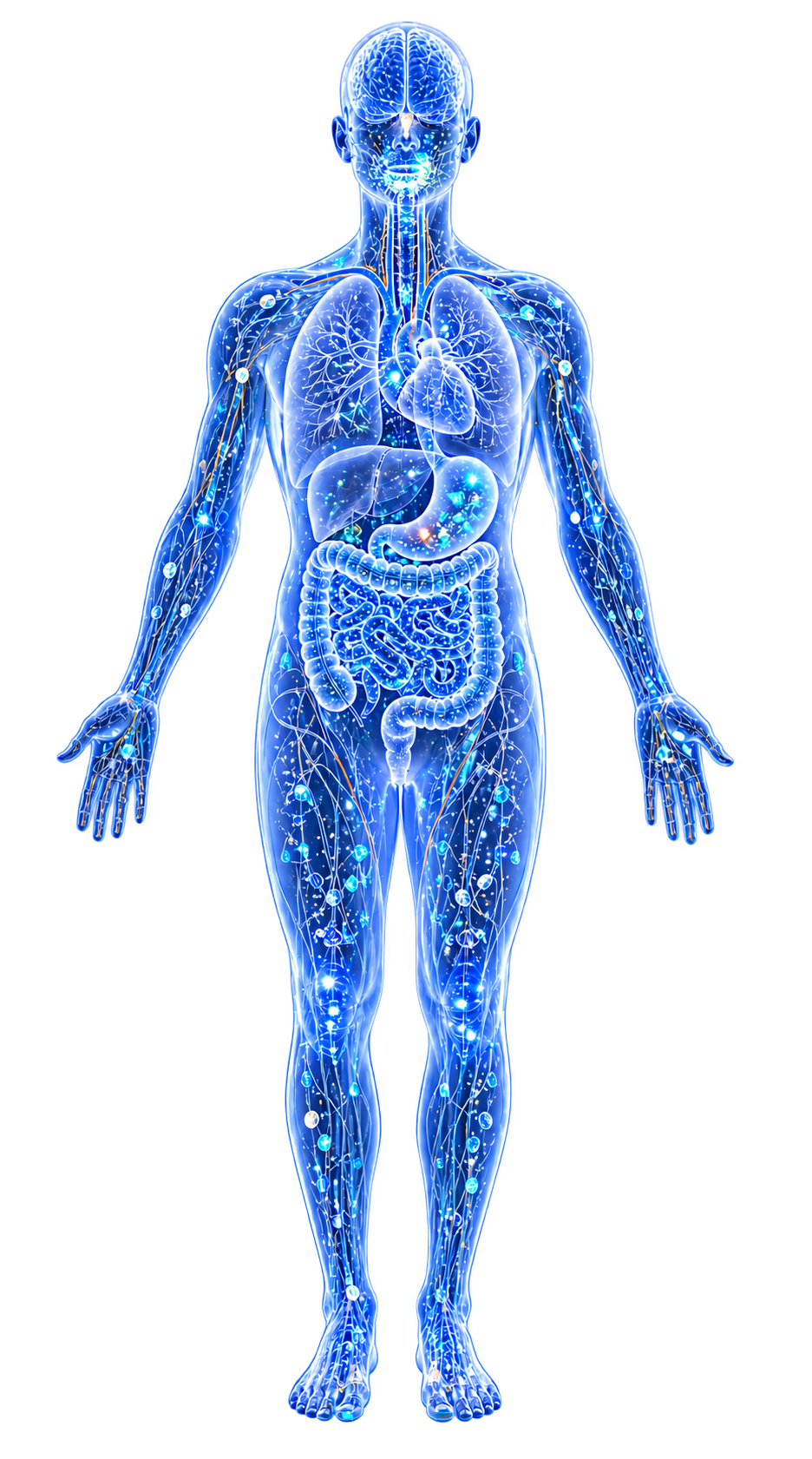
A heterodimer of S100A8 and S100A9 calcium-binding proteins that constitutes approximately 60% of the cytosolic protein content of neutrophils. Calprotectin is a central effector of Nutritional Immunity (Metal Sequestration), sequestering essential transition metals from invading pathogens at sites of infection and Metal-Driven Inflammation.
Evidence map7 cited passagesInspect provenance +
Site II (hexahistidine, His6): unique among S100 proteins. This site binds Zn(II), Mn(II), Fe(II), AND Ni(II). Critically, the hexahistidine site coordinates Ni(II) preferentially over Zn(II), making calprotectin the first identified host protein with preferential nickel-sequestering activity.
Calprotectin sequesters Zn, Mn, and Ni from S. aureus in abscess environments, directly inhibiting urease activity and Mn-SOD function.
S. aureus counters with staphylopine, a broad-spectrum metallophore that scavenges metals even in the calprotectin-rich abscess environment.
Calprotectin Mn sequestration limits streptococcal Mn-dependent virulence, including Mn-SOD activity.
Calprotectin inhibits urease activity by restricting nickel availability to K. pneumoniae.
IBD: Fecal calprotectin distinguishes inflammatory bowel disease from irritable bowel syndrome and monitors disease activity.
NEC: Elevated in necrotizing enterocolitis in preterm infants, where it reflects neutrophil infiltration and mucosal damage.
Contents
1. Structure and Metal Binding2. Release and Distribution3. Pathogen Targets4. Fecal Calprotectin as a Biomarker5. The Dual Role6. ConnectionsStructure and Metal Binding#
Multi-Metal Sequestration#
Calprotectin possesses two distinct metal-binding sites. Site I (His3Asp): binds zinc (Zn)(II) with high affinity.
Site II (hexahistidine, His6): unique among S100 proteins. This site binds zinc(II), manganese (Mn)(II), iron (Fe)(II), AND nickel (Ni)(II). Critically, the hexahistidine site coordinates nickel(II) preferentially over zinc(II), making calprotectin the first identified host protein with preferential nickel-sequestering activity.[1]Role of Nickel in Microbial PathogenesisRobert J. Maier, Stéphane L. Benoit · 2019Open reference 1 ↓
Functional Implications#
Calprotectin simultaneously restricts multiple metals at infection sites, creating a multi-metal "desert" that pathogens must overcome to establish infection.
The preferential nickel (Ni) coordination is significant because it means calprotectin can selectively target nickel-dependent virulence factors (Urease, [NiFe] Hydrogenase) even in the presence of higher zinc concentrations.
Release and Distribution#
Released by neutrophils at infection sites during NETosis (neutrophil extracellular trap formation) and degranulation. Also expressed by monocytes, macrophages, and epithelial cells under inflammatory conditions. Found at high concentrations in abscess cavities, mucosal surfaces, and the gut lumen during inflammation.
Constitutes the dominant antimicrobial protein in neutrophil abscesses surrounding Staphylococcus aureus infections.
Pathogen Targets#
Staphylococcus aureus#
Calprotectin sequesters zinc (Zn), manganese (Mn), and nickel (Ni) from S. aureus in abscess environments, directly inhibiting urease activity and manganese-SOD function.[1]Role of Nickel in Microbial PathogenesisRobert J. Maier, Stéphane L. Benoit · 2019Open reference 1 ↓
S. aureus counters with staphylopine, a broad-spectrum metallophore that scavenges metals even in the calprotectin-rich abscess environment.[1]Role of Nickel in Microbial PathogenesisRobert J. Maier, Stéphane L. Benoit · 2019Open reference 1 ↓
Streptococcus pneumoniae#
- Calprotectin manganese (Mn) sequestration limits streptococcal manganese-dependent virulence, including manganese-SOD activity.[2]Metal Homeostasis in Pathogenic StreptococciAkbari MS, Doran KS, Burcham LR · 2022Open reference 2 ↓
Klebsiella pneumoniae#
- Calprotectin inhibits urease activity by restricting nickel availability to K. pneumoniae.[1]Role of Nickel in Microbial PathogenesisRobert J. Maier, Stéphane L. Benoit · 2019Open reference 1 ↓
Fecal Calprotectin as a Biomarker#
Calprotectin shed into the gut lumen is measurable in stool as fecal calprotectin (FC), which has become a standard non-invasive biomarker.
IBD: Fecal calprotectin distinguishes inflammatory bowel disease from irritable bowel syndrome and monitors disease activity.[3]Clinical and inflammatory biomarkers of inflammatory bowel diseases are linked to plasma trace elements and toxic metals; new insights into an old conceptAmerikanou C, Karavoltsos S, Gioxari A et al. · 2022Open reference 3 ↓ NEC: Elevated in necrotizing enterocolitis in preterm infants, where it reflects neutrophil infiltration and mucosal damage.[4]Nickel as a Catalytic Driver of Necrotizing Enterocolitis: Dietary Nickel, Microbial Metallomics, and the Activation of Nickel-Dependent Virulence Pathways in the Preterm GutKaren Pendergrass · 2026Open reference 4 ↓
Elevated FC reflects neutrophil-driven inflammation anywhere in the GI tract.
The Dual Role#
Calprotectin exemplifies the tension between host defense and collateral damage. Protective: restricts metals from pathogens, limiting virulence.
Potentially harmful: metal restriction also affects commensal bacteria, potentially worsening Dysbiosis. Chronic calprotectin elevation in inflammatory conditions may contribute to the metal-depleted mucosal environment that favors pathobionts with superior metal acquisition systems.
Connections#
- Nutritional Immunity (Metal Sequestration)—calprotectin is a primary effector of host metal sequestration
- Nickel—preferential nickel (Ni) binding at the hexahistidine site
- Zinc, Manganese—traditional calprotectin targets
- Staphylococcus aureus—best-characterized calprotectin-pathogen interaction
- Inter-Kingdom Metal Shielding—biofilms may physically exclude calprotectin
- Lactoferrin—complementary metal-sequestering protein (iron-focused)
References 4
Numbered by first appearance in the article, then reconciled with its declared source list.
- 1
★Robert J. Maier, Stéphane L. Benoit (2019). Role of Nickel in Microbial Pathogenesis. Inorganics.
- 2
Akbari MS, Doran KS, Burcham LR (2022). Metal Homeostasis in Pathogenic Streptococci. Microorganisms.
- 3
Amerikanou C, Karavoltsos S, Gioxari A et al. (2022). Clinical and inflammatory biomarkers of inflammatory bowel diseases are linked to plasma trace elements and toxic metals; new insights into an old concept. Frontiers in Nutrition.
- 4
Karen Pendergrass (2026). Nickel as a Catalytic Driver of Necrotizing Enterocolitis: Dietary Nickel, Microbial Metallomics, and the Activation of Nickel-Dependent Virulence Pathways in the Preterm Gut. Zenodo Preprint.
Article network
Mentioned here 11
Pages linking here 68
Connect the evidence
Publicly readable discussion by ORCID-authenticated researchers. Questions, interpretation, methods, corrections, and new evidence stay attached to this record.
No discussion yet. Start with a precise question or a source-backed observation.
Activity and accepted changes
Accepted researcher context, editorial status, public discussion, and upstream Git revisions are shown together. Pending, declined, and withdrawn proposals remain private.
- published revision
Backfill inflammation concept links
Karen Pendergrass · +1 −1
Inspect exact Git diff ↗ - published revision
Complete Hydrogenase contextual coverage
Karen Pendergrass · +1 −1
Inspect exact Git diff ↗ - published revision
Complete reviewed Urease contextual coverage
Karen Pendergrass · +1 −1
Inspect exact Git diff ↗ - published revision
massive wiki expansion: 149 stubs fixed, 100+ new pages, Rule 15 scan, keystone papers
WikiBiome Deploy Bot · +8 −8
Inspect exact Git diff ↗ - published revision
nightly maintenance: 94 stub demotions, 181 source_count fixes, 22 auto-discovered stubs, 5 adversarial audits, 3 boundary fixes, 3 evidence-level corrections
WikiBiome Deploy Bot · +1 −0
Inspect exact Git diff ↗ - published revision
pre-overnight checkpoint 2026-04-18
WikiBiome Deploy Bot · +3 −1
Inspect exact Git diff ↗ - published revision
WikiBiome update — integrity fixes, metallomic diet pages, cross-condition analyses
WikiBiome Deploy Bot · +9 −7
Inspect exact Git diff ↗ - published revision
WikiBiome v7 — interactive microbiome metallomics encyclopedia
Karen Pendergrass · +65 −0
Inspect exact Git diff ↗