
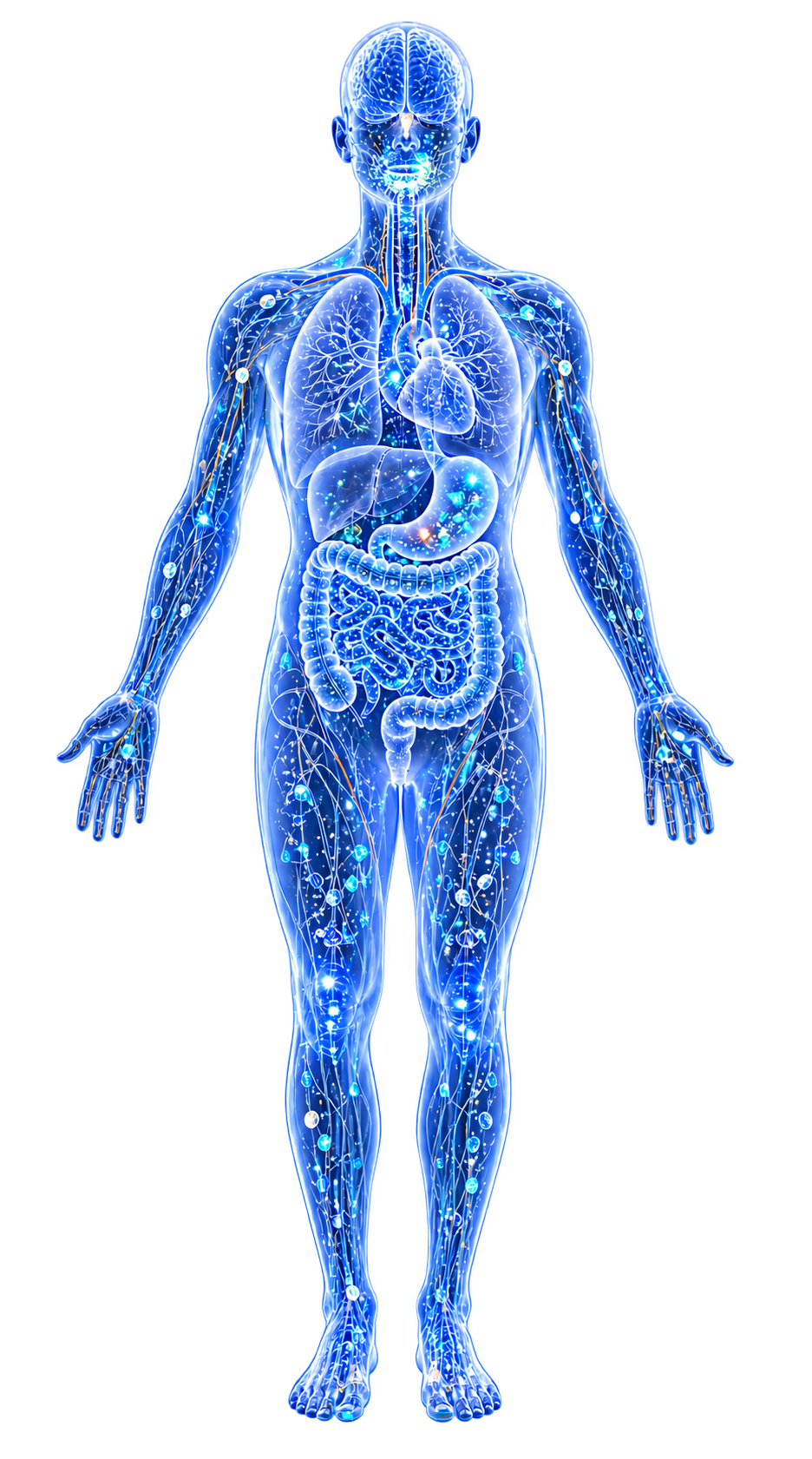
 metals · microbes · host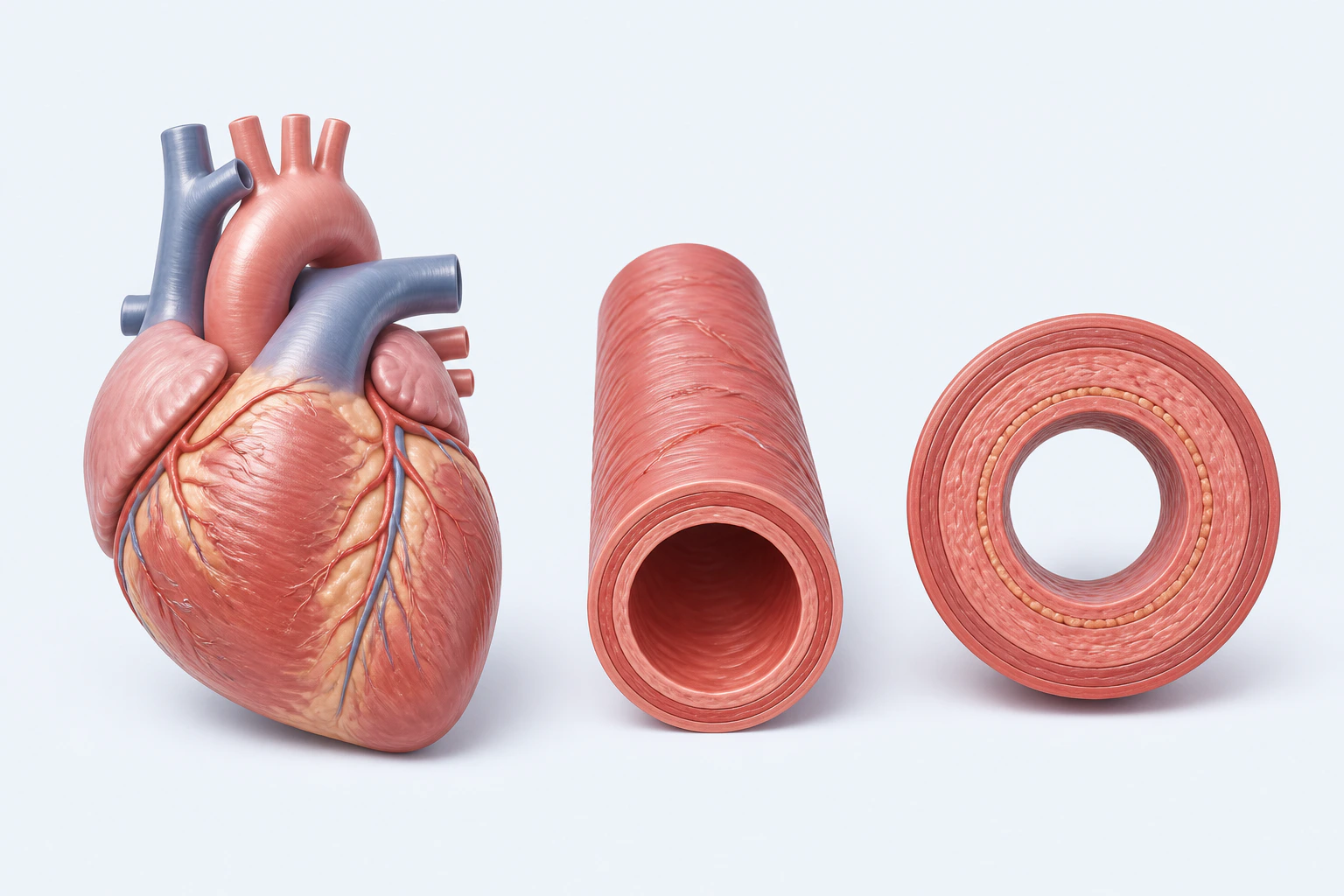
Neutral cardiovascular orientation for hypertension. Blood pressure is established by measurement; these undamaged teaching models do not show a diagnostic sign, universal vascular change, complication, severity, or treatment response.
Scientific media record1 verified identifier
- Subject
- Hypertensioncondition
- Identifiers
- MeSH:D006973
- Review
- Editorial review completeIdentifiers authority-verified · Accessibility validated · · hypertension|hypertension-pathology-v1.webp
- Digital source
- Trained-algorithmic mediaCreated with a trained generative algorithm and reviewed by WikiBiome for subject identity, scientific framing, identifiers, provenance, and accessibility.
- Scientific basis
- Hypertension — MeSHHigh Blood Pressure
- License
- CC BY-SA 4.0Created
Sustained elevation of systemic blood pressure, affecting an estimated 1.3 billion adults worldwide and the leading modifiable risk factor for Cardiovascular Disease, stroke, and Chronic Kidney Disease.
The Gut Microbiome-blood pressure axis has emerged as a major research area, with Short-Chain Fatty Acids (SCFAs), Trimethylamine N-Oxide (TMAO), the mycobiome, and microbial metabolites all contributing to BP regulation. Heavy Metals—particularly Lead and Cadmium—are established environmental risk factors operating through both direct vascular toxicity and microbiome-mediated pathways.
Evidence map27 cited passagesInspect provenance +
At physiological SCFA concentrations, the vasodilatory GPR41 effect dominates, producing net BP reduction.
Prolonged tmao elevation activates pro-inflammatory vascular remodeling pathways, contributing to arterial stiffness and increased peripheral resistance.
FXR agonist CDCA reduces blood pressure in spontaneously hypertensive rat models through iNOS expression.
Malassezia increases progressively from normotensive to pre-hypertensive to hypertensive individuals (28.45% dominance in HTN vs lower in NT).
Mortierella is depleted in both pre-HTN and HTN, paralleling loss of protective bacterial taxa.
HTN+CKD patients show the most severe mycobiome disruption: Malassezia (18.71%) dominant, with increased Apiotrichum, Cystobasidium, saccharomyces, and decreased Candida, Meyerozyma.
Fan et al. 2025 conducted the first multicenter, randomized, blinded, placebo-controlled trial of oral FMT for stage 1 hypertension (NCT04406129):
Lead (Pb)—Among the most established environmental risk factors for hypertension. Even low-level chronic exposure (blood Pb <10 ug/dL) is associated with elevated BP. Mechanisms: inhibits endothelial NO synthase, increases oxidative stress, activates RAAS, promotes vascular smooth muscle contraction. Mortality risk rises 5.9-fold at Pb 10 ug/dL in CKD.
Cadmium (Cd)—Renal nephrotoxicity damages tubules, impairing sodium handling and BP regulation. Cd-induced oxidative stress in vascular endothelium promotes arterial stiffness. Correlates with hypertension even at low concentrations (<1 ug/L plasma); 14 studies in Martins 2021 meta-analysis showed positive BP association.
Nickel (Ni)—Urinary nickel in the highest quartile associates with 3.57-fold increased CVD risk (NHANES). Nickel exposure correlates with metabolic syndrome features including elevated fasting glucose, hypertension, and dyslipidemia. Mechanism involves SOD depletion and glutathione reduction.
Zinc—Disrupted by Pb/Cd displacement from metalloenzyme binding sites; Cu/Zn homeostasis disrupted by lead exposure.
Lead: Ubiquitous in soil, food, water, cosmetics, and tobacco. Accumulates in kidney, impairing renal BP regulation. Above reference levels causes 2.24x BP association.
CRP—Low-grade inflammation consistently elevated; CRP positively associated with Serratia abundance and arterial wall changes.
IL-2Ralpha, IL-18—Elevated in HTN+CKD comorbidity; Candida negatively associated with TNF-alpha.
Glutathione—Depleted by Pb, Cd, Ni, and Hg through oxidative stress; all four non-essential metals drive CVD through ROS/oxidative stress and glutathione/SOD/catalase depletion.
| Taxon | Role | Evidence | |-------|------|----------| | enterobacteriaceae | LPS producers; TMA lyase gene enrichment (CutC/D, YeaW/X) for TMAO production; siderophore-mediated iron acquisition |, | | streptococcus spp. | Oral streptococci relatively higher in gut microbiome of ACVD patients vs. controls |, | | prevotella | Increased in hypertensive Firmic
| Taxon | Role | Evidence | |-------|------|----------| | roseburia | Butyrate producer—loss removes GPR41-mediated vasodilatory brake on BP |, | | faecalibacterium prausnitzii | Major butyrate producer—depletion reduces anti-inflammatory SCFA production | | | lachnospiraceae | SCFA producers—loss impairs propionate-mediated vasodilation | | | bifidoba
Fan et al. 2025 conducted the first multicenter RCT of oral FMT for stage 1 hypertension (n=124, 7 centers):
TMA lyases (CutC/D, YeaW/X)—Enriched in ACVD microbiome; convert dietary choline, phosphatidylcholine, and L-carnitine to TMA, which liver FMO3 oxidizes to TMAO,.
LPS biosynthesis enzymes—Enriched in ACVD microbiome; LPS activates TLR4-mediated NADPH oxidase pathway generating ROS,.
Fungal lipases—Malassezia-produced inflammatory lipases activate immune cells, compounding bacterial dysbiosis-driven inflammation.
SCFA depletion—Loss of Roseburia, F. prausnitzii, and Lachnospiraceae reduces butyrate, propionate, and acetate production. SCFAs regulate BP through opposing receptor systems: GPR41 (vasodilation, net BP reduction at physiological concentrations) vs. Olfr78 (renal renin release, BP increase). SCFA depletion removes the vasodilatory brake,.
Elevated Firmicutes/Bacteroidetes ratio—Characteristic of hypertensive and TMAO-elevated microbiomes.
TMAO elevation—TMAO activates pro-inflammatory vascular remodeling, HMGB1/TLR4 signaling, tight junction destruction, endothelial dysfunction, and platelet hyperreactivity.
Showing 24 of 27 evidence-bearing passages. Every remaining citation is still indexed in the reference record below.
One disease. Five evidence layers.
A generated systems view of the metals, organisms, host sequestration signals, ecological conditions, and microbial functions indexed for Hypertension.
Evidence layer
Taxonomic signature
Organisms reported as enriched or depleted, with their indexed functional context kept beside the name.LPS producers; TMAO precursor generation via TMA lyases; iron-scavenging siderophore producers that expand under dysbiosis
Oral streptococci translocate to gut; enriched in ACVD microbiome
Increased in hypertensive F/B ratio shift; Prevotella copri increased by FMT
Increased in hypertension; LPS producer contributing to endothelial dysfunction
Enriched by GERD/HTN-associated dysbiosis; pro-inflammatory
Fungal pathobiont — progressive enrichment from normotensive (low) to pre-HTN to HTN (28.45% dominance); produces inflammatory lipases; correlates with immunoglobulin light chain kappa
Butyrate producer — loss removes GPR41-mediated vasodilation and gut barrier support
Major butyrate producer — depletion reduces anti-inflammatory SCFA production
SCFA producers — loss impairs propionate-mediated vasodilation via GPR41
Barrier-supportive commensal; depleted across cardiovascular conditions
Protective fungus — depleted in both pre-HTN and HTN, paralleling loss of protective bacterial taxa
Evidence layer
Nutritional immunity
Host metal-withholding, inflammatory, antioxidant, and microbial-metabolite signals indexed in the signature.Elevated host signals
6Depleted protective signals
2Evidence layer
Ecological state
The environmental conditions that connect the organism-level observations into a system.Evidence layer
Virulence functions
Microbial structures, enzymes, and acquisition systems implicated by the linked evidence.The disease record, in full.
The original WikiBiome disease narrative remains intact beneath the generated signature atlas.
Gut Microbiome-Blood Pressure Axis#
SCFA-Mediated BP Regulation#
SCFAs regulate blood pressure through opposing receptor systems. GPR41 (FFAR3): Propionate and Butyrate binding causes vasodilation and BP reduction via endothelial relaxation. Olfr78 (olfactory receptor 78, renal): Propionate and acetate binding on renal juxtaglomerular cells stimulates renin release, raising BP.
At physiological SCFA concentrations, the vasodilatory GPR41 effect dominates, producing net BP reduction.[1]Emerging therapy targets to modulate microbiome-mediated effects evident in cardiovascular diseaseDorothea Katharina Hoffelner, Tim Hendrikx · 2025Open reference 1 ↓ Dysbiosis-driven SCFA depletion removes this vasodilatory brake, contributing to hypertension. High-fiber diets increase colonic SCFA production and are consistently associated with lower BP.
TMAO and Vascular Remodeling#
Prolonged Trimethylamine N-Oxide (TMAO) elevation activates pro-inflammatory vascular remodeling pathways, contributing to arterial stiffness and increased peripheral resistance.[2]The gut microbial metabolite trimethylamine N-oxide and cardiovascular diseasesJing Zhen, Zhou Zhou, Meng He et al. · 2023Open reference 2 ↓ TMAO-associated Firmicutes/Bacteroidetes ratio elevation is characteristic of hypertensive microbiomes. TMAO promotes endothelial dysfunction via HMGB1/TLR4 signaling and tight junction destruction.
Bile Acid-FXR Axis#
FXR agonist CDCA reduces blood pressure in spontaneously hypertensive rat models through iNOS expression.[3]Bile acids at the cross-roads of gut microbiome-host cardiometabolic interactionsPaul M. Ryan, Catherine Stanton, Noel M. Caplice · 2017Open reference 3 ↓ FXR expression is downregulated in left ventricle of hypertensive rats with end-stage heart failure. Bile Acid Metabolism disruption may compound SCFA depletion in raising BP.
Mycobiome in Hypertension#
A distinctive feature of hypertension research is the role of the gut fungal microbiome:
Malassezia Enrichment#
Malassezia increases progressively from normotensive to pre-hypertensive to hypertensive individuals (28.45% dominance in HTN vs lower in NT).[4]Gut mycobiome dysbiosis contributes to the development of hypertension and its response to immunoglobulin light chainsYeqing Zou, Anxing Ge, Brako Lydia et al. · 2022Open reference 4 ↓
Malassezia produces inflammatory lipases and activates immune cells; its enrichment compounds bacterial dysbiosis-driven Metal-Driven Inflammation. Malassezia positively associated with immunoglobulin light chain kappa in pre-HTN (r=0.510, P=0.044) and both kappa and lambda in HTN.
Mortierella Depletion#
- Mortierella is depleted in both pre-HTN and HTN, paralleling loss of protective bacterial taxa.[4]Gut mycobiome dysbiosis contributes to the development of hypertension and its response to immunoglobulin light chainsYeqing Zou, Anxing Ge, Brako Lydia et al. · 2022Open reference 4 ↓
HTN+CKD Comorbidity#
HTN+CKD patients show the most severe mycobiome disruption: Malassezia (18.71%) dominant, with increased Apiotrichum, Cystobasidium, Saccharomyces, and decreased Candida, Meyerozyma.[5]Exploring the gut mycobiome: differential composition and clinical associations in hypertension, chronic kidney disease, and their comorbidityJuan Qiu, Longyou Zhao, Yiwen Cheng et al. · 2023Open reference 5 ↓
HTN+CKD has higher IL2Ralpha, IL18, TNF-alpha; Candida negatively associated with TNF-alpha. Fungal dysbiosis occurs at the pre-hypertension stage, suggesting it precedes clinical disease.
FMT for Hypertension: First Human RCT#
Fan et al. 2025 conducted the first multicenter, randomized, blinded, placebo-controlled trial of oral FMT for stage 1 hypertension (NCT04406129).[6]Fecal microbiota transplantation for hypertension: an exploratory, multicenter, randomized, blinded, placebo-controlled trialLuyun Fan, Junru Chen, Qi Zhang et al. · 2025Open reference 6 ↓
124 patients (mean age 43), 7 centers in China. Primary outcome: SBP change at day 30 was -6.28 mmHg (FMT) vs -5.77 mmHg (placebo), p=0.62 (not significant). Transient effect: At 1 week, FMT produced -4.34 mmHg between-arm SBP difference (p=0.024), but this did not persist.
Age subgroup: Participants >48 years showed significant SBP reduction of 7.65 mmHg (p=0.029). Microbial shifts: Increased Parabacteroides merdae, Prevotella copri, Eubacterium sp.; decreased Eggerthella lenta, Streptococcus vestibularis. Metabolite associations: SBP-associated metabolites included tyrosine, glutamine, phenylalanine, methionine.
Implication: microbial BP modulation is real but transient, suggesting repeated or sustained intervention is needed.
Metal Risk Factors#
Lead#
lead (Pb) is among the most established environmental risk factors for hypertension. Mechanisms: inhibits endothelial NO synthase, increases Oxidative Stress, activates RAAS (renin-angiotensin-aldosterone system), promotes vascular smooth muscle contraction. Even low-level chronic lead exposure (blood lead <10 ug/dL) is associated with elevated BP.
lead accumulates in kidney, impairing renal BP regulation.
Cadmium#
cadmium (Cd) nephrotoxicity damages renal tubules, impairing sodium handling and BP regulation. cadmium-induced oxidative stress in vascular endothelium promotes arterial stiffness. cadmium accumulates in renal cortex over decades; renal cadmium burden correlates with hypertension risk.
Renal Metal Accumulation#
The kidney is a primary target organ for both lead (Pb) and cadmium (Cd) accumulation. Metal-induced renal damage impairs the kidney's central role in long-term BP regulation (sodium excretion, RAAS modulation, prostaglandin synthesis). This creates a direct metal-to-hypertension pathway independent of the microbiome, though both pathways likely operate simultaneously.
Connections#
- Cardiovascular Disease—hypertension is the leading modifiable CVD risk factor
- Short-Chain Fatty Acids (SCFAs)—SCFA-mediated vasodilation via GPR41 is a primary microbiome BP mechanism
- Trimethylamine N-Oxide (TMAO)—promotes vascular remodeling and endothelial dysfunction
- Bile Acid Metabolism—FXR agonists reduce BP in hypertensive models
- dysbiosis—both bacterial and fungal dysbiosis precede and associate with hypertension
- Lead—established environmental hypertension risk factor via renal and vascular toxicity
- Cadmium—renal accumulation impairs BP regulation
- Chronic Kidney Disease—HTN+CKD comorbidity shows most severe mycobiome disruption
- inflammation—Malassezia-driven and LPS-driven inflammation contributes to vascular remodeling
- Malassezia—enriched in hypertension; correlates with immunoglobulin light chain dysregulation
References 14
Numbered by first appearance in the article, then reconciled with its declared source list.
- 1
Dorothea Katharina Hoffelner, Tim Hendrikx (2025). Emerging therapy targets to modulate microbiome-mediated effects evident in cardiovascular disease. Frontiers in Cardiovascular Medicine.
- 2
Jing Zhen, Zhou Zhou, Meng He et al. (2023). The gut microbial metabolite trimethylamine N-oxide and cardiovascular diseases. Frontiers in Endocrinology.
- 3
Paul M. Ryan, Catherine Stanton, Noel M. Caplice (2017). Bile acids at the cross-roads of gut microbiome-host cardiometabolic interactions. Diabetology and Metabolic Syndrome.
- 4
Yeqing Zou, Anxing Ge, Brako Lydia et al. (2022). Gut mycobiome dysbiosis contributes to the development of hypertension and its response to immunoglobulin light chains. Frontiers in Immunology.
- 5
Juan Qiu, Longyou Zhao, Yiwen Cheng et al. (2023). Exploring the gut mycobiome: differential composition and clinical associations in hypertension, chronic kidney disease, and their comorbidity. Frontiers in Immunology.
- 6
Luyun Fan, Junru Chen, Qi Zhang et al. (2025). Fecal microbiota transplantation for hypertension: an exploratory, multicenter, randomized, blinded, placebo-controlled trial. Microbiome.
- 7
Asher Dixon, Kai Robertson, Amanda Yung et al. (2020). Efficacy of Probiotics in Patients of Cardiovascular Disease Risk: A Systematic Review and Meta-Analysis. Current Hypertension Reports.
- 8
Igor Spivak, Leviel Fluhr, Eran Elinav (2023). Local and systemic effects of microbiome-derived metabolites. EMBO Reports.
- 9
Nucera S, Serra M, Caminiti R et al. (2024). Nucera 2024 — Non-essential heavy metal effects in cardiovascular diseases: overview of systematic reviews. Frontiers in Cardiovascular Medicine.
- 10
Liu, Y., Zhang et al. (2025). Liu 2025 — Nickel Cardio-Metabolic Effects. Cardiovascular Toxicology.
- 11
Daria Kashtanova, Olga Tkacheva, Anna Popenko et al. (2017). Gut microbiota and vascular biomarkers in patients without clinical cardiovascular diseases. Artery Research.
- 12
Zhuye Jie, Huihua Xia, Shi-Long Zhong et al. (2017). The gut microbiome in atherosclerotic cardiovascular disease. Nature Communications.
- 13
Naushad M. Mansuri, Neelam K. Mann, Shariqa Rizwan et al. (2022). Role of Gut Microbiome in Cardiovascular Events: A Systematic Review. Cureus.
- 14
Hilde Herrema, Max Nieuwdorp, Albert K. Groen (2020). Microbiome and Cardiovascular Disease. Handbook of Experimental Pharmacology (Prevention and Treatment of Atherosclerosis).
Article network
Mentioned here 17
Pages linking here 13
Connect the evidence
Publicly readable discussion by ORCID-authenticated researchers. Questions, interpretation, methods, corrections, and new evidence stay attached to this record.
No discussion yet. Start with a precise question or a source-backed observation.
Activity and accepted changes
Accepted researcher context, editorial status, public discussion, and upstream Git revisions are shown together. Pending, declined, and withdrawn proposals remain private.
- published revision
Consolidate microbial metabolite knowledge
Karen Pendergrass · +1 −1
Inspect exact Git diff ↗ - published revision
Backfill heavy metals concept links
Karen Pendergrass · +1 −1
Inspect exact Git diff ↗ - published revision
Backfill oxidative stress concept links
Karen Pendergrass · +1 −1
Inspect exact Git diff ↗ - published revision
Backfill gut microbiome concept links
Karen Pendergrass · +1 −1
Inspect exact Git diff ↗ - published revision
Backfill inflammation concept links
Karen Pendergrass · +1 −1
Inspect exact Git diff ↗ - published revision
Complete corpus-wide Dysbiosis linking
Karen Pendergrass · +1 −1
Inspect exact Git diff ↗ - published revision
Complete Tight junctions contextual coverage
Karen Pendergrass · +1 −1
Inspect exact Git diff ↗ - published revision
massive wiki expansion: 149 stubs fixed, 100+ new pages, Rule 15 scan, keystone papers
WikiBiome Deploy Bot · +8 −8
Inspect exact Git diff ↗ - published revision
nightly maintenance: 94 stub demotions, 181 source_count fixes, 22 auto-discovered stubs, 5 adversarial audits, 3 boundary fixes, 3 evidence-level corrections
WikiBiome Deploy Bot · +1 −0
Inspect exact Git diff ↗ - published revision
cycle 1: health check + lint fixes + 8 ingests + 2 stubs + gestational-diabetes signature
WikiBiome Deploy Bot · +1 −0
Inspect exact Git diff ↗ - published revision
WikiBiome update — 2026-04-15 17:23
WikiBiome Deploy Bot · +0 −1
Inspect exact Git diff ↗ - published revision
v2 migration Priority 2: All 29 disease entity pages upgraded with associated_conditions, seo_target, wikipedia_differentiation
WikiBiome Deploy Bot · +6 −0
Inspect exact Git diff ↗ - published revision
WikiBiome update — integrity fixes, metallomic diet pages, cross-condition analyses
WikiBiome Deploy Bot · +17 −9
Inspect exact Git diff ↗ - published revision
WikiBiome update — 2026-04-10 15:45
WikiBiome Deploy Bot · +92 −0
Inspect exact Git diff ↗