

Enterobacter cloacae is a Gram-negative, facultatively anaerobic member of the Enterobacteriaceae. Ubiquitous in soil, water, and the mammalian gut, it is a leading cause of nosocomial infections and carries clinically significant antibiotic resistance through inducible AmpC beta-lactamases.
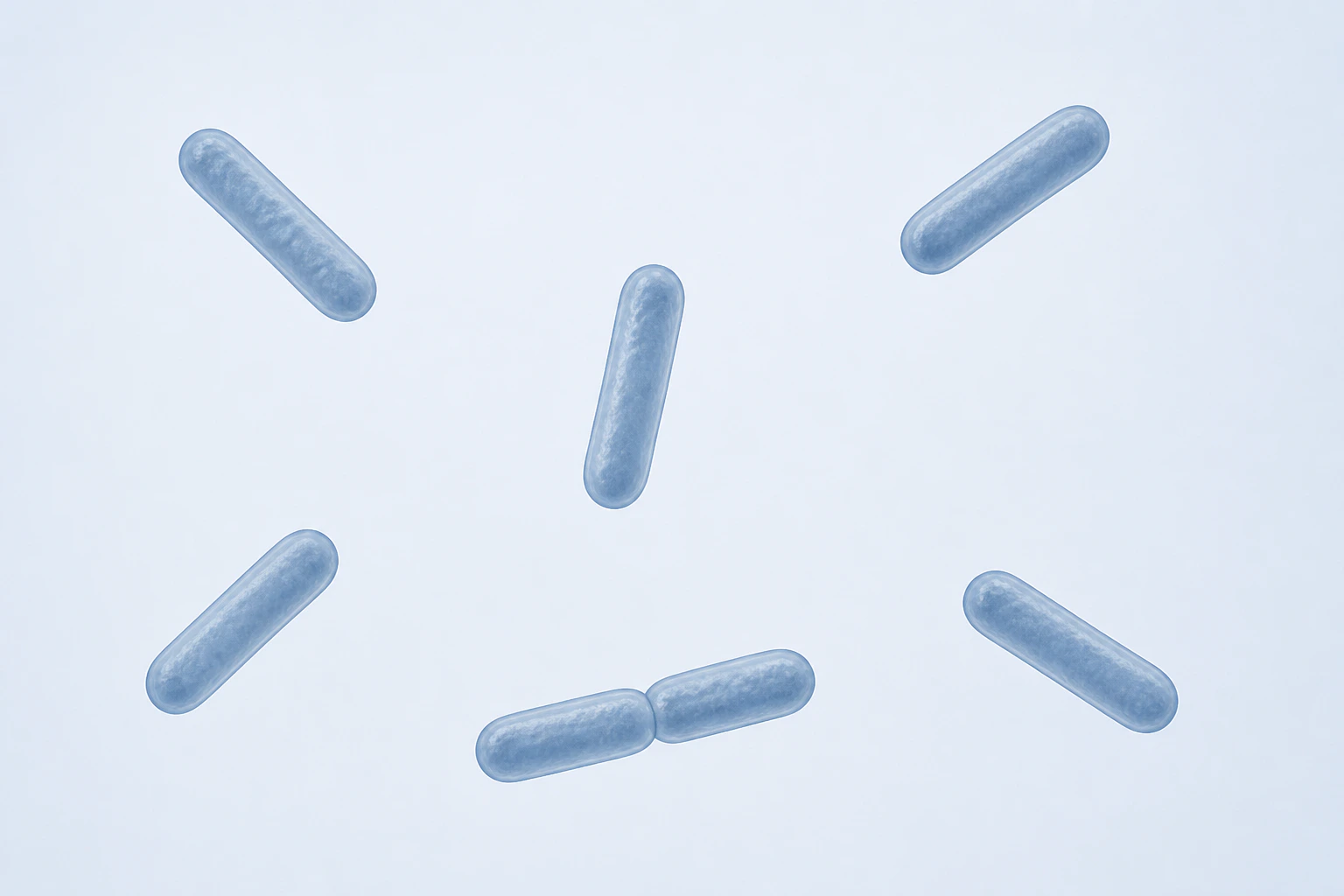
Representative Enterobacter cloacae type-strain rod forms, shown as seven bodies in five single and one paired grouping. This reconstruction is non-diagnostic, does not distinguish the species visually from other Enterobacter, and is not a micrograph.
Scientific media record1 verified identifier
- Subject
- Enterobacter cloacaetaxon · species
- Identifiers
- NCBITaxon:550
- Review
- Editorial review completeIdentifiers authority-verified · Accessibility validated · · enterobacter-cloacae|enterobacter-cloacae-morphology-v1.webp
- Digital source
- Trained-algorithmic mediaCreated with a trained generative algorithm and reviewed by WikiBiome for subject identity, scientific framing, identifiers, provenance, and accessibility.
- Scientific basis
- Enterobacter cloacae — NCBI TaxonomyEnterobacter cloacae — LPSNEnterobacter cloacae type strain — BacDiveEnterobacter cloacae complex review
- License
- CC BY-SA 4.0Created
Metal Dependencies#
E. cloacae relies heavily on iron for growth and virulence. It produces multiple siderophore types—enterobactin and aerobactin—that compete directly with host Lactoferrin and Transferrin. Zinc and manganese serve as cofactors for its beta-lactamase enzymes and Oxidative Stress defense systems, linking metal availability to antibiotic resistance expression.
Ecological Role#
In healthy adults, E. cloacae persists at low abundance. It expands during antibiotic-induced Dysbiosis, exploiting the vacated niche and elevated luminal iron that follows Metal-Driven Inflammation. Its capacity for Biofilm formation on mucosal surfaces and medical devices makes it particularly persistent once established.
Conditions Associated#
E. cloacae is enriched in neonatal intensive care settings, where it contributes to Necrotizing Enterocolitis and bloodstream infections. In adults, it appears in complicated urinary tract infections and post-surgical wound infections. Its AmpC-mediated resistance limits treatment to carbapenems in severe cases.
Cross-References#
- Iron—siderophore-dependent acquisition
- Zinc—beta-lactamase cofactor
- Biofilm—persistence mechanism
- Antimicrobial Resistance—AmpC beta-lactamase
References 3
Numbered by first appearance in the article, then reconciled with its declared source list.
- 1
Giorgio Casaburi, Jingjing Wei, Sufyan Kazi et al. (2022). Casaburi 2022 — Formate as a metabolic driver of NEC: integrated metagenomics and targeted metabolomics. Frontiers in Pediatrics.
- 2
W. Andrew Lancaster, Angeli Lal Menon, Israel Scott et al. (2014). Lancaster 2014 — Metallomics of Two Microorganisms Relevant to Heavy Metal Bioremediation Reveal Fundamental Differences in Metal Assimilation and Utilization. Metallomics.
- 3
Khan F, Rizvi M, Shukla I et al. (2011). A Novel Approach for Identification of Members of Enterobacteriaceae Isolated from Clinical Samples. Biology and Medicine.
Article network
Mentioned here 10
Pages linking here 1
Connect the evidence
Publicly readable discussion by ORCID-authenticated researchers. Questions, interpretation, methods, corrections, and new evidence stay attached to this record.
No discussion yet. Start with a precise question or a source-backed observation.
Activity and accepted changes
Accepted researcher context, editorial status, public discussion, and upstream Git revisions are shown together. Pending, declined, and withdrawn proposals remain private.
- published revision
Backfill oxidative stress concept links
Karen Pendergrass · +1 −1
Inspect exact Git diff ↗ - published revision
Backfill inflammation concept links
Karen Pendergrass · +1 −1
Inspect exact Git diff ↗ - published revision
massive wiki expansion: 149 stubs fixed, 100+ new pages, Rule 15 scan, keystone papers
WikiBiome Deploy Bot · +9 −8
Inspect exact Git diff ↗ - published revision
maintenance: 409 source fixes, 34 entity updates, 17 concept updates, 30 analysis outputs
WikiBiome Deploy Bot · +58 −0
Inspect exact Git diff ↗