
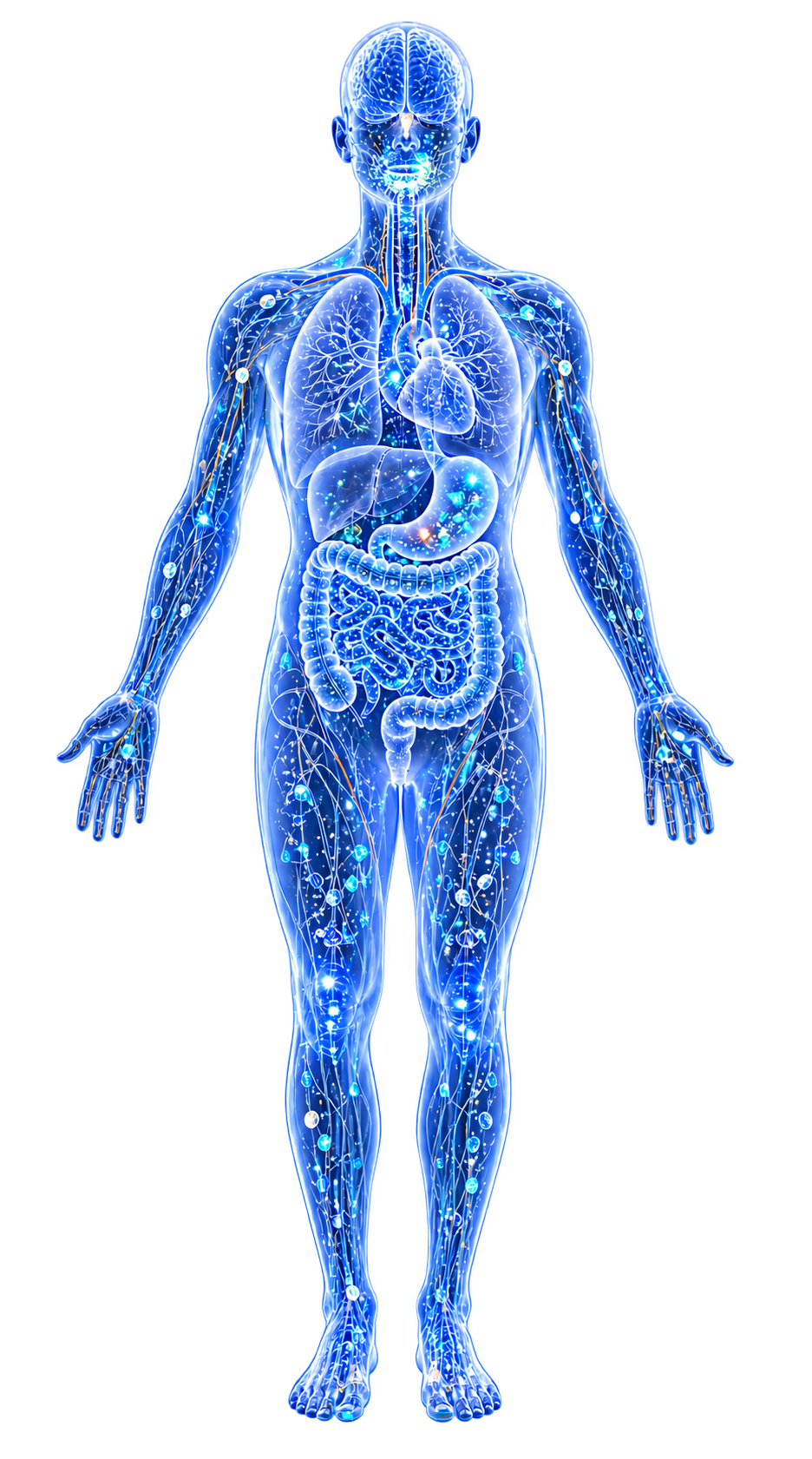
Systemic Metal-Driven Inflammation is the state in which inflammatory mediators—IL-6, TNF-alpha, CRP, IL-1beta—circulate throughout the body rather than remaining confined to a local injury site.
In the WikiBiome framework, systemic inflammation is the final common pathway through which metal exposure, Dysbiosis, and Endotoxemia converge to produce multi-organ disease.
Unlike acute inflammation (protective, self-resolving), systemic inflammation is chronic, low-grade, and self-perpetuating. It is measurable (CRP, IL-6, TNF-alpha) and modifiable (via microbiome restoration, metal restriction, and anti-inflammatory interventions).
Evidence map3 cited passagesInspect provenance +
Metal-driven: heavy metals (cadmium, lead, nickel, arsenic) activate nf kappa b directly via ROS generation, producing IL-6, TNF-alpha, and COX-2.
Microbiome-driven: endotoxemia (LPS translocation) activates TLR4 → NF-kB, producing the same cytokine profile as metal exposure.
Systemic inflammation is documented in virtually every disease signature in this wiki, including CVD, IBD→ED, depression/anxiety, and neurodegeneration.
The Convergence Model#
Three inputs drive systemic inflammation in parallel:
- Metal-driven: Heavy Metals (Cadmium, Lead, Nickel, Arsenic) activate NF-kB Signaling Pathway directly via ROS generation, producing IL-6, TNF-alpha, and COX-2.[1]Toxic Mechanisms of Five Heavy Metals: Mercury, Lead, Chromium, Cadmium, and ArsenicBalali-Mood M, Naseri K, Tahergorabi Z et al. · 2021Open reference 1 ↓[2]Heavy Metal Pollution in the Environment and Their Toxicological Effects on HumansBriffa J, Sinagra E, Blundell R · 2020Open reference 2 ↓
- Microbiome-driven: Endotoxemia (LPS translocation) activates TLR4 → NF-kB, producing the same cytokine profile as metal exposure.[3]Effects of Heavy Metals on Gut Barrier Integrity and Gut MicrobiotaSweta Ghosh, Syam P. Nukavarpu, Venkatakrishna Rao Jala · 2024Open reference 3 ↓
- Metabolic: Loss of SCFA-producing commensals removes the Butyrate-mediated NF-kB brake, allowing unchecked inflammatory signaling.
These three streams are molecularly indistinguishable at the cytokine level—making it impossible to determine whether elevated IL-6 reflects metal toxicity, microbial LPS, or both. This convergence is central to the WikiBiome thesis.
Conditions#
Systemic inflammation is documented in virtually every disease signature in this wiki, including CVD,[4]The gut microbiome in atherosclerotic cardiovascular diseaseZhuye Jie, Huihua Xia, Shi-Long Zhong et al. · 2017Open reference 4 ↓ IBD→ED,[5]Li 2026 — IBD and Male Erectile Dysfunction: Mechanistic Insights and Novel Therapeutic PerspectivesShuxin Li, Hongliang Cao, Yuwei Liang et al. · 2026Open reference 5 ↓ depression/anxiety,[6]Malekpour & Malekpour 2025 — Anti-Inflammatory Interventions on Mental Health and Sexual PerformanceOmid Malekpour, Amir Mahdi Malekpour · 2025Open reference 6 ↓ and neurodegeneration.
Cross-References#
- inflammation—metal-driven inflammation mechanisms
- Endotoxemia—LPS-mediated systemic inflammatory trigger
- Interleukin-6 (IL-6)—primary systemic inflammatory cytokine
- NF-kB Signaling Pathway—master transcription factor
- Hepcidin—IL-6 → hepcidin → iron sequestration axis
- Reactive Oxygen Species (ROS)—ROS as inflammatory initiator
References 7
Numbered by first appearance in the article, then reconciled with its declared source list.
- 1
★Balali-Mood M, Naseri K, Tahergorabi Z et al. (2021). Toxic Mechanisms of Five Heavy Metals: Mercury, Lead, Chromium, Cadmium, and Arsenic. Frontiers in Pharmacology.
- 2
Briffa J, Sinagra E, Blundell R (2020). Heavy Metal Pollution in the Environment and Their Toxicological Effects on Humans. Heliyon.
- 3
★Sweta Ghosh, Syam P. Nukavarpu, Venkatakrishna Rao Jala (2024). Effects of Heavy Metals on Gut Barrier Integrity and Gut Microbiota. Microbiota and Host.
- 4
Zhuye Jie, Huihua Xia, Shi-Long Zhong et al. (2017). The gut microbiome in atherosclerotic cardiovascular disease. Nature Communications.
- 5
Shuxin Li, Hongliang Cao, Yuwei Liang et al. (2026). Li 2026 — IBD and Male Erectile Dysfunction: Mechanistic Insights and Novel Therapeutic Perspectives. Frontiers in Immunology.
- 6
Omid Malekpour, Amir Mahdi Malekpour (2025). Malekpour & Malekpour 2025 — Anti-Inflammatory Interventions on Mental Health and Sexual Performance. International Journal of New Findings in Health and Educational Sciences (IJHES).
- 7
Dawn M. Fernandez, Jose C. Clemente, Chiara Giannarelli (2018). Physical Activity, Immune System, and the Microbiome in Cardiovascular Disease. Frontiers in Physiology.
Article network
Mentioned here 13
Pages linking here 7
Connect the evidence
Publicly readable discussion by ORCID-authenticated researchers. Questions, interpretation, methods, corrections, and new evidence stay attached to this record.
No discussion yet. Start with a precise question or a source-backed observation.
Activity and accepted changes
Accepted researcher context, editorial status, public discussion, and upstream Git revisions are shown together. Pending, declined, and withdrawn proposals remain private.
- published revision
Backfill heavy metals concept links
Karen Pendergrass · +1 −1
Inspect exact Git diff ↗ - published revision
Backfill inflammation concept links
Karen Pendergrass · +2 −2
Inspect exact Git diff ↗ - published revision
massive wiki expansion: 149 stubs fixed, 100+ new pages, Rule 15 scan, keystone papers
WikiBiome Deploy Bot · +51 −0
Inspect exact Git diff ↗