
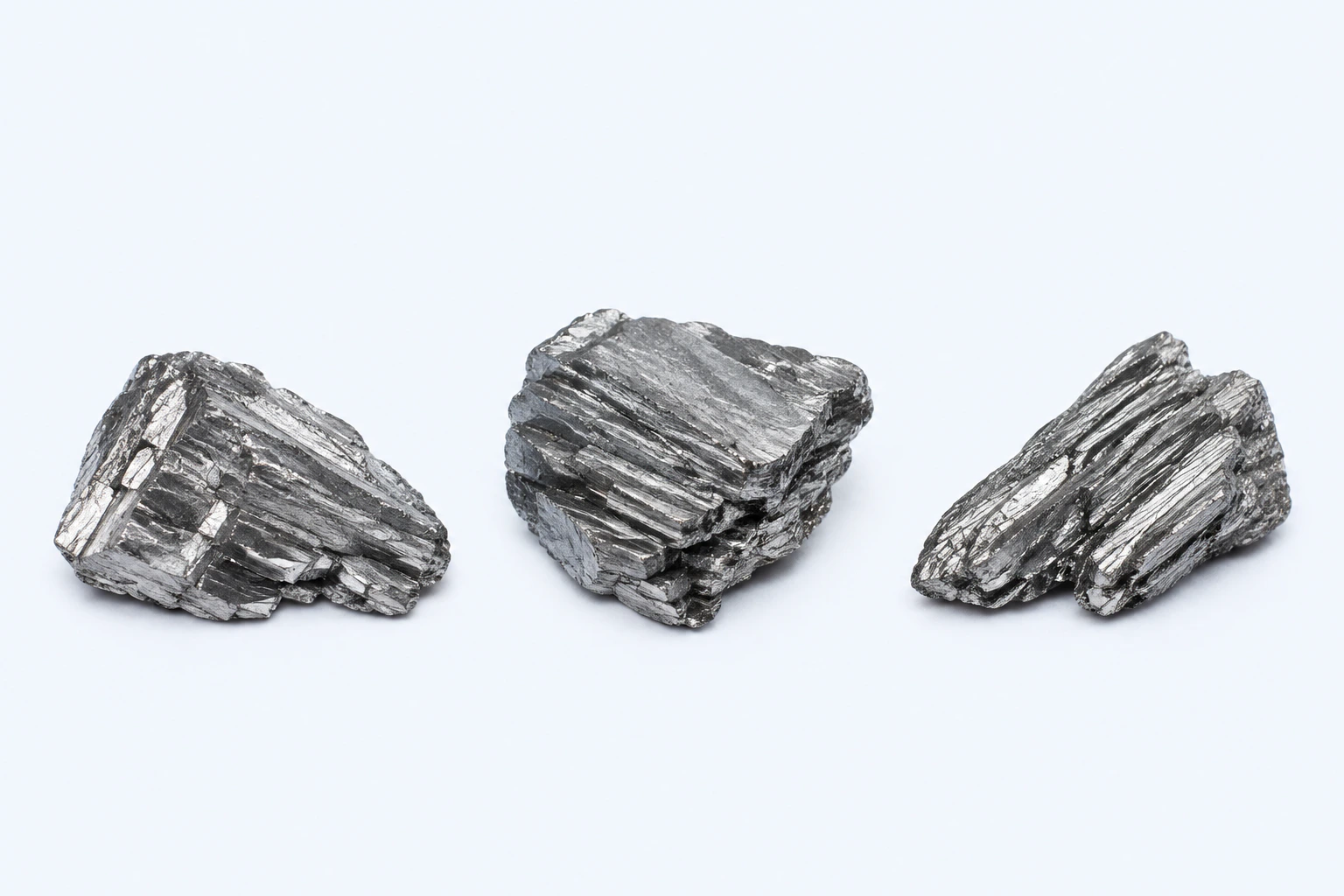
Gray elemental arsenic (As), shown as three representative steel-gray brittle crystalline fragments. Form and surface vary with purity, allotrope, processing, and oxidation; this is not ore, analytical reference material, or a photograph.
Scientific media record2 verified identifiers
- Subject
- Arsenicelement
- Identifiers
- Atomic number 33PubChem CID:5359596
- Review
- Editorial review completeIdentifiers authority-verified · Accessibility validated · · arsenic|arsenic-technical-specimen-v1.webp
- Digital source
- Trained-algorithmic mediaCreated with a trained generative algorithm and reviewed by WikiBiome for subject identity, scientific framing, identifiers, provenance, and accessibility.
- Scientific basis
- Arsenic — PubChem ElementArsenic, PubChem CID 5359596
- License
- CC BY-SA 4.0Created
Arsenic is a metalloid and potent carcinogen (IARC Group 1) that ranks among the most widespread environmental toxicants affecting human health. An estimated 225 million people worldwide are chronically exposed through contaminated drinking water alone.[1]Effects of Heavy Metals on Gut Barrier Integrity and Gut MicrobiotaSweta Ghosh, Syam P. Nukavarpu, Venkatakrishna Rao Jala · 2024Open reference 1 ↓
Unlike many Heavy Metals whose toxicity is primarily direct, arsenic's health effects are increasingly understood to be mediated through a bidirectional relationship with the Gut Microbiome: the microbiome transforms arsenic into species of varying toxicity, while arsenic reshapes microbial communities in ways that compound its harm.[2]Arsenic and the gastrointestinal tract microbiomeMcDermott TR, Stolz JF, Oremland RS · 2020Open reference 2 ↓[3]Gut Microbiota: A Target for Heavy Metal Toxicity and a Probiotic Protective StrategyHui Duan, Leilei Yu, Fengwei Tian et al. · 2020Open reference 3 ↓
What sets arsenic apart from other toxic metals is a methylation paradox—the same metabolic pathway that facilitates excretion also generates intermediates (particularly MMA(III)) that are more reactive and potentially more carcinogenic than the parent inorganic compound.[4]Genetic and Epigenetic Mechanisms in Metal Carcinogenesis and Cocarcinogenesis: Nickel, Arsenic, and ChromiumKonstantin Salnikov, Anatoly Zhitkovich · 2008Open reference 4 ↓[5]Toxicity, Mechanism and Health Effects of Some Heavy MetalsMonisha Jaishankar, Tenzin Tseten, Naresh Anbalagan et al. · 2014Open reference 5 ↓
This paradox plays out both in host tissues and within the gut microbiome, where microbial arsenic methyltransferases (arsM) produce these same dangerous intermediates.[2]Arsenic and the gastrointestinal tract microbiomeMcDermott TR, Stolz JF, Oremland RS · 2020Open reference 2 ↓
Evidence map76 cited passagesInspect provenance +
Arsenic is a metalloid and potent carcinogen (IARC Group 1) that ranks among the most widespread environmental toxicants affecting human health. An estimated 225 million people worldwide are chronically exposed through contaminated drinking water alone. Unlike many heavy metals whose toxicity is primarily direct, arsenic's health effects are increasingly und
What sets arsenic apart from other toxic metals is a methylation paradox—the same metabolic pathway that facilitates excretion also generates intermediates (particularly MMA(III)) that are more reactive and potentially more carcinogenic than the parent inorganic compound,. This paradox plays out both in host tissues and within the gut microbiome, where mic
Arsenic exists in two primary inorganic oxidation states: trivalent arsenite (As(III)) and pentavalent arsenate (As(V)). As(III) is the more toxic form due to greater chemical reactivity and easier cellular entry. Organic arsenic species (arsenobetaine, arsenosugars) found primarily in seafood are considered relatively non-toxic.
The metabolic pathway follows: inorganic As—MMA (monomethylarsonic acid)—DMA (dimethylarsinic acid), with methylation consuming S-adenosylmethionine (SAM) as the methyl donor. This SAM depletion reduces the availability of methyl groups for DNA and histone methylation, creating a direct link between arsenic metabolism and epigenetic disruption.
Arsenic shares toxicity pathways with lead, cadmium, chromium, and mercury—all five metals converge on ROS generation, antioxidant defense weakening, enzyme inactivation, and oxidative stress. However, arsenic has distinctive mechanisms: it inhibits pyruvate dehydrogenase (blocking the TCA cycle by binding vicinal dithiols), and arsenate mimics phosphate t
Arsenite binds directly to thiol groups on glutathione (As-SG conjugation) and inhibits glutathione reductase, collapsing the GSH/GSSG ratio. This is one of the earliest events in arsenic toxicity and explains why individuals with genetically lower GSH synthetic capacity are more susceptible. GSH depletion is a mechanism shared across nearly every toxic heav
Arsenic produces both hypo- and hypermethylation of DNA depending on dose, duration, and tissue. The mechanism is SAM depletion: because arsenic methylation consumes SAM, less is available for normal DNA and histone methylation. Low dietary methionine or folate exacerbates these effects. Arsenic also suppresses GLUT4 expression and upregulates IL-6, linking
Arsenic's carcinogenic mechanisms center on increased cellular proliferation and epigenetic disruption rather than direct DNA damage—distinguishing it from genotoxic metals like chromium. Key pathways include:
Signal transduction activation: EGFR and ERK activation; Cyclin D1 upregulation even at low doses
p53 disruption: low concentrations downregulate p21 via p53 interference
NF-kB activation: low-dose arsenic activates NF-kB (unlike high doses which inhibit it), driving tumor promotion
DNA repair inhibition: arsenic inhibits nucleotide excision repair (NER) and base excision repair (BER), making it a potent cocarcinogen with UV radiation. DNA adduct 8-OHdG is elevated in exposed populations
Proinflammatory signaling: TNF-alpha, IL-6, IL-8, IL-12 are elevated while IL-10 is decreased in arsenic-exposed populations
IARC classifies inorganic arsenic compounds as Group 1 carcinogens, with established links to cancers of the skin, lung, bladder, kidney, and liver,. Arsenic is additionally elevated in thyroid cancer tissue alongside Cd, Cr, Cu, Pb, and Se.
Arsenic targets multiple organ systems,:
Nervous system: sensorimotor neuropathy; arsenic activates p38 and JNK3 MAP kinases inducing neuronal apoptosis
Drinking water contamination is the primary exposure route globally. Bangladesh and West Bengal (India) represent the largest affected populations, while Chilean northern regions provide some of the clearest epidemiological exposure-cancer data. Surface water use is independently associated with chronic kidney disease of unknown cause (CKDu) (OR 3.178, p=0.0
Rice rivals drinking water as a source of inorganic arsenic exposure in U.S. and Asian populations. Brown rice contains approximately 80% more inorganic arsenic than white rice because the metalloid concentrates in the bran and germ layers removed during refining—FDA averages: white rice 92 ppb, brown rice 154 ppb. This creates a counterintuitive risk: the
Arsenic speciation analysis of commercial rice confirms that AsIII dominates, followed by DMA then AsV—meaning the most bioactive and toxic species is the predominant form in rice. All 30 rice samples tested in one Malaysian study exceeded the target hazard quotient (THQ 1) and the 10^-3 lifetime cancer risk threshold. Rice grown in Southern U.S. states (4
Arsenic contamination in paddy soils is itself a driver of antibiotic resistance gene (ARG) proliferation: in heavily polluted Chinese paddy soils, arsenic was the predominant factor shaping ARG distribution, exerting a stronger effect than cadmium, with 119 unique ARGs detected. This means arsenic-contaminated rice production environments are simultaneously
Infants face disproportionate exposure due to low body weight. Arsenic is detectable in all infant formulas tested, with total As ranging from 2.2 to 12.6 ng/g; non-dairy formulas contain significantly more than dairy-based formulas. Arsenic in formula is almost exclusively inorganic—the more toxic form. A 3.5-month-old consuming standard daily formula vol
Weaning to solid foods triggers a dramatic increase in arsenic exposure: paired urine samples from 15 New Hampshire Birth Cohort infants showed a 3.8-fold increase in urinary arsenic species between 4 and 6 months of age, with rice cereal consumption showing the strongest correlation (rho=0.90, p=0.03 for inorganic As). Breastfeeding is inversely associated
The relationship between arsenic and the gut microbiome is bidirectional: arsenic reshapes microbial communities while the microbiome determines arsenic's fate, mobility, and toxicity in the body,. This section covers what is arguably the most important aspect of arsenic biology missing from conventional toxicology—and entirely absent from Wikipedia.
The GIT microbiome possesses a sophisticated arsenal of arsenic-transforming genes:
Showing 24 of 76 evidence-bearing passages. Every remaining citation is still indexed in the reference record below.
Contents
1. Overview2. Biological Roles3. Dietary and Environmental Sources4. Microbiome Interactions5. Nutritional Immunity6. Conditions Associated7. Key Studies8. Open Questions9. Cross-ReferencesOverview#
Arsenic exists in two primary inorganic oxidation states: trivalent arsenite (As(III)) and pentavalent arsenate (As(vanadium (V))). As(III) is the more toxic form due to greater chemical reactivity and easier cellular entry.[6]Su 2023 — Arsenic in brown rice: do the benefits outweigh the risks?Lihchyun Joseph Su, Tung-Chin Chiang, Sarah N. O'Connor · 2023Open reference 6 ↓
Organic arsenic species (arsenobetaine, arsenosugars) found primarily in seafood are considered relatively non-toxic.[7]Arsenic concentration and speciation in infant formulas and first foodsJackson BP, Taylor VF, Punshon T et al. · 2012Open reference 7 ↓
The metabolic pathway follows: inorganic As --> MMA (monomethylarsonic acid) --> DMA (dimethylarsinic acid), with methylation consuming S-adenosylmethionine (SAM) as the methyl donor.[4]Genetic and Epigenetic Mechanisms in Metal Carcinogenesis and Cocarcinogenesis: Nickel, Arsenic, and ChromiumKonstantin Salnikov, Anatoly Zhitkovich · 2008Open reference 4 ↓
This SAM depletion reduces the availability of methyl groups for DNA and histone methylation, creating a direct link between arsenic metabolism and epigenetic disruption.[4]Genetic and Epigenetic Mechanisms in Metal Carcinogenesis and Cocarcinogenesis: Nickel, Arsenic, and ChromiumKonstantin Salnikov, Anatoly Zhitkovich · 2008Open reference 4 ↓
Arsenic shares toxicity pathways with Lead, Cadmium, Chromium, and Mercury—all five metals converge on ROS generation, antioxidant defense weakening, enzyme inactivation, and Oxidative Stress.[8]Toxic Mechanisms of Five Heavy Metals: Mercury, Lead, Chromium, Cadmium, and ArsenicBalali-Mood M, Naseri K, Tahergorabi Z et al. · 2021Open reference 8 ↓
However, arsenic has distinctive mechanisms: it inhibits pyruvate dehydrogenase (blocking the TCA cycle by binding vicinal dithiols), and arsenate mimics phosphate to uncouple substrate-level phosphorylation (arsenolysis).[5]Toxicity, Mechanism and Health Effects of Some Heavy MetalsMonisha Jaishankar, Tenzin Tseten, Naresh Anbalagan et al. · 2014Open reference 5 ↓
Biological Roles#
Arsenic has no known essential biological function in humans. Its toxicity operates through several convergent mechanisms:
Glutathione Depletion#
Arsenite binds directly to thiol groups on Glutathione (GSH) (As-SG conjugation) and inhibits glutathione reductase, collapsing the GSH/GSSG ratio.[5]Toxicity, Mechanism and Health Effects of Some Heavy MetalsMonisha Jaishankar, Tenzin Tseten, Naresh Anbalagan et al. · 2014Open reference 5 ↓
This is one of the earliest events in arsenic toxicity and explains why individuals with genetically lower GSH synthetic capacity are more susceptible.[5]Toxicity, Mechanism and Health Effects of Some Heavy MetalsMonisha Jaishankar, Tenzin Tseten, Naresh Anbalagan et al. · 2014Open reference 5 ↓
GSH depletion is a mechanism shared across nearly every toxic heavy metal, but arsenic's direct thiol-binding affinity makes it particularly potent.[8]Toxic Mechanisms of Five Heavy Metals: Mercury, Lead, Chromium, Cadmium, and ArsenicBalali-Mood M, Naseri K, Tahergorabi Z et al. · 2021Open reference 8 ↓
Epigenetic Disruption#
Arsenic produces both hypo- and hypermethylation of DNA depending on dose, duration, and tissue.[4]Genetic and Epigenetic Mechanisms in Metal Carcinogenesis and Cocarcinogenesis: Nickel, Arsenic, and ChromiumKonstantin Salnikov, Anatoly Zhitkovich · 2008Open reference 4 ↓ The mechanism is SAM depletion: because arsenic methylation consumes SAM, less is available for normal DNA and histone methylation. Low dietary methionine or folate exacerbates these effects.[4]Genetic and Epigenetic Mechanisms in Metal Carcinogenesis and Cocarcinogenesis: Nickel, Arsenic, and ChromiumKonstantin Salnikov, Anatoly Zhitkovich · 2008Open reference 4 ↓
Arsenic also suppresses GLUT4 expression and upregulates IL-6, linking exposure to insulin resistance and obesity.[6]Su 2023 — Arsenic in brown rice: do the benefits outweigh the risks?Lihchyun Joseph Su, Tung-Chin Chiang, Sarah N. O'Connor · 2023Open reference 6 ↓
Carcinogenesis#
Arsenic's carcinogenic mechanisms center on increased cellular proliferation and epigenetic disruption rather than direct DNA damage—distinguishing it from genotoxic metals like Chromium.[4]Genetic and Epigenetic Mechanisms in Metal Carcinogenesis and Cocarcinogenesis: Nickel, Arsenic, and ChromiumKonstantin Salnikov, Anatoly Zhitkovich · 2008Open reference 4 ↓ Key pathways include.
Signal transduction activation: EGFR and ERK activation; Cyclin D1 upregulation even at low doses.[4]Genetic and Epigenetic Mechanisms in Metal Carcinogenesis and Cocarcinogenesis: Nickel, Arsenic, and ChromiumKonstantin Salnikov, Anatoly Zhitkovich · 2008Open reference 4 ↓ p53 disruption: low concentrations downregulate p21 via p53 interference.[4]Genetic and Epigenetic Mechanisms in Metal Carcinogenesis and Cocarcinogenesis: Nickel, Arsenic, and ChromiumKonstantin Salnikov, Anatoly Zhitkovich · 2008Open reference 4 ↓ NF-kB activation: low-dose arsenic activates NF-kB (unlike high doses which inhibit it), driving tumor promotion.[4]Genetic and Epigenetic Mechanisms in Metal Carcinogenesis and Cocarcinogenesis: Nickel, Arsenic, and ChromiumKonstantin Salnikov, Anatoly Zhitkovich · 2008Open reference 4 ↓
DNA repair inhibition: arsenic inhibits nucleotide excision repair (NER) and base excision repair (BER), making it a potent cocarcinogen with UV radiation.[4]Genetic and Epigenetic Mechanisms in Metal Carcinogenesis and Cocarcinogenesis: Nickel, Arsenic, and ChromiumKonstantin Salnikov, Anatoly Zhitkovich · 2008Open reference 4 ↓ DNA adduct 8-OHdG is elevated in exposed populations.[8]Toxic Mechanisms of Five Heavy Metals: Mercury, Lead, Chromium, Cadmium, and ArsenicBalali-Mood M, Naseri K, Tahergorabi Z et al. · 2021Open reference 8 ↓
Proinflammatory signaling: TNF-alpha, IL-6, IL-8, IL-12 are elevated while IL-10 is decreased in arsenic-exposed populations.[8]Toxic Mechanisms of Five Heavy Metals: Mercury, Lead, Chromium, Cadmium, and ArsenicBalali-Mood M, Naseri K, Tahergorabi Z et al. · 2021Open reference 8 ↓
IARC classifies inorganic arsenic compounds as Group 1 carcinogens, with established links to cancers of the skin, lung, bladder, kidney, and liver.[6]Su 2023 — Arsenic in brown rice: do the benefits outweigh the risks?Lihchyun Joseph Su, Tung-Chin Chiang, Sarah N. O'Connor · 2023Open reference 6 ↓[4]Genetic and Epigenetic Mechanisms in Metal Carcinogenesis and Cocarcinogenesis: Nickel, Arsenic, and ChromiumKonstantin Salnikov, Anatoly Zhitkovich · 2008Open reference 4 ↓
Arsenic is additionally elevated in thyroid cancer tissue alongside cadmium (Cd), chromium (Cr), copper (Cu), lead (Pb), and selenium (Se).[9]Recent advances in the application of metallomics in diagnosis and prognosis of human cancerYan Zhang, Jie He, Jiao Jin et al. · 2022Open reference 9 ↓
Organ Toxicity#
Arsenic targets multiple organ systems.[5]Toxicity, Mechanism and Health Effects of Some Heavy MetalsMonisha Jaishankar, Tenzin Tseten, Naresh Anbalagan et al. · 2014Open reference 5 ↓[8]Toxic Mechanisms of Five Heavy Metals: Mercury, Lead, Chromium, Cadmium, and ArsenicBalali-Mood M, Naseri K, Tahergorabi Z et al. · 2021Open reference 8 ↓ Skin: chronic arsenicosis—hyperpigmentation, keratoses, Bowen's disease, squamous cell carcinoma. Lung: cancer from inhalation exposure; arsenic inhibits DNA repair in bronchial epithelium.
Liver: hepatic angiosarcoma, cirrhosis, non-cirrhotic portal hypertension.
Kidney: proximal tubular damage; arsenic accumulates in renal cortex. Bladder: transitional cell carcinoma—one of the strongest epidemiological associations for any environmental carcinogen. Nervous system: sensorimotor neuropathy; arsenic activates p38 and JNK3 MAP kinases inducing neuronal apoptosis.[8]Toxic Mechanisms of Five Heavy Metals: Mercury, Lead, Chromium, Cadmium, and ArsenicBalali-Mood M, Naseri K, Tahergorabi Z et al. · 2021Open reference 8 ↓
Dietary and Environmental Sources#
Drinking Water#
Drinking water contamination is the primary exposure route globally. Bangladesh and West Bengal (India) represent the largest affected populations, while Chilean northern regions provide some of the clearest epidemiological exposure-cancer data.[4]Genetic and Epigenetic Mechanisms in Metal Carcinogenesis and Cocarcinogenesis: Nickel, Arsenic, and ChromiumKonstantin Salnikov, Anatoly Zhitkovich · 2008Open reference 4 ↓
Surface water use is independently associated with chronic kidney disease of unknown cause (CKDu) (OR 3.178, p=0.045).[10]Heavy Metal Association with Chronic Kidney Disease of Unknown Cause in Central India - Results from a Case-Control StudyMahendra Atlani, Ashok Kumar, Rajesh Ahirwar et al. · 2024Open reference 10 ↓
In Sri Lanka's CKDu-endemic regions, household well water contains variable levels of heavy metals including arsenic alongside cyanotoxin-producing Microcystis, suggesting multiple interacting environmental exposures drive kidney damage.[11]McDonough et al. 2020 — Water Chemistry and Microbiome of Household Wells in CKDu-Endemic Sri LankaLiza K. McDonough, Karina T. Meredith, Chandima Nikagolla et al. · 2020Open reference 11 ↓
Rice and Grain Products#
Rice rivals drinking water as a source of inorganic arsenic exposure in U.S. and Asian populations.[6]Su 2023 — Arsenic in brown rice: do the benefits outweigh the risks?Lihchyun Joseph Su, Tung-Chin Chiang, Sarah N. O'Connor · 2023Open reference 6 ↓
Brown rice contains approximately 80% more inorganic arsenic than white rice because the metalloid concentrates in the bran and germ layers removed during refining—FDA averages: white rice 92 ppb, brown rice 154 ppb.[6]Su 2023 — Arsenic in brown rice: do the benefits outweigh the risks?Lihchyun Joseph Su, Tung-Chin Chiang, Sarah N. O'Connor · 2023Open reference 6 ↓
This creates a counterintuitive risk: the "healthier" whole grain carries the greater metal burden.
Arsenic speciation analysis of commercial rice confirms that AsIII dominates, followed by DMA then AsV—meaning the most bioactive and toxic species is the predominant form in rice.[12]Navaretnam 2025 — Arsenic speciation using HPLC-ICP-MS in white and brown rice and health risk assessmentRaneesha Navaretnam, Ahmad Zaharin Aris, Muhammad Faizan A. Shukor et al. · 2025Open reference 12 ↓
All 30 rice samples tested in one Malaysian study exceeded the target hazard quotient (THQ > 1) and the 10^-3 lifetime cancer risk threshold.[12]Navaretnam 2025 — Arsenic speciation using HPLC-ICP-MS in white and brown rice and health risk assessmentRaneesha Navaretnam, Ahmad Zaharin Aris, Muhammad Faizan A. Shukor et al. · 2025Open reference 12 ↓
Rice grown in Southern U.S. states (>47% of the U.S. market) has the highest arsenic content compared to California or Asian imports.[6]Su 2023 — Arsenic in brown rice: do the benefits outweigh the risks?Lihchyun Joseph Su, Tung-Chin Chiang, Sarah N. O'Connor · 2023Open reference 6 ↓
Arsenic contamination in paddy soils is itself a driver of antibiotic resistance gene (ARG) proliferation: in heavily polluted Chinese paddy soils, arsenic was the predominant factor shaping ARG distribution, exerting a stronger effect than cadmium, with 119 unique ARGs detected.[13]Arsenic and cadmium as predominant factors shaping the distribution patterns of antibiotic resistance genes in polluted paddy soilsZhao X, Shen JP, Zhang LM et al. · 2020Open reference 13 ↓
This means arsenic-contaminated rice production environments are simultaneously generating antibiotic-resistant microbes that can enter the food chain.
Infant Foods#
Infants face disproportionate exposure due to low body weight. Arsenic is detectable in all infant formulas tested, with total As ranging from 2.2 to 12.6 ng/g; non-dairy formulas contain significantly more than dairy-based formulas.[7]Arsenic concentration and speciation in infant formulas and first foodsJackson BP, Taylor VF, Punshon T et al. · 2012Open reference 7 ↓
Arsenic in formula is almost exclusively inorganic—the more toxic form.[7]Arsenic concentration and speciation in infant formulas and first foodsJackson BP, Taylor VF, Punshon T et al. · 2012Open reference 7 ↓
A 3.5-month-old consuming standard daily formula volumes could be exposed to 0.036-0.21 ug arsenic (As)/kg/day, with the upper range exceeding the adult safe drinking water limit.[7]Arsenic concentration and speciation in infant formulas and first foodsJackson BP, Taylor VF, Punshon T et al. · 2012Open reference 7 ↓
Weaning to solid foods triggers a dramatic increase in arsenic exposure: paired urine samples from 15 New Hampshire Birth Cohort infants showed a 3.8-fold increase in urinary arsenic species between 4 and 6 months of age, with rice cereal consumption showing the strongest correlation (rho=0.90, p=0.03 for inorganic arsenic).[14]Signes-Pastor 2018 — Infants' dietary arsenic exposure during transition to solid foodAntonio J. Signes-Pastor, Kathryn L. Cottingham, Manus Carey et al. · 2018Open reference 14 ↓
Breastfeeding is inversely associated with urinary arsenic species (rho=-0.71, p=0.003).[14]Signes-Pastor 2018 — Infants' dietary arsenic exposure during transition to solid foodAntonio J. Signes-Pastor, Kathryn L. Cottingham, Manus Carey et al. · 2018Open reference 14 ↓
Microbiome Interactions#
The relationship between arsenic and the gut microbiome is bidirectional: arsenic reshapes microbial communities while the microbiome determines arsenic's fate, mobility, and toxicity in the body.[2]Arsenic and the gastrointestinal tract microbiomeMcDermott TR, Stolz JF, Oremland RS · 2020Open reference 2 ↓[3]Gut Microbiota: A Target for Heavy Metal Toxicity and a Probiotic Protective StrategyHui Duan, Leilei Yu, Fengwei Tian et al. · 2020Open reference 3 ↓
This section covers what is arguably the most important aspect of arsenic biology missing from conventional toxicology—and entirely absent from Wikipedia.
Microbial Arsenic Biotransformation#
The GIT microbiome possesses a sophisticated arsenal of arsenic-transforming genes.[2]Arsenic and the gastrointestinal tract microbiomeMcDermott TR, Stolz JF, Oremland RS · 2020Open reference 2 ↓
Resistance/extrusion (ars operon: arsR, arsB/acr3, arsC, arsA, arsD, arsH, arsJ, arsK, arsN): the most common microbial response, pumping arsenic out of bacterial cells. This is neutral with respect to host toxicity—it protects the bacterium without helping the host.
Methylation (arsM): microbial arsenic methyltransferases can produce more toxic trivalent methylated species (MAs(III), DMAs(III), TMAs(III)), potentially worsening host exposure.[2]Arsenic and the gastrointestinal tract microbiomeMcDermott TR, Stolz JF, Oremland RS · 2020Open reference 2 ↓ This mirrors the host methylation paradox at the microbial level.
Oxidation (aioAB/arxAB): arsenite oxidases convert toxic As(III) to less toxic As(vanadium (V)). Notably, arxAB can function under the anaerobic conditions prevalent in the large intestine.[2]Arsenic and the gastrointestinal tract microbiomeMcDermott TR, Stolz JF, Oremland RS · 2020Open reference 2 ↓
Dissimilatory reduction (arrAB): certain bacteria use As(vanadium) as a terminal electron acceptor under anaerobic conditions. A Citrobacter sp. from termite hindgut displays As(vanadium)-dependent growth.[2]Arsenic and the gastrointestinal tract microbiomeMcDermott TR, Stolz JF, Oremland RS · 2020Open reference 2 ↓
Thiolation: sulfate-reducing bacteria including Desulfovibrio produce thiolated arsenicals (thioarsenates, methylthioarsenates) detected in mammalian urine, blood, and saliva—an under-explored transformation pathway.[2]Arsenic and the gastrointestinal tract microbiomeMcDermott TR, Stolz JF, Oremland RS · 2020Open reference 2 ↓
Each compartment of the GIT offers different conditions for these transformations: the oral cavity (aerobic, pH 6.2-7.6), stomach (microaerobic, pH 1.5-3.5), small intestine (microaerobic to anaerobic, pH 6-7.4), and large intestine (anaerobic, pH 5.7-6.7) each host distinct microbial communities with different arsenic-transforming capacities.[2]Arsenic and the gastrointestinal tract microbiomeMcDermott TR, Stolz JF, Oremland RS · 2020Open reference 2 ↓
The Microbiome as Shield: Faecalibacterium and Arsenic Protection#
A landmark study in Nature Communications demonstrated that the gut microbiome is required for full protection against acute arsenic toxicity.[15]The gut microbiome is required for full protection against acute arsenic toxicity in mouse modelsCoryell M, McAlpine M, Pinkham NV et al. · 2018Open reference 15 ↓ Key findings.
Antibiotic-treated and germ-free mice excrete less arsenic in stool and accumulate more in organs (liver, spleen, heart, lung) compared to controls (p<0.0001 at 25 ppm iAs(vanadium (V))).[15]The gut microbiome is required for full protection against acute arsenic toxicity in mouse modelsCoryell M, McAlpine M, Pinkham NV et al. · 2018Open reference 15 ↓
Mice lacking the arsenic detoxification enzyme As3mt are hypersensitive to arsenic when germ-free, with significantly lower survival (p<0.0001).[15]The gut microbiome is required for full protection against acute arsenic toxicity in mouse modelsCoryell M, McAlpine M, Pinkham NV et al. · 2018Open reference 15 ↓
Human fecal microbiota transplants protect germ-free As3mt-KO mice from arsenic-induced mortality (p<0.0014), but protection varies between donors.[15]The gut microbiome is required for full protection against acute arsenic toxicity in mouse modelsCoryell M, McAlpine M, Pinkham NV et al. · 2018Open reference 15 ↓
Higher microbiome alpha diversity (Shannon and inverse Simpson indices) correlates significantly with longer survival under arsenic exposure.[15]The gut microbiome is required for full protection against acute arsenic toxicity in mouse modelsCoryell M, McAlpine M, Pinkham NV et al. · 2018Open reference 15 ↓
Faecalibacterium prausnitzii was identified as specifically protective: E. coli + F. prausnitzii bi-colonization significantly increased survival compared to E. coli alone (p=0.0035).[15]The gut microbiome is required for full protection against acute arsenic toxicity in mouse modelsCoryell M, McAlpine M, Pinkham NV et al. · 2018Open reference 15 ↓
This finding reframes arsenic toxicity: inter-individual variation in arsenicosis symptoms among people sharing similar exposures may be partly explained by differences in gut microbiome composition.[2]Arsenic and the gastrointestinal tract microbiomeMcDermott TR, Stolz JF, Oremland RS · 2020Open reference 2 ↓
The microbiome acts as a protective buffer, facilitating fecal arsenic excretion and reducing organ accumulation.[15]The gut microbiome is required for full protection against acute arsenic toxicity in mouse modelsCoryell M, McAlpine M, Pinkham NV et al. · 2018Open reference 15 ↓
Arsenic-Induced Dysbiosis#
Arsenic exposure consistently disrupts gut microbial community structure across multiple model systems.
Mouse models: 4 weeks of 10 ppm arsenic alters beta-diversity with sex-dependent changes; increases Erysipelotrichaceae and decreases Clostridiaceae; perturbs bile acid, fatty acid, and amino acid metabolism.[16]Gut dysbiosis in animals due to environmental chemical exposuresRosenfeld CS · 2017Open reference 16 ↓[3]Gut Microbiota: A Target for Heavy Metal Toxicity and a Probiotic Protective StrategyHui Duan, Leilei Yu, Fengwei Tian et al. · 2020Open reference 3 ↓
Arsenic-induced changes are both sex-dependent and genotype-dependent (wild-type vs. IL10-/- mice show different patterns).[16]Gut dysbiosis in animals due to environmental chemical exposuresRosenfeld CS · 2017Open reference 16 ↓
Rat models: 5-day oral gavage of sodium arsenite produces significant dose-dependent effects on microbiota composition (PERMANOVA), with 17 genera significantly affected and reduced Shannon diversity.
Iron complex transport system genes are significantly overrepresented after arsenic treatment, suggesting a shared iron-importing response among surviving microbes.[17]Exposure to toxic metals triggers unique responses from the rat gut microbiotaRichardson JB, Dancy BCR, Horton CL et al. · 2018Open reference 17 ↓
Zebrafish: even at 10 ppb (the WHO drinking water limit), arsenic significantly alters microbial composition in developing larvae. At 100 ppb, class 1 integron (int1) abundance increases 9-fold, indicating arsenic promotes horizontal transfer of antimicrobial resistance genes.
Arsenic exposure explained 54.7% of variance in overall bacterial composition.[18]Exposure to arsenic alters the microbiome of larval zebrafishDahan D, Jude BA, Lamendella R et al. · 2018Open reference 18 ↓
Systematic review (n=3000+): across all studies reviewed, arsenic consistently disrupts gut microbiota. Collinsella is enriched as a pathobiont across multiple metal exposures, while Desulfovibrio is enriched and may contribute to hydrogen sulfide production and further barrier damage.[19]Rezazadegan et al. 2025 — Heavy Metals and Gut Microbiota: A Systematic ReviewFatemeh Rezazadegan, Maryam Mahmoudi, Seyed Mohammad Mousavi · 2025Open reference 19 ↓
Human infant studies: in 204 U.S. infants, arsenic levels were associated with 15 genera including Bacteroidetes and Bifidobacterium.[20]Influence of Toxic Metal Exposure on the Gut Microbiota (Review)Federica Giambo, Sebastiano Italia, Michele Teodoro et al. · 2021Open reference 20 ↓
The metabolic consequences are profound: arsenic exposure increases Bacteroidetes and Bilophila, perturbs bile acid homeostasis and amino acid metabolism,[21]Toxic and Essential Metals: Metabolic Interactions with the Gut Microbiota and Health ImplicationsQinheng Zhu, Boyan Chen, Fu Zhang et al. · 2024Open reference 21 ↓ and affects bile acid molecular families and Butyrate-producing bacteria.[22]Heavy Metal Exposure Causes Changes in the Metabolic Health-Associated Gut Microbiome and MetabolitesXuanji Li, Asker Daniel Brejnrod, Madeleine Ernst et al. · 2019Open reference 22 ↓
In mice receiving environmentally relevant arsenic (50 ppm), the metabolome was significantly perturbed (5.1% of variance, p=0.046), with bile acid-related molecular families particularly affected.[22]Heavy Metal Exposure Causes Changes in the Metabolic Health-Associated Gut Microbiome and MetabolitesXuanji Li, Asker Daniel Brejnrod, Madeleine Ernst et al. · 2019Open reference 22 ↓
Gut Barrier Disruption#
Arsenic directly disrupts the intestinal epithelial barrier. Chronic exposure disrupts colonic epithelial structure, increases paracellular transport, and induces proinflammatory cytokines (IL-6, IL-8, TNF-alpha).[1]Effects of Heavy Metals on Gut Barrier Integrity and Gut MicrobiotaSweta Ghosh, Syam P. Nukavarpu, Venkatakrishna Rao Jala · 2024Open reference 1 ↓
Approximately 60% of ingested heavy metals are absorbed in the intestine, causing oxidative stress and intestinal barrier damage.[23]Heavy Metal-Gut Microbiota Interactions: Probiotics Modulation and Biosensors DetectionLiliana Anchidin-Norocel, Oana C. Iatcu, Andrei Lobiuc et al. · 2025Open reference 23 ↓ Arsenic exposure increases pathogenic bacteria and decreases Firmicutes, compounding barrier damage through loss of SCFA-producing commensals.[23]Heavy Metal-Gut Microbiota Interactions: Probiotics Modulation and Biosensors DetectionLiliana Anchidin-Norocel, Oana C. Iatcu, Andrei Lobiuc et al. · 2025Open reference 23 ↓
Notably, Urolithin A (UroA), a gut microbial metabolite of polyphenols, has been shown to protect colon epithelial cells against arsenic-induced oxidative stress and barrier dysfunction[1]Effects of Heavy Metals on Gut Barrier Integrity and Gut MicrobiotaSweta Ghosh, Syam P. Nukavarpu, Venkatakrishna Rao Jala · 2024Open reference 1 ↓—another illustration of how microbial metabolic capacity modulates arsenic's impact.
Prenatal Microbiome Programming#
Arsenic exposure during pregnancy programs the offspring gut microbiome with persistent effects. In utero exposure in mice significantly altered offspring gut microbial community composition, with a significant decrease in Firmicutes and dose-dependent effects at both low (0.04 mg/kg) and high (0.4 mg/kg) doses.[24]Shukla et al. 2023 — Analysis of Gut Bacteriome of In Utero Arsenic-Exposed MiceShukla S, Srivastava A, Verma D et al. · 2023Open reference 24 ↓
Even the lower dose—approximating environmental exposure levels in arsenic-endemic regions—produced measurable changes, suggesting no safe threshold for prenatal effects.[24]Shukla et al. 2023 — Analysis of Gut Bacteriome of In Utero Arsenic-Exposed MiceShukla S, Srivastava A, Verma D et al. · 2023Open reference 24 ↓
Functional analysis (PICRUSt) revealed shifts in genes involved in insulin signaling and NAFLD pathways, suggesting arsenic-induced microbiome changes have metabolic consequences relevant to later-life disease.[24]Shukla et al. 2023 — Analysis of Gut Bacteriome of In Utero Arsenic-Exposed MiceShukla S, Srivastava A, Verma D et al. · 2023Open reference 24 ↓
In zebrafish, prenatal arsenic exposure alters the developing gut microbiome.[18]Exposure to arsenic alters the microbiome of larval zebrafishDahan D, Jude BA, Lamendella R et al. · 2018Open reference 18 ↓
A prospective cohort of 146 mother-infant pairs found that high levels of arsenic exposure may induce enrichment of antibiotic resistance genes (ARGs) in infant gut.[25]Xiong 2025 — Prenatal Exposure to Trace Elements Impacts Mother-Infant Gut Microbiome, Metabolome and Resistome During the First Year of LifeShimao Xiong, Bing Xie, Naiyi Yin et al. · 2025Open reference 25 ↓
This prenatal programming model means arsenic's microbiome effects begin before birth, potentially establishing a dysbiotic trajectory that predisposes to metabolic, inflammatory, and potentially neurological disease.
Co-selection of Antibiotic Resistance#
Arsenic drives proliferation of antibiotic resistance through co-selection—three molecular mechanisms by which metal exposure selects for antibiotic-resistant organisms:[26]Baker-Austin 2006 — Co-selection of Antibiotic and Metal ResistanceBaker-Austin C, Wright MS, Stepanauskas R et al. · 2006Open reference 26 ↓
- cobalt (Co)-resistance: arsenic resistance genes (arsC, arsB) and antibiotic resistance genes physically linked on the same mobile genetic element
- Cross-resistance: shared efflux pumps that expel both arsenic and antibiotics (arsenic is listed among metals conferring resistance via reduced membrane permeability)[26]Baker-Austin 2006 — Co-selection of Antibiotic and Metal ResistanceBaker-Austin C, Wright MS, Stepanauskas R et al. · 2006Open reference 26 ↓
- cobalt-regulatory mechanisms: exposure to arsenic transcriptionally activates resistance to unrelated toxicants
In CKD patients, lead and arsenic resistance were the most prevalent metal resistance phenotypes among culturable gut bacteria, with co-resistance to antibiotics detected in the same isolates—meaning arsenic exposure may inadvertently select for antibiotic-resistant organisms in the gut.[27]Miranda 2022 — Metal(loid) and Antibiotic Resistance in CKD Gut BacteriaMiranda, Rojas, Geisse et al. · 2022Open reference 27 ↓
The arsC (arsenic reduction) gene was detected across isolates from CKD patients.[27]Miranda 2022 — Metal(loid) and Antibiotic Resistance in CKD Gut BacteriaMiranda, Rojas, Geisse et al. · 2022Open reference 27 ↓
Unlike antibiotics, metals are not subject to degradation and represent a long-term selection pressure that persists indefinitely in the environment.[26]Baker-Austin 2006 — Co-selection of Antibiotic and Metal ResistanceBaker-Austin C, Wright MS, Stepanauskas R et al. · 2006Open reference 26 ↓ This makes arsenic-contaminated environments—including agricultural soils and the human gut—reservoirs of antibiotic resistance.
Nutritional Immunity#
The relationship between arsenic and host nutritional immunity is less well-characterized than for redox-active metals like Iron or Zinc, but several patterns emerge.
Heavy metals, including arsenic, accumulated significantly more in germ-free mice organs compared to conventional mice, demonstrating that the microbiota plays a direct role in metal clearance from the body.[1]Effects of Heavy Metals on Gut Barrier Integrity and Gut MicrobiotaSweta Ghosh, Syam P. Nukavarpu, Venkatakrishna Rao Jala · 2024Open reference 1 ↓
The gut microbiota acts as the first line of defense against arsenic through bioaccumulation, binding, and enzymatic transformation facilitating fecal excretion.[3]Gut Microbiota: A Target for Heavy Metal Toxicity and a Probiotic Protective StrategyHui Duan, Leilei Yu, Fengwei Tian et al. · 2020Open reference 3 ↓ Specific mechanisms include siderophore production, sulfide production by sulfate-reducing bacteria, and oxalate production.[3]Gut Microbiota: A Target for Heavy Metal Toxicity and a Probiotic Protective StrategyHui Duan, Leilei Yu, Fengwei Tian et al. · 2020Open reference 3 ↓
Arsenic treatment in rats triggers significant overrepresentation of iron complex transport system genes (ATP-binding protein, permease, substrate-binding protein), suggesting that surviving microbes upregulate iron acquisition in response to arsenic stress.[17]Exposure to toxic metals triggers unique responses from the rat gut microbiotaRichardson JB, Dancy BCR, Horton CL et al. · 2018Open reference 17 ↓
Bacteria with higher numbers of iron-importing gene orthologs are overly represented under arsenic exposure.[17]Exposure to toxic metals triggers unique responses from the rat gut microbiotaRichardson JB, Dancy BCR, Horton CL et al. · 2018Open reference 17 ↓
Iron deficiency increases arsenic (and lead and cadmium) absorption through shared intestinal transporters (DMT1/NRAMP2),[5]Toxicity, Mechanism and Health Effects of Some Heavy MetalsMonisha Jaishankar, Tenzin Tseten, Naresh Anbalagan et al. · 2014Open reference 5 ↓ meaning nutritional status directly modulates arsenic uptake.
Conditions Associated#
Cancer#
Chronic arsenic exposure is linked to cancers of the skin, lung, bladder, kidney, liver, pancreas, prostate, and digestive tract.[6]Su 2023 — Arsenic in brown rice: do the benefits outweigh the risks?Lihchyun Joseph Su, Tung-Chin Chiang, Sarah N. O'Connor · 2023Open reference 6 ↓[4]Genetic and Epigenetic Mechanisms in Metal Carcinogenesis and Cocarcinogenesis: Nickel, Arsenic, and ChromiumKonstantin Salnikov, Anatoly Zhitkovich · 2008Open reference 4 ↓[5]Toxicity, Mechanism and Health Effects of Some Heavy MetalsMonisha Jaishankar, Tenzin Tseten, Naresh Anbalagan et al. · 2014Open reference 5 ↓
The FDA expert panel estimated cancer cases would increase 148.6% if rice consumption rose from <1 serving/day to precisely 1 serving/day.[6]Su 2023 — Arsenic in brown rice: do the benefits outweigh the risks?Lihchyun Joseph Su, Tung-Chin Chiang, Sarah N. O'Connor · 2023Open reference 6 ↓ Arsenic is elevated alongside other metals in thyroid cancer tissue.[9]Recent advances in the application of metallomics in diagnosis and prognosis of human cancerYan Zhang, Jie He, Jiao Jin et al. · 2022Open reference 9 ↓
Chronic Kidney Disease#
Blood arsenic is independently associated with CKDu (chronic kidney disease of unknown cause) in central India (OR 1.013, 95% CI 1.003-1.024, p=0.014), with surface water use as a key risk factor.[10]Heavy Metal Association with Chronic Kidney Disease of Unknown Cause in Central India - Results from a Case-Control StudyMahendra Atlani, Ashok Kumar, Rajesh Ahirwar et al. · 2024Open reference 10 ↓
Parallel CKDu epidemics in Sri Lankan rice-farming regions involve multi-metal exposure through groundwater.[11]McDonough et al. 2020 — Water Chemistry and Microbiome of Household Wells in CKDu-Endemic Sri LankaLiza K. McDonough, Karina T. Meredith, Chandima Nikagolla et al. · 2020Open reference 11 ↓ In CKD patients, arsenic-resistant bacteria dominate the gut resistome.[27]Miranda 2022 — Metal(loid) and Antibiotic Resistance in CKD Gut BacteriaMiranda, Rojas, Geisse et al. · 2022Open reference 27 ↓
Metabolic Disease#
Arsenic exposure is associated with type-2 diabetes, metabolic syndrome, and obesity.[6]Su 2023 — Arsenic in brown rice: do the benefits outweigh the risks?Lihchyun Joseph Su, Tung-Chin Chiang, Sarah N. O'Connor · 2023Open reference 6 ↓ The metabolic consequences may be partly microbiome-mediated: arsenic perturbs bile acid metabolism and affects metabolic health-associated gut microbiota, with changes linked to T2DM pathways.[22]Heavy Metal Exposure Causes Changes in the Metabolic Health-Associated Gut Microbiome and MetabolitesXuanji Li, Asker Daniel Brejnrod, Madeleine Ernst et al. · 2019Open reference 22 ↓
Prenatal exposure programs offspring microbiome shifts in insulin signaling and NAFLD pathways.[24]Shukla et al. 2023 — Analysis of Gut Bacteriome of In Utero Arsenic-Exposed MiceShukla S, Srivastava A, Verma D et al. · 2023Open reference 24 ↓
Neurodevelopmental Effects#
Arsenic and/or fluoride exposure from intrauterine to adult periods in rats reduces neurobehavioral performance and causes hippocampal CA1 lesions, mediated through altered gut microbiome composition and disrupted tryptophan, GABA, and arachidonic acid metabolism.[28]Zhang 2023 — Mechanism of Learning and Memory Impairment in Rats Exposed to Arsenic and/or Fluoride Based on Microbiome and MetabolomeZhang Xiao Li, Yu Sheng Nan, Qu Ruo Di et al. · 2023Open reference 28 ↓
In children, urinary arsenic shows the strongest negative correlation with social behavior (r=-0.43, p<0.001) and is associated with disrupted microbiome-associated catecholamine precursor metabolites.[29]Krajewski 2025 -- Heavy metals, noradrenaline/adrenaline ratio, and microbiome-associated hormone precursor metabolites: biomarkers for social behaviour, ADHD symptoms, and executive function in childrenKristin Krajewski · 2025Open reference 29 ↓
Dietary heavy metals including arsenic are implicated in neurodegeneration through gut-brain axis disruption.[30]Editorial: Risk of dietary hazardous substances and impact on human microbiota: possible role in several dysbiosis phenotypesAguilera M, Lamas B, Van Pamel E et al. · 2021Open reference 30 ↓
Cardiovascular Disease#
Arsenic exposure is linked to cardiovascular disease and hypertension.[6]Su 2023 — Arsenic in brown rice: do the benefits outweigh the risks?Lihchyun Joseph Su, Tung-Chin Chiang, Sarah N. O'Connor · 2023Open reference 6 ↓ The metabolic perturbations induced by arsenic in the gut—particularly bile acid disruption—may contribute to cardiovascular risk through the microbiome-metabolome axis.[21]Toxic and Essential Metals: Metabolic Interactions with the Gut Microbiota and Health ImplicationsQinheng Zhu, Boyan Chen, Fu Zhang et al. · 2024Open reference 21 ↓
Key Studies#
| Study | Type | Key Contribution |
|---|---|---|
| [15]The gut microbiome is required for full protection against acute arsenic toxicity in mouse modelsCoryell M, McAlpine M, Pinkham NV et al. · 2018Open reference 15 ↓ | Animal model | Demonstrated microbiome is required for arsenic protection; identified F. prausnitzii as protective |
| [2]Arsenic and the gastrointestinal tract microbiomeMcDermott TR, Stolz JF, Oremland RS · 2020Open reference 2 ↓ | Expert review | Mapped all known microbial arsenic biotransformation pathways in GIT context |
| [19]Rezazadegan et al. 2025 — Heavy Metals and Gut Microbiota: A Systematic ReviewFatemeh Rezazadegan, Maryam Mahmoudi, Seyed Mohammad Mousavi · 2025Open reference 19 ↓ | Systematic review (n=3000+) | Confirmed arsenic consistently disrupts gut microbiota; identified Collinsella as cross-metal pathobiont |
| [18]Exposure to arsenic alters the microbiome of larval zebrafishDahan D, Jude BA, Lamendella R et al. · 2018Open reference 18 ↓ | Animal model | Showed Dysbiosis at WHO drinking water limit (10 ppb); 9x increase in resistance gene transfer |
| [24]Shukla et al. 2023 — Analysis of Gut Bacteriome of In Utero Arsenic-Exposed MiceShukla S, Srivastava A, Verma D et al. · 2023Open reference 24 ↓ | Animal model | Demonstrated prenatal arsenic programs offspring gut microbiome and metabolic pathways |
| [6]Su 2023 — Arsenic in brown rice: do the benefits outweigh the risks?Lihchyun Joseph Su, Tung-Chin Chiang, Sarah N. O'Connor · 2023Open reference 6 ↓ | Expert review | Quantified the brown rice arsenic paradox; linked dietary arsenic to multi-cancer risk |
| [1]Effects of Heavy Metals on Gut Barrier Integrity and Gut MicrobiotaSweta Ghosh, Syam P. Nukavarpu, Venkatakrishna Rao Jala · 2024Open reference 1 ↓ | Review | Mapped arsenic-specific gut barrier disruption mechanisms (paracellular transport, cytokine induction) |
| [13]Arsenic and cadmium as predominant factors shaping the distribution patterns of antibiotic resistance genes in polluted paddy soilsZhao X, Shen JP, Zhang LM et al. · 2020Open reference 13 ↓ | Cross-sectional | Arsenic as predominant driver of antibiotic resistance gene distribution in paddy soils |
| [14]Signes-Pastor 2018 — Infants' dietary arsenic exposure during transition to solid foodAntonio J. Signes-Pastor, Kathryn L. Cottingham, Manus Carey et al. · 2018Open reference 14 ↓ | Prospective cohort (n=15) | 3.8-fold urinary arsenic increase at weaning; rice cereal as dominant infant exposure source |
| [10]Heavy Metal Association with Chronic Kidney Disease of Unknown Cause in Central India - Results from a Case-Control StudyMahendra Atlani, Ashok Kumar, Rajesh Ahirwar et al. · 2024Open reference 10 ↓ | Case-control | Blood arsenic independently associated with CKDu (OR 1.013) |
Open Questions#
Unresolved questions identified by the current evidence record.
01Which methylated form is the proximate carcinogen?+
DMA(III) is highly reactive but transient; MMA(III) may be the most toxic arsenical intermediate,[5]Toxicity, Mechanism and Health Effects of Some Heavy MetalsMonisha Jaishankar, Tenzin Tseten, Naresh Anbalagan et al. · 2014Open reference 5 ↓ but in vivo studies are limited.
02Microbiome individuality and arsenicosis: Can gut microbiome composition predict who will develop disease from arsenic exposure?+
The inter-individual variation in microbiome-mediated protection observed by[15]The gut microbiome is required for full protection against acute arsenic toxicity in mouse modelsCoryell M, McAlpine M, Pinkham NV et al. · 2018Open reference 15 ↓ suggests this is possible but untested in human populations.
03No direct human GIT studies: Most knowledge of arsenic biotransformation in the gut is extrapolated from environmental and model organism studies; no studies have directly measured arsenic biogeochemistry within the human GIT.[2]Arsenic and the gastrointestinal tract microbiomeMcDermott TR, Stolz JF, Oremland RS · 2020Open reference 2 ↓+
The current WikiBiome record identifies this as an unresolved evidence gap.
04Prenatal programming persistence: How long do arsenic-induced microbiome changes persist in offspring—are they permanent or do they normalize?+
[24]Shukla et al. 2023 — Analysis of Gut Bacteriome of In Utero Arsenic-Exposed MiceShukla S, Srivastava A, Verma D et al. · 2023Open reference 24 ↓
05cobalt (Co)-selection clinical impact: Does the arsenic-driven enrichment of antibiotic-resistant gut bacteria translate to treatment failure in clinical settings?+
[27]Miranda 2022 — Metal(loid) and Antibiotic Resistance in CKD Gut BacteriaMiranda, Rojas, Geisse et al. · 2022Open reference 27 ↓
06Interaction with dietary factors: folate/methionine status may modulate cancer risk significantly by affecting SAM availability.[4]Genetic and Epigenetic Mechanisms in Metal Carcinogenesis and Cocarcinogenesis: Nickel, Arsenic, and ChromiumKonstantin Salnikov, Anatoly Zhitkovich · 2008Open reference 4 ↓+
The current WikiBiome record identifies this as an unresolved evidence gap.
07Low-dose, long-term effects: chronic dietary exposure through rice and water at sub-acute levels remains poorly characterized despite affecting hundreds of millions.[6]Su 2023 — Arsenic in brown rice: do the benefits outweigh the risks?Lihchyun Joseph Su, Tung-Chin Chiang, Sarah N. O'Connor · 2023Open reference 6 ↓+
The current WikiBiome record identifies this as an unresolved evidence gap.
08---+
The current WikiBiome record identifies this as an unresolved evidence gap.
Cross-References#
- Nickel, Chromium—co-reviewed carcinogenic metals[4]Genetic and Epigenetic Mechanisms in Metal Carcinogenesis and Cocarcinogenesis: Nickel, Arsenic, and ChromiumKonstantin Salnikov, Anatoly Zhitkovich · 2008Open reference 4 ↓
- Lead, Cadmium, Mercury—shared ROS/GSH depletion mechanisms[8]Toxic Mechanisms of Five Heavy Metals: Mercury, Lead, Chromium, Cadmium, and ArsenicBalali-Mood M, Naseri K, Tahergorabi Z et al. · 2021Open reference 8 ↓
- Epigenetic Modifications—SAM depletion and methylation paradox
- oxidative stress—convergent toxicity pathway across metals
- Glutathione (GSH)—universal target of arsenic-induced depletion
- Faecalibacterium prausnitzii—protective against arsenic toxicity[15]The gut microbiome is required for full protection against acute arsenic toxicity in mouse modelsCoryell M, McAlpine M, Pinkham NV et al. · 2018Open reference 15 ↓
- Desulfovibrio—thiolation of arsenic compounds; enriched under metal exposure[2]Arsenic and the gastrointestinal tract microbiomeMcDermott TR, Stolz JF, Oremland RS · 2020Open reference 2 ↓[19]Rezazadegan et al. 2025 — Heavy Metals and Gut Microbiota: A Systematic ReviewFatemeh Rezazadegan, Maryam Mahmoudi, Seyed Mohammad Mousavi · 2025Open reference 19 ↓
- Co-Selection—arsenic as driver of antibiotic resistance[26]Baker-Austin 2006 — Co-selection of Antibiotic and Metal ResistanceBaker-Austin C, Wright MS, Stepanauskas R et al. · 2006Open reference 26 ↓
- Antimicrobial Resistance—arsenic in paddy soils shapes ARG distribution[13]Arsenic and cadmium as predominant factors shaping the distribution patterns of antibiotic resistance genes in polluted paddy soilsZhao X, Shen JP, Zhang LM et al. · 2020Open reference 13 ↓
- Gut-Metal-Microbiome Interactions—bidirectional arsenic-microbiome relationship
- Developmental Metal Vulnerability: Critical Windows of Susceptibility—prenatal arsenic exposure programs offspring microbiome
- Iron—shared intestinal transporters; iron-importing genes upregulated under arsenic stress[17]Exposure to toxic metals triggers unique responses from the rat gut microbiotaRichardson JB, Dancy BCR, Horton CL et al. · 2018Open reference 17 ↓
- Heavy Metals—arsenic as metalloid classified among toxic heavy metals
- Environmental Metal Exposure—arsenic in groundwater, rice, and infant foods
- Metal Carcinogenesis—overarching framework for arsenic carcinogenesis
References 31
Numbered by first appearance in the article, then reconciled with its declared source list.
- 1
★Sweta Ghosh, Syam P. Nukavarpu, Venkatakrishna Rao Jala (2024). Effects of Heavy Metals on Gut Barrier Integrity and Gut Microbiota. Microbiota and Host.
- 2
McDermott TR, Stolz JF, Oremland RS (2020). Arsenic and the gastrointestinal tract microbiome. Environmental Microbiology Reports.
- 3
★Hui Duan, Leilei Yu, Fengwei Tian et al. (2020). Gut Microbiota: A Target for Heavy Metal Toxicity and a Probiotic Protective Strategy. Science of the Total Environment.
- 4
Konstantin Salnikov, Anatoly Zhitkovich (2008). Genetic and Epigenetic Mechanisms in Metal Carcinogenesis and Cocarcinogenesis: Nickel, Arsenic, and Chromium. Chemical Research in Toxicology.
- 5
★Monisha Jaishankar, Tenzin Tseten, Naresh Anbalagan et al. (2014). Toxicity, Mechanism and Health Effects of Some Heavy Metals. Interdisciplinary Toxicology.
- 6
Lihchyun Joseph Su, Tung-Chin Chiang, Sarah N. O'Connor (2023). Su 2023 — Arsenic in brown rice: do the benefits outweigh the risks?. Frontiers in Nutrition.
- 7
Jackson BP, Taylor VF, Punshon T et al. (2012). Arsenic concentration and speciation in infant formulas and first foods. Pure and Applied Chemistry.
- 8
★Balali-Mood M, Naseri K, Tahergorabi Z et al. (2021). Toxic Mechanisms of Five Heavy Metals: Mercury, Lead, Chromium, Cadmium, and Arsenic. Frontiers in Pharmacology.
- 9
Yan Zhang, Jie He, Jiao Jin et al. (2022). Recent advances in the application of metallomics in diagnosis and prognosis of human cancer. Metallomics.
- 10
Mahendra Atlani, Ashok Kumar, Rajesh Ahirwar et al. (2024). Heavy Metal Association with Chronic Kidney Disease of Unknown Cause in Central India - Results from a Case-Control Study. BMC Nephrology.
- 11
Liza K. McDonough, Karina T. Meredith, Chandima Nikagolla et al. (2020). McDonough et al. 2020 — Water Chemistry and Microbiome of Household Wells in CKDu-Endemic Sri Lanka. Scientific Reports.
- 12
Raneesha Navaretnam, Ahmad Zaharin Aris, Muhammad Faizan A. Shukor et al. (2025). Navaretnam 2025 — Arsenic speciation using HPLC-ICP-MS in white and brown rice and health risk assessment. Environmental Geochemistry and Health.
- 13
Zhao X, Shen JP, Zhang LM et al. (2020). Arsenic and cadmium as predominant factors shaping the distribution patterns of antibiotic resistance genes in polluted paddy soils. Journal of Hazardous Materials.
- 14
Antonio J. Signes-Pastor, Kathryn L. Cottingham, Manus Carey et al. (2018). Signes-Pastor 2018 — Infants' dietary arsenic exposure during transition to solid food. Scientific Reports.
- 15
Coryell M, McAlpine M, Pinkham NV et al. (2018). The gut microbiome is required for full protection against acute arsenic toxicity in mouse models. Nature Communications.
- 16
Rosenfeld CS (2017). Gut dysbiosis in animals due to environmental chemical exposures. Frontiers in Cellular and Infection Microbiology.
- 17
Richardson JB, Dancy BCR, Horton CL et al. (2018). Exposure to toxic metals triggers unique responses from the rat gut microbiota. Scientific Reports.
- 18
Dahan D, Jude BA, Lamendella R et al. (2018). Exposure to arsenic alters the microbiome of larval zebrafish. Frontiers in Microbiology.
- 19
Fatemeh Rezazadegan, Maryam Mahmoudi, Seyed Mohammad Mousavi (2025). Rezazadegan et al. 2025 — Heavy Metals and Gut Microbiota: A Systematic Review. Journal of Health, Population and Nutrition.
- 20
★Federica Giambo, Sebastiano Italia, Michele Teodoro et al. (2021). Influence of Toxic Metal Exposure on the Gut Microbiota (Review). World Academy of Sciences Journal.
- 21
★Qinheng Zhu, Boyan Chen, Fu Zhang et al. (2024). Toxic and Essential Metals: Metabolic Interactions with the Gut Microbiota and Health Implications. Frontiers in Nutrition.
- 22
Xuanji Li, Asker Daniel Brejnrod, Madeleine Ernst et al. (2019). Heavy Metal Exposure Causes Changes in the Metabolic Health-Associated Gut Microbiome and Metabolites. Environment International.
- 23
★Liliana Anchidin-Norocel, Oana C. Iatcu, Andrei Lobiuc et al. (2025). Heavy Metal-Gut Microbiota Interactions: Probiotics Modulation and Biosensors Detection. Biosensors.
- 24
Shukla S, Srivastava A, Verma D et al. (2023). Shukla et al. 2023 — Analysis of Gut Bacteriome of In Utero Arsenic-Exposed Mice. Frontiers in Microbiology.
- 25
Shimao Xiong, Bing Xie, Naiyi Yin et al. (2025). Xiong 2025 — Prenatal Exposure to Trace Elements Impacts Mother-Infant Gut Microbiome, Metabolome and Resistome During the First Year of Life. Nature Communications.
- 26
Baker-Austin C, Wright MS, Stepanauskas R et al. (2006). Baker-Austin 2006 — Co-selection of Antibiotic and Metal Resistance. Trends in Microbiology.
- 27
Miranda, Rojas, Geisse et al. (2022). Miranda 2022 — Metal(loid) and Antibiotic Resistance in CKD Gut Bacteria. Biological Research.
- 28
Zhang Xiao Li, Yu Sheng Nan, Qu Ruo Di et al. (2023). Zhang 2023 — Mechanism of Learning and Memory Impairment in Rats Exposed to Arsenic and/or Fluoride Based on Microbiome and Metabolome. Biomedical and Environmental Sciences.
- 29
Kristin Krajewski (2025). Krajewski 2025 -- Heavy metals, noradrenaline/adrenaline ratio, and microbiome-associated hormone precursor metabolites: biomarkers for social behaviour, ADHD symptoms, and executive function in children. Scientific Reports.
- 30
Aguilera M, Lamas B, Van Pamel E et al. (2021). Editorial: Risk of dietary hazardous substances and impact on human microbiota: possible role in several dysbiosis phenotypes. Frontiers in Microbiology.
- 31
Yan X, Qiu J, Huang RW et al. (2025). Association between infants' serum levels of 26 metals and gut microbiota: a hospital-based cross-sectional study in China. Frontiers in Microbiology.
Article network
Mentioned here 18
Pages linking here 73
Connect the evidence
Publicly readable discussion by ORCID-authenticated researchers. Questions, interpretation, methods, corrections, and new evidence stay attached to this record.
No discussion yet. Start with a precise question or a source-backed observation.
Activity and accepted changes
Accepted researcher context, editorial status, public discussion, and upstream Git revisions are shown together. Pending, declined, and withdrawn proposals remain private.
- published revision
Backfill heavy metals concept links
Karen Pendergrass · +2 −2
Inspect exact Git diff ↗ - published revision
Backfill oxidative stress concept links
Karen Pendergrass · +1 −1
Inspect exact Git diff ↗ - published revision
Backfill gut microbiome concept links
Karen Pendergrass · +1 −1
Inspect exact Git diff ↗ - published revision
Complete corpus-wide Dysbiosis linking
Karen Pendergrass · +1 −1
Inspect exact Git diff ↗ - published revision
massive wiki expansion: 149 stubs fixed, 100+ new pages, Rule 15 scan, keystone papers
WikiBiome Deploy Bot · +55 −55
Inspect exact Git diff ↗ - published revision
deepen 7 metal entity pages: iron, zinc, cadmium, lead, mercury, nickel, arsenic
WikiBiome Deploy Bot · +255 −54
Inspect exact Git diff ↗ - published revision
nightly maintenance: 94 stub demotions, 181 source_count fixes, 22 auto-discovered stubs, 5 adversarial audits, 3 boundary fixes, 3 evidence-level corrections
WikiBiome Deploy Bot · +2 −0
Inspect exact Git diff ↗ - published revision
pre-overnight checkpoint 2026-04-18
WikiBiome Deploy Bot · +1 −1
Inspect exact Git diff ↗ - published revision
Deepen metal/concept entities + 8 new sources for T1D/schizophrenia
WikiBiome Deploy Bot · +7 −5
Inspect exact Git diff ↗ - published revision
wiki: bulk entity upgrades, new article pages, and site regeneration
WikiBiome Deploy Bot · +6 −0
Inspect exact Git diff ↗ - published revision
WikiBiome v2 migration: signature pages + safety fixes + gap analysis
WikiBiome Deploy Bot · +4 −0
Inspect exact Git diff ↗ - published revision
WikiBiome update — integrity fixes, metallomic diet pages, cross-condition analyses
WikiBiome Deploy Bot · +3 −1
Inspect exact Git diff ↗ - published revision
WikiBiome v7 — interactive microbiome metallomics encyclopedia
Karen Pendergrass · +73 −0
Inspect exact Git diff ↗