
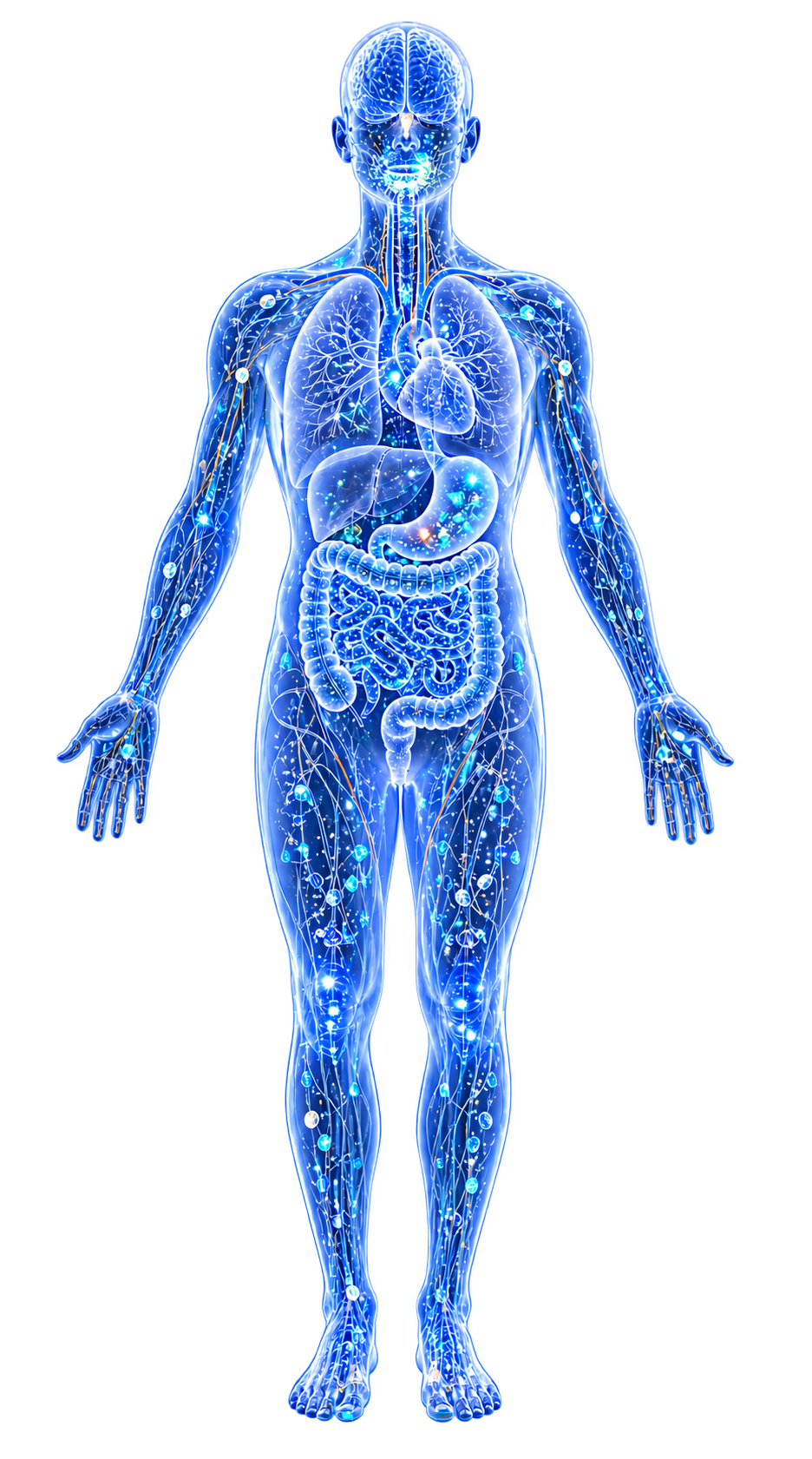
Interleukin-6 is a pleiotropic cytokine that sits at the crossroads of innate immunity, adaptive immunity, and metabolism.
It is one of the most frequently elevated inflammatory mediators across conditions in this wiki—appearing in disease signatures spanning IBD, autism spectrum disorder, endometriosis, cardiovascular disease, multiple sclerosis, depression, GERD, CKD, schizophrenia, and COVID-19.
Its dual nature—protective during acute infection, destructive when chronically elevated—makes it a central node in understanding how metal exposure and Dysbiosis converge on shared pathology.
Evidence map14 cited passagesInspect provenance +
nickel, cadmium, lead, and arsenic can activate nf kappa b, which drives IL-6 gene transcription in relevant models. Bacterial LPS signaling through TLR4 can converge on the same mediator, but shared cytokine output does not make the initiating metal and microbial pathways identical.
Cadmium exposure in animal models elevates colonic IL-6 alongside dysbiotic shifts, particularly expansion of Proteobacteria and depletion of SCFA producers.
copper and iron status modulate IL-6 production during perinatal depression, with dysregulated trace element homeostasis correlating with elevated IL-6 and TNF-alpha.
LPS-rich Gram-negatives (Bacteroides in dysbiosis, Prevotella) activate TLR4, driving pro-inflammatory IL-6 and IL-8 production.
In ASD children, plasma IL-6 was nearly 4-fold elevated (20.54 vs. 5.54 pg/ml, p = 0.0001) alongside enrichment of Clostridium, Desulfovibrio, and depletion of butyrate-producing Lachnospiraceae.
In GERD, esophageal dysbiosis activates TLR2/TLR4 signaling, elevating IL-6 and impairing epithelial barrier integrity through a feed-forward inflammatory loop.
Butyrate producers (Faecalibacterium, Roseburia) suppress NF-kB signaling, reducing IL-6 and TNF-alpha. IL-6 accounts for ~35% of the causal association between gut microbiota composition and COVID-19 severity in Mendelian randomization analyses.
Probiotic interventions (Lactobacillus, Bifidobacterium) reduce circulating IL-6 in CKD patients alongside improvements in uremic toxin clearance.
streptococcus thermophilus produces anti-inflammatory metabolites that downregulate IL-6 in MS models.
| Condition | IL-6 role | Key source | |-----------|-----------|------------| | Multiple sclerosis | IL-6 signaling mediates ~43% of the BMI → MS causal association; genetically predicted IL-6 signaling OR = 1.51 for MS risk | | | COVID-19 / Long COVID | IL-6 mediates ~35% of microbiota → COVID severity association; cytokine storm driver | | | Endometriosis
STOP signal: Excessive anti-IL-6 therapy without addressing underlying dysbiosis may create conditions favoring pathogenic opportunistic overgrowth. Blocking IL-6 also blocks hepcidin induction, potentially releasing sequestered iron into the circulation and feeding siderophore-producing pathogens.
Curcumin inhibits NF-kB, COX-2, TNF-alpha, and IL-6 through upstream pathway blockade.
Physical activity reduces IL-6 through reduced visceral adiposity and increased anti-inflammatory myokine production.
SCFA restoration (butyrate supplementation or butyrate-producer inoculation) suppresses NF-kB → IL-6 signaling at the gut epithelial level.
Contents
1. Biology and Signaling2. Metal-Driven IL-6 Production3. Microbiome-IL-6 Interactions4. IL-6 as a Hepcidin Driver5. Condition-Specific Roles6. Therapeutic Implications7. Cross-ReferencesBiology and Signaling#
IL-6 is produced by macrophages, dendritic cells, T cells, fibroblasts, endothelial cells, and adipocytes. It signals through two distinct pathways.
Classic signaling: IL-6 binds membrane-bound IL-6R (expressed mainly on hepatocytes, neutrophils, and some T cells), activating the JAK-STAT3 pathway. This drives acute-phase protein production (including Hepcidin and CRP) and is generally protective and anti-inflammatory in scope.
Trans-signaling: IL-6 binds soluble IL-6R (sIL-6R) shed from cell surfaces, and the IL-6/sIL-6R complex activates gp130 on virtually any cell. This pathway drives chronic Metal-Driven Inflammation, endothelial activation, and tissue damage. Trans-signaling is the pathological arm responsible for most disease associations.
The distinction matters clinically: blocking all IL-6 signaling (e.g., tocilizumab) may impair host defense, while selectively blocking trans-signaling could suppress chronic inflammation without compromising acute immunity.
Metal-Driven IL-6 Production#
Heavy Metals are potent inducers of IL-6 through multiple converging pathways. Nickel, Cadmium, Lead, and Arsenic can activate NF-kB Signaling Pathway, which drives IL-6 gene transcription in relevant models.[1]Toxic Mechanisms of Five Heavy Metals: Mercury, Lead, Chromium, Cadmium, and ArsenicBalali-Mood M, Naseri K, Tahergorabi Z et al. · 2021Open reference 1 ↓
Bacterial LPS signaling through TLR4 can converge on the same mediator, but shared cytokine output does not make the initiating metal and microbial pathways identical.
Cadmium exposure in animal models elevates colonic IL-6 alongside dysbiotic shifts, particularly expansion of Proteobacteria and depletion of SCFA producers.[2]Liu 2023 — Environmental cadmium exposure alters the internal microbiota and metabolome of Sprague–Dawley ratsLiu S, Deng X, Li Z et al. · 2023Open reference 2 ↓
Zinc deficiency amplifies IL-6 production by impairing the zinc-finger transcription factors that normally restrain NF-kB signaling. Paradoxically, zinc supplementation can reduce IL-6 levels—one of the few interventions that directly addresses the metal-cytokine axis.
Copper and Iron status modulate IL-6 production during perinatal depression, with dysregulated trace element homeostasis correlating with elevated IL-6 and TNF-alpha.[3]Silva-Fernandes 2024 — Inflammatory Biomarkers and Perinatal Depression: A Systematic ReviewAnabela Silva-Fernandes, Ana Conde, Margarida Marques et al. · 2024Open reference 3 ↓
Microbiome-IL-6 Interactions#
The Gut Microbiome is both a target and a driver of IL-6 signaling:
Dysbiosis Drives IL-6#
LPS-rich Gram-negatives (Bacteroides in dysbiosis, Prevotella) activate TLR4, driving pro-inflammatory IL-6 and IL-8 production.[4]Chen, Chen 2023 — Gut microbiota, inflammatory proteins and COVID-19: a Mendelian randomisation studyYuling Chen, Chang Chen · 2023Open reference 4 ↓
In ASD children, plasma IL-6 was nearly 4-fold elevated (20.54 vs. 5.54 pg/ml, p = 0.0001) alongside enrichment of Clostridium, Desulfovibrio, and depletion of Butyrate-producing Lachnospiraceae.[5]Cao 2021 — Dysbiotic Gut Microbiota and Dysregulation of Cytokine Profile in Children and Teens With Autism Spectrum DisorderXia Cao, Kevin Liu, Jun Liu et al. · 2021Open reference 5 ↓
In GERD, esophageal dysbiosis activates TLR2/TLR4 signaling, elevating IL-6 and impairing epithelial barrier integrity through a feed-forward inflammatory loop.[6]Esophageal microbial dysbiosis impairs mucosal barrier integrity via toll-like receptor 2 pathway in patients with gastroesophageal reflux symptomsChen S, Jiang D, Zhuang Q et al. · 2024Open reference 6 ↓
Commensals Suppress IL-6#
Butyrate producers (Faecalibacterium, Roseburia) suppress NF-kB signaling, reducing IL-6 and TNF-alpha. IL-6 accounts for ~35% of the causal association between gut microbiota composition and COVID-19 severity in Mendelian randomization analyses.[4]Chen, Chen 2023 — Gut microbiota, inflammatory proteins and COVID-19: a Mendelian randomisation studyYuling Chen, Chang Chen · 2023Open reference 4 ↓
Probiotic interventions (Lactobacillus, Bifidobacterium) reduce circulating IL-6 in CKD patients alongside improvements in uremic toxin clearance.[7]Protein-Bound Uremic Toxins from Gut Microbiota and Inflammatory Markers in CKDNatalia A. Borges, Amanda F. Barros, Lia S. Nakao et al. · 2016Open reference 7 ↓ Streptococcus thermophilus produces anti-inflammatory metabolites that downregulate IL-6 in MS models.[8]Streptococcus thermophilus ST285 Alters Pro-Inflammatory to Anti-Inflammatory Cytokine Secretion against Multiple Sclerosis Peptide in MiceDargahi N, Matsoukas J, Apostolopoulos V · 2020Open reference 8 ↓
IL-6 as a Hepcidin Driver#
IL-6 is the primary inducer of Hepcidin, the master regulator of iron homeostasis. During infection or chronic inflammation, IL-6 drives hepcidin transcription via STAT3, which blocks ferroportin and traps iron inside macrophages.
This is the mechanistic basis of the anemia of chronic disease—not true iron deficiency, but host-directed iron sequestration to starve iron-dependent pathogens (nutritional immunity, Karen's Brain Primitive 2).
This IL-6 → hepcidin → iron sequestration axis is critical for interpreting low serum iron in inflammatory conditions.
Supplementing iron in a patient with IL-6-driven hepcidin elevation feeds siderophore-producing pathogens rather than correcting a deficiency—the basis for multiple STOP signals across this wiki (STOP: Iron Supplementation in ASD Dysbiosis (Without Metal Dysregulation Assessment), STOP: Iron Supplementation for Type 2 Diabetes-Associated Anemia).
Condition-Specific Roles#
IL-6 elevation is documented across virtually every disease signature in this wiki. Key patterns:
| Condition | IL-6 role | Key source |
|---|---|---|
| Multiple sclerosis | IL-6 signaling mediates ~43% of the BMI → MS causal association; genetically predicted IL-6 signaling OR = 1.51 for MS risk | [9]Body Mass Index, Interleukin-6 Signaling and Multiple Sclerosis: A Mendelian Randomization StudyMarijne Vandebergh, Sara Becelaere, CHARGE Inflammation Working Group et al. · 2022Open reference 9 ↓ |
| COVID-19 / Long COVID | IL-6 mediates ~35% of microbiota → COVID severity association; cytokine storm driver | [4]Chen, Chen 2023 — Gut microbiota, inflammatory proteins and COVID-19: a Mendelian randomisation studyYuling Chen, Chang Chen · 2023Open reference 4 ↓ |
| Endometriosis | Peritoneal IL-6 elevated 2.7-fold (48.15 vs 18.14 pg/ml); AUC 0.873 as diagnostic biomarker for endometriosis with infertility | [10]Inflammatory cytokines IL-6, IL-10, IL-13, TNF-alpha and peritoneal fluid flora were associated with infertility in patients with endometriosisWang XM, Ma ZY, Song N · 2018Open reference 10 ↓ |
| ASD | Plasma IL-6 elevated ~4-fold; correlated with Clostridium and Desulfovibrio enrichment | [5]Cao 2021 — Dysbiotic Gut Microbiota and Dysregulation of Cytokine Profile in Children and Teens With Autism Spectrum DisorderXia Cao, Kevin Liu, Jun Liu et al. · 2021Open reference 5 ↓ |
| Perinatal depression | Elevated IL-6, CRP, and TNF-alpha in depressed perinatal groups across 56 studies | [3]Silva-Fernandes 2024 — Inflammatory Biomarkers and Perinatal Depression: A Systematic ReviewAnabela Silva-Fernandes, Ana Conde, Margarida Marques et al. · 2024Open reference 3 ↓ |
| IBD → ED | Gut-derived IL-6 suppresses eNOS and increases ROS in corpus cavernosum, impairing NO-dependent erection | [11]Li 2026 — IBD and Male Erectile Dysfunction: Mechanistic Insights and Novel Therapeutic PerspectivesShuxin Li, Hongliang Cao, Yuwei Liang et al. · 2026Open reference 11 ↓ |
| IBD | IL-6 elevated alongside trace metal dysregulation (iron (Fe), zinc (Zn), copper (Cu), selenium (Se)) in active IBD | [12]Clinical and inflammatory biomarkers of inflammatory bowel diseases are linked to plasma trace elements and toxic metals; new insights into an old conceptAmerikanou C, Karavoltsos S, Gioxari A et al. · 2022Open reference 12 ↓ |
| CKD | IL-6 elevated with uremic toxins; probiotic intervention reduces both | [7]Protein-Bound Uremic Toxins from Gut Microbiota and Inflammatory Markers in CKDNatalia A. Borges, Amanda F. Barros, Lia S. Nakao et al. · 2016Open reference 7 ↓ |
The recurring pattern: IL-6 is rarely the root cause. It is the convergence point where metal exposure, microbial LPS, and host immune activation meet. Treating IL-6 without addressing the upstream metal burden and dysbiosis is treating the thermometer, not the fever.
Therapeutic Implications#
Anti-IL-6 Therapies#
Tocilizumab (anti-IL-6R monoclonal antibody) blocks both classic and trans-signaling. Used in rheumatoid arthritis and severe COVID-19 cytokine storm.
STOP signal: Excessive anti-IL-6 therapy without addressing underlying dysbiosis may create conditions favoring pathogenic opportunistic overgrowth.[4]Chen, Chen 2023 — Gut microbiota, inflammatory proteins and COVID-19: a Mendelian randomisation studyYuling Chen, Chang Chen · 2023Open reference 4 ↓ Blocking IL-6 also blocks hepcidin induction, potentially releasing sequestered iron into the circulation and feeding siderophore-producing pathogens.
Indirect IL-6 Reduction#
Curcumin inhibits NF-kB, COX-2, TNF-alpha, and IL-6 through upstream pathway blockade.[13]Malekpour & Malekpour 2025 — Anti-Inflammatory Interventions on Mental Health and Sexual PerformanceOmid Malekpour, Amir Mahdi Malekpour · 2025Open reference 13 ↓ Physical activity reduces IL-6 through reduced visceral adiposity and increased anti-inflammatory myokine production.[13]Malekpour & Malekpour 2025 — Anti-Inflammatory Interventions on Mental Health and Sexual PerformanceOmid Malekpour, Amir Mahdi Malekpour · 2025Open reference 13 ↓
SCFA restoration (butyrate supplementation or butyrate-producer inoculation) suppresses NF-kB → IL-6 signaling at the gut epithelial level.[4]Chen, Chen 2023 — Gut microbiota, inflammatory proteins and COVID-19: a Mendelian randomisation studyYuling Chen, Chang Chen · 2023Open reference 4 ↓ Metal restriction—reducing the upstream metal burden removes a major driver of NF-kB activation, reducing IL-6 production at the source.
Cross-References#
- inflammation—IL-6 as a key effector of NF-kB Signaling Pathway activation
- Hepcidin—IL-6 → STAT3 → hepcidin axis drives iron sequestration
- Lipopolysaccharide—LPS/TLR4 → NF-kB → IL-6 cascade
- Gut-Brain Axis—IL-6 crosses the blood-brain barrier and activates Microglia
- Calprotectin (S100A8/A9)—co-elevated with IL-6 in intestinal inflammation
- dysbiosis—loss of butyrate producers removes the IL-6 brake
- Short-Chain Fatty Acids (SCFAs)—butyrate suppresses IL-6 via NF-kB inhibition
- Copper Dysregulation—copper (Cu)/zinc (Zn) ratio correlates with IL-6 in inflammatory states
References 14
Numbered by first appearance in the article, then reconciled with its declared source list.
- 1
★Balali-Mood M, Naseri K, Tahergorabi Z et al. (2021). Toxic Mechanisms of Five Heavy Metals: Mercury, Lead, Chromium, Cadmium, and Arsenic. Frontiers in Pharmacology.
- 2
Liu S, Deng X, Li Z et al. (2023). Liu 2023 — Environmental cadmium exposure alters the internal microbiota and metabolome of Sprague–Dawley rats. Frontiers in Veterinary Science.
- 3
Anabela Silva-Fernandes, Ana Conde, Margarida Marques et al. (2024). Silva-Fernandes 2024 — Inflammatory Biomarkers and Perinatal Depression: A Systematic Review. PLOS ONE.
- 4
Yuling Chen, Chang Chen (2023). Chen, Chen 2023 — Gut microbiota, inflammatory proteins and COVID-19: a Mendelian randomisation study. Frontiers in Immunology.
- 5
Xia Cao, Kevin Liu, Jun Liu et al. (2021). Cao 2021 — Dysbiotic Gut Microbiota and Dysregulation of Cytokine Profile in Children and Teens With Autism Spectrum Disorder. Frontiers in Neuroscience.
- 6
Chen S, Jiang D, Zhuang Q et al. (2024). Esophageal microbial dysbiosis impairs mucosal barrier integrity via toll-like receptor 2 pathway in patients with gastroesophageal reflux symptoms. Journal of Translational Medicine.
- 7
Natalia A. Borges, Amanda F. Barros, Lia S. Nakao et al. (2016). Protein-Bound Uremic Toxins from Gut Microbiota and Inflammatory Markers in CKD. Journal of Renal Nutrition.
- 8
Dargahi N, Matsoukas J, Apostolopoulos V (2020). Streptococcus thermophilus ST285 Alters Pro-Inflammatory to Anti-Inflammatory Cytokine Secretion against Multiple Sclerosis Peptide in Mice. Brain Sciences.
- 9
Marijne Vandebergh, Sara Becelaere, CHARGE Inflammation Working Group et al. (2022). Body Mass Index, Interleukin-6 Signaling and Multiple Sclerosis: A Mendelian Randomization Study. Frontiers in Immunology.
- 10
Wang XM, Ma ZY, Song N (2018). Inflammatory cytokines IL-6, IL-10, IL-13, TNF-alpha and peritoneal fluid flora were associated with infertility in patients with endometriosis. European Review for Medical and Pharmacological Sciences.
- 11
Shuxin Li, Hongliang Cao, Yuwei Liang et al. (2026). Li 2026 — IBD and Male Erectile Dysfunction: Mechanistic Insights and Novel Therapeutic Perspectives. Frontiers in Immunology.
- 12
Amerikanou C, Karavoltsos S, Gioxari A et al. (2022). Clinical and inflammatory biomarkers of inflammatory bowel diseases are linked to plasma trace elements and toxic metals; new insights into an old concept. Frontiers in Nutrition.
- 13
Omid Malekpour, Amir Mahdi Malekpour (2025). Malekpour & Malekpour 2025 — Anti-Inflammatory Interventions on Mental Health and Sexual Performance. International Journal of New Findings in Health and Educational Sciences (IJHES).
- 14
Rachel L Brown, Laura Benjamin, Michael P Lunn et al. (2024). Brown et al. 2024 — Pathophysiology, Diagnosis, and Management of Neuroinflammation in COVID-19. BMJ (British Medical Journal).
Article network
Mentioned here 18
Pages linking here 21
Connect the evidence
Publicly readable discussion by ORCID-authenticated researchers. Questions, interpretation, methods, corrections, and new evidence stay attached to this record.
No discussion yet. Start with a precise question or a source-backed observation.
Published page changes
This record shows only material changes published on this page, including changes to its content, evidence, conclusions, or author context. Internal processes and discussion activity are excluded. Pending, declined, and withdrawn proposals remain private.
- published revision
Revised “Metal-Driven IL-6 Production”: now reads “- nickel, cadmium, lead, and arsenic can activate nf kappa b, which drives IL-6 gene transcription in relevant models. Bacterial LPS signaling through TLR4 can converge on the same mediator, but…”.
Revised “Metal-Driven IL-6 Production”: changed “- nickel, cadmium, lead, and arsenic activate nf kappa b, which directly drives IL-6 gene transcription. This produces the same IL-6 surge generated by bacterial LPS via TLR4 — making metal and…” to “- nickel, cadmium, lead, and arsenic can activate nf kappa b, which drives IL-6 gene transcription in relevant models. Bacterial LPS signaling through TLR4 can converge on the same mediator, but…”. · Karen Pendergrass · +1 −1
Inspect exact Git diff ↗ - published revision
Revised “Metal-Driven IL-6 Production”: now reads “heavy metals are potent inducers of IL-6”.
Revised “Metal-Driven IL-6 Production”: changed “Heavy metals are potent inducers of IL-6” to “heavy metals are potent inducers of IL-6”. · Karen Pendergrass · +1 −1
Inspect exact Git diff ↗ - published revision
Created “Interleukin-6 (IL-6)”: Interleukin-6 is a pleiotropic cytokine that sits at the crossroads of innate immunity, adaptive immunity, and metabolism. It is one of the most frequently elevated inflammatory mediators across…
Created “Interleukin-6 (IL-6)”: Interleukin-6 is a pleiotropic cytokine that sits at the crossroads of innate immunity, adaptive immunity, and metabolism. It is one of the most frequently elevated inflammatory mediators across… Published sections: Interleukin-6 (IL-6); Biology and Signaling; Metal-Driven IL-6 Production; Microbiome-IL-6 Interactions; Dysbiosis Drives IL-6; Commensals Suppress IL-6; IL-6 as a Hepcidin Driver; Condition-Specific Roles; Anti-IL-6 Therapies; Indirect IL-6 Reduction; Cross-References. · WikiBiome Deploy Bot · +99 −0
Inspect exact Git diff ↗