
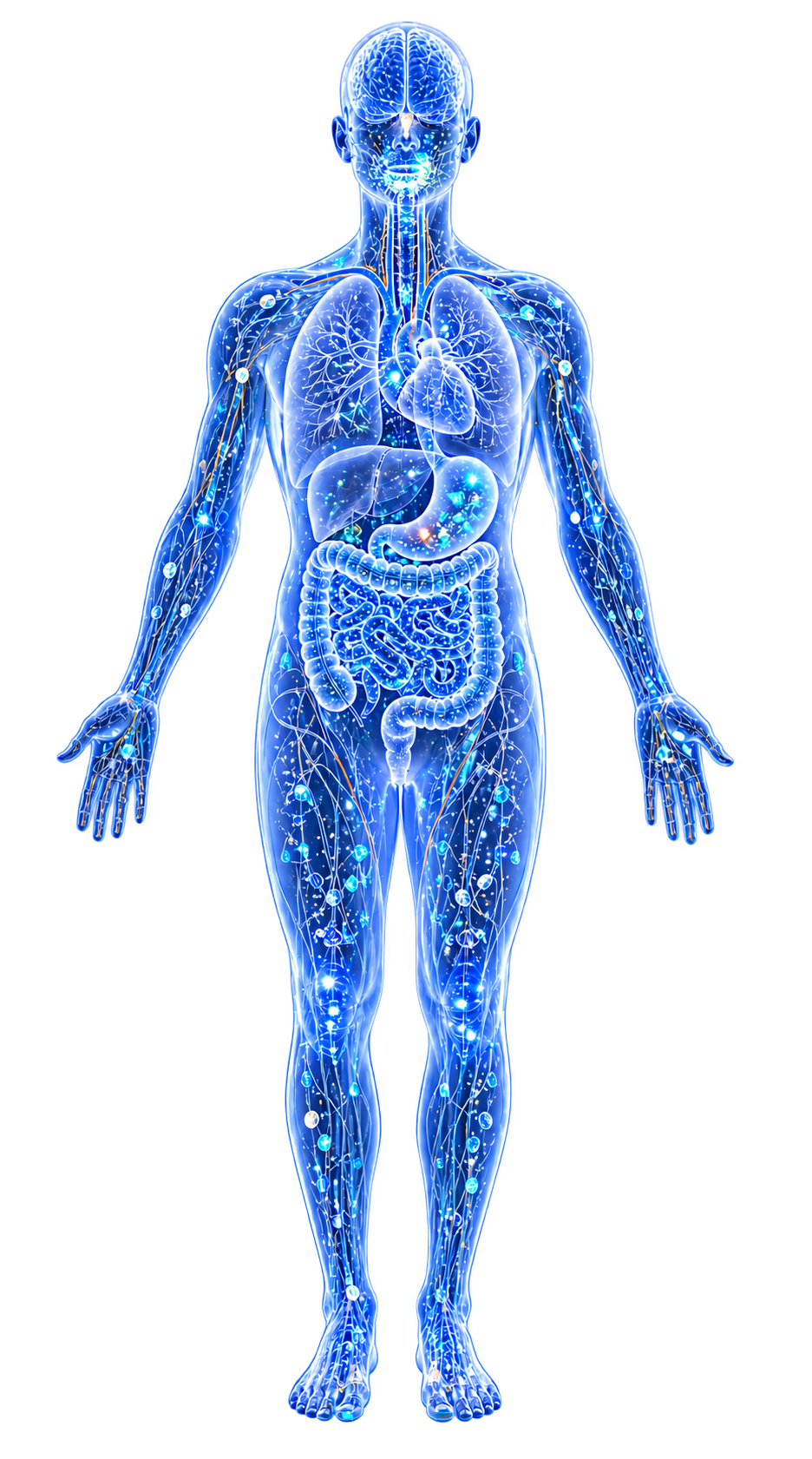
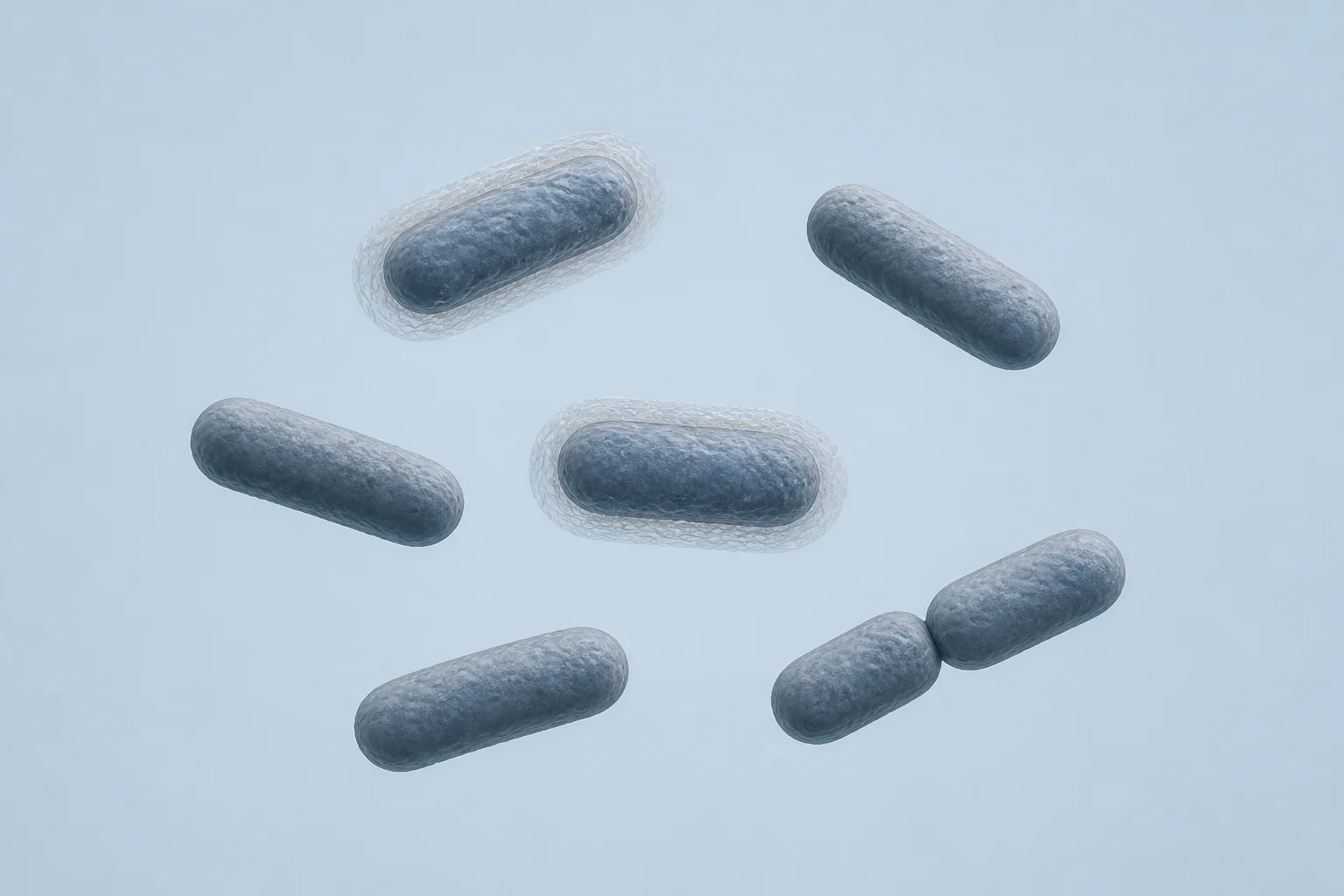
Representative Bacteroides thetaiotaomicron rods with nonuniform visible capsular layers. Capsule expression is phase-variable; this reconstruction does not imply that every cell is capsulated and is not diagnostic or a micrograph.
Scientific media record1 verified identifier
- Subject
- Bacteroides thetaiotaomicrontaxon · species
- Identifiers
- NCBITaxon:818
- Review
- Editorial review completeIdentifiers authority-verified · Accessibility validated · · bacteroides-thetaiotaomicron|bacteroides-thetaiotaomicron-morphology-v1.webp
- Digital source
- Trained-algorithmic mediaCreated with a trained generative algorithm and reviewed by WikiBiome for subject identity, scientific framing, identifiers, provenance, and accessibility.
- Scientific basis
- Bacteroides thetaiotaomicron — NCBI TaxonomyBacteroides thetaiotaomicron capsular polysaccharidesPhase-variable Bacteroides thetaiotaomicron surface layerDemonstration of Bacteroides capsules
- License
- CC BY-SA 4.0Created
Bacteroides thetaiotaomicron is one of the most abundant and metabolically versatile commensals of the human gut, routinely cited as a model organism for studying host-microbe symbiosis.
Its genome was one of the first human gut bacterial genomes fully sequenced, and subsequent functional work has made it the canonical example of a glycobiome specialist—an organism whose evolutionary success rests on its ability to harvest carbohydrates that the host itself cannot digest.
It is a Gram-negative obligate anaerobe in the family Bacteroidaceae within the dominant Bacteroides genus of the phylum Bacteroidota.
B. thetaiotaomicron is unusual among commensals in the breadth of experimental evidence supporting its role: gnotobiotic colonization studies, transcriptomic profiling of polysaccharide utilization, and mechanistic dissection of host-microbe signaling have each placed it at the center of our understanding of gut ecology.
Its decline is a consistent marker of Dysbiosis across multiple chronic inflammatory and metabolic conditions.
Evidence map4 cited passagesInspect provenance +
This dietary-to-host flexibility is central to B. thetaiotaomicron's ecological success: when dietary fiber is abundant, it ferments plant polysaccharides; when fiber is scarce, it switches to mucin foraging. Dietary fiber intake shapes Bacteroides abundance and SCFA output in human cohorts, with higher fiber consumption linked to increased propionate and ac
Like all members of its genus, B. thetaiotaomicron expresses a suite of zinc-dependent enzymes, including zinc metalloproteases and carboxypeptidases involved in polysaccharide processing and protein turnover. Its glycoside hydrolase family includes zinc-coordinating members that link metal availability to fermentative capacity. Broader surveys of bacterial
On iron biology, B. thetaiotaomicron lacks the classic hydroxamate and catecholate siderophores of the Enterobacteriaceae but expresses xenosiderophore receptors that allow it to scavenge iron liberated by other organisms. It also encodes TonB-dependent transporters for heme utilization. In the inflamed gut, where luminal iron becomes abundant and siderophor
Multiple sclerosis—reduced abundance in MS cohorts, with functional consequences for SCFA supply and AhR signaling
Contents
1. Metabolic Capabilities and Glycan Utilization2. Commensal Role and Host-Microbe Signaling3. Metal and Iron Biology4. Bile Acid Metabolism5. Tryptophan Metabolism and AhR Signaling6. Disease Associations7. Context-Dependent Effects8. Cross-ReferencesMetabolic Capabilities and Glycan Utilization#
The defining feature of B. thetaiotaomicron is its enormous repertoire of carbohydrate-active enzymes (CAZymes). Its ~6.3 Mb genome encodes approximately 172 glycoside hydrolases, 15 polysaccharide lyases, and more than 200 sulfatases—a carbohydrate-processing armamentarium far exceeding that of the human genome itself.
These enzymes are organized into polysaccharide utilization loci (PULs) that are coordinately regulated in response to substrate availability.
Documented substrates include. Plant cell wall polysaccharides—xylan, pectin, homogalacturonan, rhamnogalacturonan, arabinan, and several hemicelluloses. Storage polysaccharides—starch, amylopectin, and resistant starch.
Host-derived glycans—mucin O-glycans, N-linked glycans, chondroitin sulfate, and heparan sulfate.
This dietary-to-host flexibility is central to B. thetaiotaomicron's ecological success: when dietary fiber is abundant, it ferments plant polysaccharides; when fiber is scarce, it switches to mucin foraging.
Dietary fiber intake shapes Bacteroides abundance and SCFA output in human cohorts, with higher fiber consumption linked to increased propionate and acetate production by Bacteroides-group taxa.[1]Dietary fiber intake, the gut microbiome, and chronic systemic inflammation in a cohort of adult menWenjie Ma, Long H. Nguyen, Mingyang Song et al. · 2021Open reference 1 ↓
The downstream SCFAs—primarily propionate and acetate—feed colonocytes, modulate hepatic gluconeogenesis, and support epithelial barrier integrity.
Commensal Role and Host-Microbe Signaling#
B. thetaiotaomicron is a template for understanding how commensals educate the host. Angiogenesis induction—monocolonization of germ-free mice with B. thetaiotaomicron induces capillary network development in the small intestinal villi, a response mediated through Paneth cells and dependent on the transcription factor PPAR-gamma.
Paneth cell antimicrobial regulation—B. thetaiotaomicron modulates Paneth cell expression of angiogenins and other antimicrobial peptides, sculpting the antimicrobial landscape of the crypt.
Intestinal fucosylation—induces host expression of fucosyltransferase 2 (FUT2), which decorates intestinal epithelial glycans with fucose residues; this fucosylation protects against pathogen invasion and simultaneously provides a carbohydrate source that B. thetaiotaomicron itself can harvest.
Immune calibration—germ-free mice colonized with B. thetaiotaomicron show normalized gut architecture, corrected innate immune tolerance, and restored IgA production.
These host-beneficial effects depend on intact metabolic function; when B. thetaiotaomicron is displaced or its PULs are suppressed, the host loses not just a fermenter but an entire layer of mucosal education.
Metal and Iron Biology#
Like all members of its genus, B. thetaiotaomicron expresses a suite of zinc-dependent enzymes, including zinc metalloproteases and carboxypeptidases involved in polysaccharide processing and protein turnover. Its glycoside hydrolase family includes zinc-coordinating members that link metal availability to fermentative capacity.
Broader surveys of bacterial metalation show that Bacteroidetes employ strategic metalation of mononuclear enzymes, with metal cofactor selection tightly regulated by intracellular metal pools.[2]Rohaun 2024 — Microbes Vary Strategically in Their Metalation of Mononuclear EnzymesSanjay Kumar Rohaun, Ramakrishnan Sethu, James A Imlay · 2024Open reference 2 ↓
On iron biology, B. thetaiotaomicron lacks the classic hydroxamate and catecholate siderophores of the Enterobacteriaceae but expresses xenosiderophore receptors that allow it to scavenge iron liberated by other organisms. It also encodes TonB-dependent transporters for heme utilization.
In the inflamed gut, where luminal iron becomes abundant and siderophore-equipped pathogens bloom, B. thetaiotaomicron is typically outcompeted—a central mechanism in the Bacteroides-to-Enterobacteriaceae shift seen in IBD.[3]Bushman 2025 — The Exploitation of Nutrient Metals by Bacteria for Survival and Infection in the GutSummer D Bushman, Eric P Skaar, N Luisa Hiller · 2025Open reference 3 ↓
Its sulfate reduction and sulfatase activity on mucin O-glycans links it to sulfur metabolism and colonic hydrogen sulfide production, with implications for both barrier function and cross-feeding with sulfate-reducing bacteria.
Bile Acid Metabolism#
B. thetaiotaomicron expresses bile salt hydrolase (BSH) activity, deconjugating glycine- and taurine-conjugated primary bile acids to release free bile acids in the colon. It also participates in the downstream transformations that convert primary bile acids to secondary bile acids such as deoxycholate and lithocholate. Through this activity, it influences:
- Hepatic cholesterol metabolism via the enterohepatic circulation
- FXR and TGR5 signaling in both enterocytes and systemic tissues
- Lipid absorption and storage
- The competitive landscape of the colon, as secondary bile acids are inhibitory to many enteropathogens including Clostridioides difficile
Tryptophan Metabolism and AhR Signaling#
B. thetaiotaomicron contributes to the production of indole derivatives—including indole-3-lactate and indole-3-propionate—from dietary tryptophan. These metabolites act as aryl hydrocarbon receptor (AhR) ligands, activating mucosal immune programs that support IL-22 production, antimicrobial peptide expression, and barrier repair.
The loss of B. thetaiotaomicron in dysbiotic states therefore reduces AhR tone, with downstream effects on both local Metal-Driven Inflammation and systemic immunity.
Disease Associations#
Inflammatory bowel disease—consistently depleted in both Crohn's disease and ulcerative colitis; its loss is a hallmark of the Bacteroidetes-to-Proteobacteria shift associated with inflamed mucosa.
Colorectal cancer—variable reports, with some studies showing depletion in tumor-adjacent tissue and others identifying context-dependent enrichment in specific tumor subtypes. Multiple sclerosis—reduced abundance in MS cohorts, with functional consequences for SCFA supply and AhR signaling.[4]Functional Microbiome Reprogramming Links Dietary Interventions to Neuroinflammatory Outcomes in Multiple SclerosisFriederike Gutmann, Lina Samira Bahr, Ulrike Bruning et al. · 2025Open reference 4 ↓
Alzheimer's disease and cardiometabolic risk—indirect associations via the trimethylamine N-oxide (TMAO) pathway and bile acid dysregulation, though B. thetaiotaomicron is not itself a primary TMA producer.
Context-Dependent Effects#
Although classically framed as a commensal, B. thetaiotaomicron can behave as a conditional pathobiont when niche conditions shift. In the absence of dietary fiber, its aggressive mucin foraging erodes the mucus barrier and facilitates pathogen invasion. In iron-replete, inflamed environments, its normal competitive advantages collapse.
Through functional shielding interactions with other Bacteroides—notably B. fragilis—it participates in protected polymicrobial communities that may persist despite host defenses.
The key point: B. thetaiotaomicron's role is determined less by its identity than by the ecological context it finds itself in. In a fiber-rich, metal-balanced gut, it is a cornerstone commensal; in a fiber-poor, iron-rich, inflamed gut, it is displaced entirely.
Cross-References#
- Bacteroides fragilis—related species with distinct pathobiont potential
- Bacteroides vulgatus—co-abundant commensal in the Bacteroides guild
- Zinc-Metalloprotease—enzyme class expressed by B. thetaiotaomicron
- Short-Chain Fatty Acids (SCFAs)—primary metabolic output
- Bile Acid Metabolism—contributes to bile acid transformation via bile salt hydrolase activity
- Tryptophan Metabolism—modulates tryptophan-derived metabolites influencing gut-immune signaling
- AhR (Aryl Hydrocarbon Receptor)—aryl hydrocarbon receptor activated by B. thetaiotaomicron-derived indoles
- mucin—substrate for mucin-foraging under low-fiber conditions
- Functional Shielding—interkingdom and intrageneric protection mechanism
- Iron—central to the Bacteroides-to-Enterobacteriaceae shift in inflammation
- Inflammatory Bowel Disease (IBD)—condition where B. thetaiotaomicron is consistently depleted
References 4
Numbered by first appearance in the article, then reconciled with its declared source list.
- 1
Wenjie Ma, Long H. Nguyen, Mingyang Song et al. (2021). Dietary fiber intake, the gut microbiome, and chronic systemic inflammation in a cohort of adult men. Genome Medicine.
- 2
Sanjay Kumar Rohaun, Ramakrishnan Sethu, James A Imlay (2024). Rohaun 2024 — Microbes Vary Strategically in Their Metalation of Mononuclear Enzymes. Proceedings of the National Academy of Sciences.
- 3
Summer D Bushman, Eric P Skaar, N Luisa Hiller (2025). Bushman 2025 — The Exploitation of Nutrient Metals by Bacteria for Survival and Infection in the Gut. PLOS Pathogens.
- 4
Friederike Gutmann, Lina Samira Bahr, Ulrike Bruning et al. (2025). Functional Microbiome Reprogramming Links Dietary Interventions to Neuroinflammatory Outcomes in Multiple Sclerosis. Research Square (preprint).
Article network
Mentioned here 14
Pages linking here 8
Connect the evidence
Publicly readable discussion by ORCID-authenticated researchers. Questions, interpretation, methods, corrections, and new evidence stay attached to this record.
No discussion yet. Start with a precise question or a source-backed observation.
Activity and accepted changes
Accepted researcher context, editorial status, public discussion, and upstream Git revisions are shown together. Pending, declined, and withdrawn proposals remain private.
- published revision
Backfill inflammation concept links
Karen Pendergrass · +1 −1
Inspect exact Git diff ↗ - published revision
Complete corpus-wide Dysbiosis linking
Karen Pendergrass · +1 −1
Inspect exact Git diff ↗ - published revision
Add Interleukin-22 concept and contextual links
Karen Pendergrass · +1 −1
Inspect exact Git diff ↗ - published revision
massive wiki expansion: 149 stubs fixed, 100+ new pages, Rule 15 scan, keystone papers
WikiBiome Deploy Bot · +20 −20
Inspect exact Git diff ↗ - published revision
pre-overnight checkpoint 2026-04-18
WikiBiome Deploy Bot · +1 −1
Inspect exact Git diff ↗ - published revision
Deep citation pass: 25 new sources + major entity citations
WikiBiome Deploy Bot · +67 −14
Inspect exact Git diff ↗ - published revision
Health check fixes: 40 intervention pages + 14 entity Connections sections
WikiBiome Deploy Bot · +2 −0
Inspect exact Git diff ↗ - published revision
wiki: bulk entity upgrades, new article pages, and site regeneration
WikiBiome Deploy Bot · +6 −0
Inspect exact Git diff ↗ - published revision
WikiBiome v2 migration: signature pages + safety fixes + gap analysis
WikiBiome Deploy Bot · +36 −0
Inspect exact Git diff ↗