
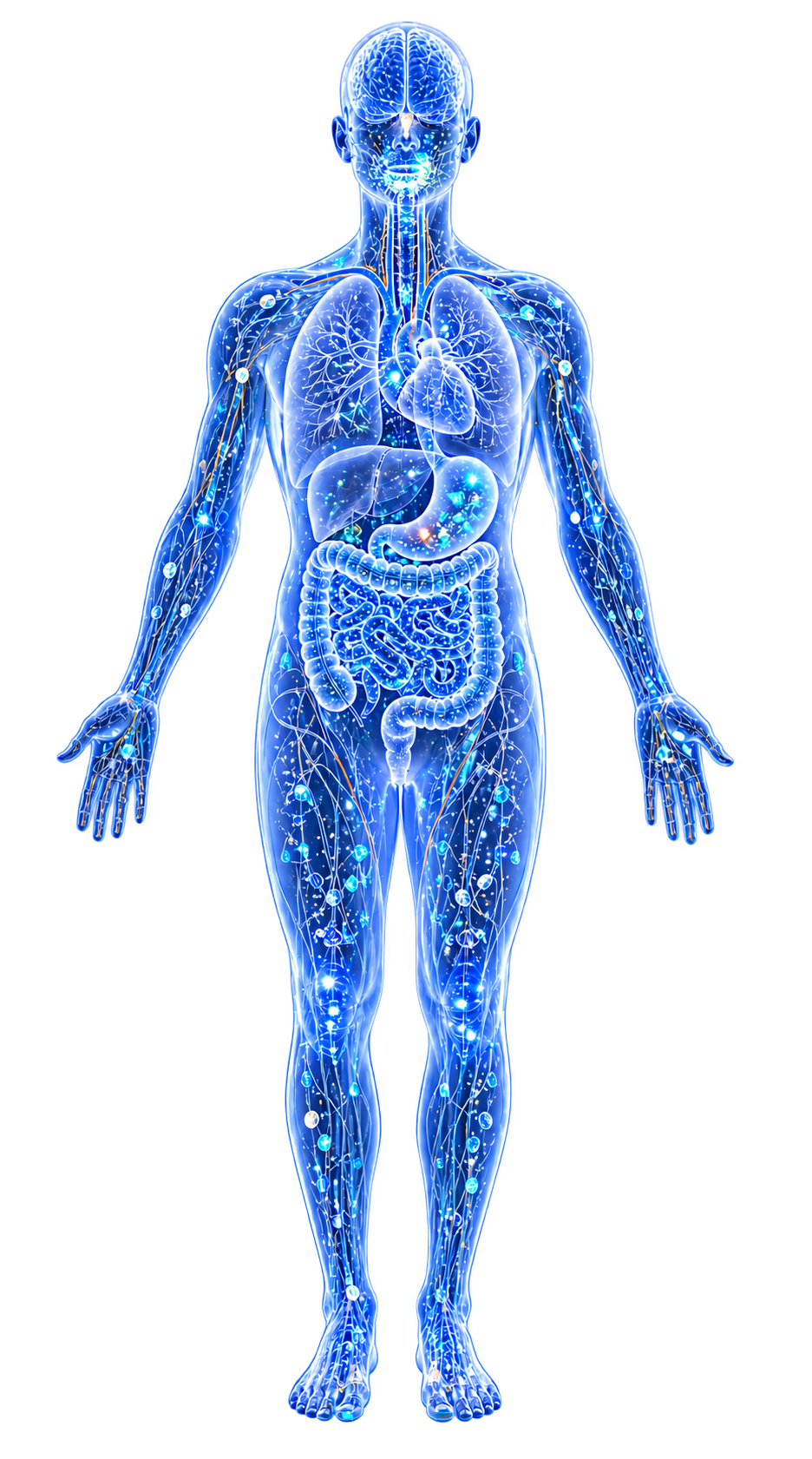
The intestinal epithelium is a single-cell-thick barrier separating the lumen—home to trillions of microbes and ingested metals—from the systemic circulation. When this barrier fails, the consequences cascade: microbial products translocate, metals gain unrestricted access, and systemic Metal-Driven Inflammation ignites.
Intestinal permeability is arguably the gateway mechanism connecting the Gut-Metal-Microbiome Interactions triad to virtually every disease in this wiki.
Contents
1. Tight Junction Architecture2. The Zonulin Pathway3. Metal-Induced Barrier Disruption4. The Gateway Mechanism5. Biomarkers of Permeability6. Disease Connections7. Therapeutic Implications8. See AlsoTight Junction Architecture#
Paracellular permeability is governed by the tight junction (TJ) complex. Occludin—the first TJ protein discovered; regulates macromolecular flux and is downregulated by cadmium and arsenic exposure.
Claudins—a family of ~27 proteins forming the structural backbone of TJ strands. Claudin-2 is "pore-forming" (increases permeability); claudin-1, -3, -4 are "sealing." Metal exposure shifts the ratio toward pore-forming claudins.
Zonula occludens (ZO-1, ZO-2, ZO-3)—scaffolding proteins anchoring transmembrane TJ proteins to the actin cytoskeleton. ZO-1 displacement from the junction is a hallmark of barrier failure.
Junctional adhesion molecules (JAMs)—regulate immune cell transmigration across the epithelium.
The Zonulin Pathway#
Zonulin (pre-haptoglobin 2) is the only known physiological regulator of intestinal TJ permeability. Triggers include gliadin peptides, enteric bacteria, and—critically—certain metals. Zonulin binds to PAR-2 and EGFR receptors on enterocytes, causing ZO-1 displacement and TJ opening.
Serum zonulin serves as a biomarker for barrier integrity, though assay specificity remains debated.
Metal-Induced Barrier Disruption#
| Metal | Primary Mechanism | Key TJ Targets |
|---|---|---|
| Cadmium | Oxidative Stress, Mitochondrial Dysfunction, direct claudin displacement | Occludin, ZO-1, claudin-1 |
| Lead | PKC activation, calcium mimicry at TJ signaling | ZO-1, occludin phosphorylation |
| Arsenic | NF-kB Signaling Pathway activation, mucus layer degradation | Claudin-1, -4; MUC2 depletion |
| Mercury | Thiol binding on TJ proteins, cytoskeletal disruption | Actin ring, ZO-1 |
| Nickel | TLR4 activation, mast cell degranulation (in sensitized individuals) | Histamine-mediated TJ opening |
All five metals converge on oxidative stress as a common final pathway for TJ disruption. Dysbiosis amplifies the damage—loss of Short-Chain Fatty Acids (SCFAs)-producing bacteria removes the primary fuel source for colonocytes, weakening the barrier from the luminal side.
The Gateway Mechanism#
Increased permeability creates a vicious cycle. Metal exposure damages TJs directly and via oxidative stress. Barrier failure permits LPS and bacterial translocation.
LPS activates TLR4 on immune cells, driving inflammation and NF-kB Signaling Pathway.
Inflammatory cytokines (TNF-alpha, IFN-gamma, IL-13) further open TJs. Opened barrier permits greater metal absorption (especially for cadmium (Cd), lead (Pb)). More metal enters systemic circulation, reaching distal organs.
dysbiosis worsens as the luminal environment shifts.
This feed-forward loop explains why acute metal exposure can produce chronic disease long after the original exposure ceases.
Biomarkers of Permeability#
Lactulose/mannitol ratio—the classical dual-sugar absorption test. Lactulose (large) crosses paracellularly; mannitol (small) crosses transcellularly. Elevated ratio = increased paracellular permeability.
Serum zonulin—correlates with TJ opening but assay cross-reactivity with complement C3 limits specificity. Serum LPS / endotoxin—direct indicator of bacterial translocation.
LPS-binding protein (LBP)—more stable than LPS itself as a translocation marker. Calprotectin (S100A8/A9) (fecal)—marker of neutrophil infiltration; indicates inflammation secondary to barrier failure. Intestinal fatty acid-binding protein (I-FABP)—marker of enterocyte damage.
Claudin-3 (urinary)—emerging marker of TJ disruption.
Disease Connections#
Increased intestinal permeability is documented in Inflammatory Bowel Disease (IBD), Crohn's Disease, Ulcerative Colitis, Celiac Disease, Irritable Bowel Syndrome (IBS), Type 1 Diabetes, Type 2 Diabetes, Non-Alcoholic Fatty Liver Disease, Chronic Kidney Disease, Parkinson's Disease, Alzheimer's Disease, Depression, Autism Spectrum Disorder, and Rheumatoid Arthritis.
In many cases, permeability changes precede clinical disease onset, supporting a causal role rather than mere consequence.
Therapeutic Implications#
Barrier restoration strategies include Probiotics (especially Lactobacillus rhamnosus GG, which upregulates ZO-1 and occludin), Short-Chain Fatty Acids (SCFAs) (Butyrate feeds colonocytes and tightens TJs), zinc supplementation (zinc (Zn) is essential for TJ protein expression), and removal of the offending metal exposure.
The Gut-Metal-Microbiome Interactions framework positions permeability restoration as a central therapeutic target.
See Also#
- Gut-Metal-Microbiome Interactions—the overarching triad framework
- dysbiosis—microbial disruption that compounds barrier failure
- Calprotectin (S100A8/A9)—key fecal biomarker downstream of permeability
- inflammation—the systemic consequence of translocation
- Short-Chain Fatty Acids (SCFAs)—barrier-protective metabolites
References 8
Numbered by first appearance in the article, then reconciled with its declared source list.
- 1
★Sweta Ghosh, Syam P. Nukavarpu, Venkatakrishna Rao Jala (2024). Effects of Heavy Metals on Gut Barrier Integrity and Gut Microbiota. Microbiota and Host.
- 2
★Federica Giambo, Sebastiano Italia, Michele Teodoro et al. (2021). Influence of Toxic Metal Exposure on the Gut Microbiota (Review). World Academy of Sciences Journal.
- 3
M. Firoze Khan, Hui Wang (2020). Environmental Exposures and Autoimmune Diseases: Contribution of Gut Microbiome. Frontiers in Immunology.
- 4
★Qinheng Zhu, Boyan Chen, Fu Zhang et al. (2024). Toxic and Essential Metals: Metabolic Interactions with the Gut Microbiota and Health Implications. Frontiers in Nutrition.
- 5
Fatemeh Rezazadegan, Maryam Mahmoudi, Seyed Mohammad Mousavi (2025). Rezazadegan et al. 2025 — Heavy Metals and Gut Microbiota: A Systematic Review. Journal of Health, Population and Nutrition.
- 6
Jessica Briffa, Emmanuel Sinagra, Renald Blundell (2020). Heavy Metal Pollution in the Environment and Their Toxicological Effects on Humans. Heliyon.
- 7
Amerikanou C, Karavoltsos S, Gioxari A et al. (2022). Clinical and inflammatory biomarkers of inflammatory bowel diseases are linked to plasma trace elements and toxic metals; new insights into an old concept. Frontiers in Nutrition.
- 8
Lombardi F, Fiasca F, Minelli M et al. (2020). The Effects of Low-Nickel Diet Combined with Oral Administration of Selected Probiotics on Patients with Systemic Nickel Allergy Syndrome (SNAS) and Gut Dysbiosis. Nutrients.
Article network
Mentioned here 18
Pages linking here 39
Connect the evidence
Publicly readable discussion by ORCID-authenticated researchers. Questions, interpretation, methods, corrections, and new evidence stay attached to this record.
No discussion yet. Start with a precise question or a source-backed observation.
Activity and accepted changes
Accepted researcher context, editorial status, public discussion, and upstream Git revisions are shown together. Pending, declined, and withdrawn proposals remain private.
- published revision
Place TLR4 link in permeability narrative
Karen Pendergrass · +2 −2
Inspect exact Git diff ↗ - published revision
Strengthen TLR4 and link high-leverage contexts
Karen Pendergrass · +1 −1
Inspect exact Git diff ↗ - published revision
Backfill oxidative stress concept links
Karen Pendergrass · +3 −3
Inspect exact Git diff ↗ - published revision
Backfill inflammation concept links
Karen Pendergrass · +2 −2
Inspect exact Git diff ↗ - published revision
Complete corpus-wide Dysbiosis linking
Karen Pendergrass · +2 −2
Inspect exact Git diff ↗ - published revision
Complete Tight junctions contextual coverage
Karen Pendergrass · +1 −1
Inspect exact Git diff ↗ - published revision
massive wiki expansion: 149 stubs fixed, 100+ new pages, Rule 15 scan, keystone papers
WikiBiome Deploy Bot · +16 −16
Inspect exact Git diff ↗ - published revision
nightly maintenance: 94 stub demotions, 181 source_count fixes, 22 auto-discovered stubs, 5 adversarial audits, 3 boundary fixes, 3 evidence-level corrections
WikiBiome Deploy Bot · +1 −0
Inspect exact Git diff ↗ - published revision
pre-overnight checkpoint 2026-04-18
WikiBiome Deploy Bot · +7 −5
Inspect exact Git diff ↗ - published revision
WikiBiome update — 2026-04-11 22:49
WikiBiome Deploy Bot · +79 −0
Inspect exact Git diff ↗