
 metals · microbes · host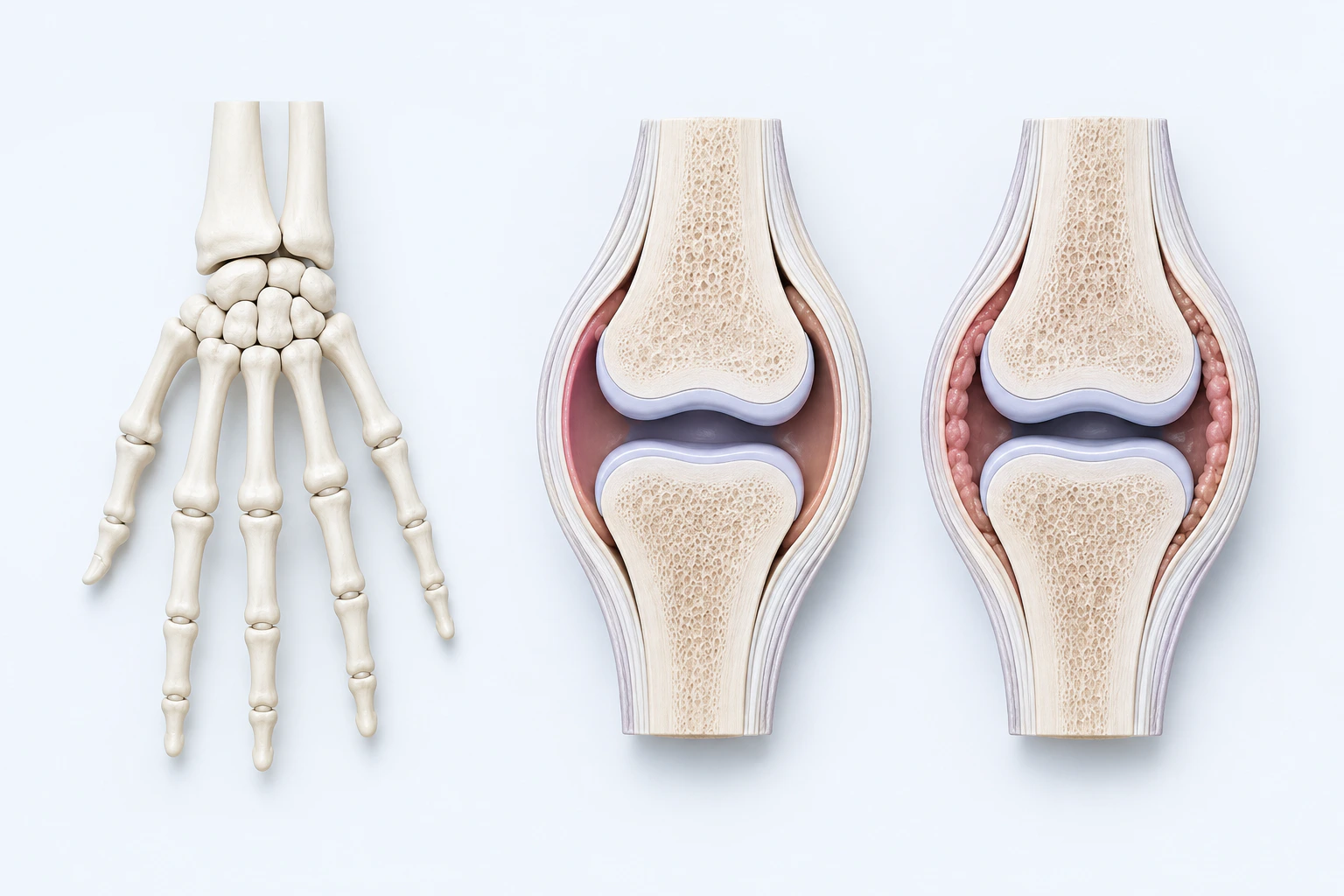
Rheumatoid-arthritis orientation without deformity, erosion, universal distribution, stage, systemic-involvement, severity, prognosis, or diagnostic claims.
Scientific media record1 verified identifier
- Subject
- Arthritis, Rheumatoidcondition
- Identifiers
- MeSH:D001172
- Review
- Editorial review completeIdentifiers authority-verified · Accessibility validated · · rheumatoid-arthritis|rheumatoid-arthritis-pathology-v1.webp
- Digital source
- Trained-algorithmic mediaCreated with a trained generative algorithm and reviewed by WikiBiome for subject identity, scientific framing, identifiers, provenance, and accessibility.
- Scientific basis
- Arthritis, Rheumatoid — MeSHRheumatoid Arthritis
- License
- CC BY-SA 4.0Created
Rheumatoid arthritis (RA) is a chronic systemic autoimmune disease characterized by symmetric polyarthritis with progressive joint destruction, affecting approximately 1% of the global population. The conventional framing centers on genetic susceptibility (HLA-DRB1 shared epitope), autoantibody production (RF, anti-CCP), and immune dysregulation.
The metallomic perspective reveals altered serum metal profiles—particularly elevated copper and toxic metal burden—that correlate with disease activity, Metal-Driven Inflammation markers, and vitamin D disruption. Environmental metal exposure from farm soils, industrial pollution, and dietary sources may both trigger and exacerbate the autoimmune cascade.
Evidence map17 cited passagesInspect provenance +
Copper in RA presents a geographic or population-dependent paradox. In Taiwan, found that RA patients living in townships with high soil copper had higher WBC, ESR, DAS28, and platelet counts. Blood copper was the only metal that significantly predicted ESR in multiple regression (beta=0.058, p=0.021). RA patients had the highest blood Cu among all disease g
In contrast, from Pakistan found copper significantly lower in RA patients (p=0.04). This discrepancy may reflect different disease stages, dietary Cu intake, ceruloplasmin responses, or genetic differences in Cu metabolism. Ceruloplasmin is an acute phase reactant that rises with inflammation, carrying the majority of circulating Cu. In early or active infl
VOC-microbiome connection: found urinary VOC metabolites (AMCC, CEMC, CYMC) associated with RA risk. These metabolites derive from acrolein (combustion product) and acrylonitrile (plastics)—compounds that also disrupt gut microbiome composition.
provided the first direct evidence linking environmental soil metal contamination to RA disease activity. In Changhua County, Taiwan (a region with heavy industrial pollution), RA patients in Grade 1 townships (highest soil Cu, 23.83 mg/kg) had significantly higher WBC, ESR, DAS28, and platelet counts compared to Grade 4 (lowest Cu). The study suggests that
and (same cohort, preprint and published versions) documented a novel mechanism: heavy metals disrupt vitamin D metabolism in RA. Key findings:
applied interpretable ML to NHANES data (14,319 participants, 384 RA cases) and identified metal predictors of arthritis risk:
Rheumatoid arthritis (RA) is a chronic systemic autoimmune disease characterized by symmetric polyarthritis with progressive joint destruction, affecting approximately 1% of the global population. The conventional framing centers on genetic susceptibility (HLA-DRB1 shared epitope), autoantibody production (RF, anti-CCP), and immune dysregulation. This signat
| Metal | Direction | Key Evidence | |-------|-----------|-------------| | copper | Elevated (conflicting) | Blood Cu positively correlated with WBC, ESR, platelets, RF-IgM in Taiwan (p<0.01); RA had highest blood Cu among disease groups; BUT significantly lower in Pakistani RA (p=0.04) | | lead | Elevated | 5.73 vs. 2.19 ug/L in Pakistani RA vs. controls (p
Copper in RA presents a population-dependent paradox. In Taiwan, RA patients in high-soil-copper townships had higher inflammatory markers (WBC, ESR, DAS28); copper was the only metal predicting ESR in multiple regression (beta=0.058, p=0.021). In Pakistan, copper was significantly lower in RA. The resolution likely involves disease stage: ceruloplasmin (an
Heavy metals interfere with renal activation of vitamin D (1-alpha hydroxylation), causing deficiency and secondary hyperparathyroidism (PTH 77.03 vs. 49.35 pg/ml in RA vs. controls, p<0.001). Strong inverse correlations: VitD-Lead (r=-0.969), VitD-Cd (r=-0.901), VitD-Cr (r=-0.925). This metal-VitD-bone axis explains why RA patients have both elevated inflam
provided the first direct evidence linking environmental soil metal contamination to RA disease activity. In Changhua County, Taiwan (heavy industrial pollution), RA patients in Grade 1 townships (highest soil Cu, 23.83 mg/kg) had significantly higher WBC, ESR, DAS28, and platelet counts vs. Grade 4. Environmental Cu exposure through food grown in contaminat
Urinary VOC metabolites (AMCC from N,N-dimethylformamide; CEMC from acrolein/combustion; CYMC from acrylonitrile/plastics) are independently associated with RA risk (mixed-exposure WQS OR 1.39, 95% CI 1.07-1.80). These compounds disrupt gut microbiome composition alongside their direct inflammatory effects.
XGBoost model (AUC 0.81, n=14,319) identified RA-positive predictors: arsenic metabolites (SHAP 0.02), molybdenum (0.013), tungsten (0.009), antimony (0.009). Mercury showed an apparent protective effect (-0.009), possibly confounded by fish consumption (omega-3 anti-inflammatory effects).
Ceruloplasmin elevation—acute phase reactant carrying majority of circulating copper; rises with active RA inflammation
Vitamin D depletion—21.84 ng/ml in RA (deficient range); heavy metals interfere with renal 1-alpha hydroxylation
Glutathione depletion—nickel depletes GSH and protein-bound sulfhydryl groups; Cr(VI) reduction to Cr(III) consumes antioxidant capacity
Lead and cadmium shift Th1/Th2 balance and may trigger autoimmunity through immune system attacks on self-molecules modified by metal binding. Arsenic disrupts NF-kB signaling and activates the NLRP3 inflammasome—both central inflammatory pathways in RA. Chromium generates ROS through Cr(VI)-to-Cr(III) reduction, amplifying oxidative stress in already-infl
One disease. Five evidence layers.
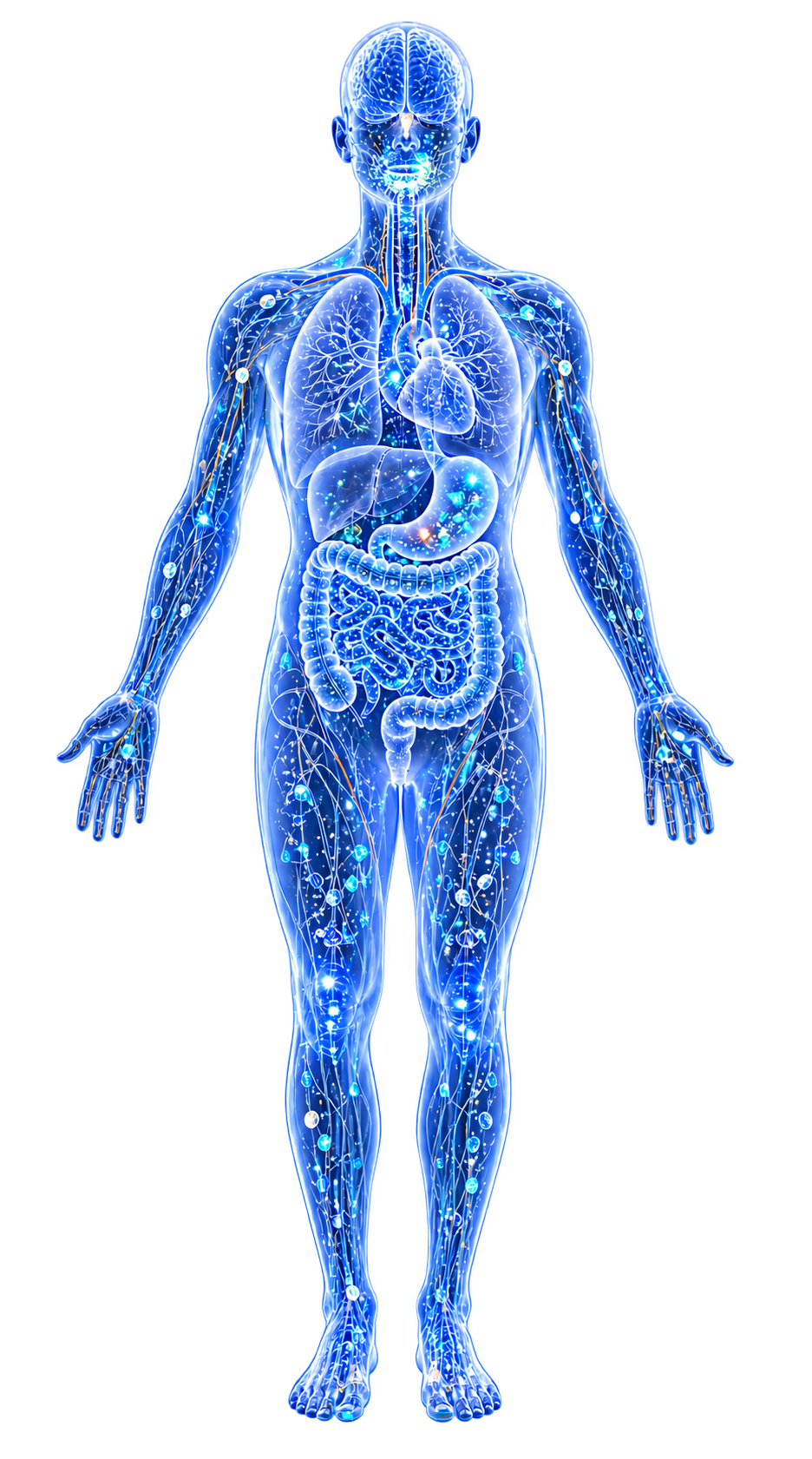
A generated systems view of the metals, organisms, host sequestration signals, ecological conditions, and microbial functions indexed for Rheumatoid Arthritis.
Evidence layer
Taxonomic signature
Organisms reported as enriched or depleted, with their indexed functional context kept beside the name.Strongly enriched in early RA; drives Th17 immune activation; molecular mimicry with joint antigens
Proteobacteria pathobiont; LPS-driven systemic inflammation; siderophore-mediated iron acquisition
Facultative anaerobes enriched in dysbiotic niche; LPS production drives NF-kB activation
Enriched in RA; promotes gut permeability and IL-17A production
Anti-inflammatory butyrate producer; loss removes Treg-supporting SCFA signal
SCFA-producing family; depletion shared with Crohn's, MS, and Hashimoto's
Immune modulator; reduced in RA with loss of tolerogenic signaling
PSA-producing immunomodulator; loss impairs Treg development
Evidence layer
Nutritional immunity
Host metal-withholding, inflammatory, antioxidant, and microbial-metabolite signals indexed in the signature.Elevated host signals
3Depleted protective signals
2Evidence layer
Ecological state
The environmental conditions that connect the organism-level observations into a system.Evidence layer
Virulence functions
Microbial structures, enzymes, and acquisition systems implicated by the linked evidence.The disease record, in full.
The original WikiBiome disease narrative remains intact beneath the generated signature atlas.
Metallomic Signature#
The metallomic profile of RA from the Metal-Disease Matrix: A Cross-Source Synthesis and primary sources:
| Metal | Direction | Key Evidence | |
|---|---|---|---|
| [[copper | copper (Cu)]] | Elevated (conflicting) | Blood copper positively correlated with WBC, ESR, platelets, RF-IgM in Taiwan study; RA patients had highest blood copper among disease groups; BUT Pakistani study found copper significantly lower in RA |
| [[zinc | zinc (Zn)]] | Not significantly changed | No significant difference in Pakistani study (p=0.22); not a primary marker |
| [[lead | lead (Pb)]] | Elevated | 5.73 vs. 2.19 ug/L in Pakistani RA vs. controls (p<0.01); inversely correlated with vitamin D |
| [[cadmium | cadmium (Cd)]] | Elevated | 1.77 vs. 0.28 ug/L in RA vs. controls (p<0.01); positively correlated with DAS28 disease activity; r=-0.901 with vitamin D |
| [[chromium | chromium (Cr)]] | Elevated | 3.08 vs. 0.26 ug/L in RA vs. controls (p<0.01); generated through ROS-producing chromium(VI)-to-chromium(III) reduction |
| [[nickel | nickel (Ni)]] | Decreased (conflicting) | Significantly lower in RA (41.19 vs. 112.53 ug/L) in Pakistani study; BUT correlated with ESR in Taiwanese study |
| [[arsenic | As]] | Elevated (metabolites) | Arsenic metabolites were top positive predictors for RA in NHANES ML analysis (SHAP 0.02) |
The Copper Paradox in RA#
Copper in RA presents a geographic or population-dependent paradox. In Taiwan,[1]Increased inflammation in rheumatoid arthritis patients living where farm soils contain high levels of copperYang TH, Yuan TH, Hwang YH et al. · 2016Open reference 1 ↓ found that RA patients living in townships with high soil copper had higher WBC, ESR, DAS28, and platelet counts. Blood copper was the only metal that significantly predicted ESR in multiple regression (beta=0.058, p=0.021).
RA patients had the highest blood copper (Cu) among all disease groups studied (RA > gout > ankylosing spondylitis > steel workers).
In contrast,[2]Role of Some Heavy Metals in Rheumatoid ArthritisArshad M, Riaz N, Bashir R et al. · 2023Open reference 2 ↓ from Pakistan found copper significantly lower in RA patients (p=0.04). This discrepancy may reflect different disease stages, dietary copper intake, ceruloplasmin responses, or genetic differences in copper metabolism. Ceruloplasmin is an acute phase reactant that rises with inflammation, carrying the majority of circulating copper.
In early or active inflammation, copper may be elevated (Taiwan finding); in chronic disease with nutritional depletion, it may be lowered (Pakistan finding).
Nickel: An Unexpected Depletion#
Unlike most diseases in this wiki where nickel is elevated or unchanged, the Pakistani RA study found nickel significantly depleted (41.19 vs. 112.53 ug/L, p<0.01). This is the opposite direction from the matrix entry.
The finding may reflect increased nickel utilization by immune cells during chronic inflammation, renal excretion changes, or population-specific dietary patterns. However, the Taiwanese study found nickel (Ni) correlated with ESR (p=0.040), suggesting nickel may contribute to inflammation even at lower absolute levels.
Gut Microbiome Connection#
While no source pages in this collection directly studied the Gut Microbiome in RA, the connections are well-established in the broader literature and supported by indirect evidence from these sources.
Molecular mimicry and metal modification: Heavy Metals (lead (Pb), cadmium (Cd)) shift Th1/Th2 balance and may trigger autoimmunity through immune system attacks on self-molecules modified by metal binding. This parallels the "molecular mimicry" hypothesis for RA where microbial antigens cross-react with joint proteins.
Gut permeability: The same metals that disrupt tight junctions in the intestinal epithelium (lead reduces ZO-1, claudin-1, occludin; cadmium reduces ZO-1, ZO-2, JAM-A) are elevated in RA patients. Metal-induced gut barrier dysfunction could promote bacterial translocation and systemic immune activation.
Mucosal immune priming: RA is increasingly recognized as a "mucosal origin" disease, with anti-CCP antibodies detectable in saliva and gut before joint involvement. Metal-driven mucosal inflammation could prime the autoimmune response at mucosal sites before it targets joints.
VOC-microbiome connection:[3]Association between urinary volatile organic compounds metabolites and rheumatoid arthritis among the adults from NHANES 2011-2018Zhou L, Wu D, Chen H et al. · 2024Open reference 3 ↓ found urinary VOC metabolites (AMCC, CEMC, CYMC) associated with RA risk. These metabolites derive from acrolein (combustion product) and acrylonitrile (plastics)—compounds that also disrupt gut microbiome composition.
Environmental Metal Exposure Links#
The environmental dimension of RA metallomics is perhaps the most compelling:
Farm Soil Contamination#
[1]Increased inflammation in rheumatoid arthritis patients living where farm soils contain high levels of copperYang TH, Yuan TH, Hwang YH et al. · 2016Open reference 1 ↓ provided the first direct evidence linking environmental soil metal contamination to RA disease activity.
In Changhua County, Taiwan (a region with heavy industrial pollution), RA patients in Grade 1 townships (highest soil copper (Cu), >23.83 mg/kg) had significantly higher WBC, ESR, DAS28, and platelet counts compared to Grade 4 (lowest copper).
The study suggests that environmental copper exposure through food grown in contaminated soil is sufficient to worsen RA inflammation.
Heavy Metals and Vitamin D#
[4]Impact of heavy metals on serum vitamin D3 and PTH in fibromyalgia and rheumatoid arthritis and their correlation to disease activityHaddad R, Elbeialy A, El Sawy S et al. · 2024Open reference 4 ↓ and[5]Environmental pollution impact on the severity of some rheumatic diseases: a comparative analytical study on inflammatory and non-inflammatory samplesElbeialy A, El Sawy S, Elzomor H et al. · 2024Open reference 5 ↓ (same cohort, preprint and published versions) documented a novel mechanism: heavy metals disrupt vitamin D metabolism in RA. Key findings.
Vitamin D: 21.84 ng/ml in RA vs. 27.99 ng/ml in controls (p<0.001). PTH: 77.03 pg/ml in RA vs.
49.35 pg/ml in controls (p<0.001)—secondary hyperparathyroidism. Strong inverse correlations: VitD-Lead (r=-0.969), VitD-cadmium (Cd) (r=-0.901), VitD-chromium (Cr) (r=-0.925).
Direct correlations: lead (Pb), cadmium, chromium all positively correlated with DAS28, tender joints, swollen joints.
The proposed mechanism: heavy metals interfere with renal activation of vitamin D (1-alpha hydroxylation), causing deficiency and secondary hyperparathyroidism. This metal-VitD-bone axis may explain why RA patients have both elevated inflammatory markers and vitamin D deficiency—the metals drive both.
Machine Learning Metal Predictors#
[6]Analyzing the impact of heavy metal exposure on osteoarthritis and rheumatoid arthritis: an approach based on interpretable machine learningFan W, Pi Z, Kong K et al. · 2024Open reference 6 ↓ applied interpretable ML to NHANES data (14,319 participants, 384 RA cases) and identified metal predictors of arthritis risk.
RA-positive predictors (SHAP values): Arsenic metabolites (0.02), molybdenum (0.013), tungsten (0.009), antimony (0.009). RA-negative predictors: Mercury (-0.009), cobalt (-0.008). Best model: XGBoost achieved AUC 0.81 for binary arthritis classification.
The arsenic metabolites as the top RA predictor is notable: arsenic disrupts NF-kB signaling (a central inflammatory pathway in RA) and activates the NLRP3 inflammasome. The apparent protective effect of mercury is unexpected and may reflect confounding by fish consumption (omega-3 fatty acids are anti-inflammatory in RA).
Current Interventions with Metal Relevance#
| Intervention | Mechanism | Evidence Level |
|---|---|---|
| Vitamin D supplementation | Addresses metal-induced VitD deficiency; 50,000 IU every 2 weeks reduced hs-CRP in studies | Clinical trials + mechanistic rationale |
| Reducing environmental copper (Cu)/lead (Pb)/cadmium (Cd) exposure | Soil-to-food-chain exposure reduction; diet control | Epidemiological (Yang 2016) |
| Copper chelation (tetrathiomolybdate) | Proposed by Yang et al. for RA patients in high-copper areas | Theoretical; used in Wilson's disease |
| Heavy metal screening | Measure lead, cadmium, chromium (Cr) alongside standard RA labs; correlate with DAS28 | Emerging research direction |
| Selenium supplementation | selenium (Se) antagonizes cadmium; supports GPx antioxidant defense | Indirect evidence from thyroid/cancer literature |
| Probiotics | Barrier protection; immune modulation; metal detoxification | Limited RA-specific data; strong precedent from MS trials |
Open Questions#
Unresolved questions identified by the current evidence record.
01Copper direction: Why does copper (Cu) appear elevated in Taiwanese but depleted in Pakistani RA patients?+
Is this ceruloplasmin-mediated, dietary, or genetic?
02Nickel depletion mechanism: Is nickel (Ni) depletion in RA a cause (loss of immunoregulatory function?+
), consequence (increased utilization?), or artifact (population-specific)?
03Metal-VitD intervention: Can heavy metal reduction (chelation, dietary changes) restore vitamin D levels and improve RA outcomes without exogenous VitD supplementation?+
The current WikiBiome record identifies this as an unresolved evidence gap.
04Soil metal screening: Should environmental copper (Cu)/cadmium (Cd)/lead (Pb) levels in residential soil be included in RA risk assessment?+
The current WikiBiome record identifies this as an unresolved evidence gap.
05As metabolites: Why are arsenic metabolites the strongest ML predictor for RA specifically?+
Is this through NF-kB, NLRP3, or another pathway?
06Microbiome-RA-metals: What does the gut microbiome of RA patients living in high-soil-metal areas look like compared to those in clean areas?+
The current WikiBiome record identifies this as an unresolved evidence gap.
07Temporal direction: Do metal elevations precede RA onset (suggesting causation) or follow from inflammation and medication effects?+
Prospective cohorts with pre-diagnostic metal measurements are needed.
Comorbidities#
Cardiovascular Disease—RA patients have 1.5-2x increased CVD mortality; shared systemic inflammation (elevated CRP, IL-6, TNF-alpha) drives accelerated atherosclerosis; anti-TNF therapy reduces both joint inflammation and CVD events; shared metal-VitD disruption (cadmium (Cd), lead (Pb) inversely correlate with vitamin D in both).
Depression—depression prevalence is 15-40% in RA; chronic pain, disability, and systemic inflammation drive neuropsychiatric symptoms; shared NF-kB activation and tryptophan pathway shifts; anti-TNF biologics improve both joint and mood symptoms.
Chronic Kidney Disease—RA patients have increased CKD risk from chronic inflammation, NSAID nephrotoxicity, and amyloidosis; shared cadmium and lead elevation with nephrotoxic effects; both feature Oxidative Stress and vitamin D deficiency driven by heavy metal burden.
Connections#
- Copper—Elevated in some populations; correlates with ESR and DAS28; farm soil copper (Cu) worsens inflammation
- Cadmium—Elevated; strong inverse correlation with vitamin D; disrupts bone metabolism
- Lead—Elevated; r=-0.969 with vitamin D in RA; shifts Th1/Th2 balance
- Chromium—Elevated; chromium (Cr)(VI)-to-chromium(III) reduction generates ROS
- Nickel—Paradoxically depleted in Pakistani RA; correlates with ESR in Taiwanese RA
- Zinc—Not significantly altered in RA (unlike most diseases in the matrix); copper/zinc (Zn) ratio less relevant here
- Metal-Disease Matrix: A Cross-Source Synthesis—RA shows a distinct pattern compared to cancers: nickel (Ni) down, copper conflicting, toxic metals up
- Gut-Metal-Microbiome Interactions—Metal-induced barrier disruption may prime mucosal autoimmunity
References 7
Numbered by first appearance in the article, then reconciled with its declared source list.
- 1
Yang TH, Yuan TH, Hwang YH et al. (2016). Increased inflammation in rheumatoid arthritis patients living where farm soils contain high levels of copper. Journal of the Formosan Medical Association.
- 2
Arshad M, Riaz N, Bashir R et al. (2023). Role of Some Heavy Metals in Rheumatoid Arthritis. Research Developments in Medicine and Medical Science Vol. 7.
- 3
Zhou L, Wu D, Chen H et al. (2024). Association between urinary volatile organic compounds metabolites and rheumatoid arthritis among the adults from NHANES 2011-2018. Scientific Reports.
- 4
Haddad R, Elbeialy A, El Sawy S et al. (2024). Impact of heavy metals on serum vitamin D3 and PTH in fibromyalgia and rheumatoid arthritis and their correlation to disease activity. Research Square (Preprint).
- 5
Elbeialy A, El Sawy S, Elzomor H et al. (2024). Environmental pollution impact on the severity of some rheumatic diseases: a comparative analytical study on inflammatory and non-inflammatory samples. BMC Rheumatology.
- 6
Fan W, Pi Z, Kong K et al. (2024). Analyzing the impact of heavy metal exposure on osteoarthritis and rheumatoid arthritis: an approach based on interpretable machine learning. Frontiers in Nutrition.
- 7
Irfan S, Rani A, Riaz N et al. (2017). Comparative Evaluation of Heavy Metals in Patients with Rheumatoid Arthritis and Healthy Control in Pakistani Population. Iranian Journal of Public Health.
Article network
Mentioned here 17
Pages linking here 12
Connect the evidence
Publicly readable discussion by ORCID-authenticated researchers. Questions, interpretation, methods, corrections, and new evidence stay attached to this record.
No discussion yet. Start with a precise question or a source-backed observation.
Activity and accepted changes
Accepted researcher context, editorial status, public discussion, and upstream Git revisions are shown together. Pending, declined, and withdrawn proposals remain private.
- published revision
Backfill heavy metals concept links
Karen Pendergrass · +1 −1
Inspect exact Git diff ↗ - published revision
Backfill oxidative stress concept links
Karen Pendergrass · +1 −1
Inspect exact Git diff ↗ - published revision
Backfill gut microbiome concept links
Karen Pendergrass · +1 −1
Inspect exact Git diff ↗ - published revision
Backfill inflammation concept links
Karen Pendergrass · +1 −1
Inspect exact Git diff ↗ - published revision
Complete Tight junctions contextual coverage
Karen Pendergrass · +1 −1
Inspect exact Git diff ↗ - published revision
massive wiki expansion: 149 stubs fixed, 100+ new pages, Rule 15 scan, keystone papers
WikiBiome Deploy Bot · +29 −29
Inspect exact Git diff ↗ - published revision
nightly maintenance: 94 stub demotions, 181 source_count fixes, 22 auto-discovered stubs, 5 adversarial audits, 3 boundary fixes, 3 evidence-level corrections
WikiBiome Deploy Bot · +1 −0
Inspect exact Git diff ↗ - published revision
semantic integrity pass: boundary fixes, 10 interventions, 31 STOPs, 2 supersessions, keystone revalidation
WikiBiome Deploy Bot · +1 −1
Inspect exact Git diff ↗ - published revision
cycle 1: health check + lint fixes + 8 ingests + 2 stubs + gestational-diabetes signature
WikiBiome Deploy Bot · +1 −0
Inspect exact Git diff ↗ - published revision
WikiBiome update — 2026-04-15 17:23
WikiBiome Deploy Bot · +7 −7
Inspect exact Git diff ↗ - published revision
v2 migration Priority 2: All 29 disease entity pages upgraded with associated_conditions, seo_target, wikipedia_differentiation
WikiBiome Deploy Bot · +6 −0
Inspect exact Git diff ↗ - published revision
WikiBiome update — 2026-04-11 22:49
WikiBiome Deploy Bot · +6 −0
Inspect exact Git diff ↗ - published revision
WikiBiome update — integrity fixes, metallomic diet pages, cross-condition analyses
WikiBiome Deploy Bot · +9 −7
Inspect exact Git diff ↗ - published revision
WikiBiome v7 — interactive microbiome metallomics encyclopedia
Karen Pendergrass · +116 −0
Inspect exact Git diff ↗