
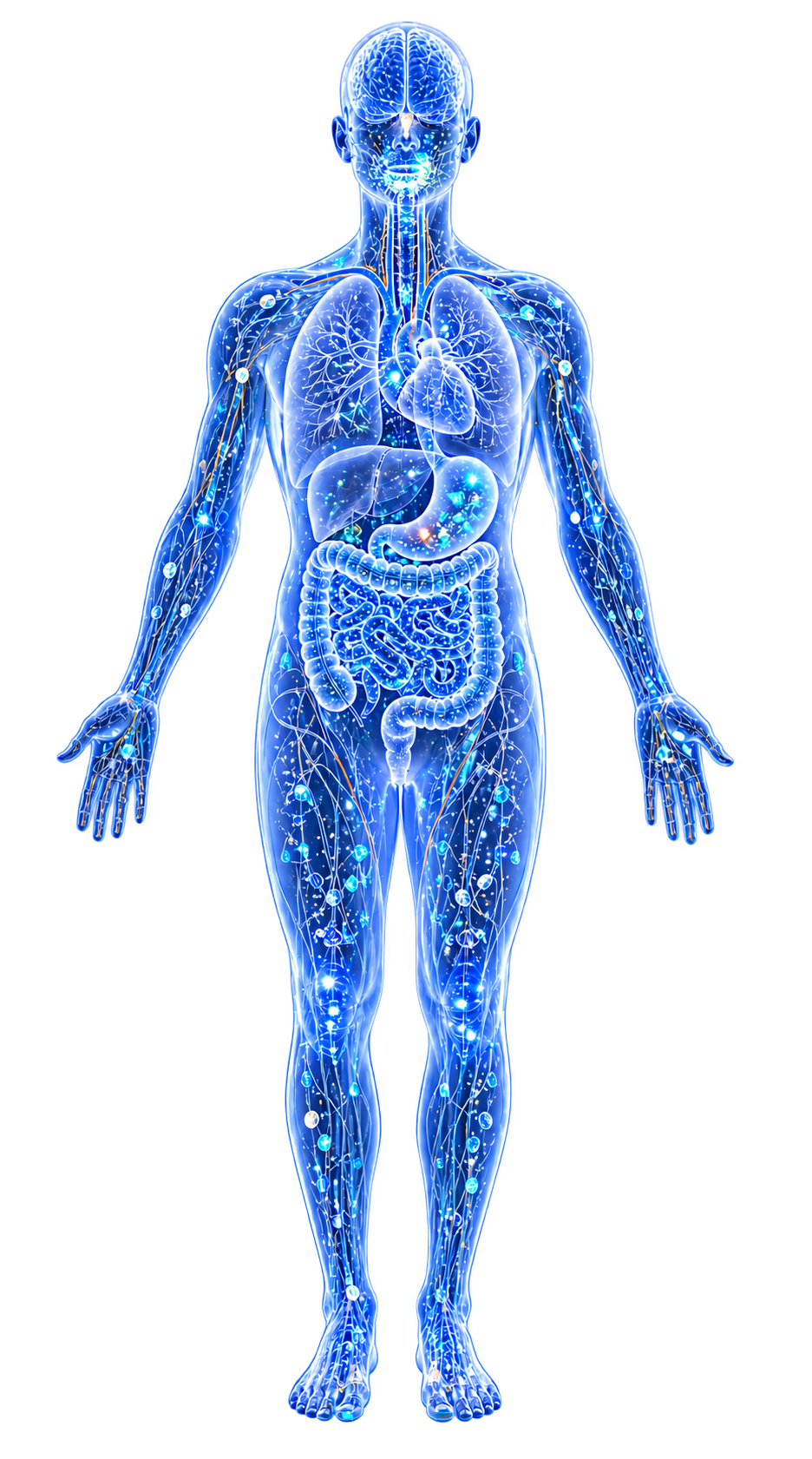
Live microorganisms that, when administered in adequate amounts, confer a health benefit on the host. In the context of this wiki, probiotics are relevant both as therapeutic agents for metal-related diseases and as mediators of Gut-Metal-Microbiome Interactions interactions.
Their capacity to bind metals in the gut lumen is a double-edged sword: beneficial for toxic metal detoxification, but potentially reducing bioavailability of essential trace elements.
Evidence map11 cited passagesInspect provenance +
The most mechanistically detailed probiotic-metal study in this collection uses L. plantarum CCFM8610 against cadmium. This strain was selected because it possesses both strong cadmium-binding ability AND antioxidative capacity—strains with only one property were less effective. The four-part protective mechanism:
In vivo (mouse, 8 weeks), CCFM8610 increased fecal Cd excretion while decreasing Cd accumulation in liver and kidneys. The critical insight is that effective probiotic intervention against heavy metals requires dual functionality—both metal-binding capacity and antioxidative capacity.
Four key modes of probiotic resistance against heavy metal intoxication have been identified:
A low nickel diet combined with targeted probiotics is significantly more effective in restoring gut eubiosis than diet alone in SNAS patients (72.73% vs 41.38% shifted to eubiosis, p=0.026). Fermentative dysbiosis (indicated by elevated urinary indican) was the predominant type (64.71%), suggesting the small bowel microbiota is primarily perturbed. Probioti
An overview of 8 systematic reviews confirms that probiotics improve BMI, fasting plasma glucose (FPG), and lipid profiles in pcos. Prebiotics may actually be more effective than probiotics for anthropometric indices (BMI, waist circumference, hip circumference). Evidence for hormonal outcomes (testosterone, SHBG) remains limited and inconsistent. High heter
Vitamin D co-supplementation (50,000 IU biweekly) with probiotics for 12 weeks significantly improved mental health, reduced total testosterone and hirsutism, decreased hs-CRP and MDA, and increased glutathione and total antioxidant capacity in PCOS women. This suggests synergistic benefits between vitamin D and probiotics, potentially mediated through the g
Clinical improvement: A 12-week RCT (L. acidophilus, L. casei, B. bifidum, L. fermentum) improved EDSS scores, depression, anxiety, hs-CRP, insulin resistance (HOMA-IR), and lipid profiles in MS patients.
Immune modulation: S. thermophilus ST285 shifts the immune response from pro-inflammatory Th1 to anti-inflammatory Th2, significantly increasing IL-4, IL-5, and IL-10 while decreasing IFN-gamma and IL-1beta. The IL-10 increase could drive Treg differentiation, further supporting an anti-inflammatory phenotype.
Microbiome modulation: VSL3 modulates both gut microbiome composition and peripheral immune responses (including Treg populations) in MS patients, providing clinical evidence for the gut brain axis hypothesis.
Probiotics accumulate trace elements including selenium, zinc, and copper, integrating them into organic compounds beneficial for thyroid function. L. reuteri increased T4 count and enhanced T-regulatory cells in mice. Lactobacillus and Bifidobacteria supplementation reduces thyroid cancer complications and decreases oral Prevotella, Fusobacterium, and Haemo
Traditional probiotics have limited metal-resistance properties, motivating development of genetically engineered microorganisms for enhanced detoxification:
Contents
1. Metal Detoxification2. SNAS and Nickel3. PCOS4. Multiple Sclerosis5. Thyroid6. Metal Accumulation Concern7. Genetically Engineered Microorganisms (GEMs)8. ConnectionsMetal Detoxification#
The L. plantarum CCFM8610 Model#
The most mechanistically detailed probiotic-metal study in this collection uses L. plantarum CCFM8610 against Cadmium.[1]Oral Administration of Probiotics Inhibits Absorption of the Heavy Metal Cadmium by Protecting the Intestinal BarrierZhai Q, Wang G, Zhao J et al. · 2016Open reference 1 ↓ This strain was selected because it possesses both strong cadmium-binding ability AND antioxidative capacity—strains with only one property were less effective. The four-part protective mechanism:
- Intestinal metal sequestration: Bacterial cell wall binding of cadmium (Cd) ions in the gut lumen, increasing fecal excretion and reducing systemic absorption
- Alleviation of Oxidative Stress: Antioxidative properties counteract metal-induced ROS, protecting epithelial cells
- Tight junction protection: Preserved expression of ZO-1, ZO-2, occludin, and claudin-1, preventing the vicious cycle where metal-disrupted junctions allow more metal absorption
- Gut immune modulation: Maintained secretory IgA levels and balanced cytokine profiles in the intestinal mucosa
In vivo (mouse, 8 weeks), CCFM8610 increased fecal cadmium excretion while decreasing cadmium accumulation in liver and kidneys. The critical insight is that effective probiotic intervention against Heavy Metals requires dual functionality—both metal-binding capacity and antioxidative capacity.[1]Oral Administration of Probiotics Inhibits Absorption of the Heavy Metal Cadmium by Protecting the Intestinal BarrierZhai Q, Wang G, Zhao J et al. · 2016Open reference 1 ↓
Broader Probiotic Detoxification Mechanisms#
Four key modes of probiotic resistance against heavy metal intoxication have been identified.[2]Potential Application of Living Microorganisms in the Detoxification of Heavy MetalsRunqiu Chen, Huaijun Tu, Tingtao Chen · 2022Open reference 2 ↓ Direct effects on metal absorption and metabolism. Bioaccumulation, binding, and transformation via enzymatic reactions.
Antioxidant and immune regulatory capability.
Reversal of metal-induced Dysbiosis.
Traditional probiotic genera (Lactobacillus, Bifidobacterium, Bacillus, Clostridium) have limitations in metal-resistance properties, motivating the development of genetically engineered approaches (see below).
SNAS and Nickel#
A Low-Nickel Diet combined with targeted probiotics is significantly more effective in restoring gut eubiosis than diet alone in SNAS patients (72.73% vs 41.38% shifted to eubiosis, p=0.026).[3]The Effects of Low-Nickel Diet Combined with Oral Administration of Selected Probiotics on Patients with Systemic Nickel Allergy Syndrome (SNAS) and Gut DysbiosisLombardi F, Fiasca F, Minelli M et al. · 2020Open reference 3 ↓
Fermentative dysbiosis (indicated by elevated urinary indican) was the predominant type (64.71%), suggesting the small bowel microbiota is primarily perturbed. Probiotic formulations were matched to dysbiosis type: Lactobacilli for fermentative, Bifidobacteria for putrefactive, and broad-spectrum multi-strain for mixed.
Benefits were maintained only 4-6 weeks after treatment ended, after which pre-treatment symptoms gradually reappeared.
PCOS#
An overview of 8 systematic reviews confirms that probiotics improve BMI, fasting plasma glucose (FPG), and lipid profiles in Polycystic Ovary Syndrome.[4]The effects of probiotics, prebiotics, and synbiotics on polycystic ovarian syndrome: an overview of systematic reviewsAngoorani P, Ejtahed H-S, Ettehad Marvasti F et al. · 2023Open reference 4 ↓ Prebiotics may actually be more effective than probiotics for anthropometric indices (BMI, waist circumference, hip circumference).
Evidence for hormonal outcomes (testosterone, SHBG) remains limited and inconsistent. High heterogeneity across studies makes it difficult to identify optimal strains, doses, or duration.
Vitamin D co-supplementation (50,000 IU biweekly) with probiotics for 12 weeks significantly improved mental health, reduced total testosterone and hirsutism, decreased hs-CRP and MDA, and increased Glutathione (GSH) and total antioxidant capacity in PCOS women.[5]Vitamin D and probiotic co-supplementation affects mental health, hormonal, inflammatory and oxidative stress parameters in women with polycystic ovary syndromeOstadmohammadi V, Jamilian M, Bahmani F et al. · 2019Open reference 5 ↓
This suggests synergistic benefits between vitamin D and probiotics, potentially mediated through the gut-brain axis.
Multiple Sclerosis#
Three lines of evidence support probiotic benefit in Multiple Sclerosis:
- Clinical improvement: A 12-week RCT (L. acidophilus, L. casei, B. bifidum, L. fermentum) improved EDSS scores, depression, anxiety, hs-CRP, insulin resistance (HOMA-IR), and lipid profiles in MS patients.[6]Clinical and metabolic response to probiotic supplementation in patients with multiple sclerosis: A randomized, double-blind, placebo-controlled trialKouchaki E, Tamtaji OR, Salami M et al. · 2017Open reference 6 ↓
- Immune modulation: S. thermophilus ST285 shifts the immune response from pro-inflammatory Th1 to anti-inflammatory Th2, significantly increasing IL-4, IL-5, and IL-10 while decreasing IFN-gamma and IL-1beta. The IL-10 increase could drive Treg differentiation, further supporting an anti-inflammatory phenotype.[7]Streptococcus thermophilus ST285 Alters Pro-Inflammatory to Anti-Inflammatory Cytokine Secretion against Multiple Sclerosis Peptide in MiceDargahi N, Matsoukas J, Apostolopoulos V · 2020Open reference 7 ↓
- Microbiome modulation: VSL#3 modulates both Gut Microbiome composition and peripheral immune responses (including Treg populations) in MS patients, providing clinical evidence for the Gut-Brain Axis hypothesis.[8]A probiotic modulates the microbiome and immunity in multiple sclerosisTankou SK, Regev K, Healy BC et al. · 2018Open reference 8 ↓
Thyroid#
Probiotics accumulate trace elements including Selenium, Zinc, and copper, integrating them into organic compounds beneficial for thyroid function.[9]Kun et al. 2023 — Exploring the Oral-Gut Microbiota During Thyroid Cancer: Factors Affecting Thyroid Functions and Cancer DevelopmentKun Y, Xiaodong W, Haijun W et al. · 2023Open reference 9 ↓ L. reuteri increased T4 count and enhanced T-regulatory cells in mice. Lactobacillus and Bifidobacteria supplementation reduces thyroid cancer complications and decreases oral Prevotella, Fusobacterium, and Haemophilus.
The gut-thyroid axis connects intestinal microbiome composition to thyroid hormone metabolism, immune regulation, and cancer development.
Metal Accumulation Concern#
The same metal-binding capacity that makes probiotics useful for toxic metal detoxification raises a concern: probiotics may also bind beneficial trace elements (selenium (Se), zinc (Zn), copper (Cu)), potentially reducing their bioavailability.
This is particularly relevant for thyroid function, where selenium and zinc are critical, and for conditions like PCOS where trace element status is already compromised. The dual role of probiotics as both metal scavengers and mineral accumulators requires careful consideration in clinical applications.
Genetically Engineered Microorganisms (GEMs)#
Traditional probiotics have limited metal-resistance properties, motivating development of genetically engineered microorganisms for enhanced detoxification.[2]Potential Application of Living Microorganisms in the Detoxification of Heavy MetalsRunqiu Chen, Huaijun Tu, Tingtao Chen · 2022Open reference 2 ↓ Surface display technology: Using outer membrane proteins (OmpA, OmpC, LamB, INP) to express metal-binding peptides (metallothioneins, phytochelatins) on the bacterial surface, achieving 4-15x higher binding capacity than wild-type.
Transport systems: Expression of specific metal transporters such as NixA (for Nickel/cobalt uptake), enabling selective metal sequestration.
In vivo results: PbrR-displayed E. coli for lead (Pb) (reduced blood/bone lead), CL-displayed E. coli for mercury (Hg) (51.1% less mercury in fish), E. coli tungsten (W)-1 for methylmercury (36.3% decrease in fish tissue).
Limitations: Gene migration risk (40-65% plasmid loss in gut), safety concerns, lack of chronic exposure models, and regulatory hurdles.
The NixA transporter is particularly relevant to nickel-targeted engineered probiotics, potentially applicable to SNAS or occupational nickel exposure.
Connections#
- Gut-Metal-Microbiome Interactions—probiotics operate within the broader gut-metal-microbiome axis
- dysbiosis—probiotics aim to reverse metal-induced or disease-associated dysbiosis
- Glutathione (GSH)—probiotic supplementation increases GSH levels in PCOS and MS trials
- Cadmium—best-characterized probiotic detoxification model (CCFM8610)
- Nickel—SNAS treatment, NixA transporter for GEMs
- Polycystic Ovary Syndrome—probiotics improve metabolic and inflammatory parameters
- Multiple Sclerosis—clinical trials show improved EDSS, Metal-Driven Inflammation, and immune balance
- oxidative stress—antioxidative capacity is essential for effective probiotic metal detoxification
- Gut-Brain Axis—mediates probiotic effects on neurological and mental health outcomes
- Insulin Resistance—improved by probiotics in both PCOS and MS contexts
- Low-Nickel Diet—synergistic with probiotics for SNAS management
References 12
Numbered by first appearance in the article, then reconciled with its declared source list.
- 1
★Zhai Q, Wang G, Zhao J et al. (2016). Oral Administration of Probiotics Inhibits Absorption of the Heavy Metal Cadmium by Protecting the Intestinal Barrier. Appl Environ Microbiol.
- 2
Runqiu Chen, Huaijun Tu, Tingtao Chen (2022). Potential Application of Living Microorganisms in the Detoxification of Heavy Metals. Foods.
- 3
Lombardi F, Fiasca F, Minelli M et al. (2020). The Effects of Low-Nickel Diet Combined with Oral Administration of Selected Probiotics on Patients with Systemic Nickel Allergy Syndrome (SNAS) and Gut Dysbiosis. Nutrients.
- 4
Angoorani P, Ejtahed H-S, Ettehad Marvasti F et al. (2023). The effects of probiotics, prebiotics, and synbiotics on polycystic ovarian syndrome: an overview of systematic reviews. Frontiers in Medicine.
- 5
Ostadmohammadi V, Jamilian M, Bahmani F et al. (2019). Vitamin D and probiotic co-supplementation affects mental health, hormonal, inflammatory and oxidative stress parameters in women with polycystic ovary syndrome. Journal of Ovarian Research.
- 6
Kouchaki E, Tamtaji OR, Salami M et al. (2017). Clinical and metabolic response to probiotic supplementation in patients with multiple sclerosis: A randomized, double-blind, placebo-controlled trial. Clinical Nutrition.
- 7
Dargahi N, Matsoukas J, Apostolopoulos V (2020). Streptococcus thermophilus ST285 Alters Pro-Inflammatory to Anti-Inflammatory Cytokine Secretion against Multiple Sclerosis Peptide in Mice. Brain Sciences.
- 8
Tankou SK, Regev K, Healy BC et al. (2018). A probiotic modulates the microbiome and immunity in multiple sclerosis. Annals of Neurology.
- 9
Kun Y, Xiaodong W, Haijun W et al. (2023). Kun et al. 2023 — Exploring the Oral-Gut Microbiota During Thyroid Cancer: Factors Affecting Thyroid Functions and Cancer Development. Food Science and Nutrition.
- 10
Calcaterra V, Rossi V, Massini G et al. (2023). Probiotics and Polycystic Ovary Syndrome: A Perspective for Management in Adolescents with Obesity. Nutrients.
- 11
★Hui Duan, Leilei Yu, Fengwei Tian et al. (2020). Gut Microbiota: A Target for Heavy Metal Toxicity and a Probiotic Protective Strategy. Science of the Total Environment.
- 12
★Liliana Anchidin-Norocel, Oana C. Iatcu, Andrei Lobiuc et al. (2025). Heavy Metal-Gut Microbiota Interactions: Probiotics Modulation and Biosensors Detection. Biosensors.
Article network
Mentioned here 17
Pages linking here 33
Connect the evidence
Publicly readable discussion by ORCID-authenticated researchers. Questions, interpretation, methods, corrections, and new evidence stay attached to this record.
No discussion yet. Start with a precise question or a source-backed observation.
Activity and accepted changes
Accepted researcher context, editorial status, public discussion, and upstream Git revisions are shown together. Pending, declined, and withdrawn proposals remain private.
- published revision
Backfill heavy metals concept links
Karen Pendergrass · +1 −1
Inspect exact Git diff ↗ - published revision
Backfill oxidative stress concept links
Karen Pendergrass · +1 −1
Inspect exact Git diff ↗ - published revision
Backfill gut microbiome concept links
Karen Pendergrass · +1 −1
Inspect exact Git diff ↗ - published revision
Backfill inflammation concept links
Karen Pendergrass · +1 −1
Inspect exact Git diff ↗ - published revision
Complete corpus-wide Dysbiosis linking
Karen Pendergrass · +2 −2
Inspect exact Git diff ↗ - published revision
Complete Tight junctions contextual coverage
Karen Pendergrass · +1 −1
Inspect exact Git diff ↗ - published revision
massive wiki expansion: 149 stubs fixed, 100+ new pages, Rule 15 scan, keystone papers
WikiBiome Deploy Bot · +12 −12
Inspect exact Git diff ↗ - published revision
nightly maintenance: 94 stub demotions, 181 source_count fixes, 22 auto-discovered stubs, 5 adversarial audits, 3 boundary fixes, 3 evidence-level corrections
WikiBiome Deploy Bot · +1 −0
Inspect exact Git diff ↗ - published revision
pre-overnight checkpoint 2026-04-18
WikiBiome Deploy Bot · +3 −1
Inspect exact Git diff ↗ - published revision
WikiBiome update — 2026-04-15 17:23
WikiBiome Deploy Bot · +0 −1
Inspect exact Git diff ↗ - published revision
WikiBiome update — integrity fixes, metallomic diet pages, cross-condition analyses
WikiBiome Deploy Bot · +9 −0
Inspect exact Git diff ↗ - published revision
WikiBiome v7 — interactive microbiome metallomics encyclopedia
Karen Pendergrass · +86 −0
Inspect exact Git diff ↗