
 metals · microbes · host
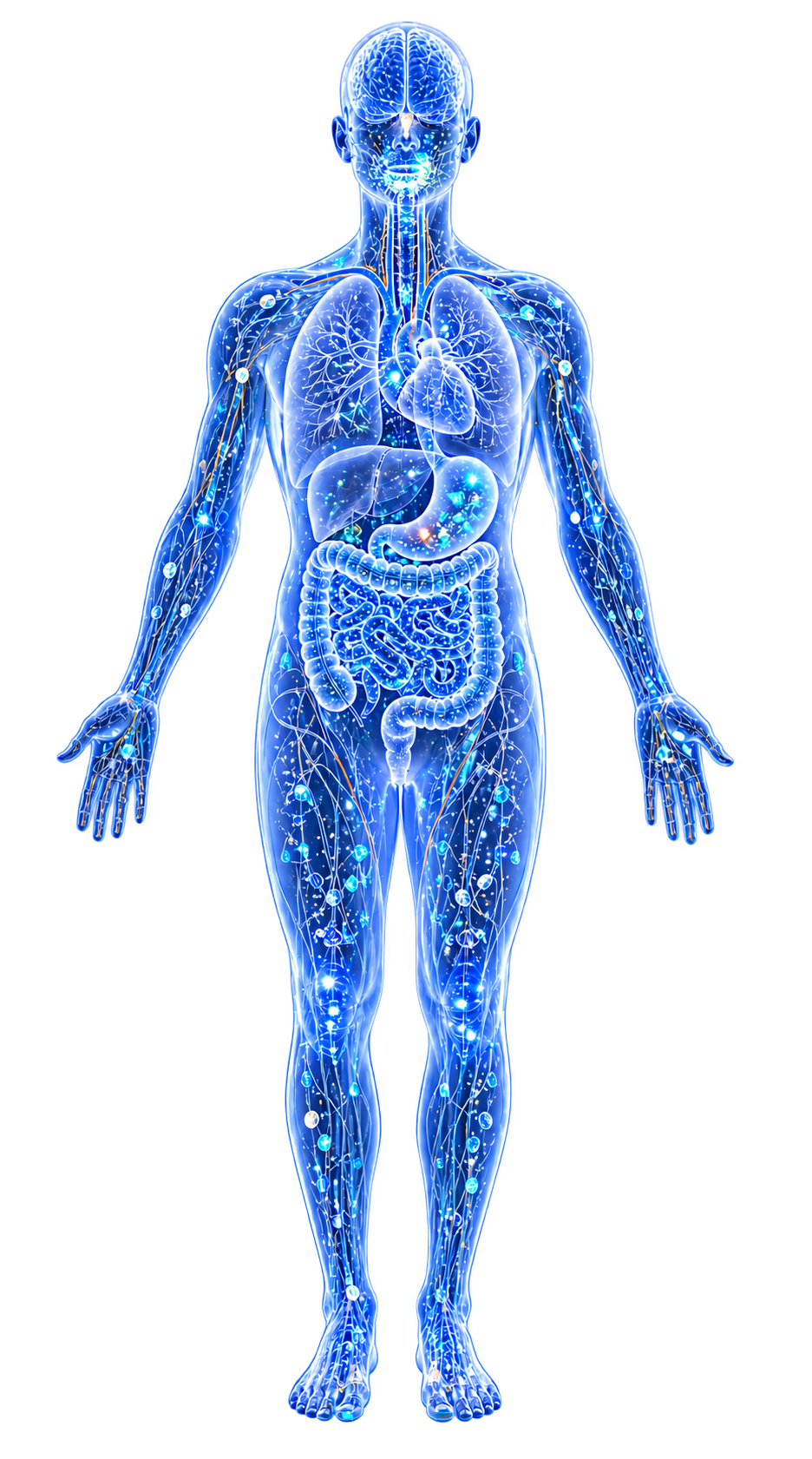
Representative colonic-mucosa orientation for ulcerative colitis. The illustrative surface change is not literal histology and does not establish a Crohn-disease comparison, disease extent, activity, complication, severity, prognosis, or diagnosis.
Scientific media record1 verified identifier
- Subject
- Colitis, Ulcerativecondition
- Identifiers
- MeSH:D003093
- Review
- Editorial review completeIdentifiers authority-verified · Accessibility validated · · ulcerative-colitis|ulcerative-colitis-pathology-v1.webp
- Digital source
- Trained-algorithmic mediaCreated with a trained generative algorithm and reviewed by WikiBiome for subject identity, scientific framing, identifiers, provenance, and accessibility.
- License
- CC BY-SA 4.0Created
A chronic Inflammatory Bowel Disease (IBD) characterized by continuous mucosal Metal-Driven Inflammation of the colon, extending proximally from the rectum. Unlike Crohn's Disease, UC is limited to the colon, affects only the mucosa/submucosa (not transmural), produces no skip lesions, and has no granulomas.
From a metallomics perspective, UC presents a distinct metal signature from Crohn's, driven by chronic blood loss, mucosal inflammation, and a microbiome collapse that differs in character from the Crohn's pattern.
Evidence map8 cited passagesInspect provenance +
Iron was negatively associated with myeloperoxidase (MPO) in UC patients (Beta: -1.270x10^3, p=0.044)
Copper positively associated with CRP in CD patients; similar pattern likely in UC flares
Manganese also lower in UC (1.4) vs. healthy controls (2.4, p=0.041)
Thallium was positively associated with disease activity (PMS) in UC (Beta: 3.899, p<0.01). This is a novel finding requiring replication.
Heavy metals (Cd, Pb, As, Hg) disrupt gut barrier integrity through downregulation of tight junction proteins (ZO-1, claudin-1, occludin), compounding the mucosal barrier failure already present in UC
Lead reduces colonic MUC2 and tight junction proteins; Pb-intolerant gut microbes (A. muciniphila, F. prausnitzii) are further depleted
Cadmium reduces ZO-1, ZO-2, JAM-A, and decreases Akkermansia muciniphila at low doses
Thallium—The novel positive association with UC disease activity needs replication. What is the mechanism?
One disease. Five evidence layers.
A generated systems view of the metals, organisms, host sequestration signals, ecological conditions, and microbial functions indexed for Ulcerative Colitis.
Evidence layer
Taxonomic signature
Organisms reported as enriched or depleted, with their indexed functional context kept beside the name.Adherent-invasive E. coli (AIEC) — enriched in inflamed mucosa; high iron requirement fueled by mucosal bleeding
Expands in the depleted ecosystem; opportunistic expansion when competitors are lost
Associated with colorectal neoplasia in longstanding UC; adhesin-mediated mucosal invasion
Mucin degrader — enriched in UC flares; thins mucus layer exposing epithelium
Most consistently depleted taxon in UC — produces butyrate and induces IL-10; hallmark of active disease
Major butyrate producer — lost in UC; butyrate is primary colonocyte fuel
SCFA-producing family — depleted in UC; donor Lachnospiraceae abundance predicts FMT response
Reduced diversity within this genus in UC
Evidence layer
Nutritional immunity
Host metal-withholding, inflammatory, antioxidant, and microbial-metabolite signals indexed in the signature.Elevated host signals
5Depleted protective signals
3Evidence layer
Ecological state
The environmental conditions that connect the organism-level observations into a system.Evidence layer
Virulence functions
Microbial structures, enzymes, and acquisition systems implicated by the linked evidence.The disease record, in full.
The original WikiBiome disease narrative remains intact beneath the generated signature atlas.
Metallomic Signature#
Iron -- The Bleeding Metal#
Iron deficiency is the dominant metal abnormality in UC, driven by chronic mucosal bleeding. Prevalence: 60-80% of active UC patients have iron deficiency; 30-40% have frank anemia. Mechanism: Chronic blood loss from ulcerated mucosa + hepcidin elevation from inflammation → functional iron deficiency even with adequate stores.
The iron paradox: Oral iron supplementation worsens UC by feeding iron-dependent pathobionts (E. coli, Klebsiella), increasing Oxidative Stress in the inflamed mucosa, and shifting the microbiome toward Dysbiosis. IV iron bypasses the gut but still raises hepcidin.
Ferritin is unreliable as an iron marker in UC (acute phase reactant; elevated by inflammation).
Copper -- Elevated in Active Disease#
Serum copper and ceruloplasmin rise during UC flares (acute phase response). Tissue copper may be depleted despite elevated serum levels. copper (Cu)/zinc (Zn) ratio is elevated and correlates with disease activity.
Ceruloplasmin's ferroxidase activity links copper to iron handling.
Zinc -- Depleted and Protective#
Serum zinc is consistently low in active UC. Zinc deficiency impairs mucosal healing, reduces tight junction integrity, and weakens antimicrobial peptide (defensin) production. Zinc supplementation in UC improves barrier function and reduces relapse in small trials.
ZIP8 transporter polymorphism (A391T) alters zinc handling in the gut—see Crohn's Disease for the genetics.
Selenium -- Deficient with Consequences#
Selenium deficiency is common in UC and correlates with disease severity. selenium (Se) is required for glutathione peroxidase (antioxidant defense in inflamed mucosa). selenium deficiency impairs Treg function (see Immune Balance), potentially perpetuating the autoimmune component.
Microbiome in UC#
UC has a characteristic dysbiotic signature:
Depleted Taxa#
- Faecalibacterium prausnitzii—the most consistently depleted taxon in UC; produces Butyrate, has direct anti-inflammatory effects (IL-10 induction); its absence is a hallmark of active disease
- Roseburia—another major butyrate producer lost in UC
- Bacteroides—reduced diversity within this genus
- Overall diversity—alpha diversity reduced, particularly during flares
Enriched Taxa#
- Escherichia coli—especially adherent-invasive E. coli (AIEC); enriched in inflamed mucosa; high iron requirement fuels expansion when mucosal bleeding provides iron
- Enterococcus—expands in the depleted ecosystem
- Fusobacterium—associated with colorectal neoplasia in longstanding UC
- Ruminococcus gnavus—mucin degrader enriched in UC flares
Metabolic Consequences#
Short-Chain Fatty Acids (SCFAs) (especially butyrate) are profoundly reduced in UC. Butyrate is the primary fuel for colonocytes—its depletion creates an energy crisis in the epithelium. Reduced SCFA → weakened barrier function → increased translocation → more inflammation → a vicious cycle.
Bile acid metabolism is altered (reduced secondary bile acids from microbial deconjugation).
Distinguishing UC from Crohn's: The Metallomic View#
| Feature | Ulcerative Colitis | Crohn's Disease |
|---|---|---|
| Iron deficiency | Dominant (bleeding) | Present (malabsorption) |
| Copper | Elevated (acute phase) | Variable |
| Zinc | Depleted | Depleted + ZIP8 genetic link |
| Selenium | Depleted | Depleted |
| Calprotectin (S100A8/A9) | Very high (>250 mcg/g in active) | High but more variable |
| Key depleted taxa | F. prausnitzii, Roseburia | F. prausnitzii + broader loss |
| Key enriched taxa | E. coli, Enterococcus | AIEC, Ruminococcus gnavus |
| FMT evidence | Stronger (multiple positive RCTs) | Weaker (case series) |
Fecal Microbiota Transplantation (FMT)#
UC has the strongest FMT evidence of any IBD subtype. Multiple RCTs show clinical remission in 25-35% of UC patients (vs. 5-10% placebo). Donor microbiome diversity predicts response—donors with high Lachnospiraceae and Ruminococcaceae abundance produce better outcomes.
FMT restores butyrate production and F. prausnitzii populations.
Metal implications: FMT may normalize the metal-handling capacity of the microbiome (metal-binding, biotransformation), though this is unstudied.
The Iron-Pathobiont Feedback Loop#
A UC-specific vicious cycle. Mucosal ulceration → bleeding → luminal iron excess. Luminal iron feeds iron-dependent E. coli and Enterobacteriaceae.
Pathobiont expansion → more inflammation → more tissue damage.
More bleeding → more luminal iron → cycle accelerates. Simultaneously, systemic iron deficiency worsens (blood loss outpaces absorption).
This explains why oral iron is generally avoided during active UC flares and why iron-restricted pathobiont control is a recognized research target.
Connections#
- Inflammatory Bowel Disease (IBD)—the parent category; UC is the mucosal-limited colonic subtype
- Crohn's Disease—the key differential; distinct metal signature and microbiome pattern
- Iron—dominant metal abnormality; chronic mucosal bleeding drives deficiency; oral iron feeds pathobionts
- Zinc—depleted in active UC; supplementation improves barrier function and reduces relapse
- Copper—elevated serum copper (Cu) during flares (acute phase response); copper/zinc (Zn) ratio tracks disease activity
- Selenium—deficiency common and correlates with severity; required for antioxidant defense
- Calprotectin (S100A8/A9)—primary non-invasive biomarker; very high (>250 mcg/g) in active disease
- dysbiosis—F. prausnitzii and Roseburia depletion; E. coli and Enterococcus enrichment
- Short-Chain Fatty Acids (SCFAs)—profound butyrate reduction creates colonocyte energy crisis
- Intestinal Permeability—barrier dysfunction central to the inflammation-translocation vicious cycle
- Immune Balance—Th17/Treg imbalance perpetuates mucosal inflammation
- Fecal Microbiota Transplant (FMT)—strongest FMT evidence of any IBD subtype; 25-35% clinical remission
- Probiotics—VSL#3 for maintaining remission; E. coli Nissle 1917 efficacy comparable to mesalazine
- Pharmacomicrobiomics—bacterial azoreductases convert sulfasalazine to active 5-ASA
References 6
Numbered by first appearance in the article, then reconciled with its declared source list.
- 1
Amerikanou C, Karavoltsos S, Gioxari A et al. (2022). Clinical and inflammatory biomarkers of inflammatory bowel diseases are linked to plasma trace elements and toxic metals; new insights into an old concept. Frontiers in Nutrition.
- 2
★Yang JC, Zhao M, Chernikova D et al. (2024). ZIP8 A391T Crohn's Disease-Linked Risk Variant Induces Colonic Metal Ion Dyshomeostasis, Microbiome Compositional Shifts, and Inflammation. Digestive Diseases and Sciences.
- 3
★Sweta Ghosh, Syam P. Nukavarpu, Venkatakrishna Rao Jala (2024). Effects of Heavy Metals on Gut Barrier Integrity and Gut Microbiota. Microbiota and Host.
- 4
M. Firoze Khan, Hui Wang (2020). Environmental Exposures and Autoimmune Diseases: Contribution of Gut Microbiome. Frontiers in Immunology.
- 5
★Federica Giambo, Sebastiano Italia, Michele Teodoro et al. (2021). Influence of Toxic Metal Exposure on the Gut Microbiota (Review). World Academy of Sciences Journal.
- 6
★Qinheng Zhu, Boyan Chen, Fu Zhang et al. (2024). Toxic and Essential Metals: Metabolic Interactions with the Gut Microbiota and Health Implications. Frontiers in Nutrition.
Article network
Mentioned here 17
Pages linking here 14
Connect the evidence
Publicly readable discussion by ORCID-authenticated researchers. Questions, interpretation, methods, corrections, and new evidence stay attached to this record.
No discussion yet. Start with a precise question or a source-backed observation.
Activity and accepted changes
Accepted researcher context, editorial status, public discussion, and upstream Git revisions are shown together. Pending, declined, and withdrawn proposals remain private.
- published revision
Backfill inflammation concept links
Karen Pendergrass · +4 −4
Inspect exact Git diff ↗ - published revision
Complete corpus-wide Dysbiosis linking
Karen Pendergrass · +1 −1
Inspect exact Git diff ↗ - published revision
massive wiki expansion: 149 stubs fixed, 100+ new pages, Rule 15 scan, keystone papers
WikiBiome Deploy Bot · +12 −12
Inspect exact Git diff ↗ - published revision
nightly maintenance: 94 stub demotions, 181 source_count fixes, 22 auto-discovered stubs, 5 adversarial audits, 3 boundary fixes, 3 evidence-level corrections
WikiBiome Deploy Bot · +1 −0
Inspect exact Git diff ↗ - published revision
semantic integrity pass: boundary fixes, 10 interventions, 31 STOPs, 2 supersessions, keystone revalidation
WikiBiome Deploy Bot · +1 −1
Inspect exact Git diff ↗ - published revision
cycle 1: health check + lint fixes + 8 ingests + 2 stubs + gestational-diabetes signature
WikiBiome Deploy Bot · +1 −0
Inspect exact Git diff ↗ - published revision
pre-overnight checkpoint 2026-04-18
WikiBiome Deploy Bot · +5 −5
Inspect exact Git diff ↗ - published revision
Citation integrity pass: 38 citations added, 24 parenthesized citations fixed
WikiBiome Deploy Bot · +1 −8
Inspect exact Git diff ↗ - published revision
v2 migration Priority 2: All 29 disease entity pages upgraded with associated_conditions, seo_target, wikipedia_differentiation
WikiBiome Deploy Bot · +6 −0
Inspect exact Git diff ↗ - published revision
WikiBiome v2 migration: signature pages + safety fixes + gap analysis
WikiBiome Deploy Bot · +25 −9
Inspect exact Git diff ↗ - published revision
WikiBiome update — 2026-04-11 22:49
WikiBiome Deploy Bot · +114 −0
Inspect exact Git diff ↗