
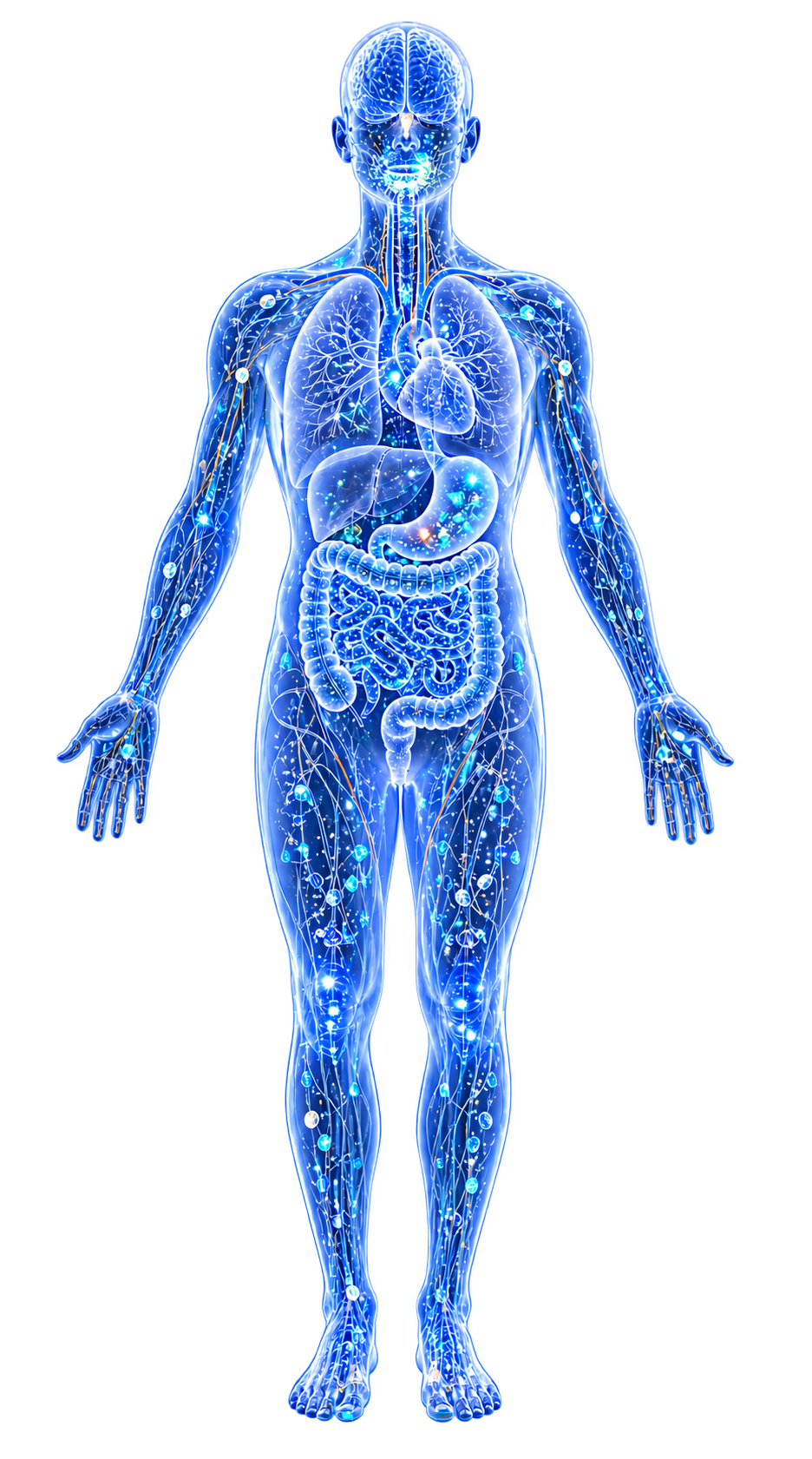
 metals · microbes · host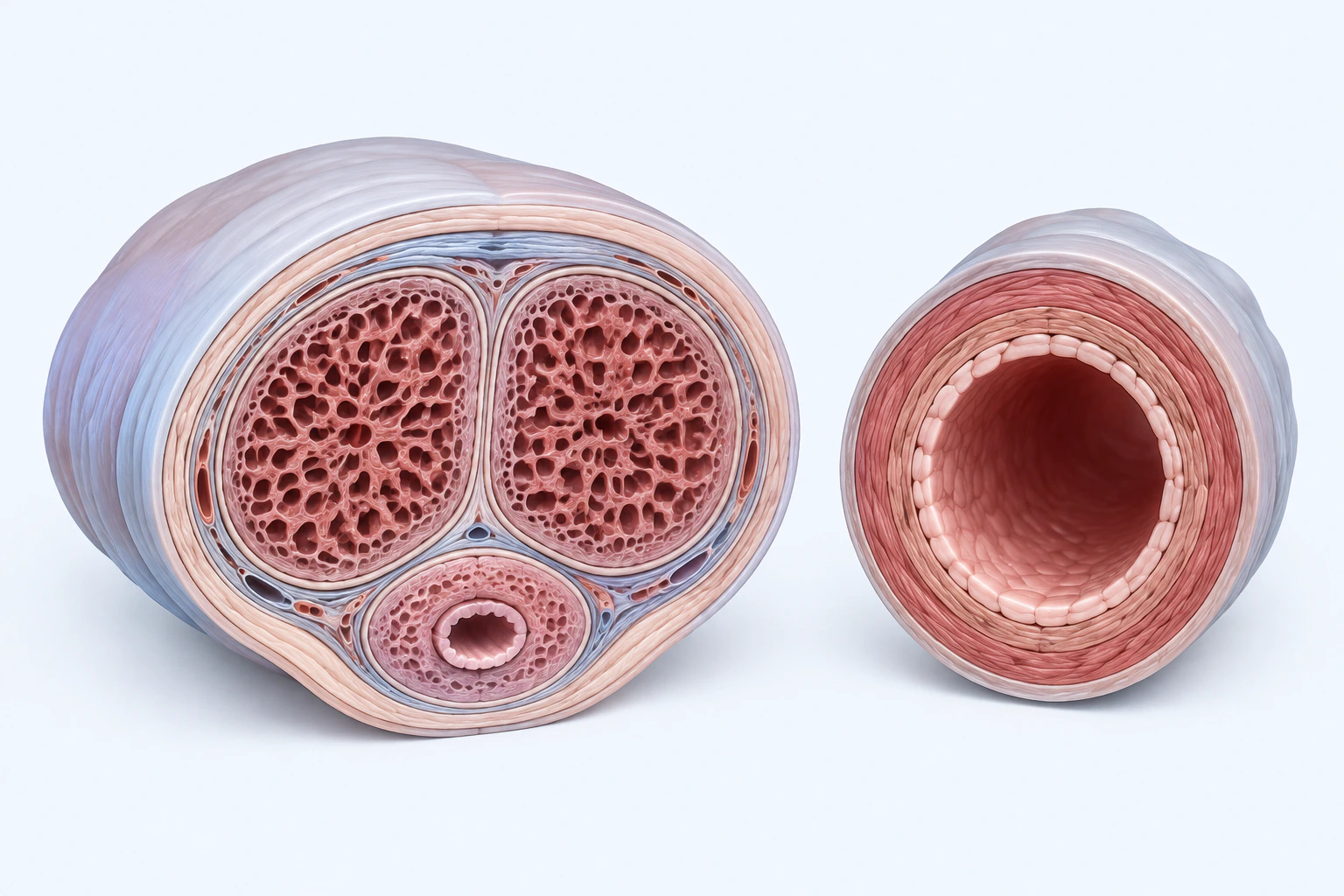
Internal erectile-tissue and vascular orientation for erectile dysfunction. The reconstruction depicts neither a person nor an arousal state and does not establish a cause, disease state, treatment effect, severity, or diagnosis.
Scientific media record1 verified identifier
- Subject
- Erectile Dysfunctioncondition
- Identifiers
- MeSH:D007172
- Review
- Editorial review completeIdentifiers authority-verified · Accessibility validated · · erectile-dysfunction|erectile-dysfunction-pathology-v1.webp
- Digital source
- Trained-algorithmic mediaCreated with a trained generative algorithm and reviewed by WikiBiome for subject identity, scientific framing, identifiers, provenance, and accessibility.
- License
- CC BY-SA 4.0Created
Erectile dysfunction (ED) affects 30-50% of men aged 40-70 Feldman et al. 1994, with prevalence increasing with age. Conventionally understood as a vascular and/or neurogenic disorder, ED is now recognized as a condition with a significant Gut Microbiome component—the emerging gut-penis axis concept lithium (Li) et al. 2026.
Three concordant Mendelian randomization studies have validated specific causal taxa, and the mechanistic pathway from gut Dysbiosis to penile vascular dysfunction is well-characterized.
Evidence map3 cited passagesInspect provenance +
Cadmium accumulates in testicular tissue and disrupts testosterone biosynthesis
Cadmium disrupts the blood-testis barrier, enabling further toxicant entry
Cadmium (elevated): Established reproductive toxicant. Cadmium accumulates in testicular tissue, disrupts testosterone biosynthesis, damages penile endothelium, and disrupts the blood-testis barrier. The finding that FMT rescues cadmium-induced ED (Cai et al. 2022) demonstrates that the microbiome mediates at least part of cadmium's reproductive toxicity.
One disease. Five evidence layers.
A generated systems view of the metals, organisms, host sequestration signals, ecological conditions, and microbial functions indexed for Erectile Dysfunction.
Evidence layer
Taxonomic signature
Organisms reported as enriched or depleted, with their indexed functional context kept beside the name.Family-level MR-validated causal risk (OR=1.265 across 3 independent MR studies); most consistently validated risk taxon; may reflect pro-inflammatory species within a normally beneficial family
MR causal (OR=1.355) — enriched in ED; functional role under investigation
MR causal (OR=1.201) — associated with metabolic dysfunction and inflammation
Tyzzerella 3 — enriched in ED; associated with cardiovascular risk
Pro-inflammatory; produces inflammatory polysaccharides; enriched in multiple inflammatory conditions
Enriched in ED; pro-inflammatory
Ruminococcaceae UCG013 — MR-validated protective (OR=0.761-0.827 across 3 studies); most consistently protective taxon in ED
Bacteroides intestinalis — protective association; loss impairs polysaccharide fermentation
MR-validated protective taxon (OR=0.761-0.827 across 3 studies); most consistently validated protective taxon
Protective association; polysaccharide fermenter
H2S producer; H2S relaxes corporal smooth muscle independently of NO; depletion compounds NO deficit
Evidence layer
Nutritional immunity
Host metal-withholding, inflammatory, antioxidant, and microbial-metabolite signals indexed in the signature.Elevated host signals
5Depleted protective signals
4Evidence layer
Ecological state
The environmental conditions that connect the organism-level observations into a system.Evidence layer
Virulence functions
Microbial structures, enzymes, and acquisition systems implicated by the linked evidence.The disease record, in full.
The original WikiBiome disease narrative remains intact beneath the generated signature atlas.
The Gut-Penis Axis#
The gut-penis axis describes a systemic inflammatory pathway connecting intestinal dysbiosis to erectile function:
- Dysbiotic gut communities produce excess lipopolysaccharide (LPS) and pro-inflammatory metabolites
- Intestinal barrier dysfunction permits LPS translocation into systemic circulation
- Circulating LPS activates TLR4 on endothelial cells, upregulating TNF-alpha and IL-6
- TNF-alpha and IL-6 suppress endothelial nitric oxide synthase (eNOS) in penile vasculature
- Reduced NO synthesis impairs smooth muscle relaxation and vasodilation required for erection
This pathway explains why ED is a sentinel marker for cardiovascular disease—the same endothelial dysfunction affecting penile arteries precedes coronary artery disease by 3-5 years.
Microbiome Associations#
Three Concordant MR Studies#
The strength of the gut-ED connection lies in the remarkable consistency across three independent Mendelian randomization analyses:
Causal risk taxa. Lachnospiraceae (family level)—OR = 1.265 across all 3 MR studies Zhang et al. 2023, Chen et al. 2024, Su et al. 2023, the most consistently validated risk taxon.
Senegalimassilia—OR = 1.355 Su et al. 2023. Oscillibacter—OR = 1.201.
Tyzzerella 3—enriched in ED.
Ruminococcus gnavus—pro-inflammatory; enriched in multiple inflammatory conditions.
Protective taxa. Ruminococcaceae UCG013—OR = 0.761-0.827 across 3 MR studies Zhang et al. 2023, Chen et al.
2024, Su et al. 2023, the most consistently validated protective taxon.
Bacteroides intestinalis—protective association.
Functional Implications#
The enrichment of Lachnospiraceae in ED is notable because this family is typically considered beneficial in other contexts (Butyrate production). The ED-associated enrichment may reflect specific pro-inflammatory species within the family, or an ecological shift where Lachnospiraceae displaces more protective taxa.
Cadmium as Reproductive Toxicant#
Cadmium is established as a reproductive toxicant with direct effects on erectile function:
- Cadmium accumulates in testicular tissue and disrupts testosterone biosynthesis[1]Effects of Heavy Metals on Gut Barrier Integrity and Gut MicrobiotaSweta Ghosh, Syam P. Nukavarpu, Venkatakrishna Rao Jala · 2024Open reference 1 ↓
- cadmium (Cd) exposure damages penile endothelium, impairing NO-mediated vasodilation
- In animal models, fecal microbiota transplantation (FMT) rescues cadmium-induced erectile dysfunction, demonstrating that the microbiome mediates at least part of cadmium's reproductive toxicity Cai et al. 2022
- Cadmium disrupts the blood-testis barrier, enabling further toxicant entry[1]Effects of Heavy Metals on Gut Barrier Integrity and Gut MicrobiotaSweta Ghosh, Syam P. Nukavarpu, Venkatakrishna Rao Jala · 2024Open reference 1 ↓
Testosterone and the Gut Microbiome#
Gut bacteria regulate testosterone levels through hydroxysteroid dehydrogenase (HSDH) enzymes that interconvert active and inactive steroid hormones Lv et al. 2024. Dysbiotic communities with altered HSDH activity may reduce bioavailable testosterone, contributing to both ED and the associated metabolic syndrome.
Hydrogen Sulfide and Erection#
Desulfovibrio and other sulfate-reducing bacteria produce hydrogen sulfide (H2S), which functions as a gasotransmitter in penile tissue Cai et al. 2022. H2S relaxes corporal smooth muscle independently of NO, providing a secondary pathway for erection.
Depletion of H2S-producing taxa may compound the NO deficit from LPS-mediated eNOS suppression.
Metal Associations#
Beyond cadmium, the metallomic context of ED intersects with cardiovascular metal signatures: lead and mercury impair endothelial function systemically, while zinc deficiency reduces testosterone synthesis and impairs immune tolerance.
Open Questions#
Unresolved questions identified by the current evidence record.
01What specific Lachnospiraceae species drive the causal risk association—can strain-level resolution identify the culprit?+
The current WikiBiome record identifies this as an unresolved evidence gap.
02Does the FMT rescue of cadmium-induced ED translate to human interventions?+
The current WikiBiome record identifies this as an unresolved evidence gap.
03Can Ruminococcaceae UCG013 supplementation prevent or reverse ED?+
The current WikiBiome record identifies this as an unresolved evidence gap.
04Is the H2S pathway from Desulfovibrio therapeutically targetable?+
The current WikiBiome record identifies this as an unresolved evidence gap.
Cross-References#
- Cardiovascular Disease—shared endothelial dysfunction, ED as 3-5 year sentinel
- Type 2 Diabetes—shared insulin resistance, endothelial dysfunction, Lachnospiraceae enrichment
- Depression—bidirectional comorbidity, shared inflammatory pathways
- Cadmium—reproductive toxicant with FMT-rescuable effects
- Testosterone—gut bacteria regulate testosterone via HSDH enzymes; deficiency contributes to ED
- Gut-Brain Axis—the gut-penis axis is a vascular extension of gut-brain inflammatory signaling
- dysbiosis—Lachnospiraceae enrichment and SCFA-producer depletion drive endothelial dysfunction
References 9
Numbered by first appearance in the article, then reconciled with its declared source list.
- 1
★Sweta Ghosh, Syam P. Nukavarpu, Venkatakrishna Rao Jala (2024). Effects of Heavy Metals on Gut Barrier Integrity and Gut Microbiota. Microbiota and Host.
- 2
Cristina Vocca, Diana Marisol Abrego-Guandique, Erika Cione et al. (2025). Vocca 2025 — Probiotics in the Management of Chronic Bacterial Prostatitis: A Randomized, Double-Blind Trial to Evaluate a Possible Link Between Gut Microbiota Restoring and Symptom Relief. Microorganisms.
- 3
Zirun Jin, Yuzhuo Yang, Yalei Cao et al. (2023). Jin 2023 — Gut Metabolite 3-HPAA Rejuvenates Spermatogenic Dysfunction in Aged Mice through GPX4-Mediated Ferroptosis. Microbiome.
- 4
Anna C. Salvador, M. Nazmul Huda, Danny Arends et al. (2023). Salvador 2023 — Strain, Sex, and Diet-Dependent Modulation of Gut Microbiota Reveals Candidate Keystone Organisms. Microbiome.
- 5
Yan Guo, Yunhua Dong, Runzi Zheng et al. (2024). Guo 2024 — Correlation Between Viral Infections in Male Semen and Infertility: A Literature Review. Virology Journal.
- 6
Adriel Latorre-Pérez, Marta Hernández, Jose Ramón Iglesias et al. (2021). Latorre-Pérez 2021 — The Spanish Gut Microbiome Reveals Links Between Microorganisms and Mediterranean Diet. Scientific Reports.
- 7
Roy H. Stevens, Hongming Zhang, Michal Kajsik et al. (2023). Stevens 2023 — Successful Use of a Phage Endolysin for Treatment of CPPS/Chronic Bacterial Prostatitis. Frontiers in Medicine.
- 8
Yi Lu, Jiaqi Kang, Zhongjia Li et al. (2021). Lu 2021 — Plant-Based Diet and Erectile Dysfunction in Chinese Men. Basic and Clinical Andrology.
- 9
Jhommara Bautista, Walter D. Cardona-Maya, Kelly Gancino-Guevara et al. (2025). Bautista 2025 — Reprogramming Prostate Cancer Through the Microbiome. Frontiers in Medicine.
Article network
Mentioned here 10
Pages linking here 9
Connect the evidence
Publicly readable discussion by ORCID-authenticated researchers. Questions, interpretation, methods, corrections, and new evidence stay attached to this record.
No discussion yet. Start with a precise question or a source-backed observation.
Activity and accepted changes
Accepted researcher context, editorial status, public discussion, and upstream Git revisions are shown together. Pending, declined, and withdrawn proposals remain private.
- published revision
Backfill gut microbiome concept links
Karen Pendergrass · +1 −1
Inspect exact Git diff ↗ - published revision
Complete corpus-wide Dysbiosis linking
Karen Pendergrass · +2 −2
Inspect exact Git diff ↗ - published revision
massive wiki expansion: 149 stubs fixed, 100+ new pages, Rule 15 scan, keystone papers
WikiBiome Deploy Bot · +30 −24
Inspect exact Git diff ↗ - published revision
ingest: 87 papers (17 endometriosis, 67 erectile dysfunction, 3 cross-condition)
WikiBiome Deploy Bot · +76 −50
Inspect exact Git diff ↗ - published revision
nightly maintenance: 94 stub demotions, 181 source_count fixes, 22 auto-discovered stubs, 5 adversarial audits, 3 boundary fixes, 3 evidence-level corrections
WikiBiome Deploy Bot · +2 −0
Inspect exact Git diff ↗ - published revision
cycle 1: health check + lint fixes + 8 ingests + 2 stubs + gestational-diabetes signature
WikiBiome Deploy Bot · +1 −0
Inspect exact Git diff ↗ - published revision
Deepen metal/concept entities + 8 new sources for T1D/schizophrenia
WikiBiome Deploy Bot · +168 −0
Inspect exact Git diff ↗ - published revision
Citation integrity pass: 38 citations added, 24 parenthesized citations fixed
WikiBiome Deploy Bot · +9 −9
Inspect exact Git diff ↗ - published revision
Health check fixes: 40 intervention pages + 14 entity Connections sections
WikiBiome Deploy Bot · +3 −0
Inspect exact Git diff ↗ - published revision
Final 5 condition signatures + chelation library (Primitive 4/8)
WikiBiome Deploy Bot · +89 −0
Inspect exact Git diff ↗