
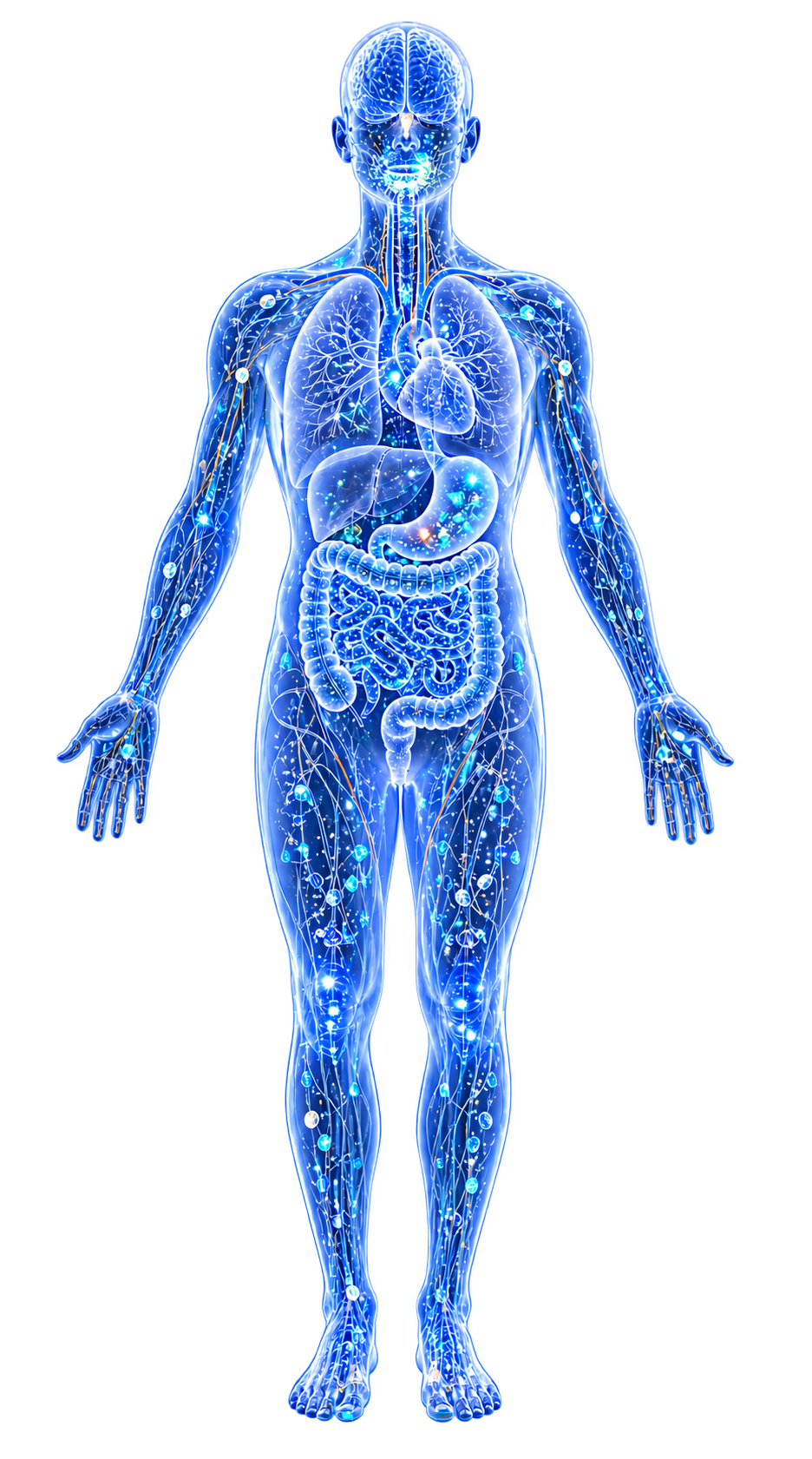
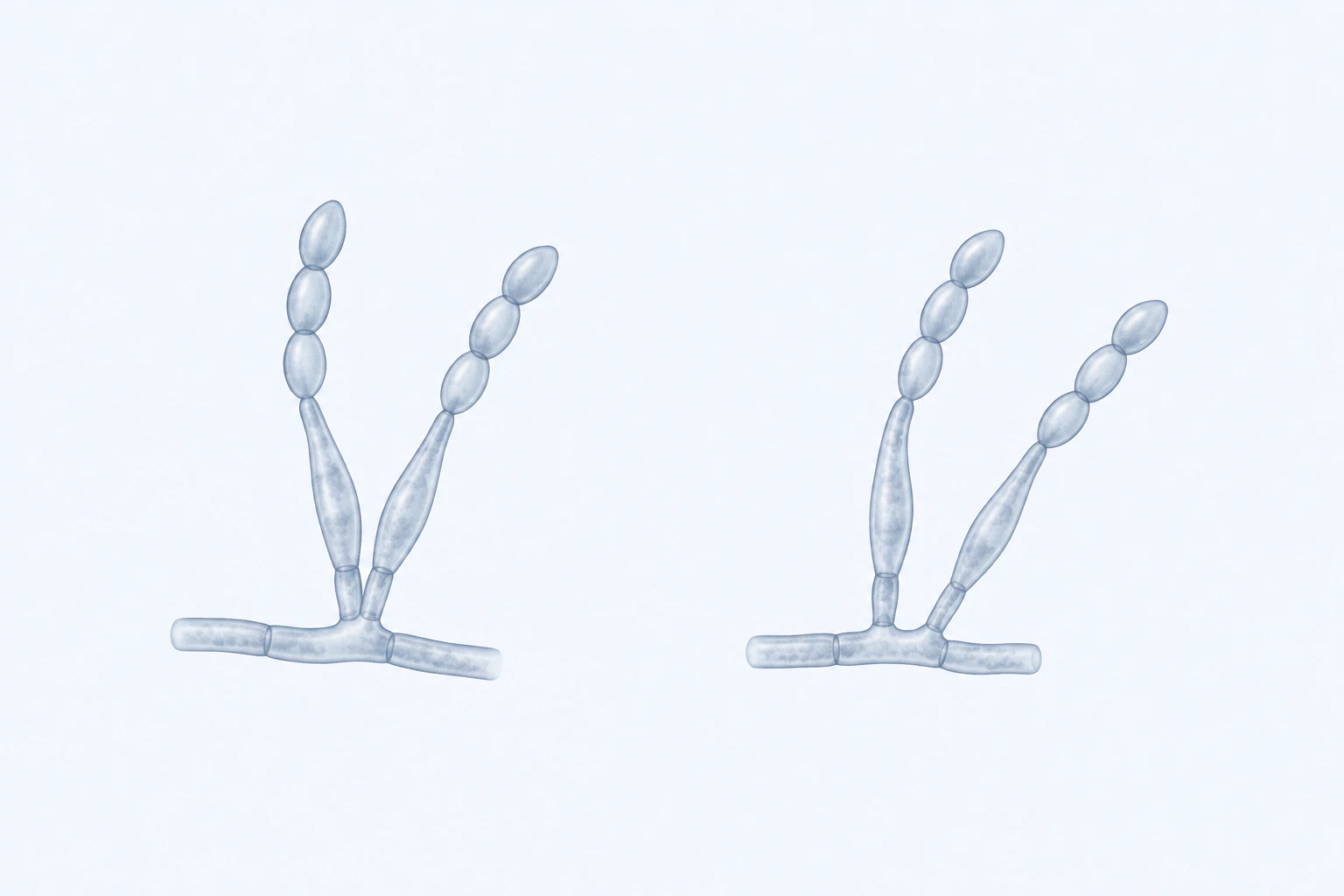
Type-species-anchored Purpureocillium reconstruction with two compact conidiophore groupings, four phialides, and twelve conidia. The genus plate is representative, non-universal, non-diagnostic, and not a micrograph.
Scientific media record1 verified identifier
- Subject
- Purpureocilliumtaxon · genus
- Identifiers
- NCBITaxon:1052105
- Review
- Editorial review completeIdentifiers authority-verified · Accessibility validated · · purpureocillium|purpureocillium-morphology-v1.webp
- Digital source
- Trained-algorithmic mediaCreated with a trained generative algorithm and reviewed by WikiBiome for subject identity, scientific framing, identifiers, provenance, and accessibility.
- Scientific basis
- Purpureocillium — NCBI TaxonomyPurpureocillium, a new genus for Paecilomyces lilacinusPurpureocillium primary genus paper
- License
- CC BY-SA 4.0Created
A filamentous fungus in the order Hypocreales (family Ophiocordycipitaceae), historically studied as an insect and nematode pathogen (P. lilacinum, formerly Paecilomyces lilacinus), now emerging as a clinically significant protective member of the gut mycobiome—and its near-elimination is a defining feature of schizophrenia-associated fungal Dysbiosis.
Evidence map7 cited passagesInspect provenance +
One of the most striking findings from mycobiome research in schizophrenia is the existence of two distinct fungal community states (enterotypes) in elderly Chinese subjects:
Purpureocillium abundance is negatively correlated with performance across five cognitive domains in schizophrenia patients—meaning higher Purpureocillium is associated with better cognitive performance:
The cognitive impact appears to operate through depletion of three key neuroactive metabolites when Purpureocillium is absent:
The Purpureocillium/Aspergillus ratio and Turicibacteraceae/Moraxellaceae bacterial abundance emerged as important predictive features in a multi-omics schizophrenia model incorporating gut viruses, bacteria, and metabolites. The multi-omics model integrating virus-bacteria-metabolite data achieved AUC = 0.986 versus single-omics models (bacteria: 0.970; vir
The Purpureocillium/Aspergillus ratio has been validated as a mycobiome-based biomarker for cognitive severity in schizophrenia.
ROC-based fungal classifiers incorporating Purpureocillium status effectively discriminate schizophrenia from healthy controls.
Purpureocillium lilacinum showed negative correlation with systemic immune dysfunction cytokines in schizophrenia cohorts, suggesting it may actively suppress fungal-driven inflammatory signaling or compete with Candida and other pro-inflammatory fungi.
Contents
1. Taxonomy and Ecological Background2. Mycobiome Enterotype: The Healthy State Baseline3. Cognitive Impact4. Metabolite Depletion Mechanism5. Virome Integration6. Diagnostic Potential7. Immune Interactions8. Ecological Role in the Gut Mycobiome9. Metal and Nutrient Dependencies10. Wikipedia Differentiation11. Cross-ReferencesTaxonomy and Ecological Background#
Purpureocillium lilacinum (formerly Paecilomyces lilacinus) is the primary species; reclassified based on molecular phylogenetics. Member of Ophiocordycipitaceae, the same family as entomopathogenic fungi like Beauveria bassiana; natural habitat includes soil, plant debris, and insect cuticles.
In the gut, Purpureocillium occupies a distinct niche from the more commonly studied Candida and Aspergillus, potentially acting as a competitive regulator of yeast-form fungi.
Its classification as an insect pathogen historically directed research attention away from its potential beneficial roles in mammalian gut ecology—a significant oversight now being corrected.
Mycobiome Enterotype: The Healthy State Baseline#
One of the most striking findings from mycobiome research in schizophrenia is the existence of two distinct fungal community states (enterotypes) in elderly Chinese subjects.[1]Ling 2025 — Schizophrenia-Associated Alterations in Fecal Mycobiota and Systemic Immune Dysfunction in Elderly Chinese PatientsZongxin Ling, Yiwen Cheng, Xia Liu et al. · 2025Open reference 1 ↓
Enterotype E1 (Purpureocillium-dominant): Present in 84.4% (54/64) of healthy controls. This is the dominant fungal community organization in cognitively intact elderly individuals.
Enterotype E2 (Candida-dominant): Present in 65.5% (57/87) of schizophrenia patients. The shift from E1 to E2 represents not just depletion of Purpureocillium but a wholesale restructuring of the mycobiome toward a yeast-dominated state.
This enterotype framework—applied to the mycobiome—parallels the bacterial enterotype concept but with striking disease specificity for neuropsychiatric outcomes. The Candida-dominant state is associated with elevated inflammatory cytokines, while the Purpureocillium-dominant state correlates with relative immune quiescence.
Cognitive Impact#
Purpureocillium abundance is negatively correlated with performance across five cognitive domains in schizophrenia patients—meaning higher Purpureocillium is associated with better cognitive performance:[2]Yuan 2025 — Association Between Purpureocillium, Amino Acid Metabolism and Cognitive Function in Drug-Naive, First-Episode SchizophreniaXiuxia Yuan, Xue Li, Lijuan Pang et al. · 2025Open reference 2 ↓
| Cognitive Domain | Relationship to Purpureocillium |
|---|---|
| Working memory | Positive (higher abundance = better performance) |
| Processing speed | Positive |
| Verbal learning | Positive |
| Visual learning | Positive |
| Attention/vigilance | Positive |
This multi-domain cognitive association is unusual—most gut-brain axis findings are domain-specific. The breadth of effect suggests Purpureocillium influences fundamental neural processing rather than a single pathway.
Metabolite Depletion Mechanism#
The cognitive impact appears to operate through depletion of three key neuroactive metabolites when Purpureocillium is absent:[2]Yuan 2025 — Association Between Purpureocillium, Amino Acid Metabolism and Cognitive Function in Drug-Naive, First-Episode SchizophreniaXiuxia Yuan, Xue Li, Lijuan Pang et al. · 2025Open reference 2 ↓
1. Ergothioneine A potent antioxidant and cytoprotectant synthesized exclusively by fungi and certain bacteria (notably Mycobacterium species). Ergothioneine is not synthesized by mammals and must be acquired from diet or gut microbial production.
It accumulates in tissues with high Oxidative Stress exposure—brain, liver, kidney, mitochondria. Purpureocillium is among the gut fungal species that produce or support ergothioneine availability; its depletion removes this antioxidant supply to neural tissue.
2. N-acetylserotonin A melatonin precursor with independent neuroprotective and neurotrophic properties. N-acetylserotonin activates TrkB receptors (the BDNF receptor), promoting neuronal survival and synaptic plasticity without requiring BDNF itself.
Its depletion disrupts both serotonergic signaling and circadian regulation—both highly relevant to schizophrenia pathophysiology.
3. 2-oxoarginine An arginine metabolite involved in nitric oxide signaling and neural plasticity. Arginine-derived nitric oxide modulates NMDA receptor function and long-term potentiation; disruption of this pathway intersects with the glutamatergic hypothesis of schizophrenia.
The convergence on amino acid metabolism and antioxidant supply suggests Purpureocillium reshapes the mycobiome metabolic landscape in ways that specifically compromise neuroactive compound availability across multiple pathways simultaneously.
Virome Integration#
The Purpureocillium/Aspergillus ratio and Turicibacteraceae/Moraxellaceae bacterial abundance emerged as important predictive features in a multi-omics schizophrenia model incorporating gut viruses, bacteria, and metabolites.[3]Tao 2025 — Alterations in Fecal Bacteriome Virome Interplay and Microbiota-Derived Dysfunction in Patients with SchizophreniaShiwan Tao, Yulu Wu, Liling Xiao et al. · 2025Open reference 3 ↓
The multi-omics model integrating virus-bacteria-metabolite data achieved AUC = 0.986 versus single-omics models (bacteria: 0.970; viruses: 0.732; metabolites: 0.823)—and the fungal ratio was a key feature even in this bacteria-heavy analysis, suggesting Purpureocillium status provides independent information not captured by bacterial profiling alone.
Diagnostic Potential#
The Purpureocillium/Aspergillus ratio has been validated as a mycobiome-based biomarker for cognitive severity in schizophrenia.[2]Yuan 2025 — Association Between Purpureocillium, Amino Acid Metabolism and Cognitive Function in Drug-Naive, First-Episode SchizophreniaXiuxia Yuan, Xue Li, Lijuan Pang et al. · 2025Open reference 2 ↓ Aspergillus shows an opposing metabolic profile; its relative abundance correlates with preserved cognitive function, creating a ratio whose directionality is clinically informative.
ROC-based fungal classifiers incorporating Purpureocillium status effectively discriminate schizophrenia from healthy controls.[1]Ling 2025 — Schizophrenia-Associated Alterations in Fecal Mycobiota and Systemic Immune Dysfunction in Elderly Chinese PatientsZongxin Ling, Yiwen Cheng, Xia Liu et al. · 2025Open reference 1 ↓ The non-invasive ITS-based mycobiome test required for these analyses is technically feasible with existing clinical laboratory infrastructure.
Immune Interactions#
Purpureocillium lilacinum showed negative correlation with systemic immune dysfunction cytokines in schizophrenia cohorts,[1]Ling 2025 — Schizophrenia-Associated Alterations in Fecal Mycobiota and Systemic Immune Dysfunction in Elderly Chinese PatientsZongxin Ling, Yiwen Cheng, Xia Liu et al. · 2025Open reference 1 ↓ suggesting it may actively suppress fungal-driven inflammatory signaling or compete with Candida and other pro-inflammatory fungi.
The E1 (Purpureocillium-dominant) enterotype is associated with lower inflammatory tone than the E2 (Candida-dominant) state. Whether Purpureocillium exerts immune modulation directly or primarily through competitive exclusion of more inflammatory fungi is not yet established.
Ecological Role in the Gut Mycobiome#
Understanding Purpureocillium's protective role requires framing it within the competitive ecology of the gut mycobiome:
In healthy individuals. The E1 (Purpureocillium-dominant) state represents a fungal community where filamentous fungi, including Purpureocillium and Aspergillus, maintain competitive balance against yeast-form fungi like Candida and Saccharomyces.
Purpureocillium likely competes with Candida for adhesion sites on the gut mucosa and for nutritional substrates, limiting yeast overgrowth. Its filamentous growth form may physically displace yeast colonies, providing a structural competitive advantage in the mucosal niche.
In schizophrenia (E2 state). The loss of Purpureocillium removes both competitive exclusion of Candida and the ergothioneine/N-acetylserotonin supply it provides.
Candida expansion in the vacated niche introduces a pro-inflammatory mycobiome signature: Candida hyphal forms activate NLRP3 inflammasome and IL-1β production, creating neuroinflammatory metabolite burden.
The transition from E1 to E2 is thus a self-reinforcing shift: Purpureocillium loss → Candida expansion → inflammatory cytokines → further antifungal immune responses that may paradoxically worsen the imbalance.
Metal and Nutrient Dependencies#
Purpureocillium lilacinum biosynthesizes secondary metabolites (including cyclosporins and destruxin analogs) that require iron-containing cytochrome P450 enzymes. Its filamentous growth and sporulation also depend on. Iron: Required for respiratory chain components and cytochrome P450-dependent biosynthetic pathways; iron availability in the gut lumen influences Purpureocillium growth rate and competitive fitness.
Zinc: Zinc-finger transcription factors control sporulation and secondary metabolite production in Hypocreales fungi; zinc deficiency may impair Purpureocillium persistence.
Selenium: Glutathione peroxidase variants (selenium-dependent) in fungi support the antioxidant capacity that underpins ergothioneine's protective function—dietary selenium may modulate gut antioxidant metabolite availability indirectly through fungal community composition.
Wikipedia Differentiation#
Wikipedia covers Purpureocillium lilacinum primarily as an entomopathogenic and plant-pathogenic fungus, with brief mention of immunocompromised host infections. What is absent: its role as a protective gut mycobiome member, its near-elimination in schizophrenia, the mycobiome enterotype framework (E1 vs.
E2) it defines, its connection to ergothioneine and N-acetylserotonin neuroprotection, the Purpureocillium/Aspergillus diagnostic ratio, and the antifungal STOP signal it creates—broad antifungals risk eliminating this protective fungus alongside pathogenic Candida.
Cross-References#
- Aspergillus—Opposing mycobiome member; ratio used as diagnostic biomarker
- candida—Expands in Candida-dominant E2 enterotype when Purpureocillium is depleted
- Schizophrenia—Primary disease association: nearly eliminated in SCZ patients
- ergothioneine—Neuroprotective antioxidant metabolite depleted when Purpureocillium is absent
- Gut-Brain Axis—Pathway linking mycobiome composition to cognitive function
- Mycobiome—The gut fungal community in which Purpureocillium operates as a protective regulator
- Iron—Required for cytochrome P450-dependent secondary metabolite biosynthesis
- Nutritional Immunity (Metal Sequestration)—Ergothioneine depletion may interact with oxidative stress-related metal handling
- Biofilm—Filamentous growth form competes structurally with yeast biofilm formation
References 5
Numbered by first appearance in the article, then reconciled with its declared source list.
- 1
Zongxin Ling, Yiwen Cheng, Xia Liu et al. (2025). Ling 2025 — Schizophrenia-Associated Alterations in Fecal Mycobiota and Systemic Immune Dysfunction in Elderly Chinese Patients. Frontiers in Immunology.
- 2
Xiuxia Yuan, Xue Li, Lijuan Pang et al. (2025). Yuan 2025 — Association Between Purpureocillium, Amino Acid Metabolism and Cognitive Function in Drug-Naive, First-Episode Schizophrenia. BMC Psychiatry.
- 3
Shiwan Tao, Yulu Wu, Liling Xiao et al. (2025). Tao 2025 — Alterations in Fecal Bacteriome Virome Interplay and Microbiota-Derived Dysfunction in Patients with Schizophrenia. Translational Psychiatry.
- 4
Christos Theleritis, Maria-Ioanna Stefanou, Marina Demetriou et al. (2024). Theleritis 2024 -- Association of gut dysbiosis with first-episode psychosis (Review). Molecular Medicine Reports.
- 5
Patrono E, Svoboda J, Bhatt DK et al. (2021). Schizophrenia, the Gut Microbiota, and New Opportunities from Optogenetic Manipulations of the Gut-Brain Axis. Behavioral and Brain Functions.
Article network
Connect the evidence
Publicly readable discussion by ORCID-authenticated researchers. Questions, interpretation, methods, corrections, and new evidence stay attached to this record.
No discussion yet. Start with a precise question or a source-backed observation.
Activity and accepted changes
Accepted researcher context, editorial status, public discussion, and upstream Git revisions are shown together. Pending, declined, and withdrawn proposals remain private.
- published revision
Backfill oxidative stress concept links
Karen Pendergrass · +2 −2
Inspect exact Git diff ↗ - published revision
Complete corpus-wide Dysbiosis linking
Karen Pendergrass · +1 −1
Inspect exact Git diff ↗ - published revision
massive wiki expansion: 149 stubs fixed, 100+ new pages, Rule 15 scan, keystone papers
WikiBiome Deploy Bot · +15 −15
Inspect exact Git diff ↗ - published revision
pre-overnight checkpoint 2026-04-18
WikiBiome Deploy Bot · +2 −2
Inspect exact Git diff ↗ - published revision
Batch: fix 1025 broken wikilinks, wire 13 STOP pages, deepen PPD/GERD/T1D/8 microbes
WikiBiome Deploy Bot · +93 −29
Inspect exact Git diff ↗ - published revision
Health check fixes: 40 intervention pages + 14 entity Connections sections
WikiBiome Deploy Bot · +1 −0
Inspect exact Git diff ↗ - published revision
Health check gap fill: 15 missing pages identified and created
WikiBiome Deploy Bot · +56 −0
Inspect exact Git diff ↗