
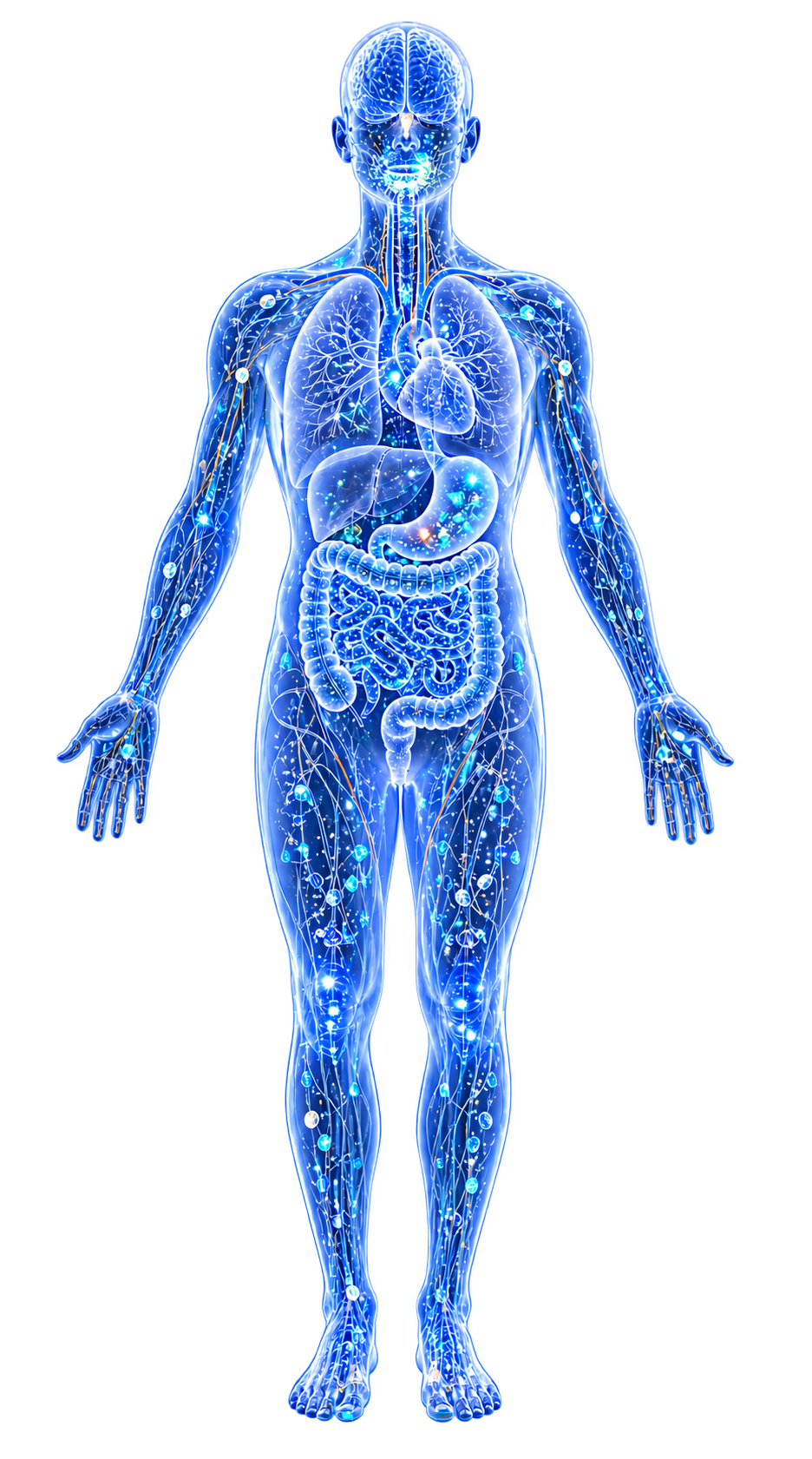
 metals · microbes · host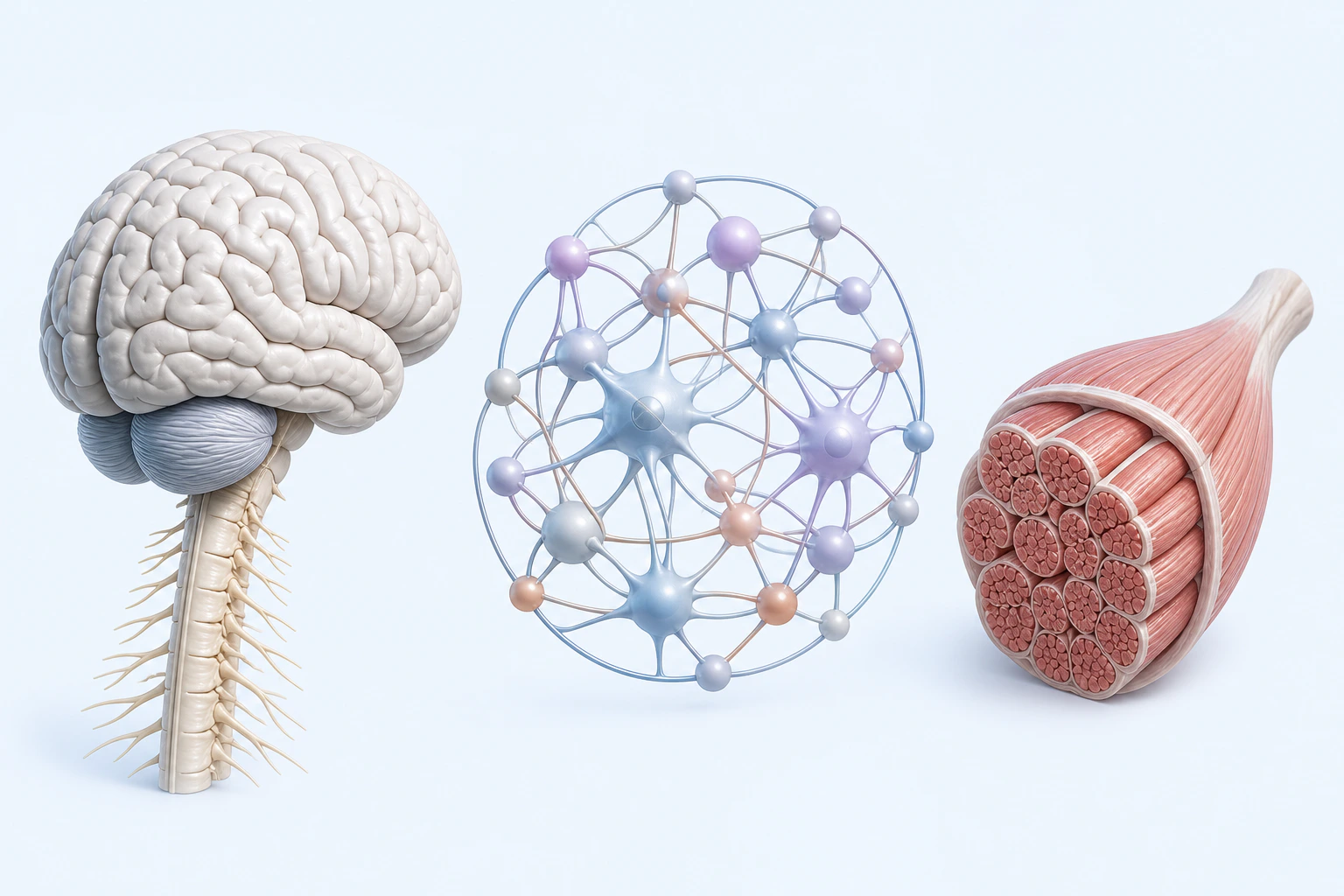
Neutral central-network and muscle orientation for fibromyalgia. The network is an editorial orientation model, not a mechanism, biomarker, tender-point examination, lesion, severity measure, treatment response, or diagnosis.
Scientific media record1 verified identifier
- Subject
- Fibromyalgiacondition
- Identifiers
- MeSH:D005356
- Review
- Editorial review completeIdentifiers authority-verified · Accessibility validated · · fibromyalgia|fibromyalgia-pathology-v1.webp
- Digital source
- Trained-algorithmic mediaCreated with a trained generative algorithm and reviewed by WikiBiome for subject identity, scientific framing, identifiers, provenance, and accessibility.
- Scientific basis
- Fibromyalgia — MeSHFibromyalgia
- License
- CC BY-SA 4.0Created
Fibromyalgia (FM) is a chronic pain syndrome affecting 2-4% of the global population Heidari et al. 2017, characterized by widespread musculoskeletal pain, fatigue, cognitive dysfunction ("fibro fog"), and sleep disturbances.
Conventionally attributed to central sensitization—the amplification of neural signaling within the CNS—fibromyalgia is increasingly understood as a disorder with a strong gut-brain axis component.
The microbiome offers both a diagnostic biomarker (AUC = 87.8%, Minerbi et al. 2019) and a mechanistic explanation linking metal dysregulation, microbial ecology, and neurotransmitter imbalance.
Evidence map2 cited passagesInspect provenance +
Copper excess promotes oxidative stress that selectively favors copper-tolerant taxa (Eggerthella, Collinsella) while suppressing copper-sensitive commensals
Elevated copper: Promotes oxidative stress that selectively favors copper-tolerant taxa while suppressing copper-sensitive commensals.
One disease. Five evidence layers.
A generated systems view of the metals, organisms, host sequestration signals, ecological conditions, and microbial functions indexed for Fibromyalgia.
Evidence layer
Taxonomic signature
Organisms reported as enriched or depleted, with their indexed functional context kept beside the name.MR-validated causal taxon (OR=1.897) — neurotoxic metabolites, pro-inflammatory activation, enriched across neuropsychiatric conditions
Enriched in FM; associated with oxidative stress and depression comorbidity
Coprococcus 2 — MR causal (OR=2.317); paradoxical enrichment of butyrate-associated genus suggests strain-level functional divergence
Streptococcus salivarius — enriched in oral and gut communities; may reflect oral-gut axis
Pro-inflammatory; promotes IL-17A signaling; enriched in FM and rheumatoid arthritis
MR-validated causal risk taxon (OR=1.897); produces neurotoxic metabolites; activates pro-inflammatory pathways
MR-validated causal risk (OR=2.317); paradoxically butyrate-associated genus, suggesting strain-level functional divergence
Most consistently depleted taxon (5+ studies) — primary colonic butyrate producer; loss impairs anti-inflammatory signaling and barrier integrity
Depleted — loss reduces lactate cross-feeding, barrier support, and pathogen exclusion
Depleted — impaired polysaccharide degradation and immune regulation
SCFA-producing family depleted — reduced colonocyte nutrition and immune tolerance
Butyrate producer — depletion compounds SCFA deficit and barrier dysfunction
Depleted; loss impairs polysaccharide degradation and immune regulation
Evidence layer
Nutritional immunity
Host metal-withholding, inflammatory, antioxidant, and microbial-metabolite signals indexed in the signature.Elevated host signals
6Depleted protective signals
7Evidence layer
Ecological state
The environmental conditions that connect the organism-level observations into a system.Evidence layer
Virulence functions
Microbial structures, enzymes, and acquisition systems implicated by the linked evidence.The disease record, in full.
The original WikiBiome disease narrative remains intact beneath the generated signature atlas.
Metallomic Signature#
Mendelian randomization (MR) studies have identified a distinctive metal profile in FM, distinguishing causal relationships from mere associations:
| Metal | Direction | Evidence | Mechanism |
|---|---|---|---|
| Copper (copper (Cu)) | Elevated (causal) | MR OR = 1.095 Zeng et al. 2025 | Promotes Oxidative Stress, displaces zinc in metalloenzymes, amplifies neuroinflammation. Elevated copper/zinc (Zn) ratio correlates with pain severity |
| Iron (iron (Fe)) | Depleted (protective when present) | MR OR = 0.440 (protective) Zeng et al. 2025; ferritin <50 ng/mL = 6.5x FM risk Shtrozberg et al. 2025 | Iron deficiency impairs mitochondrial function and dopamine synthesis. Hepcidin-mediated sequestration may explain functional iron deficiency despite normal serum levels |
| Magnesium (magnesium (Mg)) | Depleted | Observational studies | Cofactor for >300 enzymes; deficiency amplifies NMDA receptor activation, central sensitization, and muscle hyperexcitability |
| Selenium (selenium (Se)) | Depleted | Observational studies | Cofactor for glutathione peroxidase (GPX); depletion impairs antioxidant defense. GPX3 expression decreased 0.85x in FM patients Duran-Gonzalez et al. 2025 |
The copper-iron axis is particularly informative: elevated copper competes with iron for transport and binding sites, potentially explaining the functional iron deficiency observed in FM patients even when serum iron appears normal.
Microbiome Associations#
Depleted Taxa#
Faecalibacterium prausnitzii is the most consistently depleted taxon in FM, reported across 5+ independent studies Goudman et al. 2024, meta-analysis. This is significant because F. prausnitzii is the primary Butyrate producer in the human colon; its depletion reduces anti-inflammatory signaling and compromises intestinal barrier integrity.
Other consistently depleted taxa include. Bifidobacterium—loss reduces lactate cross-feeding and barrier support. Bacteroides uniformis—loss impairs polysaccharide degradation and immune regulation. Lachnospiraceae—SCFA-producing family; depletion reduces colonocyte nutrition.
Roseburia—butyrate producer; loss contributes to barrier dysfunction.
Enriched Taxa#
Eggerthella—MR-validated causal taxon (OR = 1.897) Wang et al. 2024. Produces neurotoxic metabolites, activates pro-inflammatory pathways, and is enriched in multiple neuropsychiatric conditions.
Flavonifractor—enriched in FM; associated with oxidative stress and depression. Coprococcus 2—MR causal association (OR = 2.317) Wang et al. 2024; paradoxically a butyrate-associated genus, suggesting strain-level functional divergence. Streptococcus salivarius—enriched in oral and gut communities of FM patients.
Collinsella—pro-inflammatory; enriched in rheumatoid arthritis and FM.
The Butyrate Paradox#
FM patients show elevated serum butyrate despite depletion of canonical butyrate-producing taxa. This paradox may reflect impaired colonocyte butyrate uptake (barrier dysfunction causes butyrate to "leak" into systemic circulation) rather than increased production—a critical distinction for intervention design.
FM-IBS Overlap#
28-59% of FM patients meet diagnostic criteria for irritable bowel syndrome (IBS) Bheemanenni et al. 2025, and the comorbidity is bidirectional. Shared features include visceral hypersensitivity, altered gut motility, mast cell activation, and overlapping taxonomic signatures (Faecalibacterium depletion, Eggerthella enrichment).
The gut-brain axis provides a unifying mechanism: dysbiotic communities produce pro-inflammatory and neuroactive metabolites that amplify both peripheral and central pain processing.
Central Sensitization and the Gut-Brain Axis#
Central sensitization in FM is not merely a CNS phenomenon—it is driven in part by peripheral signals from the gut. Tryptophan-serotonin pathway dysfunction: Dysbiotic communities shunt tryptophan toward kynurenine (via IDO upregulation from pro-inflammatory cytokines), reducing serotonin availability and generating neurotoxic quinolinic acid.
Glutathione depletion: GPX3 decreased 0.85x in FM patients Duran-Gonzalez et al. 2025, reducing capacity to neutralize oxidative stress from copper excess and microbial metabolites.
LPS translocation: Barrier dysfunction permits endotoxin entry, activating TLR4 on microglia and amplifying neuroinflammation. SCFA signaling disruption: Reduced butyrate at the colonocyte impairs vagal afferent signaling, disrupting the anti-inflammatory cholinergic pathway.
Diagnostic Potential#
Minerbi et al. 2019 demonstrated that a microbiome-based classifier could distinguish FM patients from healthy controls with AUC = 87.8%, outperforming many conventional diagnostic approaches for a condition that currently lacks any objective biomarker. The classifier relied on the taxonomic shifts described above, particularly Faecalibacterium depletion and Eggerthella/Flavonifractor enrichment.
Metal Associations#
The metallomic signature intersects with microbiome ecology through multiple mechanisms. Copper excess promotes oxidative stress that selectively favors copper-tolerant taxa (Eggerthella, Collinsella) while suppressing copper-sensitive commensals.[1]Impact of heavy metals on serum vitamin D3 and PTH in fibromyalgia and rheumatoid arthritis and their correlation to disease activityHaddad R, Elbeialy A, El Sawy S et al. · 2024Open reference 1 ↓
Iron restriction by hepcidin starves iron-dependent beneficial taxa (Faecalibacterium requires iron for butyrate synthesis) while sparing iron-independent opportunists. Magnesium depletion impairs enzymatic function in both host tissues and commensal bacteria. Selenium depletion reduces glutathione peroxidase activity, amplifying oxidative damage from copper excess.
Open Questions#
Unresolved questions identified by the current evidence record.
01Does the elevated serum butyrate in FM reflect impaired colonocyte uptake, altered bacterial production, or both?+
The current WikiBiome record identifies this as an unresolved evidence gap.
02Can the MR-validated copper-iron axis be targeted therapeutically (e.g., copper chelation + iron repletion)?+
The current WikiBiome record identifies this as an unresolved evidence gap.
03What drives the strain-level functional divergence in Coprococcus 2 (butyrate-associated genus enriched in a butyrate-depleted state)?+
The current WikiBiome record identifies this as an unresolved evidence gap.
04Is the FM microbiome signature causal, consequential, or both?+
FMT studies are needed.
Cross-References#
- Depression—shared Faecalibacterium depletion, magnesium (Mg)/selenium (Se) depletion, tryptophan-kynurenine shunting
- irritable-bowel-syndrome—28-59% comorbidity, shared taxonomic shifts
- chronic-fatigue-syndrome—overlapping fatigue, cognitive dysfunction, Faecalibacterium depletion
- Copper—causal risk factor via MR
- Iron—protective factor via MR
- Magnesium—depleted; cofactor for 300+ enzymes, deficiency amplifies central sensitization
- Selenium—depleted; GPX3 decreased 0.85x, impairs antioxidant defense against copper excess
- Gut-Brain Axis—dysbiotic communities produce neuroactive metabolites driving peripheral and central pain
- Eggerthella lenta—MR-validated causal risk taxon (OR = 1.897) producing neurotoxic metabolites
References 9
Numbered by first appearance in the article, then reconciled with its declared source list.
- 1
Haddad R, Elbeialy A, El Sawy S et al. (2024). Impact of heavy metals on serum vitamin D3 and PTH in fibromyalgia and rheumatoid arthritis and their correlation to disease activity. Research Square (Preprint).
- 2
Zeng et al. (2025). Zeng 2025 — Copper, Iron and Trace Elements in Fibromyalgia (Mendelian Randomization). Scientific Reports.
- 3
Elbeialy A, El Sawy S, Elzomor H et al. (2024). Environmental pollution impact on the severity of some rheumatic diseases: a comparative analytical study on inflammatory and non-inflammatory samples. BMC Rheumatology.
- 4
Goudman et al. (2024). Goudman 2024 — Gut Dysbiosis in Chronic Pain (Meta-Analysis). Frontiers in Immunology.
- 5
Minghe Zhao, Ling Zhang, Zhihui Liu (2025). Zhao 2025 — Gut Microbiota-Mediated Pain Sensitization: Mechanisms and Therapeutic Implications. Frontiers in Pain Research.
- 6
Wang et al. (2024). Wang 2024 — Gut Microbiota and Fibromyalgia (Mendelian Randomization). Frontiers in Microbiology.
- 7
L. Bazzichi, V. Giorgi, M. Di Franco et al. (2024). Bazzichi 2024 — Environmental Factors and Fibromyalgia Syndrome (Review). Clinical and Experimental Rheumatology.
- 8
Shtrozberg et al. (2025). Shtrozberg 2025 — Gut Microbiome in Fibromyalgia (Review). Clinical and Experimental Rheumatology.
- 9
Amir Minerbi, Mary-Ann Fitzcharles (2020). Minerbi 2020 — Gut Microbiome: Pertinence in Fibromyalgia (Review). Clinical and Experimental Rheumatology.
Article network
Mentioned here 13
Pages linking here 15
Connect the evidence
Publicly readable discussion by ORCID-authenticated researchers. Questions, interpretation, methods, corrections, and new evidence stay attached to this record.
No discussion yet. Start with a precise question or a source-backed observation.
Activity and accepted changes
Accepted researcher context, editorial status, public discussion, and upstream Git revisions are shown together. Pending, declined, and withdrawn proposals remain private.
- published revision
Consolidate microbial metabolite knowledge
Karen Pendergrass · +1 −1
Inspect exact Git diff ↗ - published revision
Backfill oxidative stress concept links
Karen Pendergrass · +1 −1
Inspect exact Git diff ↗ - published revision
massive wiki expansion: 149 stubs fixed, 100+ new pages, Rule 15 scan, keystone papers
WikiBiome Deploy Bot · +32 −26
Inspect exact Git diff ↗ - published revision
ingest: 87 papers (17 endometriosis, 67 erectile dysfunction, 3 cross-condition)
WikiBiome Deploy Bot · +103 −61
Inspect exact Git diff ↗ - published revision
nightly maintenance: 94 stub demotions, 181 source_count fixes, 22 auto-discovered stubs, 5 adversarial audits, 3 boundary fixes, 3 evidence-level corrections
WikiBiome Deploy Bot · +2 −0
Inspect exact Git diff ↗ - published revision
cycle 1: health check + lint fixes + 8 ingests + 2 stubs + gestational-diabetes signature
WikiBiome Deploy Bot · +1 −0
Inspect exact Git diff ↗ - published revision
pre-overnight checkpoint 2026-04-18
WikiBiome Deploy Bot · +2 −2
Inspect exact Git diff ↗ - published revision
Deepen metal/concept entities + 8 new sources for T1D/schizophrenia
WikiBiome Deploy Bot · +162 −0
Inspect exact Git diff ↗ - published revision
Citation integrity pass: 38 citations added, 24 parenthesized citations fixed
WikiBiome Deploy Bot · +11 −11
Inspect exact Git diff ↗ - published revision
Health check fixes: 40 intervention pages + 14 entity Connections sections
WikiBiome Deploy Bot · +4 −0
Inspect exact Git diff ↗ - published revision
Final 5 condition signatures + chelation library (Primitive 4/8)
WikiBiome Deploy Bot · +98 −0
Inspect exact Git diff ↗