

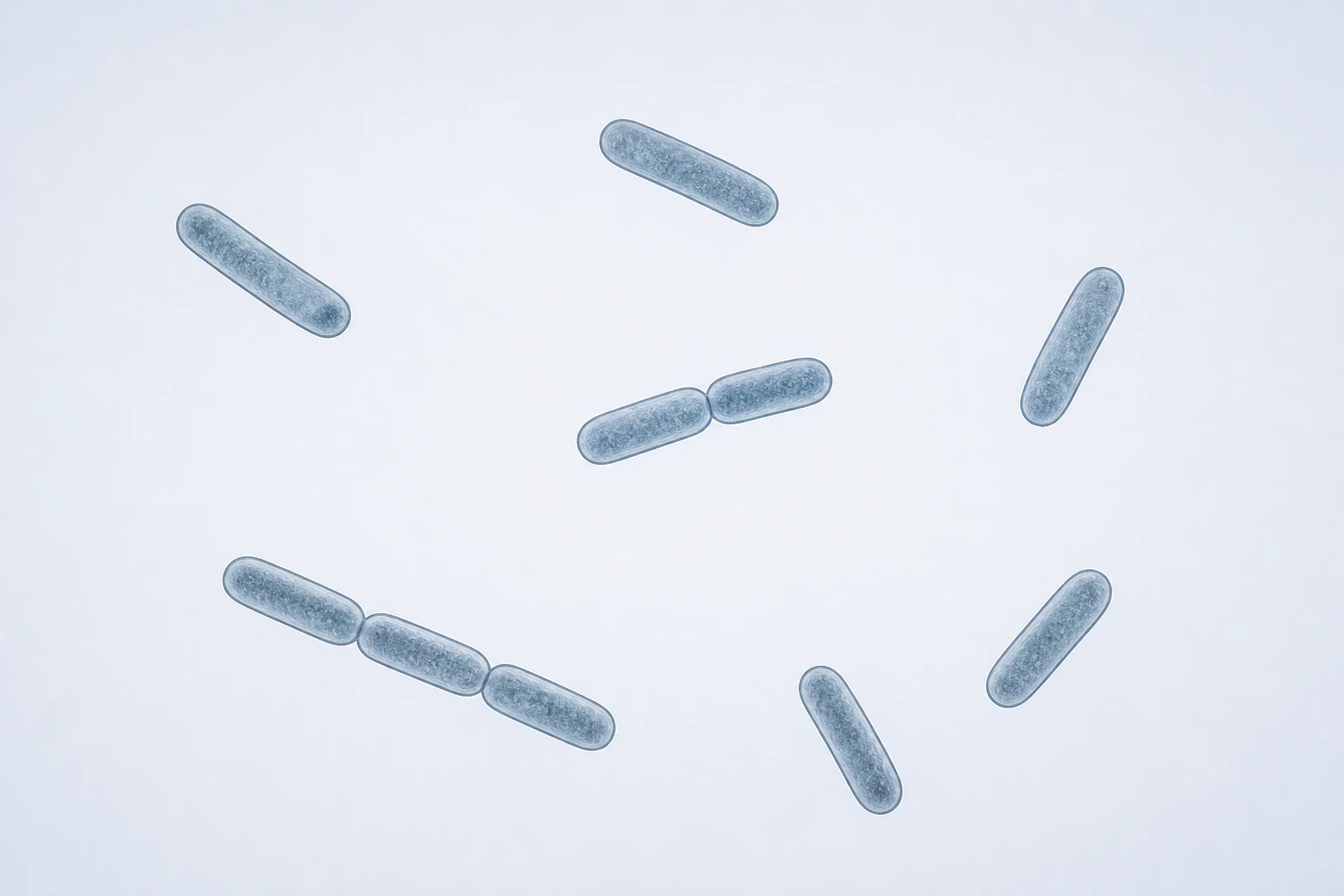
Selected type-species-anchored Eggerthella rod forms, shown as ten bodies in five single, one paired, and one short-chain grouping. This reconstruction is representative, non-diagnostic, and not a micrograph.
Scientific media record1 verified identifier
- Subject
- Eggerthellataxon · genus
- Identifiers
- NCBITaxon:84111
- Review
- Editorial review completeIdentifiers authority-verified · Accessibility validated · · eggerthella|eggerthella-morphology-v1.webp
- Digital source
- Trained-algorithmic mediaCreated with a trained generative algorithm and reviewed by WikiBiome for subject identity, scientific framing, identifiers, provenance, and accessibility.
- Scientific basis
- Eggerthella — NCBI TaxonomyEggerthella — LPSNEggerthella gen. nov. primary proposalEggerthella nomenclature and clinical review
- License
- CC BY-SA 4.0Created
Eggerthella is a genus of Gram-positive, strictly anaerobic, non-spore-forming bacteria in the family Eggerthellaceae (phylum Actinobacteria). The most studied species, Eggerthella lenta, was originally classified as Eubacterium lentum before reclassification.
It is a normal resident of the human colon at low abundance, but its metabolic versatility—particularly its ability to degrade drugs and hormones—makes it disproportionately influential.
What distinguishes Eggerthella from a WikiBiome perspective is its role at the intersection of drug metabolism, hormone recirculation, and metal-tolerant opportunism. It participates in an interspecies metabolic relay with Enterococcus faecalis that degrades levodopa in the gut, directly affecting Parkinson's disease treatment.
It also expands in metal-disturbed ecosystems where Clostridia are depleted, marking it as an indicator of heavy metal-driven Dysbiosis.
Evidence map11 cited passagesInspect provenance +
Unlike many strict anaerobes that are sensitive to heavy metals, Eggerthella appears to be metal-tolerant. In multiple sclerosis cohorts, E. lenta expands precisely when metal-sensitive Clostridia are depleted—a pattern consistent with cadmium, lead, and nickel exposure selectively removing competitors (, cross-sectional).
Dopamine dehydroxylase: E. lenta converts dopamine to m-tyramine through dehydroxylation, forming the second step of an interspecies relay where enterococcus faecalis first converts L-DOPA to dopamine via tyrosine decarboxylase (TyrDC). This two-step pathway significantly reduces levodopa bioavailability in Parkinson's disease patients (, in-vitro).
Cardiac glycoside reductase (Cgr): Inactivates digoxin in the gut lumen, reducing drug efficacy. This enzyme is strain-specific—only E. lenta strains carrying the Cgr operon metabolize digoxin (, expert-opinion).
Competitor depletion: When metal-sensitive Clostridia (clusters IV and XIVa) are depleted by heavy metal exposure or other stressors, Eggerthella fills the vacated anaerobic niches. This is the pattern observed in MS, where E. lenta increases alongside Streptococcus as Clostridia decline (, cross-sectional).
Uremic environment: In chronic kidney disease, the accumulation of urea and protein fermentation substrates favors proteolytic bacteria. E. lenta is consistently enriched in CKD patients and contributes to the production of uremic toxins including indoxyl sulfate and p-cresyl sulfate (, expert-opinion).
The genus also participates in urolithin production from dietary polyphenols via the closely related family Eggerthellaceae. Urolithin A has anti-inflammatory and neuroprotective effects, providing a rare example where this group contributes beneficial metabolites (, expert-opinion).
Multiple sclerosis: Significantly increased in Japanese MS patients alongside Streptococcus thermophilus; expansion coincides with depletion of Treg-inducing Clostridia (, cross-sectional, n=40). Also reported enriched in European MS cohorts (, expert-opinion).
Chronic kidney disease: Consistently enriched in CKD; contributes to uremic toxin generation (indoxyl sulfate, p-cresyl sulfate) that accelerates renal decline (, expert-opinion).
Premature ovarian insufficiency: Abundance significantly increased in POI patients; reversed by hormone replacement therapy. E. lenta induced ovarian fibrosis when administered to mice, an effect ameliorated by estrogen (, animal-model).
Hashimoto's thyroiditis: Identified among genera with significant differences between HT progression stages (, cross-sectional).
| Study | Finding | Evidence Level | |-------|---------|---------------| | | E. lenta dehydroxylates dopamine to m-tyramine; interspecies L-DOPA degradation pathway with E. faecalis | In vitro | | | Enriched in MS when Clostridia depleted; metal-tolerant opportunist pattern | Cross-sectional | | | Increased in POI; reversed by HRT; causes ovarian fibrosis in
Contents
1. Metal Dependencies2. Key Enzymes and Virulence Factors3. Ecological Role4. Conditions Associated5. Key Studies6. Cross-ReferencesMetal Dependencies#
Eggerthella lenta relies on several metal cofactors for its diverse reductase enzymes.
Iron: Required for electron transport chains in anaerobic respiration. E. lenta uses iron-containing oxidoreductases for its dehydroxylation reactions. Cobalt: The cardiac glycoside reductase (Cgr) operon that inactivates digoxin requires cobalamin (vitamin B12) as a cofactor, linking cobalt availability to drug metabolism.
Molybdenum: Molybdopterin-dependent enzymes participate in the reductive metabolism that defines the genus.
Unlike many strict anaerobes that are sensitive to Heavy Metals, Eggerthella appears to be metal-tolerant. In multiple sclerosis cohorts, E. lenta expands precisely when metal-sensitive Clostridia are depleted—a pattern consistent with Cadmium, Lead, and Nickel exposure selectively removing competitors (,[1]Dysbiosis in the Gut Microbiota of Patients with Multiple Sclerosis, with a Striking Depletion of Species Belonging to Clostridia XIVa and IV ClustersSachiko Miyake, Sangwan Kim, Wataru Suda et al. · 2015Open reference 1 ↓ cross-sectional).
Key Enzymes and Virulence Factors#
Dopamine dehydroxylase: E. lenta converts dopamine to m-tyramine through dehydroxylation, forming the second step of an interspecies relay where Enterococcus faecalis first converts L-DOPA to dopamine via tyrosine decarboxylase (TyrDC). This two-step pathway significantly reduces levodopa bioavailability in Parkinson's disease patients (,[2]Maini Rekdal 2019 -- Discovery and Inhibition of an Interspecies Gut Bacterial Pathway for Levodopa MetabolismVayu Maini Rekdal, Emily N Bess, Jordan E Bisanz et al. · 2019Open reference 2 ↓ in-vitro).
Cardiac glycoside reductase (Cgr): Inactivates digoxin in the gut lumen, reducing drug efficacy. This enzyme is strain-specific—only E. lenta strains carrying the Cgr operon metabolize digoxin (,[3]Microbiome-Drug Interactions: A Critical Review of Pharmacokinetic and Pharmacodynamic ModulationRamya Sree Maddu, Aarthi Saima Ghanta, Veeresh Pratap · 2025Open reference 3 ↓ expert-opinion).
Beta-glucuronidase: Deconjugates glucuronidated estrogens, returning active estrogen to the circulation. This activity connects Eggerthella to the Estrobolome and estrogen-dependent conditions.
Ecological Role#
In the healthy gut, E. lenta occupies a low-abundance niche as part of the Actinobacteria minority. It becomes ecologically significant under two conditions:
- Competitor depletion: When metal-sensitive Clostridia (clusters IV and XIVa) are depleted by heavy metal exposure or other stressors, Eggerthella fills the vacated anaerobic niches. This is the pattern observed in MS, where E. lenta increases alongside Streptococcus as Clostridia decline (,[1]Dysbiosis in the Gut Microbiota of Patients with Multiple Sclerosis, with a Striking Depletion of Species Belonging to Clostridia XIVa and IV ClustersSachiko Miyake, Sangwan Kim, Wataru Suda et al. · 2015Open reference 1 ↓ cross-sectional).
- Uremic environment: In chronic kidney disease, the accumulation of urea and protein fermentation substrates favors proteolytic bacteria. E. lenta is consistently enriched in CKD patients and contributes to the production of uremic toxins including indoxyl sulfate and p-cresyl sulfate (,[4]Wehedy et al. 2022 — The Human Microbiome in CKD: A Double-Edged SwordWehedy, Ghali, Matboli · 2022Open reference 4 ↓ expert-opinion).
The genus also participates in urolithin production from dietary polyphenols via the closely related family Eggerthellaceae. Urolithin A has anti-inflammatory and neuroprotective effects, providing a rare example where this group contributes beneficial metabolites (,[5]Microbial Metabolites in Multiple Sclerosis: Implications for Pathogenesis and TreatmentEduardo Duarte-Silva, Sven G. Meuth, Christina Alves Peixoto · 2022Open reference 5 ↓ expert-opinion).
Conditions Associated#
Enriched in:#
Multiple sclerosis: Significantly increased in Japanese MS patients alongside Streptococcus thermophilus; expansion coincides with depletion of Treg-inducing Clostridia (,[1]Dysbiosis in the Gut Microbiota of Patients with Multiple Sclerosis, with a Striking Depletion of Species Belonging to Clostridia XIVa and IV ClustersSachiko Miyake, Sangwan Kim, Wataru Suda et al. · 2015Open reference 1 ↓ cross-sectional, n=40). Also reported enriched in European MS cohorts (,[6]Feeding the gut microbiome: impact on multiple sclerosisMatteo Bronzini, Alessandro Maglione, Rachele Rosso et al. · 2023Open reference 6 ↓ expert-opinion).
Chronic kidney disease: Consistently enriched in CKD; contributes to uremic toxin generation (indoxyl sulfate, p-cresyl sulfate) that accelerates renal decline (,[4]Wehedy et al. 2022 — The Human Microbiome in CKD: A Double-Edged SwordWehedy, Ghali, Matboli · 2022Open reference 4 ↓ expert-opinion).
Premature ovarian insufficiency: Abundance significantly increased in POI patients; reversed by hormone replacement therapy. E. lenta induced ovarian fibrosis when administered to mice, an effect ameliorated by estrogen (,[7]Hormone Replacement Therapy Reverses Gut Microbiome and Serum Metabolome Alterations in Premature Ovarian InsufficiencyJiang L, Fei H, Tong J et al. · 2021Open reference 7 ↓ animal-model).
Hashimoto's thyroiditis: Identified among genera with significant differences between HT progression stages (,[8]Analysis of gut microbiota diversity in Hashimoto's thyroiditis patientsLiu J, Qin X, Lin B et al. · 2022Open reference 8 ↓ cross-sectional).
Key Studies#
| Study | Finding | Evidence Level |
|---|---|---|
| [2]Maini Rekdal 2019 -- Discovery and Inhibition of an Interspecies Gut Bacterial Pathway for Levodopa MetabolismVayu Maini Rekdal, Emily N Bess, Jordan E Bisanz et al. · 2019Open reference 2 ↓ | E. lenta dehydroxylates dopamine to m-tyramine; interspecies L-DOPA degradation pathway with E. faecalis | In vitro |
| [1]Dysbiosis in the Gut Microbiota of Patients with Multiple Sclerosis, with a Striking Depletion of Species Belonging to Clostridia XIVa and IV ClustersSachiko Miyake, Sangwan Kim, Wataru Suda et al. · 2015Open reference 1 ↓ | Enriched in MS when Clostridia depleted; metal-tolerant opportunist pattern | Cross-sectional |
| [7]Hormone Replacement Therapy Reverses Gut Microbiome and Serum Metabolome Alterations in Premature Ovarian InsufficiencyJiang L, Fei H, Tong J et al. · 2021Open reference 7 ↓ | Increased in POI; reversed by HRT; causes ovarian fibrosis in mice | Animal model |
| [4]Wehedy et al. 2022 — The Human Microbiome in CKD: A Double-Edged SwordWehedy, Ghali, Matboli · 2022Open reference 4 ↓ | Enriched in CKD; uremic toxin producer | Expert opinion |
| [3]Microbiome-Drug Interactions: A Critical Review of Pharmacokinetic and Pharmacodynamic ModulationRamya Sree Maddu, Aarthi Saima Ghanta, Veeresh Pratap · 2025Open reference 3 ↓ | Digoxin inactivation via Cgr reductase | Expert opinion |
Cross-References#
- Enterococcus faecalis—interspecies partner in L-DOPA degradation
- Parkinson's Disease—levodopa bioavailability reduction
- Estrobolome—beta-glucuronidase-mediated estrogen recirculation
- Cadmium—metal exposure pattern enabling Eggerthella expansion
- Chronic Kidney Disease—uremic toxin production
- Multiple Sclerosis—metal-tolerant opportunist in Clostridia-depleted gut
- Beta-Glucuronidase—hormone and drug deconjugation enzyme
References 9
Numbered by first appearance in the article, then reconciled with its declared source list.
- 1
Sachiko Miyake, Sangwan Kim, Wataru Suda et al. (2015). Dysbiosis in the Gut Microbiota of Patients with Multiple Sclerosis, with a Striking Depletion of Species Belonging to Clostridia XIVa and IV Clusters. PLoS ONE.
- 2
Vayu Maini Rekdal, Emily N Bess, Jordan E Bisanz et al. (2019). Maini Rekdal 2019 -- Discovery and Inhibition of an Interspecies Gut Bacterial Pathway for Levodopa Metabolism. Science.
- 3
Ramya Sree Maddu, Aarthi Saima Ghanta, Veeresh Pratap (2025). Microbiome-Drug Interactions: A Critical Review of Pharmacokinetic and Pharmacodynamic Modulation. Tropical Journal of Pharmaceutical and Life Sciences.
- 4
Wehedy, Ghali, Matboli (2022). Wehedy et al. 2022 — The Human Microbiome in CKD: A Double-Edged Sword. Frontiers in Medicine.
- 5
Eduardo Duarte-Silva, Sven G. Meuth, Christina Alves Peixoto (2022). Microbial Metabolites in Multiple Sclerosis: Implications for Pathogenesis and Treatment. Frontiers in Neuroscience.
- 6
Matteo Bronzini, Alessandro Maglione, Rachele Rosso et al. (2023). Feeding the gut microbiome: impact on multiple sclerosis. Frontiers in Immunology.
- 7
Jiang L, Fei H, Tong J et al. (2021). Hormone Replacement Therapy Reverses Gut Microbiome and Serum Metabolome Alterations in Premature Ovarian Insufficiency. Frontiers in Endocrinology.
- 8
Liu J, Qin X, Lin B et al. (2022). Analysis of gut microbiota diversity in Hashimoto's thyroiditis patients. BMC Microbiology.
- 9
Esraa Mohsen, Hesham Haffez, Sandra Ahmed et al. (2025). Multiple Sclerosis: A Story of the Interaction Between Gut Microbiome and Components of the Immune System. Molecular Neurobiology.
Article network
Mentioned here 11
Pages linking here 7
Connect the evidence
Publicly readable discussion by ORCID-authenticated researchers. Questions, interpretation, methods, corrections, and new evidence stay attached to this record.
No discussion yet. Start with a precise question or a source-backed observation.
Published page changes
This record shows only material changes published on this page, including changes to its content, evidence, conclusions, or author context. Internal processes and discussion activity are excluded. Pending, declined, and withdrawn proposals remain private.
- published revision
Created “Eggerthella”: Eggerthella is a genus of Gram-positive, strictly anaerobic, non-spore-forming bacteria in the family Eggerthellaceae (phylum Actinobacteria). The most studied species, Eggerthella lenta, was…
Created “Eggerthella”: Eggerthella is a genus of Gram-positive, strictly anaerobic, non-spore-forming bacteria in the family Eggerthellaceae (phylum Actinobacteria). The most studied species, Eggerthella lenta, was… Published sections: Eggerthella; Metal Dependencies; Key Enzymes and Virulence Factors; Ecological Role; Enriched in:; Key Studies; Cross-References. · WikiBiome Deploy Bot · +82 −0
Inspect exact Git diff ↗