
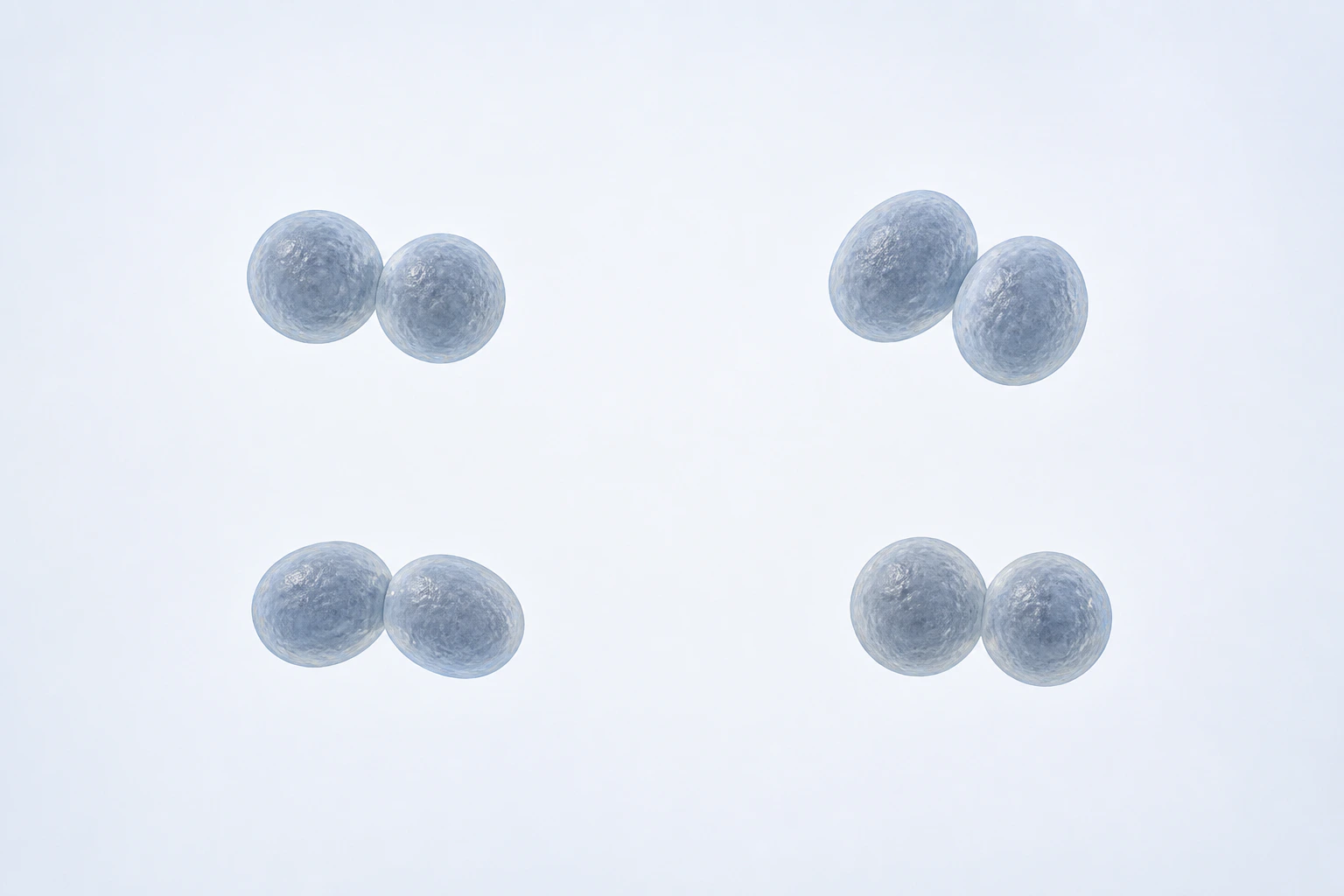
Selected type-species-anchored Coprococcus coccoid-to-short-ovoid forms, shown as eight bodies in four paired groupings. This genus-level reconstruction is representative, non-diagnostic, and not a micrograph.
Scientific media record1 verified identifier
- Subject
- Coprococcustaxon · genus
- Identifiers
- NCBITaxon:33042
- Review
- Editorial review completeIdentifiers authority-verified · Accessibility validated · · coprococcus|coprococcus-morphology-v1.webp
- Digital source
- Trained-algorithmic mediaCreated with a trained generative algorithm and reviewed by WikiBiome for subject identity, scientific framing, identifiers, provenance, and accessibility.
- Scientific basis
- Coprococcus — NCBI TaxonomyCoprococcus — LPSNCoprococcus gen. nov. primary descriptionCoprococcus morphology review
- License
- CC BY-SA 4.0Created
A Gram-positive, obligate anaerobic genus within the Lachnospiraceae family (Firmicutes phylum). Coprococcus is one of the most important Butyrate-producing commensals in the human gut and has gained particular attention as the "happiness bug"—one of very few taxa directly linked to mental health outcomes through population-level studies.
Key species include C. eutactus and C. catus, both prolific Short-Chain Fatty Acids (SCFAs) producers.
Evidence map9 cited passagesInspect provenance +
Consistently decreased in autism spectrum disorder youth across multiple observational reviews.
Depleted in schizophrenia patients alongside other SCFA producers, consistent with the dysbiosis-inflammation-neurotransmitter axis in psychotic disorders.
Coprococcus is among the SCFA-producing taxa most sensitive to heavy metals toxicity, particularly cadmium and lead.
Lead exposure depletes Coprococcus, contributing to the ASD-metal-microbiome triad where Pb-induced loss of butyrate producers may exacerbate neurodevelopmental symptoms.
Reduced 3.4-fold in MS patients compared to healthy controls in the Saresella 2020 study, part of the dramatic Lachnospiraceae depletion that characterizes MS dysbiosis.
Coprococcus (Coprococcus1) is causally protective against coronary artery disease (OR=0.867) in MR analysis.
Depleted in CRC; part of the butyrate-producing consortium lost during tumorigenesis.
Altered Coprococcus abundance contributes to the diagnostic gut microbiome signature distinguishing ovarian tumor patients from healthy controls, consistent with the broad depletion of butyrate producers across gynecological cancers.
Depleted as part of the broader loss of butyrate-producing consortia in CKD; reduced SCFA availability contributes to uremic toxin accumulation and gut-kidney axis dysfunction.
Contents
1. Role in Gut Ecosystem2. The "Happiness Bug"—Mental Health Link3. Sensitivity to Heavy Metals4. Disease Associations5. Key Metabolites6. ConnectionsRole in Gut Ecosystem#
Primary butyrate producer via the butyryl-CoA:acetate CoA-transferase pathway, generating the most potent anti-inflammatory SCFA in the colon. C. catus also produces significant propionate via the acrylate pathway, making it one of few organisms that produces both butyrate and propionate.
Contributes to colonization resistance and gut barrier maintenance through butyrate-mediated upregulation of tight junction proteins and mucin production. Cross-feeds with acetate producers and mucin-degrading bacteria like Akkermansia muciniphila in the healthy gut fermentation network.
The "Happiness Bug"—Mental Health Link#
The landmark Valles-Colomer 2019 study identified Coprococcus (alongside Faecalibacterium prausnitzii) as consistently depleted in individuals with depression, even after controlling for antidepressant use—one of the first population-scale microbiome-mental health associations.
Coprococcus produces DOPAC (3,4-dihydroxyphenylacetic acid), a dopamine metabolite, providing a plausible mechanism for its mental health associations via the Gut-Brain Axis. Consistently decreased in Autism Spectrum Disorder youth across multiple observational reviews.[1]Romano 2023 — Gut Microbiome in Children with Mood, Anxiety, and NDDs: Umbrella ReviewKaitlin Romano, Ashka N. Shah, Anett Schumacher et al. · 2023Open reference 1 ↓
Depleted in Schizophrenia patients alongside other SCFA producers, consistent with the Dysbiosis-Metal-Driven Inflammation-neurotransmitter axis in psychotic disorders.[2]A Comparative Study to Determine the Association of Gut Microbiome with Schizophrenia in Zhejiang, ChinaYan F, Xia L, Xu L et al. · 2022Open reference 2 ↓[3]Schizophrenia, the Gut Microbiota, and New Opportunities from Optogenetic Manipulations of the Gut-Brain AxisPatrono E, Svoboda J, Bhatt DK et al. · 2021Open reference 3 ↓
Sensitivity to Heavy Metals#
Coprococcus is among the SCFA-producing taxa most sensitive to Heavy Metals toxicity, particularly Cadmium and Lead.[4]Toxic and Essential Metals: Metabolic Interactions with the Gut Microbiota and Health ImplicationsQinheng Zhu, Boyan Chen, Fu Zhang et al. · 2024Open reference 4 ↓
Lead exposure depletes Coprococcus, contributing to the ASD-metal-microbiome triad where lead (Pb)-induced loss of butyrate producers may exacerbate neurodevelopmental symptoms.[5]Interaction of Heavy Metal Lead with Gut Microbiota: Implications for Autism Spectrum DisorderTizabi Y, Bennani S, El Kouhen N et al. · 2023Open reference 5 ↓
Its cobalt/B12-dependent metabolic pathways make it vulnerable to metal competition and displacement by heavy metals at enzyme active sites.
Disease Associations#
Depression and Mental Health#
- Depleted in major depressive disorder; DOPAC production links it mechanistically to dopaminergic signaling.
Multiple Sclerosis#
Reduced 3.4-fold in MS patients compared to healthy controls in the Saresella 2020 study, part of the dramatic Lachnospiraceae depletion that characterizes MS dysbiosis.[6]Alterations in Circulating Fatty Acid Are Associated With Gut Microbiota Dysbiosis and Inflammation in Multiple SclerosisMarina Saresella, Ivana Marventano, Monica Barone et al. · 2020Open reference 6 ↓
Loss correlates with reduced serum butyric acid and increased gut barrier permeability (elevated LPS and I-FABP).
Inflammatory Bowel Disease#
- Depleted in both Crohn's disease and ulcerative colitis, consistent with the general loss of butyrate producers in IBD.
Cardiovascular Disease#
- Coprococcus (Coprococcus1) is causally protective against coronary artery disease (OR=0.867) in MR analysis.[7]Assessment of the causal relationship between gut microbiota and cardiovascular diseases: a bidirectional Mendelian randomization analysisXiao-Ce Dai, Yi Yu, Si-Yu Zhou et al. · 2024Open reference 7 ↓
Colorectal Cancer#
- Depleted in CRC; part of the butyrate-producing consortium lost during tumorigenesis.[8]Location and condition based reconstruction of colon cancer microbiome from human RNA sequencing dataGaia Sambruni, Angeli D. Macandog, Jakob Wirbel et al. · 2023Open reference 8 ↓
Ovarian Cancer#
- Altered Coprococcus abundance contributes to the diagnostic Gut Microbiome signature distinguishing ovarian tumor patients from healthy controls, consistent with the broad depletion of butyrate producers across gynecological cancers.[9]Characteristics and potential diagnostic value of gut microbiota in ovarian tumor patientsGong W, Jin G, Bao Y et al. · 2025Open reference 9 ↓
Chronic Kidney Disease#
- Depleted as part of the broader loss of butyrate-producing consortia in CKD; reduced SCFA availability contributes to uremic toxin accumulation and gut-kidney axis dysfunction.[10]Gao 2021 — Butyrate Producing Microbiota Are Reduced in Chronic Kidney DiseasesBei Gao, Adarsh Jose, Norma Alonzo-Palma et al. · 2021Open reference 10 ↓[11]Gut Microbial Metabolites SCFAs and Chronic Kidney DiseaseMeng He, Wenqian Wei, Yichen Zhang et al. · 2024Open reference 11 ↓
Key Metabolites#
Butyrate—primary product; HDAC inhibitor, anti-inflammatory, gut barrier protectant. Propionate—produced by C. catus via acrylate pathway; metabolic regulator. DOPAC—dopamine metabolite; potential mediator of gut-brain mental health effects.
Connections#
- Faecalibacterium prausnitzii—fellow butyrate producer; co-depleted in depression, IBD, and MS
- Short-Chain Fatty Acids (SCFAs)—one of the most important butyrate producers in the human gut
- Gut-Brain Axis—DOPAC production links gut fermentation to dopaminergic neurotransmission
- Multiple Sclerosis—dramatically depleted; loss contributes to barrier dysfunction
- Autism Spectrum Disorder—depleted in ASD; lead exposure may drive this depletion
- Lead—particularly sensitive to lead (Pb); metal-induced loss may mediate neurobehavioral effects
- Cardiovascular Disease—causally protective against CAD per MR evidence
- Colorectal Cancer—depleted; loss removes tumor-suppressive butyrate HDAC inhibition
- Dorea—Lachnospiraceae relative with opposite disease pattern (enriched in disease)
References 11
Numbered by first appearance in the article, then reconciled with its declared source list.
- 1
Kaitlin Romano, Ashka N. Shah, Anett Schumacher et al. (2023). Romano 2023 — Gut Microbiome in Children with Mood, Anxiety, and NDDs: Umbrella Review. Gut Microbiome.
- 2
Yan F, Xia L, Xu L et al. (2022). A Comparative Study to Determine the Association of Gut Microbiome with Schizophrenia in Zhejiang, China. BMC Psychiatry.
- 3
Patrono E, Svoboda J, Bhatt DK et al. (2021). Schizophrenia, the Gut Microbiota, and New Opportunities from Optogenetic Manipulations of the Gut-Brain Axis. Behavioral and Brain Functions.
- 4
★Qinheng Zhu, Boyan Chen, Fu Zhang et al. (2024). Toxic and Essential Metals: Metabolic Interactions with the Gut Microbiota and Health Implications. Frontiers in Nutrition.
- 5
★Tizabi Y, Bennani S, El Kouhen N et al. (2023). Interaction of Heavy Metal Lead with Gut Microbiota: Implications for Autism Spectrum Disorder. Biomolecules.
- 6
Marina Saresella, Ivana Marventano, Monica Barone et al. (2020). Alterations in Circulating Fatty Acid Are Associated With Gut Microbiota Dysbiosis and Inflammation in Multiple Sclerosis. Frontiers in Immunology.
- 7
Xiao-Ce Dai, Yi Yu, Si-Yu Zhou et al. (2024). Assessment of the causal relationship between gut microbiota and cardiovascular diseases: a bidirectional Mendelian randomization analysis. BioData Mining.
- 8
Gaia Sambruni, Angeli D. Macandog, Jakob Wirbel et al. (2023). Location and condition based reconstruction of colon cancer microbiome from human RNA sequencing data. Genome Medicine.
- 9
Gong W, Jin G, Bao Y et al. (2025). Characteristics and potential diagnostic value of gut microbiota in ovarian tumor patients. Scientific Reports.
- 10
Bei Gao, Adarsh Jose, Norma Alonzo-Palma et al. (2021). Gao 2021 — Butyrate Producing Microbiota Are Reduced in Chronic Kidney Diseases. Scientific Reports.
- 11
Meng He, Wenqian Wei, Yichen Zhang et al. (2024). Gut Microbial Metabolites SCFAs and Chronic Kidney Disease. Journal of Translational Medicine.
Article network
Mentioned here 18
Pages linking here 21
Connect the evidence
Publicly readable discussion by ORCID-authenticated researchers. Questions, interpretation, methods, corrections, and new evidence stay attached to this record.
No discussion yet. Start with a precise question or a source-backed observation.
Activity and accepted changes
Accepted researcher context, editorial status, public discussion, and upstream Git revisions are shown together. Pending, declined, and withdrawn proposals remain private.
- published revision
Backfill gut microbiome concept links
Karen Pendergrass · +1 −1
Inspect exact Git diff ↗ - published revision
Backfill inflammation concept links
Karen Pendergrass · +1 −1
Inspect exact Git diff ↗ - published revision
Complete corpus-wide Dysbiosis linking
Karen Pendergrass · +1 −1
Inspect exact Git diff ↗ - published revision
Complete Tight junctions contextual coverage
Karen Pendergrass · +1 −1
Inspect exact Git diff ↗ - published revision
massive wiki expansion: 149 stubs fixed, 100+ new pages, Rule 15 scan, keystone papers
WikiBiome Deploy Bot · +6 −6
Inspect exact Git diff ↗ - published revision
nightly maintenance: 94 stub demotions, 181 source_count fixes, 22 auto-discovered stubs, 5 adversarial audits, 3 boundary fixes, 3 evidence-level corrections
WikiBiome Deploy Bot · +1 −0
Inspect exact Git diff ↗ - published revision
Add 11 deepened microbe entities and 9 new OC/CVD/infertility source pages
WikiBiome Deploy Bot · +9 −2
Inspect exact Git diff ↗ - published revision
wiki: bulk entity upgrades, new article pages, and site regeneration
WikiBiome Deploy Bot · +6 −0
Inspect exact Git diff ↗ - published revision
WikiBiome update — integrity fixes, metallomic diet pages, cross-condition analyses
WikiBiome Deploy Bot · +9 −7
Inspect exact Git diff ↗ - published revision
WikiBiome update — 2026-04-10 13:49
WikiBiome Deploy Bot · +69 −0
Inspect exact Git diff ↗