
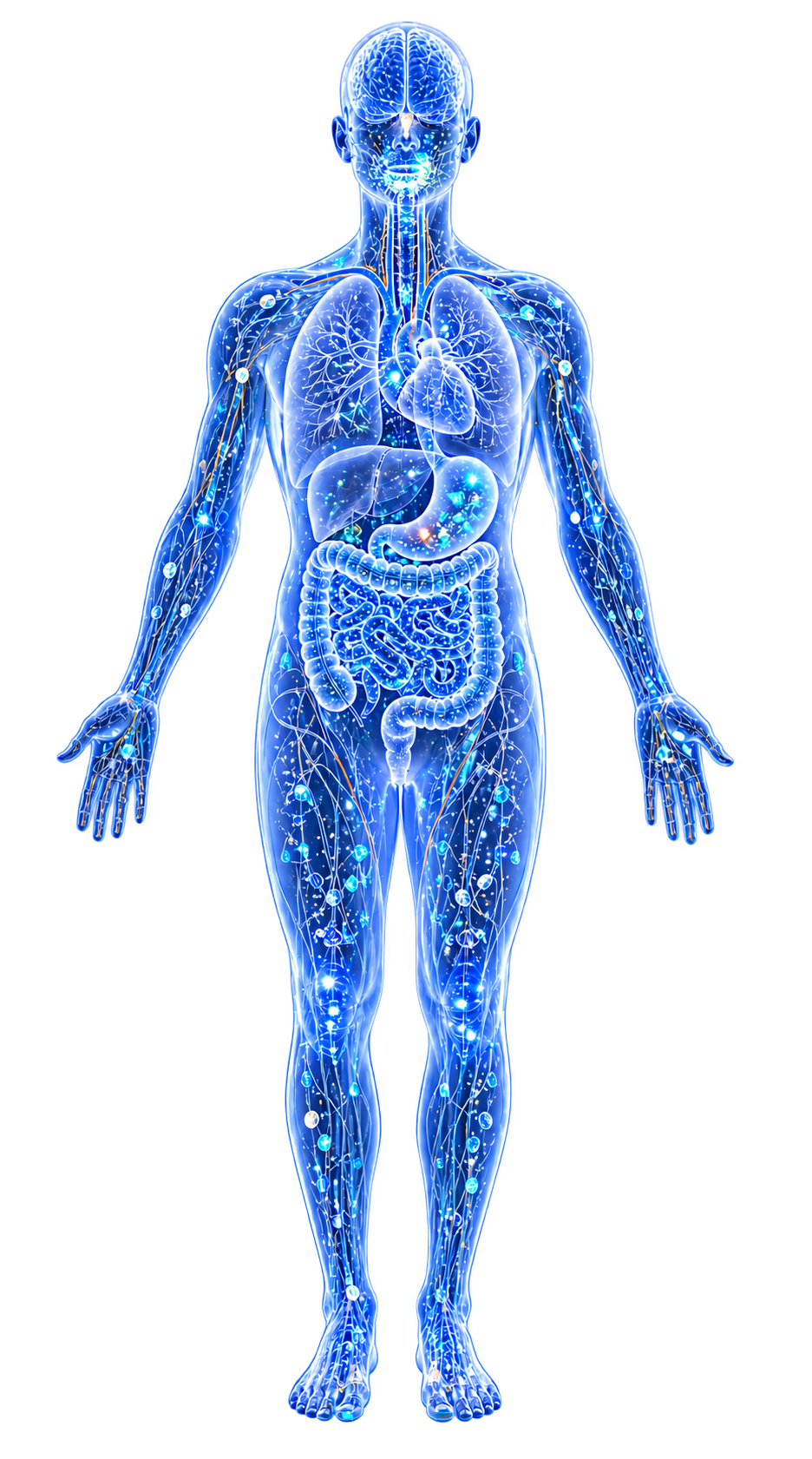
 metals · microbes · host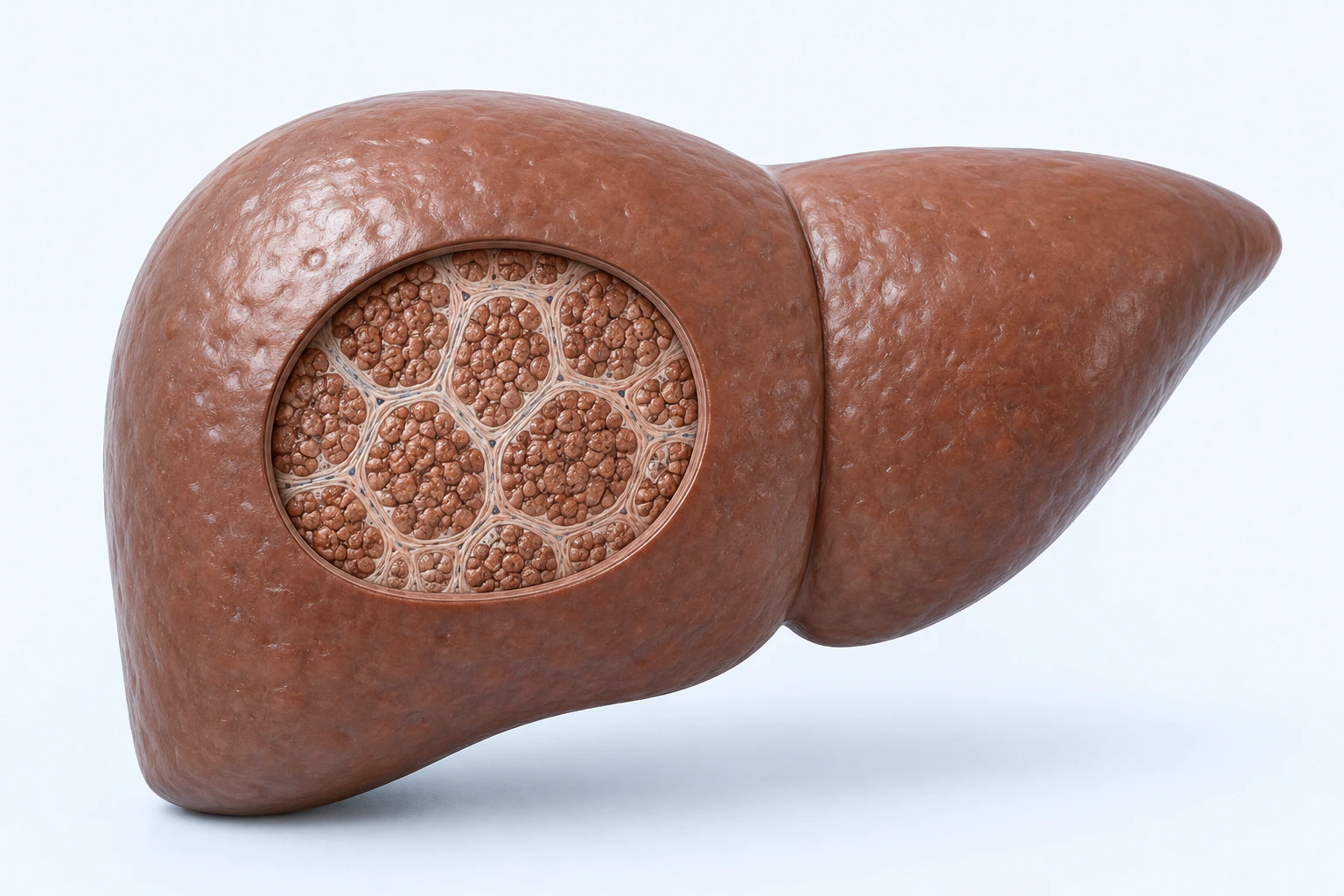
Representative fibrous architectural remodeling in liver cirrhosis. The cutaway suggests septa around regenerative nodules without asserting a cause, complication, stage, or diagnosis.
Scientific media record1 verified identifier
- Subject
- Liver Cirrhosiscondition
- Identifiers
- MeSH:D008103
- Review
- Editorial review completeIdentifiers authority-verified · Accessibility validated · · cirrhosis|cirrhosis-pathology-v1.webp
- Digital source
- Trained-algorithmic mediaCreated with a trained generative algorithm and reviewed by WikiBiome for subject identity, scientific framing, identifiers, provenance, and accessibility.
- Scientific basis
- Liver Cirrhosis — MeSHDefinition & Facts for Cirrhosis
- License
- CC BY-SA 4.0Created
Cirrhosis is end-stage liver fibrosis characterized by nodular regeneration, portal hypertension, and progressive hepatic failure.
The gut-liver axis is central: portal venous blood delivers gut-derived LPS, bacterial DNA, and viable bacteria directly to the liver, and cirrhosis-associated gut barrier failure amplifies this toxic load—creating a feed-forward cycle of Endotoxemia → hepatic Metal-Driven Inflammation → further barrier disruption.
Evidence map3 cited passagesInspect provenance +
Gut dysbiosis: Cirrhosis depletes Bacteroidetes and SCFA producers while enriching oral-origin taxa (Streptococcus, Veillonella) that translocate to the gut—a distinctive "oralization" of the gut microbiome.
Metal hepatotoxicity: Chronic cadmium, arsenic, lead exposure drives hepatic fibrosis independently of viral or alcoholic causes.
Mediterranean diet: Protective dietary pattern associated with reduced cirrhosis progression.
One disease. Five evidence layers.
A generated systems view of the metals, organisms, host sequestration signals, ecological conditions, and microbial functions indexed for Cirrhosis.
Evidence layer
Taxonomic signature
Organisms reported as enriched or depleted, with their indexed functional context kept beside the name.No structured taxa indexed yet.
No structured taxa indexed yet.
Evidence layer
Nutritional immunity
Host metal-withholding, inflammatory, antioxidant, and microbial-metabolite signals indexed in the signature.Elevated host signals
0No structured signals indexed yet.
Depleted protective signals
0No structured signals indexed yet.
Evidence layer
Ecological state
The environmental conditions that connect the organism-level observations into a system.No structured ecological features indexed yet.
Evidence layer
Virulence functions
Microbial structures, enzymes, and acquisition systems implicated by the linked evidence.No structured virulence functions indexed yet.
The disease record, in full.
The original WikiBiome disease narrative remains intact beneath the generated signature atlas.
Key Connections#
Gut Dysbiosis: Cirrhosis depletes Bacteroidetes and SCFA producers while enriching oral-origin taxa (Streptococcus, Veillonella) that translocate to the gut—a distinctive "oralization" of the Gut Microbiome.[1]The gut microbiome in atherosclerotic cardiovascular diseaseZhuye Jie, Huihua Xia, Shi-Long Zhong et al. · 2017Open reference 1 ↓
Hepatic encephalopathy: Urease-producing gut bacteria (Helicobacter pylori, Klebsiella, Proteus mirabilis) generate Ammonia → portal circulation → brain toxicity. Metal hepatotoxicity: Chronic Cadmium, Arsenic, Lead exposure drives hepatic fibrosis independently of viral or alcoholic causes.[2]Toxicity, Mechanism and Health Effects of Some Heavy MetalsMonisha Jaishankar, Tenzin Tseten, Naresh Anbalagan et al. · 2014Open reference 2 ↓
Mediterranean diet: Protective dietary pattern associated with reduced cirrhosis progression.[3]Latorre-Pérez 2021 — The Spanish Gut Microbiome Reveals Links Between Microorganisms and Mediterranean DietAdriel Latorre-Pérez, Marta Hernández, Jose Ramón Iglesias et al. · 2021Open reference 3 ↓
Cross-References#
- Hepatitis—primary cause of cirrhosis
- Endotoxemia—portal LPS driving hepatic inflammation
- Bacteremia—spontaneous bacterial peritonitis in cirrhosis
- Cadmium—hepatotoxic metal
References 4
Numbered by first appearance in the article, then reconciled with its declared source list.
- 1
Zhuye Jie, Huihua Xia, Shi-Long Zhong et al. (2017). The gut microbiome in atherosclerotic cardiovascular disease. Nature Communications.
- 2
★Monisha Jaishankar, Tenzin Tseten, Naresh Anbalagan et al. (2014). Toxicity, Mechanism and Health Effects of Some Heavy Metals. Interdisciplinary Toxicology.
- 3
Adriel Latorre-Pérez, Marta Hernández, Jose Ramón Iglesias et al. (2021). Latorre-Pérez 2021 — The Spanish Gut Microbiome Reveals Links Between Microorganisms and Mediterranean Diet. Scientific Reports.
- 4
★Robert J. Maier, Stéphane L. Benoit (2019). Role of Nickel in Microbial Pathogenesis. Inorganics.
Article network
Connect the evidence
Publicly readable discussion by ORCID-authenticated researchers. Questions, interpretation, methods, corrections, and new evidence stay attached to this record.
No discussion yet. Start with a precise question or a source-backed observation.
Published page changes
This record shows only material changes published on this page, including changes to its content, evidence, conclusions, or author context. Internal processes and discussion activity are excluded. Pending, declined, and withdrawn proposals remain private.
- published revision
Created “Cirrhosis”: Cirrhosis is end-stage liver fibrosis characterized by nodular regeneration, portal hypertension, and progressive hepatic failure. The gut-liver axis is central: portal venous blood delivers…
Created “Cirrhosis”: Cirrhosis is end-stage liver fibrosis characterized by nodular regeneration, portal hypertension, and progressive hepatic failure. The gut-liver axis is central: portal venous blood delivers… Published sections: Cirrhosis; Key Connections; Cross-References. · WikiBiome Deploy Bot · +39 −0
Inspect exact Git diff ↗