
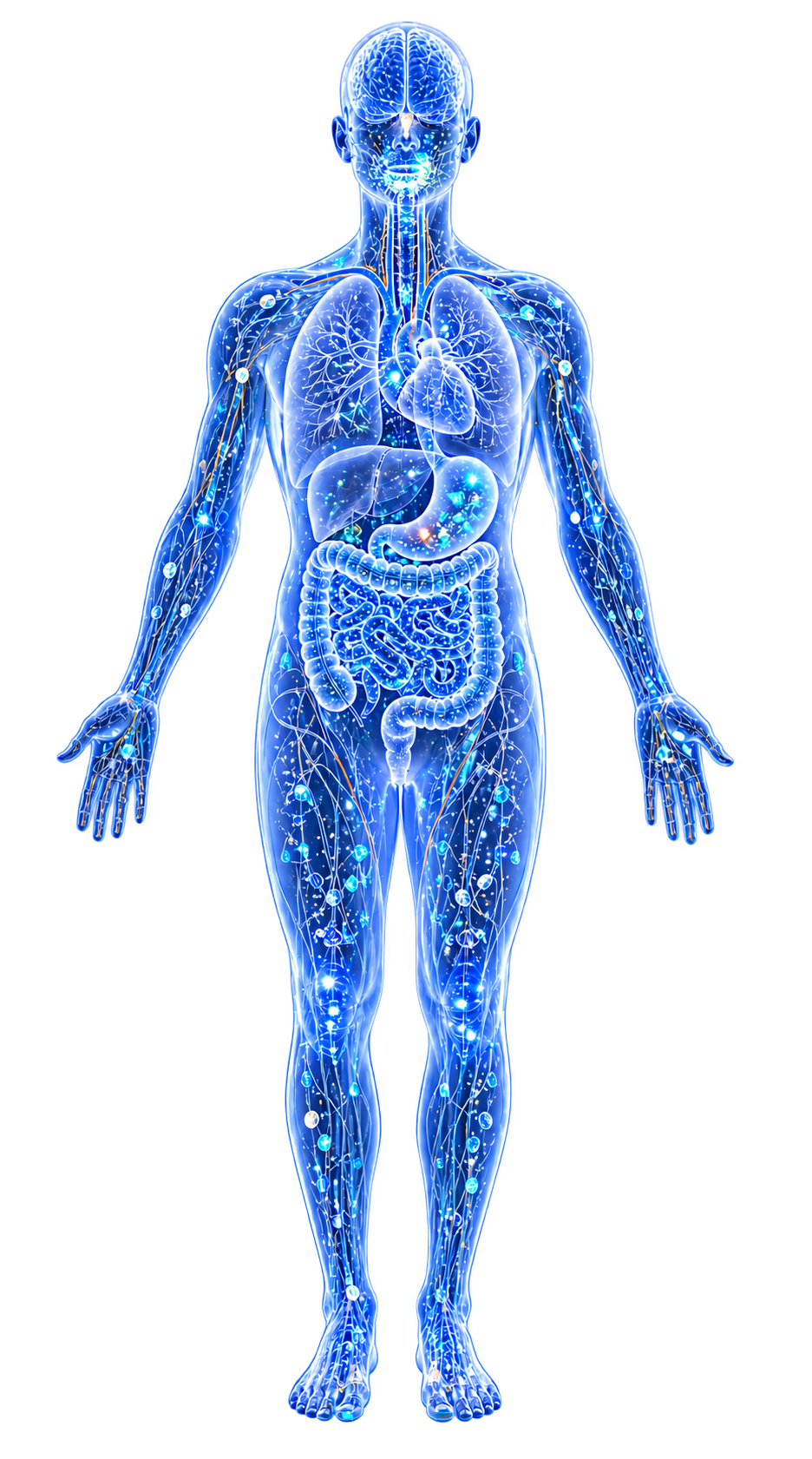
 metals · microbes · host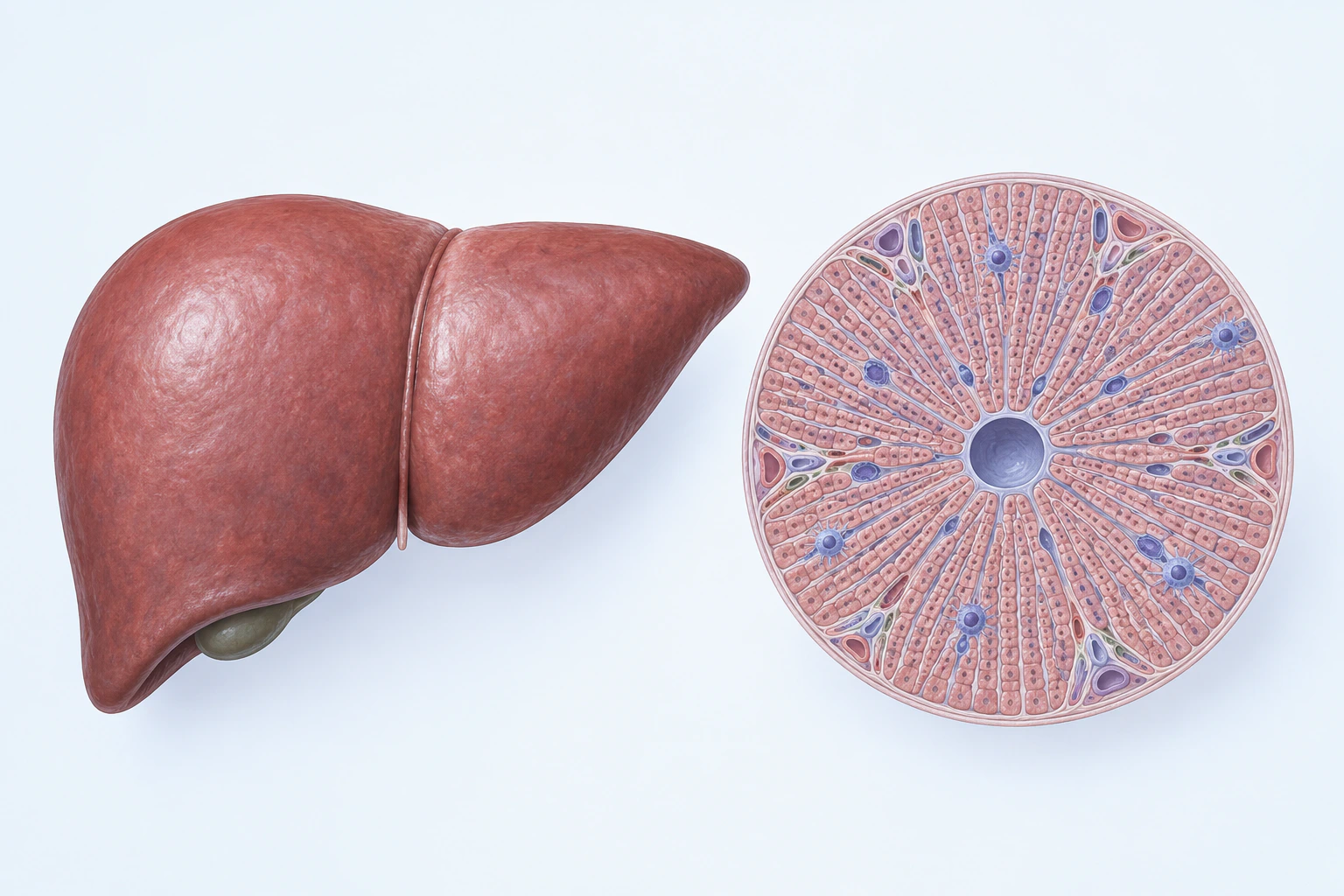
Etiology-neutral liver and hepatic-microarchitecture orientation for hepatitis. The circular model is not literal lobule histology and does not establish viral, alcohol, toxin, autoimmune, chronicity, severity, or diagnostic status.
Scientific media record1 verified identifier
- Subject
- Hepatitiscondition
- Identifiers
- MeSH:D006505
- Review
- Editorial review completeIdentifiers authority-verified · Accessibility validated · · hepatitis|hepatitis-pathology-v1.webp
- Digital source
- Trained-algorithmic mediaCreated with a trained generative algorithm and reviewed by WikiBiome for subject identity, scientific framing, identifiers, provenance, and accessibility.
- Scientific basis
- Hepatitis — MeSHHepatitis
- License
- CC BY-SA 4.0Created
Hepatitis (liver Metal-Driven Inflammation) encompasses viral (HBV, HCV, HAV), autoimmune, alcoholic, and toxin-induced forms. In the WikiBiome framework, the gut-liver axis is central—portal blood delivers gut-derived microbial products (LPS, bacterial DNA) directly to the liver via the portal vein, making hepatic inflammation inseparable from Gut Microbiome status.
Evidence map4 cited passagesInspect provenance +
Virome: Altered gut virome (bacteriophage communities) in liver disease.
Metal hepatotoxicity: cadmium, arsenic, lead cause direct hepatocyte damage, compounding viral hepatitis.
Autoimmune hepatitis: May share molecular mimicry mechanisms with other autoimmune conditions.
Male fertility: HBV/HCV affect seminal microbiome and spermatogenesis.
One disease. Five evidence layers.
A generated systems view of the metals, organisms, host sequestration signals, ecological conditions, and microbial functions indexed for Hepatitis.
Evidence layer
Taxonomic signature
Organisms reported as enriched or depleted, with their indexed functional context kept beside the name.No structured taxa indexed yet.
No structured taxa indexed yet.
Evidence layer
Nutritional immunity
Host metal-withholding, inflammatory, antioxidant, and microbial-metabolite signals indexed in the signature.Elevated host signals
0No structured signals indexed yet.
Depleted protective signals
0No structured signals indexed yet.
Evidence layer
Ecological state
The environmental conditions that connect the organism-level observations into a system.No structured ecological features indexed yet.
Evidence layer
Virulence functions
Microbial structures, enzymes, and acquisition systems implicated by the linked evidence.No structured virulence functions indexed yet.
The disease record, in full.
The original WikiBiome disease narrative remains intact beneath the generated signature atlas.
Key Connections#
Gut-liver axis: Gut Dysbiosis → increased portal LPS → Kupffer cell activation → hepatic inflammation → fibrosis → Cirrhosis. Virome: Altered gut virome (bacteriophage communities) in liver disease.[1]Gut Virome Profiling Identifies a Widespread Bacteriophage Family Associated with Metabolic SyndromePatrick A. de Jonge, Koen Wortelboer, Torsten P. M. Scheithauer et al. · 2022Open reference 1 ↓
Metal hepatotoxicity: Cadmium, Arsenic, Lead cause direct hepatocyte damage, compounding viral hepatitis.[2]Toxicity, Mechanism and Health Effects of Some Heavy MetalsMonisha Jaishankar, Tenzin Tseten, Naresh Anbalagan et al. · 2014Open reference 2 ↓ Autoimmune hepatitis: May share Molecular Mimicry mechanisms with other autoimmune conditions.[3]Graves' disease: Epidemiology, genetic and environmental risk factors and virusesAntonelli A, Ferrari SM, Ragusa F et al. · 2023Open reference 3 ↓ Male fertility: HBV/HCV affect seminal microbiome and spermatogenesis.[4]Guo 2024 — Correlation Between Viral Infections in Male Semen and Infertility: A Literature ReviewYan Guo, Yunhua Dong, Runzi Zheng et al. · 2024Open reference 4 ↓
Cross-References#
- Cirrhosis—end-stage consequence
- Endotoxemia—portal LPS as hepatic inflammatory driver
- Cadmium—hepatotoxic metal
- Gut-Kidney Axis—hepatorenal syndrome
References 4
Numbered by first appearance in the article, then reconciled with its declared source list.
- 1
Patrick A. de Jonge, Koen Wortelboer, Torsten P. M. Scheithauer et al. (2022). Gut Virome Profiling Identifies a Widespread Bacteriophage Family Associated with Metabolic Syndrome. Nature Communications.
- 2
★Monisha Jaishankar, Tenzin Tseten, Naresh Anbalagan et al. (2014). Toxicity, Mechanism and Health Effects of Some Heavy Metals. Interdisciplinary Toxicology.
- 3
Antonelli A, Ferrari SM, Ragusa F et al. (2023). Graves' disease: Epidemiology, genetic and environmental risk factors and viruses. Best Practice & Research Clinical Endocrinology & Metabolism.
- 4
Yan Guo, Yunhua Dong, Runzi Zheng et al. (2024). Guo 2024 — Correlation Between Viral Infections in Male Semen and Infertility: A Literature Review. Virology Journal.
Article network
Mentioned here 10
Pages linking here 1
Connect the evidence
Publicly readable discussion by ORCID-authenticated researchers. Questions, interpretation, methods, corrections, and new evidence stay attached to this record.
No discussion yet. Start with a precise question or a source-backed observation.
Published page changes
This record shows only material changes published on this page, including changes to its content, evidence, conclusions, or author context. Internal processes and discussion activity are excluded. Pending, declined, and withdrawn proposals remain private.
- published revision
Created “Hepatitis”: Hepatitis (liver inflammation) encompasses viral (HBV, HCV, HAV), autoimmune, alcoholic, and toxin-induced forms. In the WikiBiome framework, the gut-liver axis is central — portal blood delivers…
Created “Hepatitis”: Hepatitis (liver inflammation) encompasses viral (HBV, HCV, HAV), autoimmune, alcoholic, and toxin-induced forms. In the WikiBiome framework, the gut-liver axis is central — portal blood delivers… Published sections: Hepatitis; Key Connections; Cross-References. · WikiBiome Deploy Bot · +40 −0
Inspect exact Git diff ↗