

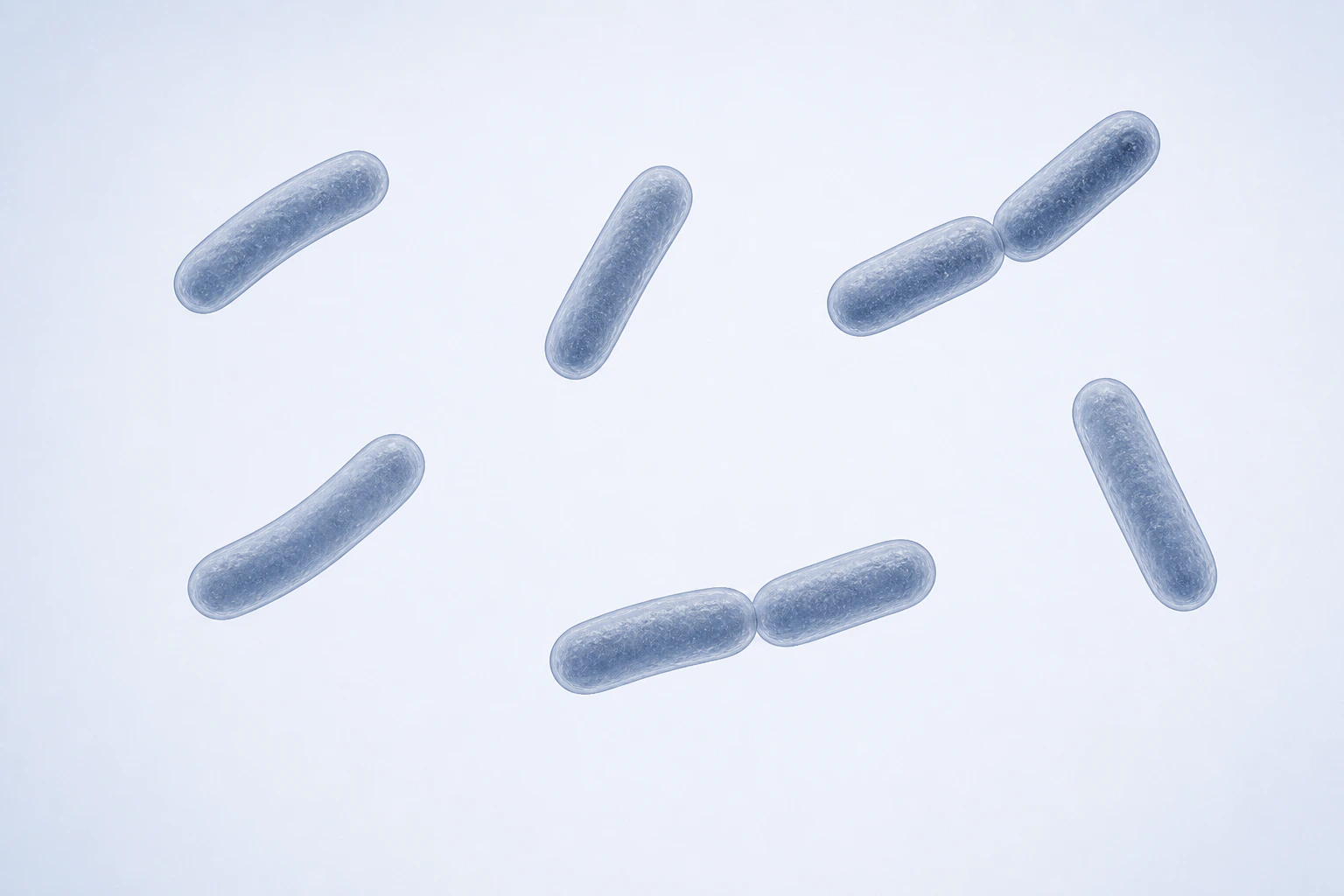
Selected type-species-anchored Enterobacter rod forms, shown as eight bodies in four single and two paired groupings. This reconstruction is representative, non-diagnostic, and not a micrograph.
Scientific media record1 verified identifier
- Subject
- Enterobactertaxon · genus
- Identifiers
- NCBITaxon:547
- Review
- Editorial review completeIdentifiers authority-verified · Accessibility validated · · enterobacter|enterobacter-morphology-v1.webp
- Digital source
- Trained-algorithmic mediaCreated with a trained generative algorithm and reviewed by WikiBiome for subject identity, scientific framing, identifiers, provenance, and accessibility.
- Scientific basis
- Enterobacter — NCBI TaxonomyEnterobacter — LPSNEnterobacter genus treatmentEnterobacter cloacae type strain — BacDive
- License
- CC BY-SA 4.0Created
Enterobacter is a genus of Gram-negative, facultatively anaerobic bacteria in the Enterobacteriaceae family. Key species include Enterobacter cloacae (the most clinically relevant) and E. hormaechei. Like other Enterobacteriaceae, Enterobacter possesses iron-dependent Siderophores and nickel-dependent NiFe hydrogenases that provide competitive advantages during Dysbiosis.
Evidence map4 cited passagesInspect provenance +
NEC: Part of the Enterobacteriaceae bloom preceding necrotizing enterocolitis in preterm infants; nickel in preterm formula may fuel expansion.
Formate metabolism: E. cloacae formate-dependent growth drives dysbiotic metabolic shifts in NEC.
AMR: Carbapenem-resistant Enterobacter (CRE) is a critical AMR threat; metal resistance genes co-locate with carbapenem resistance.
Graves' disease: E. hormaechei decreased by berberine supplementation alongside clinical improvement.
Key Associations#
NEC: Part of the Enterobacteriaceae bloom preceding necrotizing enterocolitis in preterm infants; nickel in preterm formula may fuel expansion.[1]Nickel as a Catalytic Driver of Necrotizing Enterocolitis: Dietary Nickel, Microbial Metallomics, and the Activation of Nickel-Dependent Virulence Pathways in the Preterm GutKaren Pendergrass · 2026Open reference 1 ↓
Formate metabolism: E. cloacae formate-dependent growth drives dysbiotic metabolic shifts in NEC.[2]Casaburi 2022 — Formate as a metabolic driver of NEC: integrated metagenomics and targeted metabolomicsGiorgio Casaburi, Jingjing Wei, Sufyan Kazi et al. · 2022Open reference 2 ↓ AMR: Carbapenem-resistant Enterobacter (CRE) is a critical AMR threat; metal resistance genes co-locate with carbapenem resistance.[3]Miranda 2022 — Characterization of Metal(loid)s and Antibiotic Resistance in Bacteria of Human Gut Microbiota from CKD SubjectsMaría V. Miranda, Fernanda C. González, Osvaldo S. Paredes-Godoy et al. · 2022Open reference 3 ↓
Graves' disease: E. hormaechei decreased by berberine supplementation alongside clinical improvement.[4]Han et al. 2022 — The Potential Prebiotic Berberine Combined With Methimazole Improved the Therapeutic Effect of Graves' Disease Patients Through Regulating the Intestinal MicrobiomeHan Z, Cen C, Ou Q et al. · 2022Open reference 4 ↓ CKD: Part of uremic toxin-producing Enterobacteriaceae enrichment.
Cross-References#
- Enterobacter cloacae—species page
- Enterobacteriaceae—family context
- Klebsiella—related genus; shared metal dependencies and AMR
- Necrotizing Enterocolitis—NEC pathogenesis
- Nickel—NiFe-hydrogenase dependency
- Co-Selection—metal-carbapenem co-resistance
- Berberine—Enterobacter suppression in Graves'
References 5
Numbered by first appearance in the article, then reconciled with its declared source list.
- 1
Karen Pendergrass (2026). Nickel as a Catalytic Driver of Necrotizing Enterocolitis: Dietary Nickel, Microbial Metallomics, and the Activation of Nickel-Dependent Virulence Pathways in the Preterm Gut. Zenodo Preprint.
- 2
Giorgio Casaburi, Jingjing Wei, Sufyan Kazi et al. (2022). Casaburi 2022 — Formate as a metabolic driver of NEC: integrated metagenomics and targeted metabolomics. Frontiers in Pediatrics.
- 3
María V. Miranda, Fernanda C. González, Osvaldo S. Paredes-Godoy et al. (2022). Miranda 2022 — Characterization of Metal(loid)s and Antibiotic Resistance in Bacteria of Human Gut Microbiota from CKD Subjects. Biological Research.
- 4
Han Z, Cen C, Ou Q et al. (2022). Han et al. 2022 — The Potential Prebiotic Berberine Combined With Methimazole Improved the Therapeutic Effect of Graves' Disease Patients Through Regulating the Intestinal Microbiome. Frontiers in Immunology.
- 5
Khan F, Rizvi M, Shukla I et al. (2011). A Novel Approach for Identification of Members of Enterobacteriaceae Isolated from Clinical Samples. Biology and Medicine.
Article network
Connect the evidence
Publicly readable discussion by ORCID-authenticated researchers. Questions, interpretation, methods, corrections, and new evidence stay attached to this record.
No discussion yet. Start with a precise question or a source-backed observation.
Published page changes
This record shows only material changes published on this page, including changes to its content, evidence, conclusions, or author context. Internal processes and discussion activity are excluded. Pending, declined, and withdrawn proposals remain private.
- published revision
Revised “Enterobacter”: now reads “Enterobacter possesses iron-dependent siderophores and nickel-dependent NiFe hydrogenases that provide competitive advantages during dysbiosis.”.
Revised “Enterobacter”: changed “Enterobacter possesses iron-dependent siderophores and nickel-dependent NiFe-hydrogenases that provide competitive advantages during dysbiosis.” to “Enterobacter possesses iron-dependent siderophores and nickel-dependent NiFe hydrogenases that provide competitive advantages during dysbiosis.”. · Karen Pendergrass · +1 −1
Inspect exact Git diff ↗ - published revision
Added “Enterobacter”: Enterobacter is a genus of Gram-negative, facultatively anaerobic bacteria in the enterobacteriaceae family. Key species include enterobacter cloacae (the most clinically relevant) and E. hormaechei.…
Added “Enterobacter”: Enterobacter is a genus of Gram-negative, facultatively anaerobic bacteria in the enterobacteriaceae family. Key species include enterobacter cloacae (the most clinically relevant) and E. hormaechei.… Added “Key Associations”: - NEC: Part of the Enterobacteriaceae bloom preceding necrotizing enterocolitis in preterm infants; nickel in preterm formula may fuel expansion. - Formate metabolism: E. cloacae formate-dependent… Added “Cross-References”: - enterobacter cloacae — species page - enterobacteriaceae — family context - klebsiella — related genus; shared metal dependencies and AMR - necrotizing enterocolitis — NEC pathogenesis - nickel —… Added citations to “Key Associations”: pendergrass 2026 nickel nec preterm gut; casaburi 2022 formate nec enteric dysbiosis metabolic model; miranda 2022 metalloids antibiotic resistance ckd gut; han 2022 berberine methimazole graves microbiome. Added references: casaburi-2022-formate-nec-enteric-dysbiosis-metabolic-model; khan-2011-novel-approach-enterobacteriaceae-identification-clinical; pendergrass-2026-nickel-nec-preterm-gut; miranda-2022-metalloids-antibiotic-resistance-ckd-gut; han-2022-berberine-methimazole-graves-microbiome. Added key enzymes: NiFe-hydrogenase; siderophores; beta-lactamase; efflux-pumps. Added metal dependencies: iron; nickel. · WikiBiome Deploy Bot · +39 −12
Inspect exact Git diff ↗ - published revision
Created “Enterobacter”:
Created “Enterobacter”: · WikiBiome Deploy Bot · +21 −0
Inspect exact Git diff ↗