
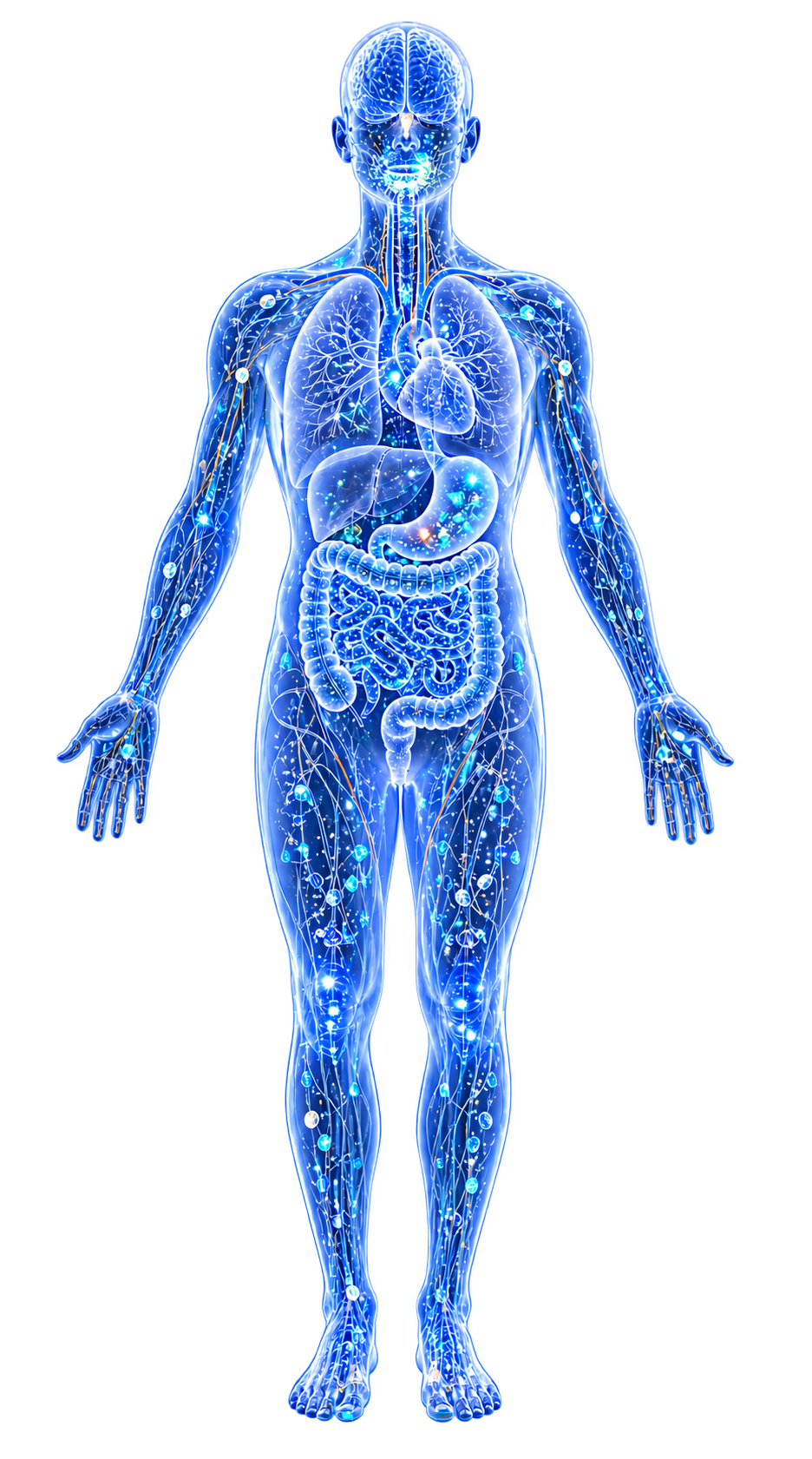
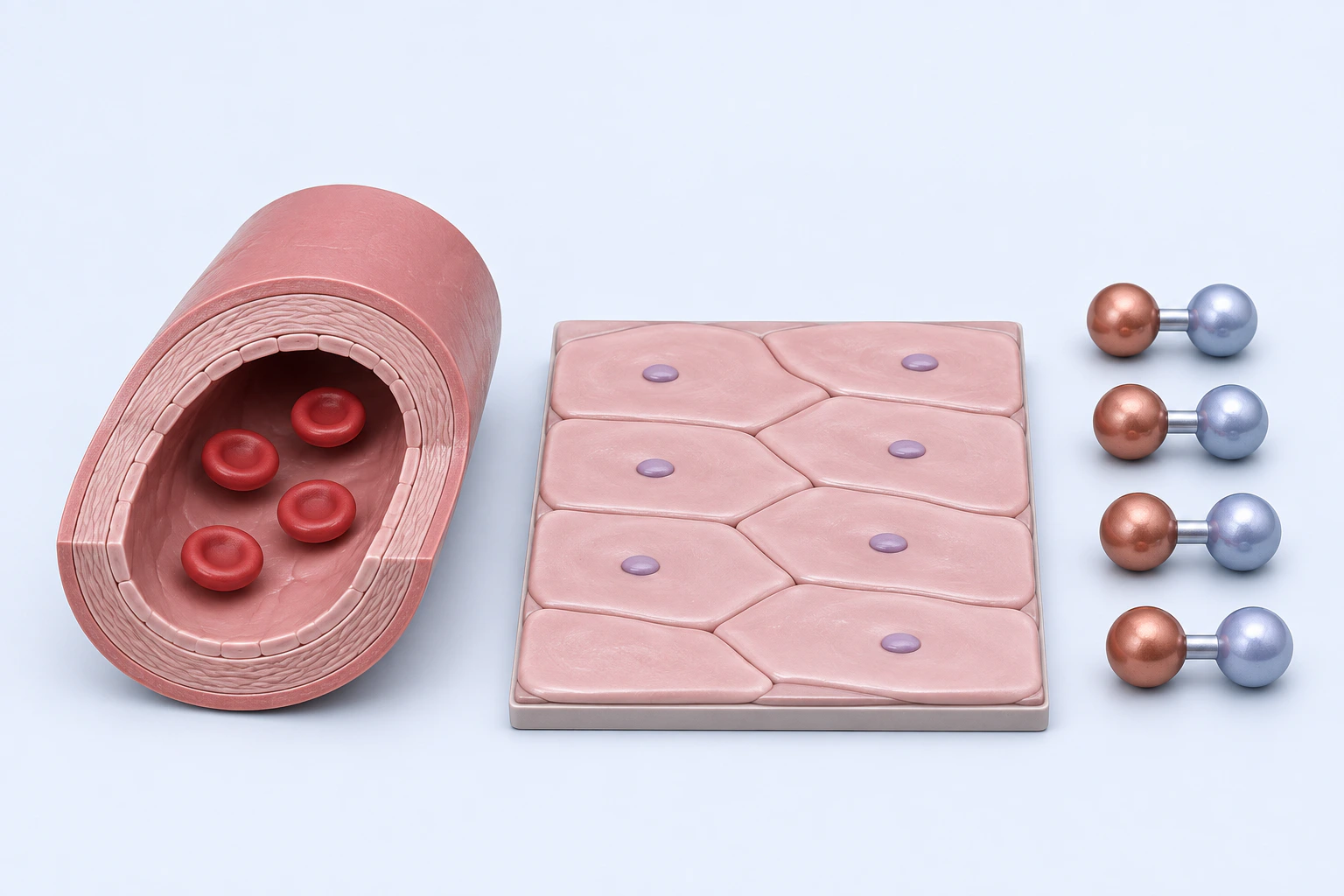
Endothelial-dysfunction orientation through normal vascular-endothelium and non-literal nitric-oxide contexts. The plate does not visually diagnose dysfunction or show a lesion, measured molecular structure, vascular response, disease mechanism, biomarker result, or treatment effect.
Scientific media record4 verified identifiers
- Subject
- Endothelial Dysfunctionbiological-process
- Review
- Editorial review completeIdentifiers authority-verified · Accessibility validated · · endothelial-dysfunction|endothelial-dysfunction-mechanism-v1.webp
- Digital source
- Trained-algorithmic mediaCreated with a trained generative algorithm and reviewed by WikiBiome for subject identity, scientific framing, identifiers, provenance, and accessibility.
- Scientific basis
- Endothelial dysfunction — MedGenEndothelium, Vascular — Medical Subject HeadingsNitric Oxide and Endothelial DysfunctionNitric oxide — CID 145068Endothelial Dysfunction
- License
- CC BY-SA 4.0Created
Endothelial dysfunction is the impairment of the vascular endothelium's ability to produce nitric oxide (NO), regulate vascular tone, and prevent thrombosis. It is the earliest detectable stage of atherosclerosis and the mechanistic link between gut Dysbiosis, systemic Metal-Driven Inflammation, and cardiovascular/erectile disease.
In the WikiBiome framework, endothelial dysfunction is where Endotoxemia, TMAO, metal-driven Oxidative Stress, and microbiome disruption converge on the vasculature.
Evidence map4 cited passagesInspect provenance +
Endotoxemia → eNOS suppression: LPS/TLR4 signaling elevates asymmetric dimethylarginine (ADMA), which competitively inhibits eNOS, reducing NO production.
TMAO: Microbial TMAO directly damages endothelial cells and promotes foam cell formation.
IL-6/TNF-alpha: Gut-derived IL-6 and TNF-alpha suppress eNOS expression and increase ROS in the endothelium.
IBD → ED axis: IBD-driven systemic inflammation creates a "gut-penis axis" where cytokines directly impair corpus cavernosum NO signaling.
Microbiome Drivers#
Endotoxemia → eNOS suppression: LPS/TLR4 signaling elevates asymmetric dimethylarginine (ADMA), which competitively inhibits eNOS, reducing NO production.[1]The gut microbiome in atherosclerotic cardiovascular diseaseZhuye Jie, Huihua Xia, Shi-Long Zhong et al. · 2017Open reference 1 ↓ TMAO: Microbial TMAO directly damages endothelial cells and promotes foam cell formation.[1]The gut microbiome in atherosclerotic cardiovascular diseaseZhuye Jie, Huihua Xia, Shi-Long Zhong et al. · 2017Open reference 1 ↓
IL-6/TNF-alpha: Gut-derived IL-6 and TNF-alpha suppress eNOS expression and increase ROS in the endothelium.[2]Li 2026 — IBD and Male Erectile Dysfunction: Mechanistic Insights and Novel Therapeutic PerspectivesShuxin Li, Hongliang Cao, Yuwei Liang et al. · 2026Open reference 2 ↓[3]Malekpour & Malekpour 2025 — Anti-Inflammatory Interventions on Mental Health and Sexual PerformanceOmid Malekpour, Amir Mahdi Malekpour · 2025Open reference 3 ↓
IBD → ED axis: IBD-driven systemic inflammation creates a "gut-penis axis" where cytokines directly impair corpus cavernosum NO signaling.[2]Li 2026 — IBD and Male Erectile Dysfunction: Mechanistic Insights and Novel Therapeutic PerspectivesShuxin Li, Hongliang Cao, Yuwei Liang et al. · 2026Open reference 2 ↓
Metal Connections#
Heavy Metals generate ROS that scavenge NO (superoxide + NO → peroxynitrite), directly impairing vasodilation. Lead and cadmium impair eNOS cofactor (BH4) recycling.
Cross-References#
- Cardiovascular Disease—endothelial dysfunction as earliest CVD stage
- Erectile Dysfunction—penile endothelial dysfunction = ED
- Endotoxemia—LPS-driven eNOS suppression
- Trimethylamine N-Oxide (TMAO)—direct endothelial toxin
- Interleukin-6 (IL-6)—cytokine-mediated endothelial damage
- Nitric Oxide—the vasodilator impaired in dysfunction
References 6
Numbered by first appearance in the article, then reconciled with its declared source list.
- 1
Zhuye Jie, Huihua Xia, Shi-Long Zhong et al. (2017). The gut microbiome in atherosclerotic cardiovascular disease. Nature Communications.
- 2
Shuxin Li, Hongliang Cao, Yuwei Liang et al. (2026). Li 2026 — IBD and Male Erectile Dysfunction: Mechanistic Insights and Novel Therapeutic Perspectives. Frontiers in Immunology.
- 3
Omid Malekpour, Amir Mahdi Malekpour (2025). Malekpour & Malekpour 2025 — Anti-Inflammatory Interventions on Mental Health and Sexual Performance. International Journal of New Findings in Health and Educational Sciences (IJHES).
- 4
Yi Lu, Jiaqi Kang, Zhongjia Li et al. (2021). Lu 2021 — Plant-Based Diet and Erectile Dysfunction in Chinese Men. Basic and Clinical Andrology.
- 5
Kevin T. McVary (2007). McVary 2007 — Erectile Dysfunction Clinical Practice Review. New England Journal of Medicine.
- 6
Mohamed Raâfet Ben Khedher, Houda Bouhajja, Samia Haj Ahmed et al. (2017). Ben Khedher 2017 — Disturbed Fatty Acids Metabolism in Diabetic Erectile Dysfunction. Lipids in Health and Disease.
Article network
Mentioned here 11
Pages linking here 3
Connect the evidence
Publicly readable discussion by ORCID-authenticated researchers. Questions, interpretation, methods, corrections, and new evidence stay attached to this record.
No discussion yet. Start with a precise question or a source-backed observation.
Activity and accepted changes
Accepted researcher context, editorial status, public discussion, and upstream Git revisions are shown together. Pending, declined, and withdrawn proposals remain private.
- published revision
Backfill heavy metals concept links
Karen Pendergrass · +1 −1
Inspect exact Git diff ↗ - published revision
Backfill inflammation concept links
Karen Pendergrass · +1 −1
Inspect exact Git diff ↗ - published revision
Complete corpus-wide Dysbiosis linking
Karen Pendergrass · +1 −1
Inspect exact Git diff ↗ - published revision
massive wiki expansion: 149 stubs fixed, 100+ new pages, Rule 15 scan, keystone papers
WikiBiome Deploy Bot · +46 −0
Inspect exact Git diff ↗