
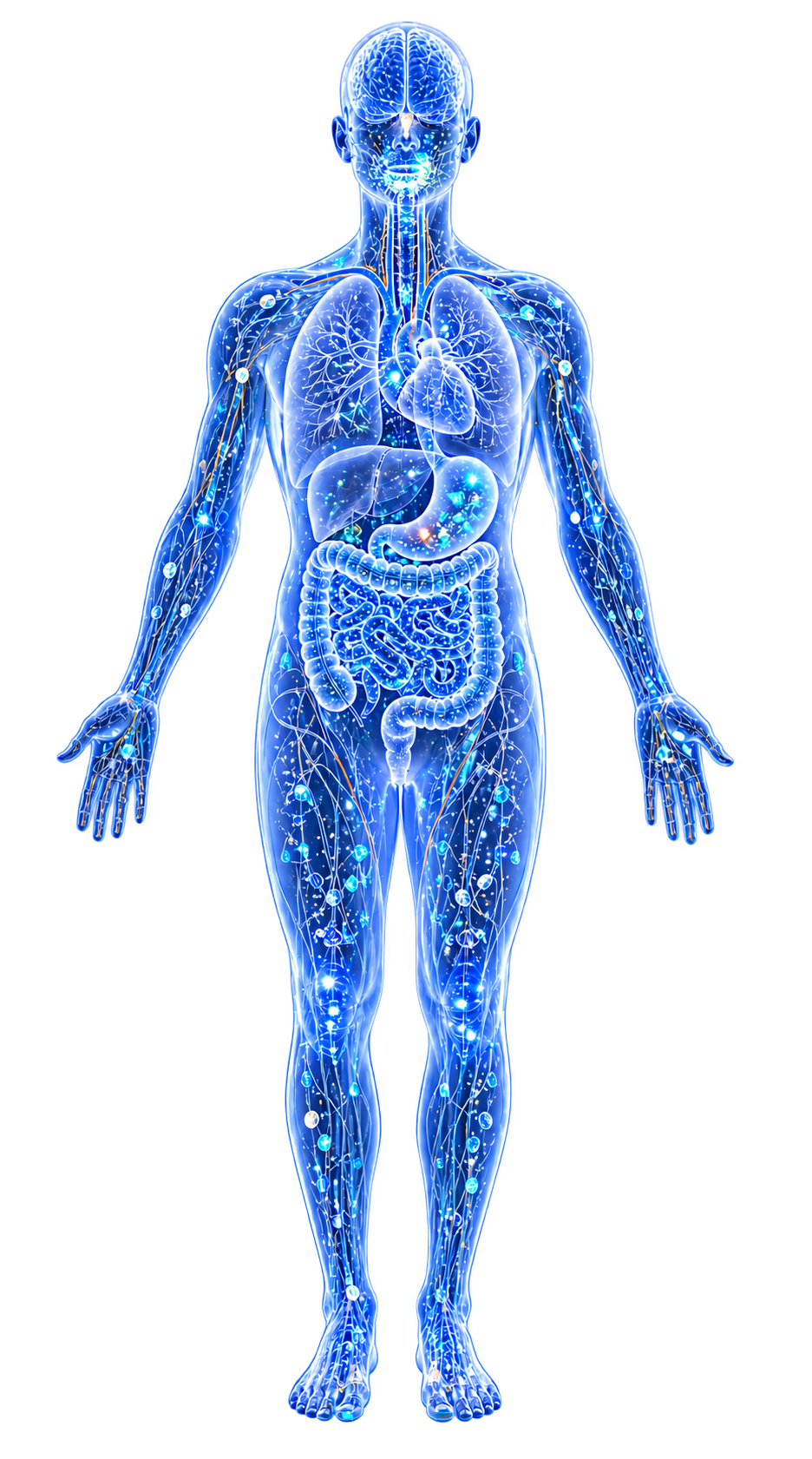
Postbiotics are defined by ISAPP (2021) as "preparations of inanimate microorganisms and/or their components that confer a health benefit on the host." They include heat-killed bacteria, cell-free supernatants, bacterial lysates, and purified microbial metabolites (SCFAs, bacteriocins, exopolysaccharides).
Postbiotics offer the functional benefits of probiotics without the risks of live organism administration—relevant for immunocompromised patients, neonates, and conditions where live bacteria could cause Bacteremia.
Advantages#
Safety: No risk of bacteremia or fungemia from live organisms. Stability: Heat-stable; no cold chain required. Standardization: Defined composition unlike variable live cultures.
Mechanistic clarity: Specific metabolites can be dosed precisely.
Key Postbiotic Types#
Short-Chain Fatty Acids (SCFAs): Butyrate, propionate, acetate—the most studied postbiotic class. Bacteriocins: Antimicrobial peptides (nisin, plantaricin) for targeted pathogen suppression. Exopolysaccharides (EPS): Immunomodulatory polymers.
Cell wall components: Lipoteichoic acid, peptidoglycan fragments—TLR ligands for immune training.
Cross-References#
- Prebiotics—substrate for live microbial postbiotic production
- Synbiotics—live probiotic + prebiotic combination (distinct from postbiotic)
- Short-Chain Fatty Acids (SCFAs)—primary postbiotic metabolite class
- microbiome-derived metabolites—broader microbial metabolite context
References 3
Numbered by first appearance in the article, then reconciled with its declared source list.
- 1
Denise Mafra, Natalia A. Borges, Livia Alvarenga et al. (2022). Fermented Food: Should Patients with Cardiometabolic Diseases Go Back to an Early Neolithic Diet?. Critical Reviews in Food Science and Nutrition.
- 2
Spivak I, Fluhr L, Elinav E (2023). Local and Systemic Effects of Microbiome-Derived Metabolites. EMBO Reports.
- 3
Appunni S, Rubens M, Ramamoorthy V et al. (2021). Emerging Evidence on the Effects of Dietary Factors on the Gut Microbiome in Colorectal Cancer. Frontiers in Nutrition.
Article network
Connect the evidence
Publicly readable discussion by ORCID-authenticated researchers. Questions, interpretation, methods, corrections, and new evidence stay attached to this record.
No discussion yet. Start with a precise question or a source-backed observation.
Activity and accepted changes
Accepted researcher context, editorial status, public discussion, and upstream Git revisions are shown together. Pending, declined, and withdrawn proposals remain private.
- published revision
Consolidate microbial metabolite knowledge
Karen Pendergrass · +2 −2
Inspect exact Git diff ↗ - published revision
massive wiki expansion: 149 stubs fixed, 100+ new pages, Rule 15 scan, keystone papers
WikiBiome Deploy Bot · +43 −0
Inspect exact Git diff ↗