
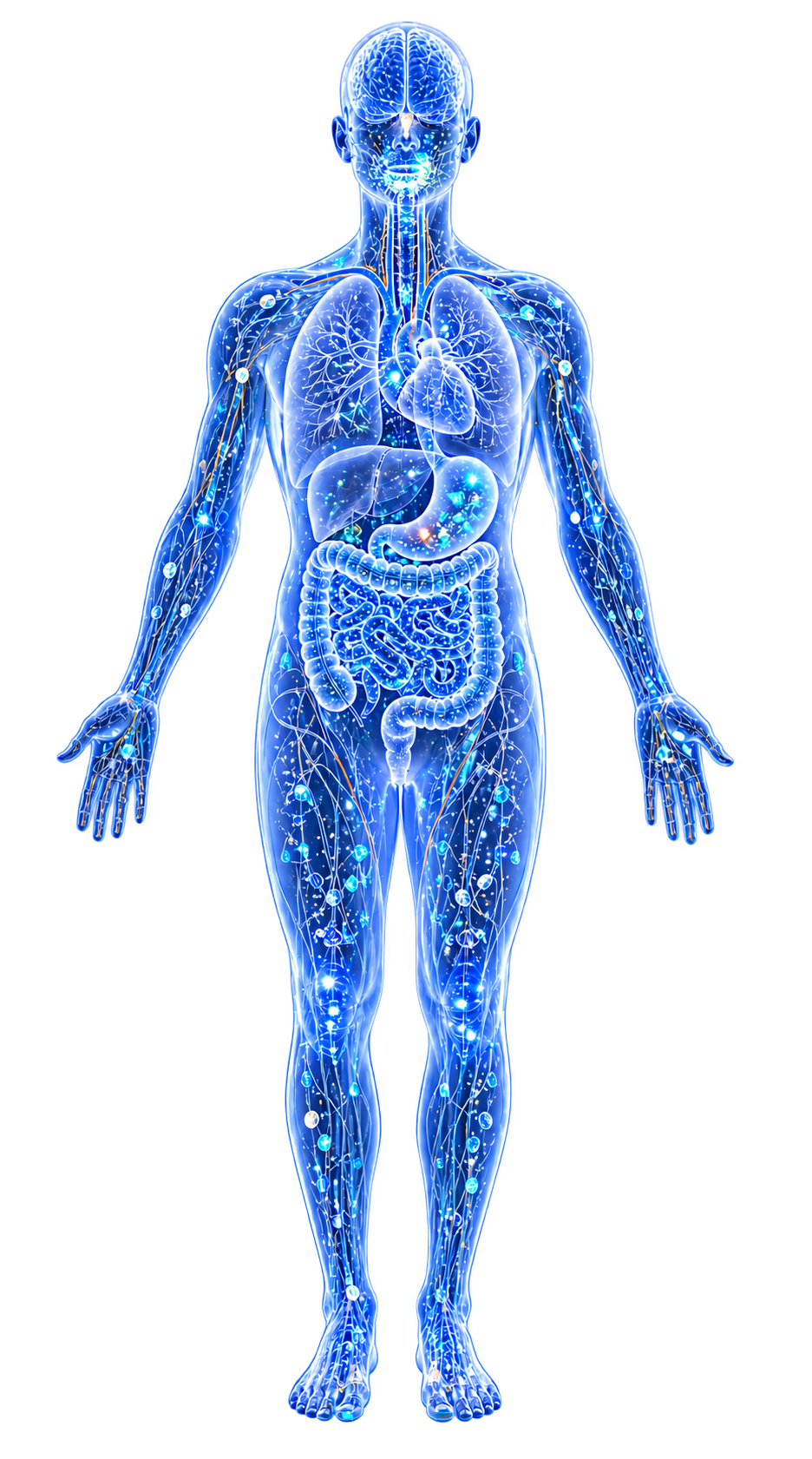
A synbiotic is a combination of a probiotic (live beneficial microorganism) and a prebiotic (substrate that selectively feeds beneficial microbes), designed to work synergistically—the prebiotic supports the survival and colonization of the probiotic organism.
Synbiotics represent a more ecologically sophisticated intervention than either component alone (Karen's Brain Primitive 5: two-sided ecological engineering).
The ISAPP 2019 definition distinguishes. Complementary synbiotic: Probiotic + prebiotic chosen independently for their individual benefits. Synergistic synbiotic: Prebiotic specifically selected to enhance survival/function of the co-administered probiotic.
Evidence map6 cited passagesInspect provenance +
ASD: Synbiotic improved GI symptoms, behavior, and anxiety; restored dialister abundance.
Schizophrenia: Synbiotic improved metabolic syndrome parameters in schizophrenia RCT.
Hypothyroidism: Synbiotic improved thyroid function alongside levothyroxine.
Breast cancer: Synbiotic during chemotherapy supported immune function.
Crohn's disease: Synbiotic (B. longum + inulin-FOS) improved clinical and histological outcomes in RCT.
Pancreatic cancer: Perioperative synbiotic improved immunomodulation post-resection.
Clinical Evidence#
ASD: Synbiotic improved GI symptoms, behavior, and anxiety; restored Dialister abundance.[1]Mitchell 2024 — Gastrointestinal, Behaviour and Anxiety Outcomes in Autistic Children Following Synbiotics vs Gut-Directed HypnotherapyLeanne K. Mitchell, Helen S. Heussler, Christopher J. Burgess et al. · 2024Open reference 1 ↓ Schizophrenia: Synbiotic improved metabolic syndrome parameters in schizophrenia RCT.[2]Effects of Synbiotic Supplementation on the Components of Metabolic Syndrome in Patients with Schizophrenia: A Randomized, Double-Blind, Placebo-Controlled TrialBasafa-Roodi P, Jazayeri S, Hadi F et al. · 2024Open reference 2 ↓ Hypothyroidism: Synbiotic improved thyroid function alongside levothyroxine.[3]The Effect of Synbiotic Supplementation on Hypothyroidism: A Randomized Double-Blind Placebo Controlled Clinical TrialRamezani M, Reisian M, Sajadi Hezaveh Z · 2023Open reference 3 ↓
Breast cancer: Synbiotic during chemotherapy supported immune function.[4]The effects of synbiotics supplementation on reducing chemotherapy-induced side effects in women with breast cancerKhazaei Y, Basi A, Fernandez ML et al. · 2023Open reference 4 ↓ Crohn's disease: Synbiotic (B. longum + inulin-FOS) improved clinical and histological outcomes in RCT.[5]Clinical Trial: The Microbiological and Immunological Effects of Synbiotic Consumption - A Randomised Double-Blind Placebo-Controlled Study in Active Crohn's DiseaseSteed H, Macfarlane GT, Blackett KL et al. · 2010Open reference 5 ↓ Pancreatic cancer: Perioperative synbiotic improved immunomodulation post-resection.[6]Synergistic immunomodulatory effect of synbiotics pre- and postoperative resection of pancreatic ductal adenocarcinoma: a randomized controlled studySara Maher, Hesham A. Elmeligy, Tarek Aboushousha et al. · 2024Open reference 6 ↓
Cross-References#
- Prebiotics—the prebiotic component
- Probiotics (General)—the probiotic component
- Dietary Fiber (Cross-Condition)—common prebiotic substrates
- Faecalibacterium prausnitzii—target organism for synergistic synbiotic design
References 6
Numbered by first appearance in the article, then reconciled with its declared source list.
- 1
Leanne K. Mitchell, Helen S. Heussler, Christopher J. Burgess et al. (2024). Mitchell 2024 — Gastrointestinal, Behaviour and Anxiety Outcomes in Autistic Children Following Synbiotics vs Gut-Directed Hypnotherapy. Journal of Autism and Developmental Disorders.
- 2
Basafa-Roodi P, Jazayeri S, Hadi F et al. (2024). Effects of Synbiotic Supplementation on the Components of Metabolic Syndrome in Patients with Schizophrenia: A Randomized, Double-Blind, Placebo-Controlled Trial. BMC Psychiatry.
- 3
Ramezani M, Reisian M, Sajadi Hezaveh Z (2023). The Effect of Synbiotic Supplementation on Hypothyroidism: A Randomized Double-Blind Placebo Controlled Clinical Trial. PLoS ONE.
- 4
Khazaei Y, Basi A, Fernandez ML et al. (2023). The effects of synbiotics supplementation on reducing chemotherapy-induced side effects in women with breast cancer. BMC Complementary Medicine and Therapies.
- 5
Steed H, Macfarlane GT, Blackett KL et al. (2010). Clinical Trial: The Microbiological and Immunological Effects of Synbiotic Consumption - A Randomised Double-Blind Placebo-Controlled Study in Active Crohn's Disease. Alimentary Pharmacology & Therapeutics.
- 6
Sara Maher, Hesham A. Elmeligy, Tarek Aboushousha et al. (2024). Synergistic immunomodulatory effect of synbiotics pre- and postoperative resection of pancreatic ductal adenocarcinoma: a randomized controlled study. Cancer Immunology, Immunotherapy.
Article network
Mentioned here 5
Pages linking here 1
Connect the evidence
Publicly readable discussion by ORCID-authenticated researchers. Questions, interpretation, methods, corrections, and new evidence stay attached to this record.
No discussion yet. Start with a precise question or a source-backed observation.
Activity and accepted changes
Accepted researcher context, editorial status, public discussion, and upstream Git revisions are shown together. Pending, declined, and withdrawn proposals remain private.
- published revision
massive wiki expansion: 149 stubs fixed, 100+ new pages, Rule 15 scan, keystone papers
WikiBiome Deploy Bot · +45 −0
Inspect exact Git diff ↗