
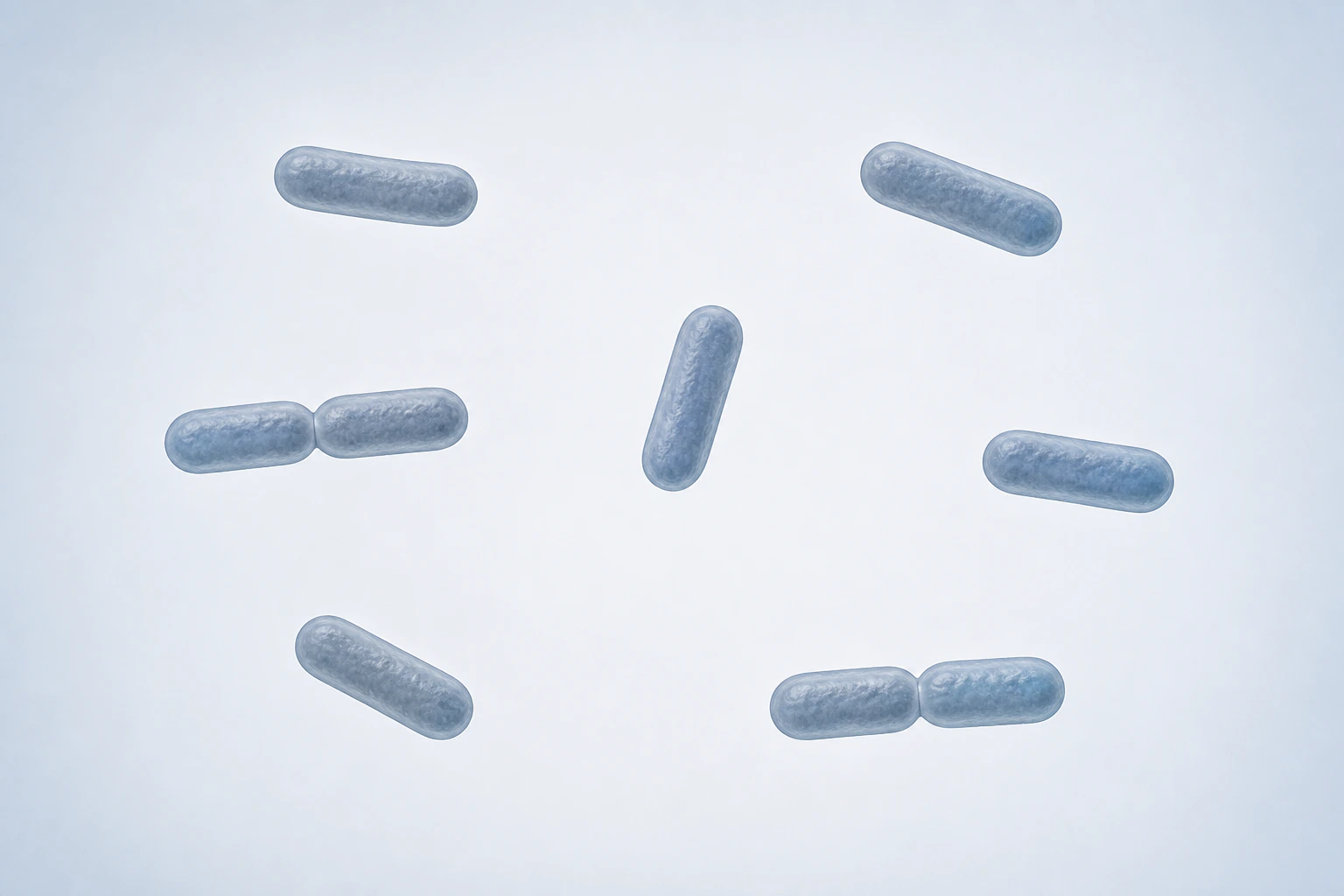
Selected type-species-anchored Dialister short rod forms, shown as nine bodies in seven single or paired groupings. This reconstruction is representative, non-diagnostic, and not a micrograph.
Scientific media record1 verified identifier
- Subject
- Dialistertaxon · genus
- Identifiers
- NCBITaxon:39948
- Review
- Editorial review completeIdentifiers authority-verified · Accessibility validated · · dialister|dialister-morphology-v1.webp
- Digital source
- Trained-algorithmic mediaCreated with a trained generative algorithm and reviewed by WikiBiome for subject identity, scientific framing, identifiers, provenance, and accessibility.
- Scientific basis
- Dialister — NCBI TaxonomyDialister — LPSNDialister pneumosintes current combinationDialister pneumosintes type strain — BacDiveDialister pneumosintes primary characterization
- License
- CC BY-SA 4.0Created
Dialister is a genus of Gram-negative, obligate anaerobic bacteria within the family Veillonellaceae that represents one of the strongest protective associations in gut-brain-axis research. Dialister depletion is a consistent and independent biomarker of Depression, anxiety, and neurodevelopmental disorders.
The genus is also a major succinate producer and is enriched in healthy periodontal microbiota, suggesting protective roles in both neuropsychiatric and oral health domains.
Evidence map3 cited passagesInspect provenance +
Significantly lower relative abundance (often <0.5% in depressed individuals vs. 2% in healthy controls)
Restoration of Dialister abundance associated with antidepressant response in both pharmacological and lifestyle interventions
Kynurenine Pathway Dysregulation - Dialister presence (and succinate production) reduces tryptophan shunting into the neurotoxic kynurenine pathway - Depletion of Dialister correlates with elevated plasma kynurenine:tryptophan ratios in depression - This shift drives quinolinic acid accumulation in the CNS, contributing to excitotoxicity
Contents
1. Taxonomy2. Depression and Neuropsychiatric Associations3. Oral Health and Periodontitis4. Metal Dependencies5. Key Metabolites and Enzymes6. Ecological Interactions7. Detection and Quantification8. Clinical Relevance and Restoration9. ConnectionsTaxonomy#
- Phylum: Firmicutes (reclassified)
- Family: Veillonellaceae
- Genus: Dialister
- Key species: D. invisus, D. pneumosintes, D. micraerophilus
- Characteristic: Gram-negative rods; obligate anaerobes; require formate for growth (formate-dependent) in many species; succinate fermenters
Depression and Neuropsychiatric Associations#
Depletion as a Biomarker#
Dialister abundance is one of the most consistent protective markers in depression research. Multiple independent cohorts demonstrate. Significantly lower relative abundance (often <0.5% in depressed individuals vs. >2% in healthy controls).[1]Zhou 2024 — Association of Maternal Postpartum Depression Symptoms with Infant Neurodevelopment and Gut MicrobiotaLepeng Zhou, Linghong Tang, Chuhui Zhou et al. · 2024Open reference 1 ↓[2]Romano 2023 — Gut Microbiome in Children with Mood, Anxiety, and NDDs: Umbrella ReviewKaitlin Romano, Ashka N. Shah, Anett Schumacher et al. · 2023Open reference 2 ↓
Inverse correlation with depressive symptom severity (PHQ-9 scores, Hamilton depression scores). Restoration of Dialister abundance associated with antidepressant response in both pharmacological and lifestyle interventions.[3]Mitchell 2024 — Gastrointestinal, Behaviour and Anxiety Outcomes in Autistic Children Following Synbiotics vs Gut-Directed HypnotherapyLeanne K. Mitchell, Helen S. Heussler, Christopher J. Burgess et al. · 2024Open reference 3 ↓ Depletion predicts treatment-resistant depression.
Mechanistic Links to Neuropsychiatry#
Succinate Production and Mitochondrial Function. Dialister's primary metabolic output is succinate, a key Krebs cycle intermediate and signaling molecule. Succinate deficiency in depression correlates with mitochondrial dysfunction in hippocampal neurons.
Oral succinate supplementation (in rodent models) partially reverses Dialister depletion phenotypes.
Short-Chain Fatty Acid Dysbiosis. Dialister depletion co-occurs with reduced Butyrate and propionate production. Butyrate is essential for histone deacetylase (HDAC) inhibition, which promotes BDNF expression in the brain.
Loss of Dialister contributes to reduced BBB integrity via claudin-5 downregulation.
Lipopolysaccharide (LPS) and Neuroinflammation. Gram-negative Dialister species produce endotoxin, but their presence appears to maintain homeostatic immune tolerance. Dialister depletion allows overgrowth of more aggressive Gram-negative pathogens (e.g., Enterobacteriaceae) with more inflammatory LPS patterns.
The shift in endotoxemia profile (not just total LPS load) drives microglia activation and neuroinflammation.
Vagal Signaling and the Gut-Brain Axis. Dialister metabolites activate GPR43/GPR41 receptors on enteric neurons. Loss of Dialister reduces afferent vagal signaling, impairing top-down parasympathetic control.
Vagal dysfunction is a core feature of treatment-resistant depression and anxiety.
Kynurenine Pathway Dysregulation. Dialister presence (and succinate production) reduces tryptophan shunting into the neurotoxic kynurenine pathway.[4]Peng 2023 — Gut Microbiome and Brain Metabolic Remodeling in CP with EpilepsyPeng A, et al. · 2023Open reference 4 ↓ Depletion of Dialister correlates with elevated plasma kynurenine:tryptophan ratios in depression.[4]Peng 2023 — Gut Microbiome and Brain Metabolic Remodeling in CP with EpilepsyPeng A, et al. · 2023Open reference 4 ↓
This shift drives quinolinic acid accumulation in the CNS, contributing to excitotoxicity.
Oral Health and Periodontitis#
Protective Role in Healthy Periodontium#
Dialister is enriched in healthy gingival tissue and depleted in active periodontitis. Produces weak organic acids (lactate, succinate) that maintain gingival pH and inhibit pathogenic species like Porphyromonas gingivalis. Competes for iron and glycan niches with periodontal pathogens.
Periodontitis-Depression Link#
Patients with severe periodontitis show Dialister depletion in both oral and gut microbiota. The shared depletion pattern suggests a systemic dysbiosis extending from oral to enteric compartments. Periodontal intervention (plaque removal, antimicrobial rinses) partially restores Dialister in responders.
Metal Dependencies#
Iron: Dialister possesses iron-dependent fermentation enzymes and citrate lyase. Iron restriction may impair succinate production efficiency. Prefers iron-limited conditions in the colon; iron overload (common in dysbiosis-associated states) favors pathogenic competitors.
Key Metabolites and Enzymes#
- Succinate – primary fermentation end-product via the Wood-Ljungdahl pathway
- Lactate – secondary fermentation product
- Formate – required cofactor for many species; uptake via formate-acetyltransferase
- Formate-acetyltransferase (also called pyruvate formate-lyase) – central to succinate and lactate production
- Citrate lyase – involved in succinate metabolism
Ecological Interactions#
- Synergistic relationship with other succinate-producing Veillonellaceae (e.g., Veillonella)
- Often co-enriched with Blautia and Faecalibacterium prausnitzii in healthy microbiota
- Depleted in dysbiosis states driven by iron overgrowth or high-carbohydrate Western diets
- Sensitive to antimicrobial agents; often reduced post-antibiotics
Detection and Quantification#
16S rRNA profiling: Genus-level quantification via high-throughput sequencing. Species-specific qPCR: D. invisus most commonly targeted for functional studies. Metabolomics: Serum and fecal succinate levels as proxy for Dialister activity.
Typical abundance: 0.5–5% of fecal microbiota in healthy individuals; <0.5% in depression.
Clinical Relevance and Restoration#
- Dialister-targeting probiotics under development (initial trials promising but limited)
- Dietary interventions: High-fiber diets and resistant starch selectively enrich Dialister
- Omega-3 supplementation: May synergize with Dialister restoration in depression
- Vagal stimulation: Preliminary evidence that VNS combined with microbiota restoration improves Dialister recovery
Connections#
- Depression – one of the strongest protective depleted taxa; depletion a biomarker of depressive disorder
- – depleted in anxiety disorders; shared mechanistic link via vagal signaling
- Gut-Brain Axis – core component of psychobiotic research; succinate and SCFA pathways
- – depleted in active periodontal disease; shared dysbiosis with oral pathogens
- – primary producer; succinate supplementation partially rescues depression phenotype
- Short-Chain Fatty Acids (SCFAs) – co-produces lactate and succinate; contributes to butyrate-producing ecosystem
- Iron – iron-dependent fermentation; iron overload may impair Dialister persistence
- Metal-Driven Inflammation – loss increases neuroinflammation via altered LPS and microglia activation
- – Dialister protects against tryptophan shunting into neurotoxic pathway
- Veillonella – genus family member; shared metabolic pathway
- Blautia – frequently co-enriched in healthy microbiota
- dysbiosis – Dialister depletion is a key dysbiosis marker across multiple conditions
References 14
Numbered by first appearance in the article, then reconciled with its declared source list.
- 1
Lepeng Zhou, Linghong Tang, Chuhui Zhou et al. (2024). Zhou 2024 — Association of Maternal Postpartum Depression Symptoms with Infant Neurodevelopment and Gut Microbiota. Frontiers in Psychiatry.
- 2
Kaitlin Romano, Ashka N. Shah, Anett Schumacher et al. (2023). Romano 2023 — Gut Microbiome in Children with Mood, Anxiety, and NDDs: Umbrella Review. Gut Microbiome.
- 3
Leanne K. Mitchell, Helen S. Heussler, Christopher J. Burgess et al. (2024). Mitchell 2024 — Gastrointestinal, Behaviour and Anxiety Outcomes in Autistic Children Following Synbiotics vs Gut-Directed Hypnotherapy. Journal of Autism and Developmental Disorders.
- 4
Peng A, et al. (2023). Peng 2023 — Gut Microbiome and Brain Metabolic Remodeling in CP with Epilepsy. Frontiers in Neurology.
- 5
Yuling Chen, Chang Chen (2023). Chen, Chen 2023 — Gut microbiota, inflammatory proteins and COVID-19: a Mendelian randomisation study. Frontiers in Immunology.
- 6
Yumei Zhou, Chen Chen, Haibo Yu et al. (2020). Zhou 2020 — Fecal Microbiota Changes in Patients With Postpartum Depressive Disorder. Frontiers in Cellular and Infection Microbiology.
- 7
Ishaq HM, Mohammad IS, Guo H et al. (2017). Molecular Estimation of Alteration in Intestinal Microbial Composition in Hashimoto's Thyroiditis Patients. Biomedicine and Pharmacotherapy.
- 8
Francesco Strati, Duccio Cavalieri, Davide Albanese et al. (2017). Strati 2017 — New Evidences on the Altered Gut Microbiota in Autism Spectrum Disorders. Microbiome.
- 9
Su X, Yin X, Liu Y et al. (2020). Alteration in gut microbiota is associated with immune imbalance in Graves' disease. EBioMedicine.
- 10
Yang M, Zheng X, Wu Y et al. (2022). Preliminary Observation of the Changes in the Intestinal Flora of Patients With Graves' Disease Before and After Methimazole Treatment. Frontiers in Cellular and Infection Microbiology.
- 11
Baris Ata, Sule Yildiz, Engin Turkgeldi et al. (2019). Ata 2019 — The Endobiota Study: Comparison of Vaginal, Cervical and Gut Microbiota Between Women with Stage 3/4 Endometriosis and Healthy Controls. Scientific Reports.
- 12
S. A. Roberts, L. Brabin, S. Diallo et al. (2019). Roberts 2019 — Mucosal Lactoferrin Response to Genital Tract Infections Is Associated with Iron and Nutritional Biomarkers. European Journal of Clinical Nutrition.
- 13
Feitong Liu, Jie Li, Fan Wu et al. (2019). Liu 2019 — Altered Composition and Function of Intestinal Microbiota in ASD: A Systematic Review. Translational Psychiatry.
- 14
Tiffany L Weir, Daniel K Manter, Amy M Sheflin et al. (2013). Stool Microbiome and Metabolome Differences between Colorectal Cancer Patients and Healthy Adults. PLoS ONE.
Article network
Mentioned here 12
Pages linking here 14
Connect the evidence
Publicly readable discussion by ORCID-authenticated researchers. Questions, interpretation, methods, corrections, and new evidence stay attached to this record.
No discussion yet. Start with a precise question or a source-backed observation.
Activity and accepted changes
Accepted researcher context, editorial status, public discussion, and upstream Git revisions are shown together. Pending, declined, and withdrawn proposals remain private.
- published revision
Complete corpus-wide Dysbiosis linking
Karen Pendergrass · +2 −2
Inspect exact Git diff ↗ - published revision
massive wiki expansion: 149 stubs fixed, 100+ new pages, Rule 15 scan, keystone papers
WikiBiome Deploy Bot · +47 −35
Inspect exact Git diff ↗ - published revision
nightly maintenance: 94 stub demotions, 181 source_count fixes, 22 auto-discovered stubs, 5 adversarial audits, 3 boundary fixes, 3 evidence-level corrections
WikiBiome Deploy Bot · +3 −0
Inspect exact Git diff ↗ - published revision
18 foundational sources + 10 microbe entities deepened
WikiBiome Deploy Bot · +4 −4
Inspect exact Git diff ↗ - published revision
WikiBiome update — 2026-04-15 17:23
WikiBiome Deploy Bot · +19 −19
Inspect exact Git diff ↗ - published revision
wiki: bulk entity upgrades, new article pages, and site regeneration
WikiBiome Deploy Bot · +6 −0
Inspect exact Git diff ↗ - published revision
WikiBiome update — integrity fixes, metallomic diet pages, cross-condition analyses
WikiBiome Deploy Bot · +2 −0
Inspect exact Git diff ↗ - published revision
WikiBiome update — 2026-04-10 17:16
WikiBiome Deploy Bot · +126 −0
Inspect exact Git diff ↗