
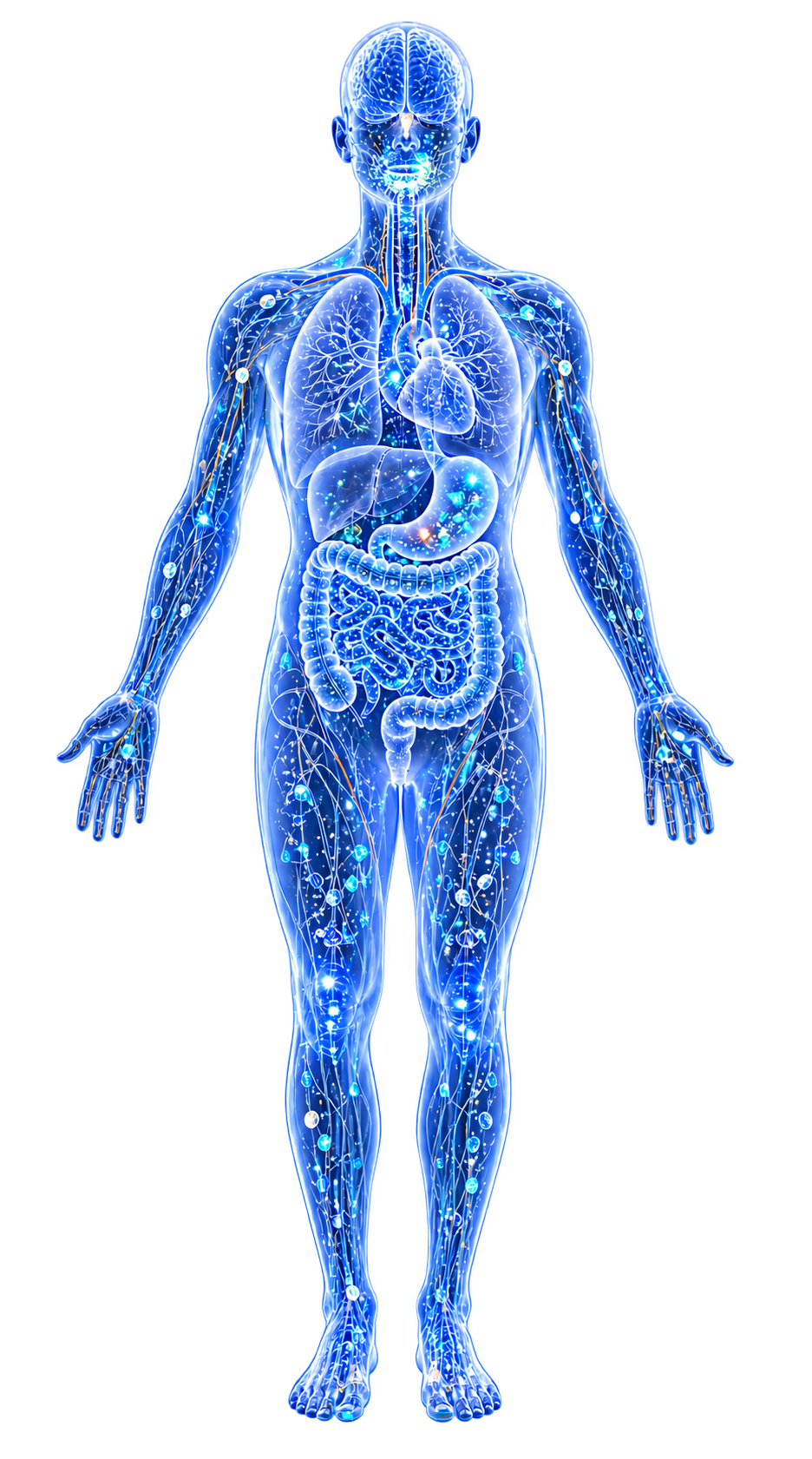
Maternal immune activation (MIA) describes the phenomenon in which infection or inflammatory stimulation during pregnancy produces persistent neurological and microbiome alterations in offspring, increasing risk for Autism Spectrum Disorder, Schizophrenia, and other neurodevelopmental conditions.
The mechanism does not require the pathogen itself to reach the fetus—maternal cytokines (particularly IL-6 and IL-17a) cross the placenta and disrupt fetal brain development, microglial programming, and intestinal colonization patterns.
Evidence map5 cited passagesInspect provenance +
Prenatal infection or inflammation—TORCH pathogens (Toxoplasma, Rubella, CMV, HSV), influenza, or other infections trigger maternal cytokine release
Microbiome alteration—MIA produces lasting changes in offspring gut microbiota composition, with Firmicutes elevation and Bacteroidetes depletion persisting into adulthood
Mis-metallation (Karen's Brain Primitive 3): Toxic metals entering fetal cells through calcium and zinc channels displace correct cofactors from developing metalloenzymes, compounding the neurodevelopmental disruption caused by MIA.
Multiple rodent models of ASD (Shank3, Cntnap2, Fmr1 knockouts; VPA-exposed mice; MIA models) all exhibit GI abnormalities including increased gut permeability, inflammation, and microbiota shifts—suggesting the gut-brain disruption is a convergent feature regardless of the initiating insult.
Bacteroides fragilis treatment in MIA mouse offspring corrects intestinal permeability, modifies microbial composition, and improves ASD-like behaviors—providing direct evidence that the microbiome mediates at least part of MIA's neurodevelopmental effects.
Contents
1. Mechanism2. Metal Amplification3. Microbiome Rescue Evidence4. Disease Associations5. Cross-ReferencesMechanism#
MIA operates through a cascade of interlinked disruptions. Prenatal infection or Metal-Driven Inflammation—TORCH pathogens (Toxoplasma, Rubella, CMV, HSV), influenza, or other infections trigger maternal cytokine release.[1]Alibek 2022 -- Persistent Inflammation Initiated by TORCH Infections and Dysbiotic Microbiome in Autism Spectrum Disorders: A Prospect for Future InterventionsKenneth Alibek, Luiza Niyazmetova, Sean Farmer et al. · 2022Open reference 1 ↓
Cytokine storm reaches fetus—IL-6 crosses the placenta and activates JAK-STAT3 signaling in fetal brain, disrupting cortical lamination and synaptogenesis. Microglial priming—Fetal microglia adopt a persistently activated phenotype that continues into postnatal life, driving chronic neuroinflammation.
Microbiome alteration—MIA produces lasting changes in offspring gut microbiota composition, with Firmicutes elevation and Bacteroidetes depletion persisting into adulthood.[2]Rogers 2016 -- From gut dysbiosis to altered brain function and mental illness: mechanisms and pathwaysGB Rogers, DJ Keating, RL Young et al. · 2016Open reference 2 ↓
Gut barrier dysfunction—MIA offspring show increased intestinal permeability, enabling microbial metabolite translocation to the brain via the Gut-Brain Axis.
Metal Amplification#
Heavy Metals amplify MIA through multiple converging mechanisms. Lead and mercury cross the placenta readily and accumulate in fetal brain tissue, priming microglia independently of infection. When MIA and metal exposure co-occur, the neuroinflammatory effect is synergistic rather than additive.
Cadmium disrupts placental function, reducing nutrient transfer and increasing Oxidative Stress—creating a vulnerable fetal environment where even mild maternal infection produces outsized neurological effects.
Mis-metallation (Karen's Brain Primitive 3): Toxic metals entering fetal cells through calcium and zinc channels displace correct cofactors from developing metalloenzymes, compounding the neurodevelopmental disruption caused by MIA.[3]Metal Dyshomeostasis as a Driver of Gut Pathology in Autism Spectrum DisordersO'Grady K, Grabrucker AM · 2025Open reference 3 ↓
Multiple rodent models of ASD (Shank3, Cntnap2, Fmr1 knockouts; VPA-exposed mice; MIA models) all exhibit GI abnormalities including increased gut permeability, inflammation, and microbiota shifts—suggesting the gut-brain disruption is a convergent feature regardless of the initiating insult.[3]Metal Dyshomeostasis as a Driver of Gut Pathology in Autism Spectrum DisordersO'Grady K, Grabrucker AM · 2025Open reference 3 ↓
Microbiome Rescue Evidence#
Bacteroides fragilis treatment in MIA mouse offspring corrects intestinal permeability, modifies microbial composition, and improves ASD-like behaviors—providing direct evidence that the microbiome mediates at least part of MIA's neurodevelopmental effects.[4]Doenyas 2018 -- Gut Microbiota, Inflammation, and Probiotics on Neural Development in Autism Spectrum DisorderCeymi Doenyas · 2018Open reference 4 ↓
Disease Associations#
| Condition | MIA Evidence |
|---|---|
| Autism Spectrum Disorder | Epidemiological: maternal infection in 2nd trimester increases ASD risk 3-7x; animal models reproduce behavioral and GI phenotype |
| Schizophrenia | Firmicutes elevation in MIA models activates immune system; MIA produces persistent microglial abnormalities |
| ADHD | Emerging epidemiological association with prenatal infection |
Cross-References#
- Autism Spectrum Disorder—primary neurodevelopmental outcome of MIA
- Schizophrenia—later-onset MIA-associated condition
- Neuroinflammation—downstream pathway linking MIA to behavioral outcomes
- Developmental Metal Vulnerability: Critical Windows of Susceptibility—metal exposure during critical developmental windows
- Gut-Brain Axis—route for microbial metabolite effects on neurodevelopment
- Bacteroides fragilis—microbiome rescue in MIA models
References 5
Numbered by first appearance in the article, then reconciled with its declared source list.
- 1
Kenneth Alibek, Luiza Niyazmetova, Sean Farmer et al. (2022). Alibek 2022 -- Persistent Inflammation Initiated by TORCH Infections and Dysbiotic Microbiome in Autism Spectrum Disorders: A Prospect for Future Interventions. Research Ideas and Outcomes.
- 2
GB Rogers, DJ Keating, RL Young et al. (2016). Rogers 2016 -- From gut dysbiosis to altered brain function and mental illness: mechanisms and pathways. Molecular Psychiatry.
- 3
★O'Grady K, Grabrucker AM (2025). Metal Dyshomeostasis as a Driver of Gut Pathology in Autism Spectrum Disorders. Journal of Neurochemistry.
- 4
Ceymi Doenyas (2018). Doenyas 2018 -- Gut Microbiota, Inflammation, and Probiotics on Neural Development in Autism Spectrum Disorder. Neuroscience.
- 5
Comer AL, Carrier M, Tremblay ME et al. (2020). The Inflamed Brain in Schizophrenia: The Convergence of Genetic and Environmental Risk Factors That Lead to Uncontrolled Neuroinflammation. Frontiers in Cellular Neuroscience.
Article network
Connect the evidence
Publicly readable discussion by ORCID-authenticated researchers. Questions, interpretation, methods, corrections, and new evidence stay attached to this record.
No discussion yet. Start with a precise question or a source-backed observation.
Published page changes
This record shows only material changes published on this page, including changes to its content, evidence, conclusions, or author context. Internal processes and discussion activity are excluded. Pending, declined, and withdrawn proposals remain private.
- published revision
Revised “Metal Amplification”: now reads “heavy metals amplify MIA through multiple converging”.
Revised “Metal Amplification”: changed “Heavy metals amplify MIA through multiple converging” to “heavy metals amplify MIA through multiple converging”. · Karen Pendergrass · +1 −1
Inspect exact Git diff ↗ - published revision
Created “Maternal Immune Activation”: Maternal immune activation (MIA) describes the phenomenon in which infection or inflammatory stimulation during pregnancy produces persistent neurological and microbiome alterations in offspring,…
Created “Maternal Immune Activation”: Maternal immune activation (MIA) describes the phenomenon in which infection or inflammatory stimulation during pregnancy produces persistent neurological and microbiome alterations in offspring,… Published sections: Overview; Mechanism; Metal Amplification; Microbiome Rescue Evidence; Disease Associations; Cross-References. · WikiBiome Deploy Bot · +60 −0
Inspect exact Git diff ↗