
 metals · microbes · host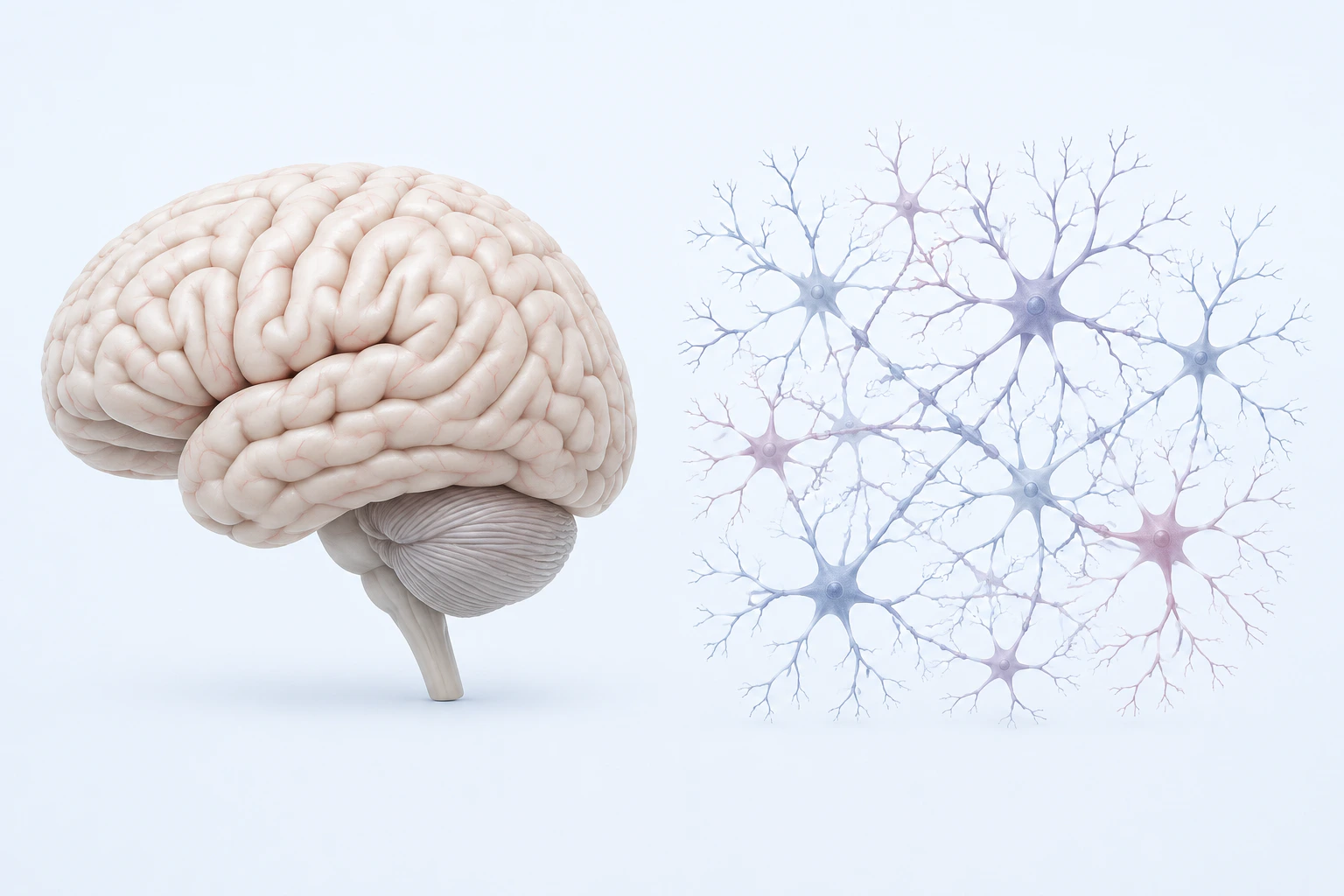
Non-stigmatizing brain-and-network orientation for major depressive disorder. The neutral models do not depict a patient, mood, named brain region, lesion, neurotransmitter, connectivity measurement, single mechanism, severity, suicide risk, or diagnosis.
Scientific media record1 verified identifier
- Subject
- Major Depressive Disordercondition
- Identifiers
- MeSH:D003865
- Review
- Editorial review completeIdentifiers authority-verified · Accessibility validated · · major-depressive-disorder|major-depressive-disorder-pathology-v1.webp
- Digital source
- Trained-algorithmic mediaCreated with a trained generative algorithm and reviewed by WikiBiome for subject identity, scientific framing, identifiers, provenance, and accessibility.
- Scientific basis
- Major Depressive Disorder — MeSHDepression
- License
- CC BY-SA 4.0Created
Major depressive disorder (MDD) is a psychiatric condition characterized by persistent depressed mood, anhedonia, and cognitive/somatic symptoms. In the WikiBiome framework, MDD is a paradigm case for the Gut-Brain Axis: gut Dysbiosis drives Systemic Inflammation and Neuroinflammation through Endotoxemia, tryptophan-kynurenine shunting, and loss of neuroactive microbial metabolites (Serotonin, GABA (Gamma-Aminobutyric Acid)).
Evidence map3 cited passagesInspect provenance +
Depleted: dialister, faecalibacterium prausnitzii, coprococcus, roseburia—SCFA and neuroactive metabolite producers.
Metal connection: Shotgun metagenomics in MDD reveals nickel-metal toxicity signatures (NiMeTox).
Mediterranean diet: Associated with reduced MDD risk via microbiome modulation.
One disease. Five evidence layers.
A generated systems view of the metals, organisms, host sequestration signals, ecological conditions, and microbial functions indexed for Major Depressive Disorder.
Evidence layer
Taxonomic signature
Organisms reported as enriched or depleted, with their indexed functional context kept beside the name.No structured taxa indexed yet.
No structured taxa indexed yet.
Evidence layer
Nutritional immunity
Host metal-withholding, inflammatory, antioxidant, and microbial-metabolite signals indexed in the signature.Elevated host signals
0No structured signals indexed yet.
Depleted protective signals
0No structured signals indexed yet.
Evidence layer
Ecological state
The environmental conditions that connect the organism-level observations into a system.No structured ecological features indexed yet.
Evidence layer
Virulence functions
Microbial structures, enzymes, and acquisition systems implicated by the linked evidence.No structured virulence functions indexed yet.
The disease record, in full.
The original WikiBiome disease narrative remains intact beneath the generated signature atlas.
Microbiome Signature#
Depleted: Dialister, Faecalibacterium prausnitzii, Coprococcus, Roseburia—SCFA and neuroactive metabolite producers.[1]Current Perspectives on Gut Microbiome Dysbiosis and DepressionCapuco A, Urits I, Hasoon J et al. · 2020Open reference 1 ↓[2]The Gut-Brain Axis in Depression, Anxiety, and Schizophrenia: A Scoping Review of Mechanisms, Biomarkers, and Therapeutic ImplicationsEskandar K · 2025Open reference 2 ↓
Enriched: Enterobacteriaceae, Eggerthella—LPS-producing pro-inflammatory taxa. Metal connection: Shotgun metagenomics in MDD reveals nickel-metal toxicity signatures (NiMeTox).[3]Maes 2026 — Functional Shotgun Metagenomic Insights into Gut Microbial Pathway and Enzyme Disruptions Linking Metabolism, Affect, Cognition, and Suicidal Ideation in Major Depressive DisorderMichael Maes, Abbas F. Almulla, Asara Vasupanrajit et al. · 2026Open reference 3 ↓ Mediterranean diet: Associated with reduced MDD risk via microbiome modulation.[4]Latorre-Pérez 2021 — The Spanish Gut Microbiome Reveals Links Between Microorganisms and Mediterranean DietAdriel Latorre-Pérez, Marta Hernández, Jose Ramón Iglesias et al. · 2021Open reference 4 ↓
Mechanistic Pathways#
Tryptophan shunting: Metal-Driven Inflammation-driven IDO activation diverts tryptophan from serotonin synthesis to the neurotoxic kynurenine pathway → quinolinic acid → excitotoxicity. SCFA depletion: Lost Butyrate → impaired BBB integrity → neuroinflammation. Endotoxemia → neuroinflammation: LPS → TLR4 → IL-6/TNF-alpha → Microglia activation.
Vagal signaling: Depleted Lactobacillus/Bifidobacterium → reduced vagal tone → HPA axis dysregulation.
Cross-References#
- Depression—related entity page
- Gut-Brain Axis—primary mechanistic framework
- Serotonin—depleted via tryptophan shunting
- GABA (Gamma-Aminobutyric Acid)—depleted via commensal loss
- Dialister—strongest protective association in depression
- Interleukin-6 (IL-6)—key inflammatory mediator
- Endotoxemia—LPS-driven neuroinflammation
- Anxiety Disorders—frequently comorbid
References 7
Numbered by first appearance in the article, then reconciled with its declared source list.
- 1
Capuco A, Urits I, Hasoon J et al. (2020). Current Perspectives on Gut Microbiome Dysbiosis and Depression. Advances in Therapy.
- 2
Eskandar K (2025). The Gut-Brain Axis in Depression, Anxiety, and Schizophrenia: A Scoping Review of Mechanisms, Biomarkers, and Therapeutic Implications. Middle East Current Psychiatry.
- 3
Michael Maes, Abbas F. Almulla, Asara Vasupanrajit et al. (2026). Maes 2026 — Functional Shotgun Metagenomic Insights into Gut Microbial Pathway and Enzyme Disruptions Linking Metabolism, Affect, Cognition, and Suicidal Ideation in Major Depressive Disorder. Acta Neuropsychiatrica.
- 4
Adriel Latorre-Pérez, Marta Hernández, Jose Ramón Iglesias et al. (2021). Latorre-Pérez 2021 — The Spanish Gut Microbiome Reveals Links Between Microorganisms and Mediterranean Diet. Scientific Reports.
- 5
Siegmann EM, Muller HHO, Luecke C et al. (2020). Graves' disease as a driver of depression: a mechanistic insight. Frontiers in Endocrinology.
- 6
Zhang Ruohan, Wang Ruting, Wu Hongxi et al. (2025). Zhang 2025 — Gut Microbiota as a Novel Target for Treating Anxiety and Depression: From Mechanisms to Multimodal Interventions. Frontiers in Microbiology.
- 7
Yimin Han, Boya Wang, Han Gao et al. (2022). Han et al. 2022 — Vagus Nerve and Underlying Impact on the Gut Microbiota-Brain Axis in Behavior and Neurodegenerative Diseases. Journal of Inflammation Research.
Article network
Mentioned here 18
Connect the evidence
Publicly readable discussion by ORCID-authenticated researchers. Questions, interpretation, methods, corrections, and new evidence stay attached to this record.
No discussion yet. Start with a precise question or a source-backed observation.
Activity and accepted changes
Accepted researcher context, editorial status, public discussion, and upstream Git revisions are shown together. Pending, declined, and withdrawn proposals remain private.
- published revision
Consolidate microbial metabolite knowledge
Karen Pendergrass · +1 −1
Inspect exact Git diff ↗ - published revision
Backfill inflammation concept links
Karen Pendergrass · +1 −1
Inspect exact Git diff ↗ - published revision
massive wiki expansion: 149 stubs fixed, 100+ new pages, Rule 15 scan, keystone papers
WikiBiome Deploy Bot · +53 −0
Inspect exact Git diff ↗