
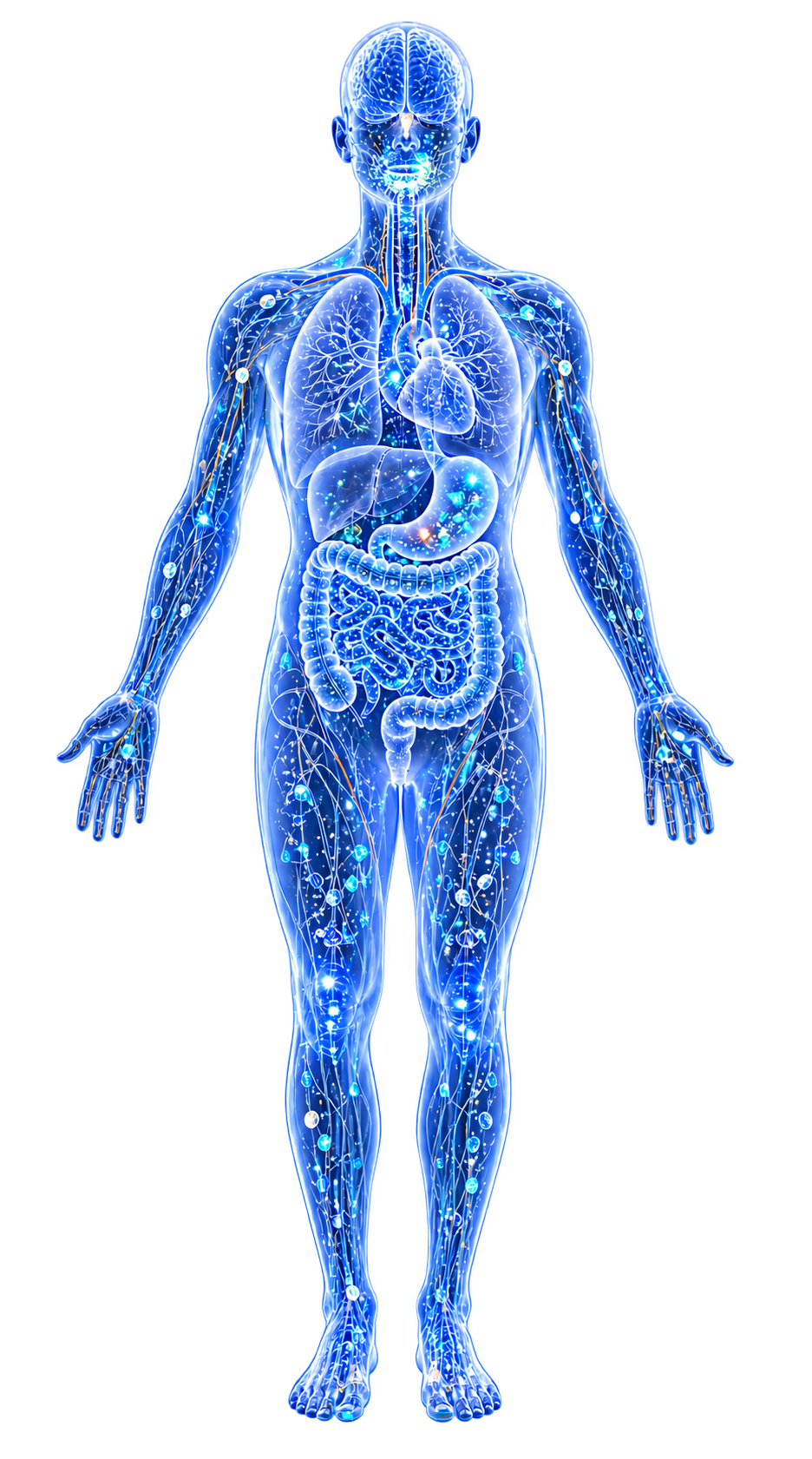
Gamma-aminobutyric acid (GABA) is the primary inhibitory neurotransmitter in the central nervous system. In the WikiBiome context, GABA is notable because gut bacteria produce it—certain Lactobacillus and Bifidobacterium species possess glutamate decarboxylase (GAD) enzymes that convert dietary glutamate to GABA.
This microbial GABA production links the Gut-Brain Axis to anxiety, depression, PMDD, and schizophrenia.
Evidence map4 cited passagesInspect provenance +
dysbiosis-driven loss of GABA-producing commensals is associated with anxiety and depressive phenotypes.
PMDD/PMS: GABAergic deficiency implicated in premenstrual mood dysregulation; allopregnanolone (a GABA-A receptor modulator) is central to PMDD pathophysiology.
Schizophrenia: Altered GABA levels and GABAergic signaling in schizophrenia gut-brain axis.
MS: Dietary interventions targeting GABA pathways in multiple sclerosis.
Microbial GABA Production#
Lactobacillus reuteri, L. brevis, and Bifidobacterium species are the primary GABA-producing gut bacteria. Microbial GABA acts locally on enteric neurons (vagal afferents) and may contribute to circulating GABA levels.
Dysbiosis-driven loss of GABA-producing commensals is associated with anxiety and depressive phenotypes.[1]The Gut-Brain Axis in Depression, Anxiety, and Schizophrenia: A Scoping Review of Mechanisms, Biomarkers, and Therapeutic ImplicationsEskandar K · 2025Open reference 1 ↓
Disease Associations#
PMDD/PMS: GABAergic deficiency implicated in premenstrual mood dysregulation; Allopregnanolone (a GABA-A receptor modulator) is central to PMDD pathophysiology.[2]Itriyeva 2022 — PMS and PMDD in Adolescents (Review)Khalida Itriyeva · 2022Open reference 2 ↓[3]Cheng 2025 — Neuroinflammation in PMS and PMDD (Review)Cheng et al. · 2025Open reference 3 ↓[4]Nexha 2024 — Biological Rhythms in PMS/PMDD (Systematic Review)Adile Nexha, Luisa Caropreso, Taiane de Azevedo Cardoso et al. · 2024Open reference 4 ↓
Schizophrenia: Altered GABA levels and GABAergic signaling in schizophrenia gut-brain axis.[5]Functional Associations of the Gut Microbiome with Dopamine, Serotonin, and BDNF in Schizophrenia: A Pilot StudyGhorbani M, Joseph GBS, Tew MM et al. · 2024Open reference 5 ↓[6]The Gut Microbiome is Associated with Brain Structure and Function in SchizophreniaLi S, Song J, Ke P et al. · 2021Open reference 6 ↓
MS: Dietary interventions targeting GABA pathways in multiple sclerosis.[7]Effects of Different Dietary Interventions in Multiple Sclerosis: A Systematic Review of Evidence from 2018 to 2022Atabilen B, Akdevelioglu Y · 2022Open reference 7 ↓
Cross-References#
- Gut-Brain Axis—GABA as microbial-derived neuroactive metabolite
- Serotonin—complementary neurotransmitter in gut-brain signaling
- Allopregnanolone—GABA-A modulator central to PMDD
- Lactobacillus reuteri—GABA-producing commensal
- Bifidobacterium—GABA-producing commensal
- Neuroinflammation—GABAergic loss compounds neuroinflammatory damage
References 8
Numbered by first appearance in the article, then reconciled with its declared source list.
- 1
Eskandar K (2025). The Gut-Brain Axis in Depression, Anxiety, and Schizophrenia: A Scoping Review of Mechanisms, Biomarkers, and Therapeutic Implications. Middle East Current Psychiatry.
- 2
Khalida Itriyeva (2022). Itriyeva 2022 — PMS and PMDD in Adolescents (Review). Current Problems in Pediatric and Adolescent Health Care.
- 3
Cheng et al. (2025). Cheng 2025 — Neuroinflammation in PMS and PMDD (Review). Frontiers in Endocrinology.
- 4
Adile Nexha, Luisa Caropreso, Taiane de Azevedo Cardoso et al. (2024). Nexha 2024 — Biological Rhythms in PMS/PMDD (Systematic Review). BMC Women's Health.
- 5
Ghorbani M, Joseph GBS, Tew MM et al. (2024). Functional Associations of the Gut Microbiome with Dopamine, Serotonin, and BDNF in Schizophrenia: A Pilot Study. Egyptian Journal of Neurology, Psychiatry and Neurosurgery.
- 6
Li S, Song J, Ke P et al. (2021). The Gut Microbiome is Associated with Brain Structure and Function in Schizophrenia. Scientific Reports.
- 7
Atabilen B, Akdevelioglu Y (2022). Effects of Different Dietary Interventions in Multiple Sclerosis: A Systematic Review of Evidence from 2018 to 2022. Nutritional Neuroscience.
- 8
Yimin Han, Boya Wang, Han Gao et al. (2022). Han et al. 2022 — Vagus Nerve and Underlying Impact on the Gut Microbiota-Brain Axis in Behavior and Neurodegenerative Diseases. Journal of Inflammation Research.
Article network
Connect the evidence
Publicly readable discussion by ORCID-authenticated researchers. Questions, interpretation, methods, corrections, and new evidence stay attached to this record.
No discussion yet. Start with a precise question or a source-backed observation.
Published page changes
This record shows only material changes published on this page, including changes to its content, evidence, conclusions, or author context. Internal processes and discussion activity are excluded. Pending, declined, and withdrawn proposals remain private.
- published revision
Revised “Microbial GABA Production”: now reads “contribute to circulating GABA levels. - dysbiosis-driven loss of GABA-producing commensals is associated”.
Revised “Microbial GABA Production”: changed “contribute to circulating GABA levels. - Dysbiosis-driven loss of GABA-producing commensals is associated” to “contribute to circulating GABA levels. - dysbiosis-driven loss of GABA-producing commensals is associated”. · Karen Pendergrass · +1 −1
Inspect exact Git diff ↗ - published revision
Created “GABA (Gamma-Aminobutyric Acid)”: Gamma-aminobutyric acid (GABA) is the primary inhibitory neurotransmitter in the central nervous system. In the WikiBiome context, GABA is notable because gut bacteria produce it — certain…
Created “GABA (Gamma-Aminobutyric Acid)”: Gamma-aminobutyric acid (GABA) is the primary inhibitory neurotransmitter in the central nervous system. In the WikiBiome context, GABA is notable because gut bacteria produce it — certain… Published sections: Overview; Microbial GABA Production; Disease Associations; Cross-References. · WikiBiome Deploy Bot · +48 −0
Inspect exact Git diff ↗