Manganese
This knowledge-base record is being expanded from WikiBiome’s evidence graph.
WikiBiomeThe human microbiome encyclopediaRanked matches across titles, topics, categories, and article introductions.
This knowledge-base record is being expanded from WikiBiome’s evidence graph.
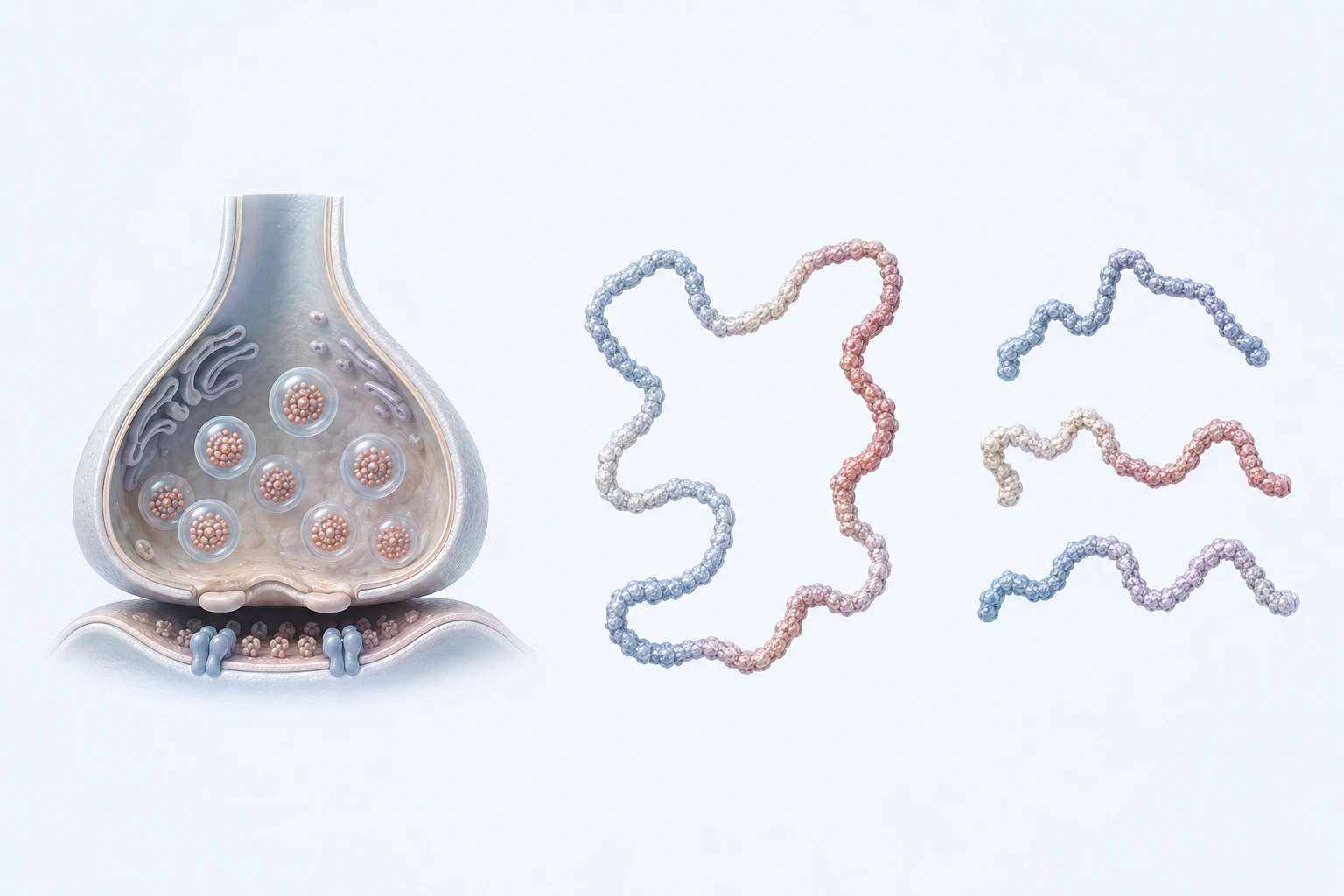
A 140-amino-acid presynaptic protein whose misfolding into insoluble fibrils and their deposition in Lewy bodies is the defining neuropathological hallmark of parkinsons disease and the broader family of synucleinopathies (including Lewy body dementia and multiple syste…
A non-essential metal and the most abundant metallic element in the Earth's crust. Unlike manganese, iron, or selenium, aluminum has no known biological function in humans. Its significance in metal toxicology stems from two major concerns: proven neurotoxicity at eleva…
A selective semipermeable border formed by brain endothelial cells connected by tight junctions, pericytes, and astrocytic end-feet. The BBB restricts passage of most molecules from blood to brain, protecting the CNS from toxins, pathogens, and inflammatory mediators. M…
A genus of spirochete bacteria transmitted by Ixodes ticks, best known as the causative agent of Lyme disease -- the most common tick-borne illness in the Northern Hemisphere. Borrelia burgdorferi sensu lato comprises approximately 20 genospecies, with B. burgdorferi se…
This knowledge-base record is being expanded from WikiBiome’s evidence graph.
A heterodimer of S100A8 and S100A9 calcium-binding proteins that constitutes approximately 60% of the cytosolic protein content of neutrophils. Calprotectin is a central effector of nutritional immunity, sequestering essential transition metals from invading pathogens a…
Candida auris is an emerging multidrug-resistant fungal pathogen first identified in 2009 (Satoh et al. 2009, from a Japanese patient's ear canal) and now classified as a critical-priority pathogen by the WHO (WHO Fungal Priority Pathogens List 2022) and CDC (CDC 2019 A…
This knowledge-base record is being expanded from WikiBiome’s evidence graph.
An essential trace element with a striking dual nature: required for survival as a cofactor for critical enzymes (SOD1, cytochrome c oxidase, ceruloplasmin), yet toxic in excess through Fenton-like redox cycling and mis metallation of iron-sulfur clusters. Copper is ele…
This knowledge-base record is being expanded from WikiBiome’s evidence graph.
The pathological disruption of normal metal homeostasis — the tightly regulated balance of essential trace elements (iron, zinc, copper, manganese, selenium, cobalt) and the effective exclusion of toxic metals (cadmium, lead, mercury, arsenic). Dyshomeostasis is a conve…
A Gram-negative obligate anaerobe that has emerged as a major pathogen in colorectal cancer (CRC) and inflammatory bowel disease. F. nucleatum is significantly enriched in CRC tissue and tumors compared to healthy mucosa, making it one of the strongest microbe-cancer as…
This knowledge-base record is being expanded from WikiBiome’s evidence graph.
Heavy metals exert some of their most devastating effects on the nervous system. lead, mercury, and arsenic are the three metals with the most extensively documented neurotoxic mechanisms, but cadmium, manganese, aluminum, and nickel also contribute to neurological dama…
This knowledge-base record is being expanded from WikiBiome’s evidence graph.
--- title: Neisseria meningitidis type: entity subtype: microbe created: 2026-04-09 updated: 2026-04-16 lastsubstantiveupdate: 2026-04-16 sources: [maier-2019-nickel-microbial-pathogenesis, patil-2021-infection-metallomics-critical-care, patil-2021-infection-metallomics…
An umbrella concept encompassing the metallomic dimensions of Alzheimer's disease, Parkinson's disease, and other neurodegenerative conditions. The brain is uniquely vulnerable to metal toxicity: it has high metabolic demand, limited regenerative capacity, region-specif…
Oxidative stress is the imbalance between the production of reactive oxygen and nitrogen species (ROS/RNS) and the capacity of biological antioxidant defense systems to detoxify them. It is the single most commonly invoked mechanism across metal toxicology in this wiki,…
The second most common neurodegenerative disease, affecting over 10 million people worldwide dorsey 2018 parkinsons incidence meta analysis. Characterized by progressive loss of dopaminergic neurons in the substantia nigra, alpha-synuclein aggregation (Lewy bodies), and…
This knowledge-base record is being expanded from WikiBiome’s evidence graph.
Pneumonia is infection of the lung parenchyma, most commonly caused by streptococcus pneumoniae, Klebsiella pneumoniae, Haemophilus influenzae, and viruses (influenza, SARS-CoV-2). In the WikiBiome framework, pneumonia exemplifies the metal battleground at the host-path…
A metabolic-endocrine disorder affecting 6-20% of reproductive-age women worldwide, characterized by hyperandrogenism, oligo/anovulation, and polycystic ovary morphology (Rotterdam criteria) barrea 2019 mediterranean diet pcos. PCOS is the leading cause of anovulatory i…
A Gram-negative obligate anaerobe and keystone pathogen of the oral microbiome that causes chronic periodontitis and is increasingly implicated in systemic diseases including alzheimers disease and cardiovascular disease. P. gingivalis virulence is fundamentally depende…
Structured RNA elements in the 5' untranslated region (UTR) of bacterial mRNAs that directly sense small molecules -- including metal ions -- and regulate gene expression without any protein intermediary. Where metalloregulators are the protein-based metal sensors, ribo…
Saccharomyces cerevisiae is a unicellular budding fungus (ascomycete) ubiquitous in fermentation, brewing, bread-making, and increasingly used as a pharmaceutical probiotic (Hatoum et al. 2012). The strain S. boulardii (also called S. cerevisiae var. boulardii) is the m…
Salmonella is a genus of Gram-negative, facultatively anaerobic bacteria in the family Enterobacteriaceae. The two species — S. enterica (with 2,500 serovars including Typhimurium and Typhi) and S. bongori — cause a spectrum of disease from self-limiting gastroenteritis…
Small regulatory RNAs (sRNAs) are non-coding RNA molecules, typically 50-500 nucleotides long, that regulate gene expression post-transcriptionally in bacteria. In the context of metal biology and microbial pathogenesis, sRNAs serve as rapid-response coordinators that h…
A genus of Gram-positive, facultative anaerobic cocci that includes some of the most clinically significant human pathogens. Staphylococci are defined by their exceptionally comprehensive metal acquisition arsenal -- arguably the most thoroughly characterized of any bac…
A versatile Gram-positive pathogen with one of the best-characterized nutritional immunity evasion systems known. S. aureus requires nickel, iron, zinc, and manganese for virulence and has evolved dedicated acquisition systems for each, including the novel metallophore …
A genus of Gram-positive facultative anaerobes that occupy niches ranging from benign commensals (dental plaque, skin) to acute pathogens (pharyngitis, impetigo, invasive disease). Streptococci are uniquely manganese-dependent for catalytic scavenging of reactive oxygen…
Streptococcus agalactiae, also known as Group B Streptococcus (GBS), is a Gram-positive, facultatively anaerobic coccus that exists in two clinical contexts: (1) as a major neonatal pathogen causing life-threatening meningitis and sepsis in newborns, and (2) as an enric…
The primary architect of dental caries -- the most prevalent chronic infectious disease worldwide. S. mutans is a Gram-positive, facultative anaerobe that colonizes tooth surfaces and produces the acid-rich, metal-managed biofilms known as dental plaque. What sets this …
A Gram-positive pathogen (the "pneumococcus") that depends on iron, manganese, and zinc for virulence and has evolved dedicated transport systems for each. Iron is required for viability itself, manganese powers the superoxide dismutase needed to survive the oxidative b…
Streptococcus thermophilus is a Gram-positive, facultative anaerobic coccus that is the primary probiotic species used in commercial yogurt fermentation and thermophilic dairy fermentation worldwide. Distinct from pathogenic Streptococcus species, S. thermophilus produc…
This knowledge-base record is being expanded from WikiBiome’s evidence graph.
Zinc deficiency is a consistent finding in breast cancer, and Zn plays key roles in immunity (T cell differentiation), p53 activation, and SOD cofactor function. Yet supplementation data are limited, and in the Sister Study, zinc showed a dose-related positive associati…
A genus of ascomycete yeasts (formerly classified as Zygosaccharomyces) found in fermentation environments (bread, wine, kombucha) and increasingly detected as a component of the human gut mycobiome. While typically at low abundance in healthy individuals, Torulaspora d…