
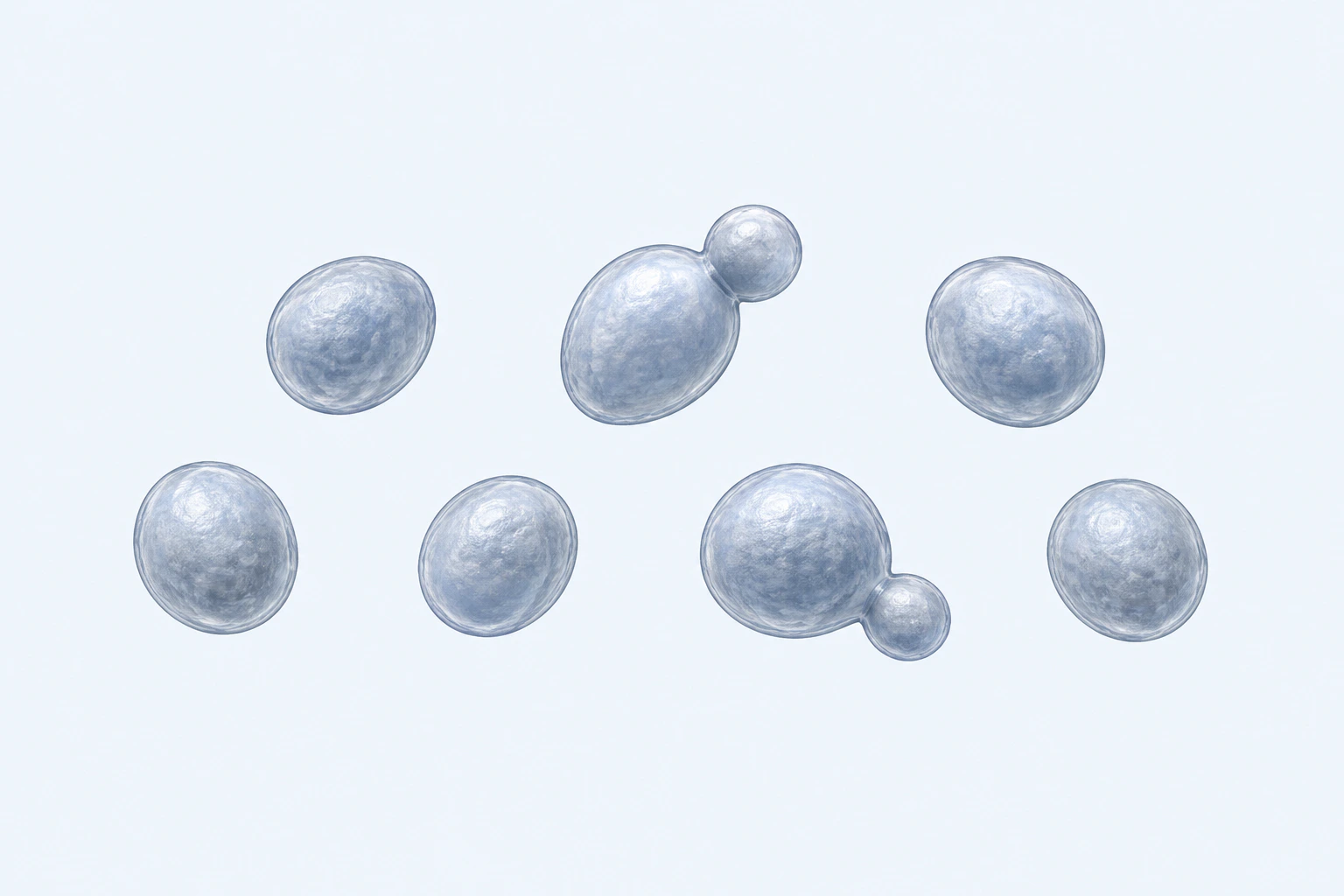
Type-material-anchored Saccharomyces cerevisiae reconstruction with spherical-to-ovoid single and budding forms. This species plate is representative, non-diagnostic, and not a micrograph.
Scientific media record1 verified identifier
- Subject
- Saccharomyces cerevisiaetaxon · species
- Identifiers
- NCBITaxon:4932
- Review
- Editorial review completeIdentifiers authority-verified · Accessibility validated · · saccharomyces-cerevisiae|saccharomyces-cerevisiae-morphology-v1.webp
- Digital source
- Trained-algorithmic mediaCreated with a trained generative algorithm and reviewed by WikiBiome for subject identity, scientific framing, identifiers, provenance, and accessibility.
- Scientific basis
- Saccharomyces cerevisiae — NCBI TaxonomySaccharomyces cerevisiae — Index FungorumSaccharomyces cerevisiae morphology review
- License
- CC BY-SA 4.0Created
Saccharomyces cerevisiae is a unicellular budding fungus (ascomycete) ubiquitous in fermentation, brewing, bread-making, and increasingly used as a pharmaceutical probiotic (Hatoum et al. 2012).
The strain S. boulardii (also called S. cerevisiae var. boulardii) is the most clinically studied variant and is marketed as a live biotherapeutic for diarrhea, traveler's diarrhea, and Clostridioides difficile–associated disease (CDAD) (McFarland 2010).
Unlike pathogenic Candida albicans, S. cerevisiae competes with pathogenic fungi, produces antimicrobial metabolites, and is rapidly cleared by the host—making it a model commensal and a key candidate for Dysbiosis intervention in Crohn's Disease, Multiple Sclerosis,[1]Proinflammatory Mucosal-Associated Invariant CD8+ T Cells React to Gut Flora Yeasts and Infiltrate Multiple Sclerosis BrainFrancesca Gargano, Gisella Guerrera, Eleonora Piras et al. · 2022Open reference 1 ↓ and other conditions involving pathogenic fungal overgrowth.
Evidence map3 cited passagesInspect provenance +
Saccharomyces cerevisiae is a unicellular budding fungus (ascomycete) ubiquitous in fermentation, brewing, bread-making, and increasingly used as a pharmaceutical probiotic (Hatoum et al. 2012). The strain S. boulardii (also called S. cerevisiae var. boulardii) is the most clinically studied variant and is marketed as a live biotherapeutic for diarrhea, trav
High-dose S. boulardii supplementation improves remission rates in CD cohorts; likely via Candida suppression and barrier strengthening.
Dysbiotic MS signatures include elevated fecal S. cerevisiae and candida albicans, with 1,608 fungal isolates (24 species) recovered from MS patients vs 392 from healthy donors.
Contents
1. Taxonomy and Basic Properties2. Metal Cofactors and Enzymes3. Fermentative Metabolism and Metabolite Production4. Probiotic Strain: Saccharomyces boulardii5. Disease Associations and WikiBiome Context6. Competitive Relationship with Candida albicans7. Detection and Quantification8. Typical Abundance Ranges9. Connections to WikiBiome Entities and Disease Signatures10. Storage and BioavailabilityTaxonomy and Basic Properties#
- Kingdom: Fungi
- Phylum: Ascomycota
- Class: Saccharomycetes
- Order: Saccharomycetales
- Family: Saccharomycetaceae
- Genome: ~12 Mb (haploid); first eukaryotic genome fully sequenced (1996)
- Cell Type: Haploid or diploid yeast; budding reproduction (asexual); pseudohyphae under low-oxygen conditions
- Cell Wall: Composed of β-glucans, mannans, and chitins; distinct from bacterial peptidoglycan
- Oxygen: Facultative; prefers aerobic fermentation but survives anaerobically in some environments
- Growth Rate: Fast; doubling time ~90 minutes under optimal conditions
Metal Cofactors and Enzymes#
S. cerevisiae is a robust metal-dependent organism with well-characterized metalloproteins. Unlike Candida, it lacks the virulence machinery of secreted proteases and siderophores; instead it survives via rapid glucose metabolism and fermentative efficiency.
Zinc-Dependent Enzymes (Primary Focus)#
Alcohol Dehydrogenase (ADH) Reversible oxidation of ethanol to acetaldehyde; central to fermentation. Requires zinc(II) (Zn2+) in the active site (catalytic center) and structural role. Zinc deprivation slows fermentation rate and reduces ethanol tolerance.
Also relevant to S. cerevisiae's ability to metabolize dietary alcohols and xenobiotics.
Pyruvate Dehydrogenase (PDH) Complex Central to energy metabolism; links glycolysis to the TCA cycle. Contains Zn2+-dependent subunits; essential for non-fermentative growth on ethanol or acetate. Zinc deficiency reduces alternative carbon source utilization.
Metalloprotease and Cell Wall Remodeling S. cerevisiae secretes zinc-dependent proteases for cell wall remodeling and nutrient acquisition. Far less aggressive than Candida's secreted aspartyl proteases, but still relevant to nutrient scavenging.
Iron-Dependent Enzymes#
Cytochrome c Oxidase (Complex IV) Heme iron at the catalytic core; essential for aerobic respiration. High abundance when yeast is grown aerobically; suppressed under fermentation. Iron deficiency forces shift to pure fermentation (Pasteur effect).
Iron-Sulfur Cluster Enzymes Aconitase, complex I, complex II; require [4Fe-4S] or [3Fe-4S] clusters. Iron deprivation impairs respiration and TCA cycle activity.
Manganese-Dependent Superoxide Dismutase (Mn-SOD)#
Critical antioxidant enzyme; protects against Oxidative Stress. Enriched in aerobic environments; suppressed in anaerobic conditions. Copper also required for cytochrome c oxidase assembly; copper deficiency rare in gut but relevant in systemic disease states.
Fermentative Metabolism and Metabolite Production#
Ethanol Fermentation#
Primary pathway: Glucose → 2 Ethanol + 2 CO2 (via pyruvate). Occurs under aerobic or anaerobic conditions (facultative fermentation). Ethanol production is both a metabolic endpoint and a competitive weapon.
Ethanol (5–8% w/v) inhibits pathogenic bacteria and fungi. S. cerevisiae is notably ethanol-tolerant; most bacteria cannot survive >4% ethanol.
Production of Organic Acids and Metabolites#
| Metabolite | Function | Target |
|---|---|---|
| Ethanol | Antimicrobial, cytotoxic | Pathogenic bacteria, Candida |
| Acetic acid | Fermentation byproduct; antibiotic | Clostridium difficile, Candida |
| Lactate | Minor fermentation product | Acidifies environment |
| Killer toxins | Protein toxins (K1, K2) | Candida albicans, other yeasts |
Killer Toxins (S. cerevisiae-Specific)#
Some strains produce yeast killer toxins: proteins that kill sensitive Candida and other yeasts (Schmitt and Breinig 2002). Mechanism: Toxin binds to yeast cell wall receptors → DNA degradation → cell death.
Candida albicans is typically sensitive to K1 and K2 toxins; this antagonism is key to S. cerevisiae's probiotic effect (Roostita et al. 2013).
Probiotic Strain: Saccharomyces boulardii#
S. boulardii is a thermotolerant derivative of S. cerevisiae selected for survival in the mammalian GI tract.
Survival Properties#
Heat-resistant spores survive stomach acid and bile (Czerucka et al. 2007). Transits the GI tract without permanent colonization (15–30% recovery in stool within 5 days of dosing) (Blehaut et al.
1989). Rapid clearance reduces overgrowth risk; unlike commensals, S. boulardii does not establish long-term residence.
Mechanisms of Action Against Pathobionts#
Direct Antagonism: Killer toxins inhibit Candida albicans, Candida auris, and susceptible bacteria (Roostita et al. 2013). Nutritional Competition: Rapid glucose consumption creates substrate scarcity for pathogens; deprives Candida of its preferred carbon source.
Barrier Protection: Increases mucin secretion and tight junction integrity via TLR-2 signaling in epithelial cells (Terciolo et al. 2019). Immune Activation: Increases IL-10 and TGF-β production; reduces pro-inflammatory IL-8 response to pathogenic infection (Thomas et al.
2011).
Siderophore Inhibition: S. boulardii does not secrete siderophores; competes for iron but does not exacerbate pathogenic siderophore-driven Metal-Driven Inflammation. Biofilm Disruption: Interferes with C. difficile and Candida biofilm formation via fermentation metabolites (ethanol, acetate) (Krasowska et al. 2009).
Disease Associations and WikiBiome Context#
Crohn's Disease#
Anti-ASCA antibodies (anti-Saccharomyces cerevisiae antibodies) are a hallmark serologic finding in CD (Main et al. 1988). Interpretation is ecologically important: ASCA+ patients often have dysfunctional anti-Candida immunity, leaving them vulnerable to secondary fungal overgrowth (Standaert-Vitse et al.
2006).
High-dose S. boulardii supplementation improves remission rates in CD cohorts; likely via Candida suppression and barrier strengthening.[2]Effect of Probiotics on Inducing Remission and Maintaining Therapy in Ulcerative Colitis, Crohn's Disease, and Pouchitis: Meta-analysis of Randomized Controlled TrialsShen J, Zuo ZX, Mao AP · 2014Open reference 2 ↓
Multiple Sclerosis#
Dysbiotic MS signatures include elevated fecal S. cerevisiae and Candida albicans, with 1,608 fungal isolates (24 species) recovered from MS patients vs 392 from healthy donors.[1]Proinflammatory Mucosal-Associated Invariant CD8+ T Cells React to Gut Flora Yeasts and Infiltrate Multiple Sclerosis BrainFrancesca Gargano, Gisella Guerrera, Eleonora Piras et al. · 2022Open reference 1 ↓
S. boulardii suppresses Candida overgrowth, reducing LPS translocation and systemic inflammation. Yeast fermentation metabolites (Butyrate-like effects from lactate) support SCFA-producing bacteria.
Traveler's Diarrhea and CDAD#
S. boulardii prevents antibiotic-associated diarrhea (AAD) via C. difficile suppression (McFarland 2010). Multiple RCTs show 60–80% reduction in AAD when S. boulardii is co-administered with broad-spectrum antibiotics (Szajewska and Kolodziej 2015, Cochrane meta-analysis). Mechanism: Rapid recolonization of the intestine before pathogenic Clostridioides can establish biofilms.
IBS and Dysbiosis#
Dysbiotic IBS often involves fungal overgrowth (elevated Candida, Aspergillus, Saccharomyces commensal). Exogenous S. boulardii may reduce symptoms by competing with pathogenic fungi for resources.
Competitive Relationship with Candida albicans#
Why S. cerevisiae Antagonizes Candida#
| Feature | S. cerevisiae | Candida albicans |
|---|---|---|
| Fermentation Rate | Very fast (Crabtree effect) | Slower; prefers glucose via glycolysis |
| Ethanol Tolerance | High (8–16% w/v) | Low (3–4% w/v) |
| Killer Toxins | Produces K1, K2 (Candida-killing) | Sensitive to S. cerevisiae toxins |
| Siderophores | None; avoids iron toxicity | Multiple siderophores; iron-hungry |
| Hyphal Formation | Absent; remains budding yeast | Yes; hyphal forms in vivo |
| Biofilm Architecture | Weak biofilms; transient | Robust biofilms; persistently colonizes |
| Antibiotic Resistance | None | Azole resistance common |
Ecological outcome: S. cerevisiae outcompetes Candida through metabolic speed and toxin production, then transits the gut without establishing harmful colonization.
Detection and Quantification#
Molecular Methods#
16S rRNA gene sequencing: Saccharomyces is a fungus; requires fungal-specific primers (ITS region, not 16S). ITS1 or ITS2 sequencing: Distinguishes S. cerevisiae from C. albicans, C. auris, and other fungi. qPCR: Species-specific assays; typical range in dysbiotic/supplemented individuals: 10^5–10^8 ITS copies/g feces.
Culture-Based Methods#
Mycological culture: S. cerevisiae grows readily on Sabouraud dextrose agar (SDA) at 25–37°C. Colony morphology: Creamy, off-white, mucoid colonies; easily distinguished from Candida (whiter, flatter colonies). Germ tube test: S. cerevisiae does not form germ tubes; Candida does (diagnostic).
Serologic Methods#
ASCA (Anti-Saccharomyces cerevisiae Antibody): IgA, IgG, and IgM titers measured via ELISA. ASCA+ indicates historical or ongoing exposure to S. cerevisiae antigens (either commensal or supplement-derived). Common in CD; not specific for Crohn's alone.
Typical Abundance Ranges#
| Population | S. cerevisiae (% of fungal community) | Notes |
|---|---|---|
| Healthy adults (no supplementation) | <0.1–1% | Minimal; occasional environmental exposure |
| S. boulardii-supplemented patients | 5–20% | During supplementation; clears within weeks of cessation |
| Dysbiotic/fungal-overgrowth patients | 1–5% | May be elevated; mixed with Candida/Aspergillus |
| CD patients (treatment) | Variable | Depends on dose and duration of supplementation |
Note: Absolute fungal abundance in healthy gut is ~0.1–1% of total microbiota; S. cerevisiae is a minor fraction of fungi even when present.
Connections to WikiBiome Entities and Disease Signatures#
Candida albicans – Primary antagonist; S. cerevisiae suppresses Candida overgrowth. Clostridioides difficile – Antagonized by S. boulardii via biofilm disruption and barrier enhancement. – Primary fermentation product; antimicrobial weapon.
– Fermentation byproduct; pathogenic suppression. Zinc – Required for alcohol dehydrogenase, pyruvate dehydrogenase, metalloproteases. Iron – Required for cytochrome c oxidase and iron-sulfur cluster enzymes.
Manganese – Required for superoxide dismutase (antioxidant). Copper – Required for cytochrome c oxidase assembly. Crohn's Disease – ASCA+ marker; S. boulardii supplementation improves remission.
Multiple Sclerosis – Dysbiotic MS involves Candida overgrowth; S. boulardii suppression beneficial. dysbiosis – Antagonizes pathogenic fungi; restores commensal/probiotic balance. inflammation – S. boulardii reduces IL-8, increases IL-10; barrier-protective.
nutritional immunity – Increases mucin and tight junction proteins.
Storage and Bioavailability#
Commercial formulations: Dehydrated spores in capsules; shelf-stable at room temperature for 2+ years. Dosing: Typically 10^9–10^10 CFU per dose (50–100 billion organisms). Oral bioavailability: ~20–30% of ingested spores survive to the colon; remainder cleared in small intestine.
Duration: Single dose provides 3–5 days of detectable S. boulardii; continuous supplementation required for persistent suppression of pathogenic fungi.
Saccharomyces cerevisiae represents the only fungal species with category 1 GRAS (Generally Recognized As Safe) status for use as a live biotherapeutic in humans, making it a unique tool in dysbiosis intervention.
References 10
Numbered by first appearance in the article, then reconciled with its declared source list.
- 1
Francesca Gargano, Gisella Guerrera, Eleonora Piras et al. (2022). Proinflammatory Mucosal-Associated Invariant CD8+ T Cells React to Gut Flora Yeasts and Infiltrate Multiple Sclerosis Brain. Frontiers in Immunology.
- 2
Shen J, Zuo ZX, Mao AP (2014). Effect of Probiotics on Inducing Remission and Maintaining Therapy in Ulcerative Colitis, Crohn's Disease, and Pouchitis: Meta-analysis of Randomized Controlled Trials. Inflammatory Bowel Diseases.
- 3
Xiaopeng Li, Jiahui Feng, Zhanggui Wang et al. (2023). Features of combined gut bacteria and fungi from a Chinese cohort of colorectal cancer, colorectal adenoma, and post-operative patients. Frontiers in Microbiology.
- 4
Mahin Ghorbani, Giorgio Gabarrini, Zamaneh Hajikhezri (2025). Brain virome dysbiosis in Parkinson's disease and multiple system atrophy. Frontiers in Microbiology.
- 5
Jarno Honkanen, Arja Vuorela, Daniel Muthas et al. (2020). Honkanen 2020 — Fungal Dysbiosis and Intestinal Inflammation in Children with Beta-Cell Autoimmunity. Frontiers in Immunology.
- 6
Yi Ren, Lei Chen, Ruochun Guo et al. (2024). Altered Gut Mycobiome in Patients with End-Stage Renal Disease and Its Correlations with Metabolomes. Journal of Translational Medicine.
- 7
Annu, Sartaj Ali (2025). Probiotics in the Management of Autoimmune Disorders (Multiple Sclerosis): A New Approach. Journal of Pharmacological Biomolecules and Therapeutics.
- 8
Xiaoyu Wei, Zixin Guo, Jingyang Wang et al. (2025). Gut mycobiome in cardiometabolic disease progression: current evidence and future directions. Frontiers in Microbiology.
- 9
Meeta Yadav, Soham Ali, Rachel L. Shrode et al. (2022). Multiple Sclerosis Patients Have an Altered Gut Mycobiome and Increased Fungal to Bacterial Richness. PLOS ONE.
- 10
Rashed R, Valcheva R, Dieleman LA (2022). Manipulation of Gut Microbiota as a Key Target for Crohn's Disease. Frontiers in Medicine.
Article network
Mentioned here 14
Pages linking here 8
Connect the evidence
Publicly readable discussion by ORCID-authenticated researchers. Questions, interpretation, methods, corrections, and new evidence stay attached to this record.
No discussion yet. Start with a precise question or a source-backed observation.
Activity and accepted changes
Accepted researcher context, editorial status, public discussion, and upstream Git revisions are shown together. Pending, declined, and withdrawn proposals remain private.
- published revision
Backfill oxidative stress concept links
Karen Pendergrass · +1 −1
Inspect exact Git diff ↗ - published revision
Backfill inflammation concept links
Karen Pendergrass · +2 −2
Inspect exact Git diff ↗ - published revision
Complete corpus-wide Dysbiosis linking
Karen Pendergrass · +2 −2
Inspect exact Git diff ↗ - published revision
Complete Tight junctions contextual coverage
Karen Pendergrass · +1 −1
Inspect exact Git diff ↗ - published revision
massive wiki expansion: 149 stubs fixed, 100+ new pages, Rule 15 scan, keystone papers
WikiBiome Deploy Bot · +79 −73
Inspect exact Git diff ↗ - published revision
nightly maintenance: 94 stub demotions, 181 source_count fixes, 22 auto-discovered stubs, 5 adversarial audits, 3 boundary fixes, 3 evidence-level corrections
WikiBiome Deploy Bot · +3 −0
Inspect exact Git diff ↗ - published revision
pre-overnight checkpoint 2026-04-18
WikiBiome Deploy Bot · +1 −0
Inspect exact Git diff ↗ - published revision
Deep citation pass: 25 new sources + major entity citations
WikiBiome Deploy Bot · +15 −15
Inspect exact Git diff ↗ - published revision
WikiBiome update — 2026-04-15 17:23
WikiBiome Deploy Bot · +7 −5
Inspect exact Git diff ↗ - published revision
WikiBiome update — integrity fixes, metallomic diet pages, cross-condition analyses
WikiBiome Deploy Bot · +9 −7
Inspect exact Git diff ↗ - published revision
WikiBiome update — 2026-04-10 17:16
WikiBiome Deploy Bot · +199 −0
Inspect exact Git diff ↗