

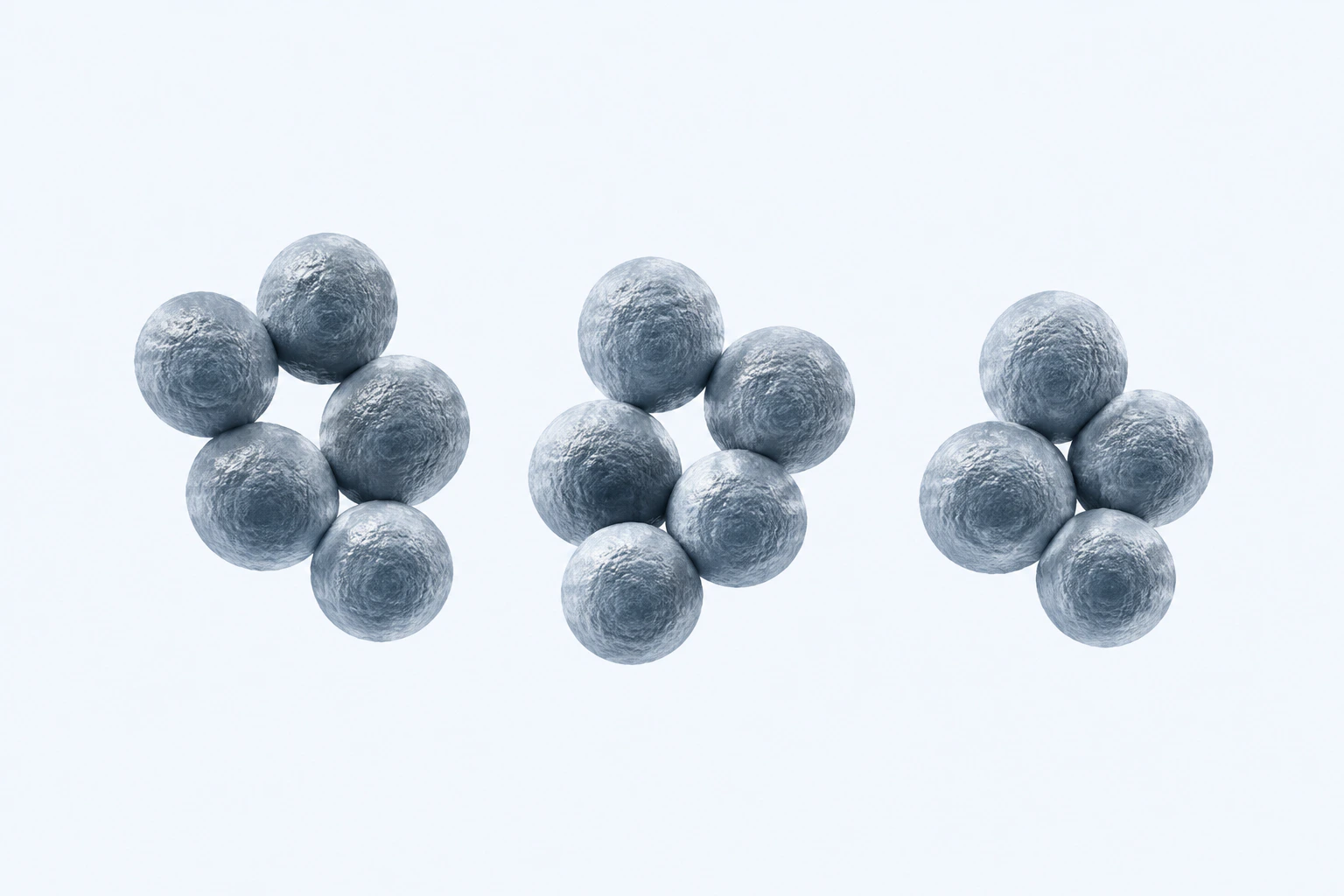
Type-species-anchored Staphylococcus reconstruction with fifteen cocci in three irregular clusters. Representative, non-universal, non-diagnostic, and not a micrograph.
Scientific media record1 verified identifier
- Subject
- Staphylococcustaxon · genus
- Identifiers
- NCBITaxon:1279
- Review
- Editorial review completeIdentifiers authority-verified · Accessibility validated · · staphylococcus|staphylococcus-morphology-v1.webp
- Digital source
- Trained-algorithmic mediaCreated with a trained generative algorithm and reviewed by WikiBiome for subject identity, scientific framing, identifiers, provenance, and accessibility.
- Scientific basis
- Staphylococcus — NCBI TaxonomyStaphylococcus — LPSNStaphylococcus — Medical Microbiology
- License
- CC BY-SA 4.0Created
A genus of Gram-positive, facultative anaerobic cocci that includes some of the most clinically significant human pathogens. Staphylococci are defined by their exceptionally comprehensive metal acquisition arsenal—arguably the most thoroughly characterized of any bacterial genus.
They have evolved dedicated, often redundant import systems for Iron, Manganese, Zinc, Nickel, and Copper, paired with efflux systems that protect against host-imposed metal intoxication. This dual capacity—to both scavenge scarce metals and survive metal poisoning—makes them formidable opponents of the host Nutritional Immunity (Metal Sequestration) system.
For the species-level page on the primary human pathogen, see Staphylococcus aureus.
Evidence map11 cited passagesInspect provenance +
Staphylococci acquire iron through at least four independent pathways (, animal-model, keystone):
Manganese is imported via MntABC (ABC-type) and MntH (NRAMP-type, homologous to host NRAMP1 but operating in reverse). Manganese serves as the essential cofactor for SodA (Mn-SOD) and SodM (cambialistic Mn/Fe-SOD), which detoxify superoxide radicals generated by neutrophils (, animal-model).
A recently discovered manganese-sparing response mediated by the small RNA RsaC resolves a fundamental conflict during infection: when calprotectin restricts manganese, RsaC suppresses SodA translation to free manganese for other essential processes, deliberately sacrificing antioxidant defense for metabolic survival (, quasi-experimental). Iron can substitu
Unlike iron, manganese, and zinc, copper levels increase at infection sites. Macrophages import copper into phagolysosomes via CTR1 and ATP7A to kill engulfed bacteria. Staphylococci resist copper poisoning through the CopAZ efflux system (CopA P-type ATPase, CopZ metallochaperone) (, animal-model).
A previously unappreciated role: staphylococcal peptidoglycan and teichoic acids bind divalent cations (Mn, Ca, Mg, Zn), functioning as a metal reservoir that buffers against host-imposed metal restriction (, in-vitro). When metal chelators (mimicking calprotectin) deplete manganese, staphylococci can evolve resistance by reconfiguring cell wall architecture
Farnesol secreted by candida albicans induces efflux pump expression in S. aureus, conferring enhanced antimicrobial tolerance to the bacterial partner (, expert-opinion). This cross-kingdom chemical cooperation makes polymicrobial infections involving staphylococci and Candida more resistant to treatment than predicted from single-species testing.
The dithiocarbamate compound BMDC combined with copper increases intracellular copper 70-fold within 30 minutes, overwhelming staphylococcal metal export capacity and causing mis-metallation of iron-sulfur clusters (, in-vitro). Both copper-BMDC and zinc-BMDC combinations eradicate established MRSA and S. epidermidis biofilms, performing as effectively as va
(animal-model, keystone)—Landmark review mapping the complete metal acquisition arsenal and nutritional immunity evasion systems across iron, manganese, zinc, copper, and nickel.
(quasi-experimental)—Discovers sRNA RsaC-mediated manganese-sparing response; demonstrates deliberate SOD sacrifice for metabolic survival during calprotectin-imposed Mn starvation.
(in-vitro)—Reveals cell wall as metal reservoir; demonstrates resistance to chelators through peptidoglycan and teichoic acid reconfiguration.
(in-vitro)—Copper-BMDC ionophore achieves 70-fold intracellular copper increase; eradicates MRSA biofilms via mis-metallation.
Contents
1. Overview2. Metal Dependencies3. Key Enzymes and Virulence Factors4. Ecological Role5. Conditions Associated6. Key Studies7. Cross-ReferencesOverview#
The genus contains approximately 50 species. Clinically, they divide into coagulase-positive (S. aureus) and coagulase-negative species (S. epidermidis, S. saprophyticus, S. haemolyticus, S. lugdunensis). Coagulase-negative staphylococci (CoNS) are increasingly recognized as significant pathogens in device-associated infections, prosthetic joint infections, and neonatal bacteremia.
Metal Dependencies#
Iron: Multiple Redundant Acquisition Systems#
Staphylococci acquire Iron through at least four independent pathways (,[1]Metal Ion Acquisition in Staphylococcus aureus: Overcoming Nutritional ImmunityJames E. Cassat, Eric P. Skaar · 2012Open reference 1 ↓ animal-model, keystone):
- Heme piracy via the Isd (iron-regulated surface determinant) system—IsdB extracts heme directly from hemoglobin; the entire Isd relay (IsdB -> IsdA -> IsdC -> IsdDEF -> IsdG/IsdI) represents the primary iron source, bypassing transferrin and lactoferrin
- Siderophores—Staphyloferrin A and Staphyloferrin B are polycarboxylate-type siderophores that evade lipocalin-2 binding (a stealth strategy unique among characterized siderophores)
- Staphylopine—a nicotianamine-like broad-spectrum metallophore (CntKLM synthesis, CntE export, CntABCDF reimport) that chelates zinc, nickel, cobalt, and iron simultaneously
- Hemolysins—alpha-hemolysin and bi-component leukocidins lyse red blood cells to release hemoglobin and simultaneously destroy the immune cells deploying nutritional immunity
Manganese: The Oxidative Stress Shield#
Manganese is imported via MntABC (ABC-type) and MntH (NRAMP-type, homologous to host NRAMP1 but operating in reverse). Manganese serves as the essential cofactor for SodA (manganese (Mn)-SOD) and SodM (cambialistic manganese/iron (Fe)-SOD), which detoxify superoxide radicals generated by neutrophils (,[1]Metal Ion Acquisition in Staphylococcus aureus: Overcoming Nutritional ImmunityJames E. Cassat, Eric P. Skaar · 2012Open reference 1 ↓ animal-model).
A recently discovered manganese-sparing response mediated by the small RNA RsaC resolves a fundamental conflict during infection: when Calprotectin (S100A8/A9) restricts manganese, RsaC suppresses SodA translation to free manganese for other essential processes, deliberately sacrificing antioxidant defense for metabolic survival (,[2]McFarlane 2025 — A Manganese-Sparing Response Balances Competing Cellular Demands to Enable Staphylococcus aureus InfectionRiley A McFarlane, Jana N Radin, Rafat Mazgaj et al. · 2025Open reference 2 ↓ quasi-experimental).
Iron can substitute for manganese in some enzymes—a form of beneficial Mis-Metallation.
Zinc: Scavenging and Resistance#
Zinc is imported by AdcABC/AdcAII and scavenged by the staphylopine metallophore. Excess zinc is exported by CzrAB (CDF family). The dual challenge of zinc limitation (by calprotectin) and zinc toxicity (by macrophage zinc mobilization into phagolysosomes) means staphylococci must simultaneously express import and export systems depending on the microenvironment.
Copper: Surviving Phagolysosomal Toxicity#
Unlike iron, manganese, and zinc, Copper levels increase at infection sites. Macrophages import copper into phagolysosomes via CTR1 and ATP7A to kill engulfed bacteria. Staphylococci resist copper poisoning through the CopAZ efflux system (CopA P-type ATPase, CopZ metallochaperone) (,[1]Metal Ion Acquisition in Staphylococcus aureus: Overcoming Nutritional ImmunityJames E. Cassat, Eric P. Skaar · 2012Open reference 1 ↓ animal-model).
Key Enzymes and Virulence Factors#
| System | Metal | Function |
|---|---|---|
| Isd heme uptake | Iron | Heme extraction from hemoglobin; vaccine target (IsdB) |
| Staphyloferrin A/B | Iron | Stealth siderophores evading lipocalin-2 |
| Staphylopine (Cnt) | zinc (Zn)/nickel (Ni)/cobalt (Co)/iron (Fe) | Broad-spectrum metallophore competing with calprotectin |
| MntABC/MntH | Manganese | Redundant manganese (Mn) import for SOD metalation |
| SodA/SodM | manganese (or iron) | Superoxide dismutases for Oxidative Stress defense |
| CopAZ | Copper | Phagolysosomal copper efflux |
| CzrAB | Zinc | Zinc export under intoxication conditions |
| Urease | Nickel | Skin survival in urea-rich sweat |
Ecological Role#
The Cell Wall as Metal Reservoir#
A previously unappreciated role: staphylococcal peptidoglycan and teichoic acids bind divalent cations (manganese (Mn), calcium (Ca), magnesium (Mg), zinc (Zn)), functioning as a metal reservoir that buffers against host-imposed metal restriction (,[3]Paterson 2025 — Enhanced Resistance of Metal Sequestering Agents by Reconfiguration of the Staphylococcus aureus Cell WallJoy R Paterson, Joshua M Wadsworth, Rebecca J Lee et al. · 2025Open reference 3 ↓ in-vitro).
When metal chelators (mimicking calprotectin) deplete manganese, staphylococci can evolve resistance by reconfiguring cell wall architecture—thickening peptidoglycan, altering teichoic acid D-alanylation, and substituting calcium for manganese in the cell wall.
Interkingdom Cooperation#
Farnesol secreted by Candida albicans induces efflux pump expression in S. aureus, conferring enhanced antimicrobial tolerance to the bacterial partner (,[4]Li et al. 2022 — Candida albicans and Resident Microbiota InteractionsLi XV, et al. · 2022Open reference 4 ↓ expert-opinion). This cross-kingdom chemical cooperation makes polymicrobial infections involving staphylococci and Candida more resistant to treatment than predicted from single-species testing.
Copper-BMDC as Metal Weapon#
The dithiocarbamate compound BMDC combined with copper increases intracellular copper 70-fold within 30 minutes, overwhelming staphylococcal metal export capacity and causing mis-metallation of iron-sulfur clusters (,[5]Sanchez-Rosario 2026 — N-benzyl-N-methyldithiocarbamate (BMDC) Combines with Metals to Produce Antimicrobial and Anti-Biofilm Activity Against MRSA and S. epidermidisYamil Sanchez-Rosario, Natasha R Cornejo, Isaiah S Gonzalez et al. · 2026Open reference 5 ↓ in-vitro).
Both copper-BMDC and zinc-BMDC combinations eradicate established MRSA and S. epidermidis biofilms, performing as effectively as vancomycin.
Conditions Associated#
- Skin and soft tissue infections—boils, impetigo, cellulitis
- Wound infections—surgical site infections, burn infections
- Sepsis and bacteremia—catheter-related bloodstream infections
- Endocarditis—native and prosthetic valve
- Device-associated infections—prosthetic joints, pacemakers, catheters (particularly CoNS)
- Nasal colonization—approximately 30% of the population are persistent S. aureus nasal carriers
Key Studies#
[1]Metal Ion Acquisition in Staphylococcus aureus: Overcoming Nutritional ImmunityJames E. Cassat, Eric P. Skaar · 2012Open reference 1 ↓ (animal-model, keystone)—Landmark review mapping the complete metal acquisition arsenal and nutritional immunity evasion systems across iron, manganese, zinc, copper, and nickel.
[2]McFarlane 2025 — A Manganese-Sparing Response Balances Competing Cellular Demands to Enable Staphylococcus aureus InfectionRiley A McFarlane, Jana N Radin, Rafat Mazgaj et al. · 2025Open reference 2 ↓ (quasi-experimental)—Discovers sRNA RsaC-mediated manganese-sparing response; demonstrates deliberate SOD sacrifice for metabolic survival during calprotectin-imposed manganese (Mn) starvation.
[3]Paterson 2025 — Enhanced Resistance of Metal Sequestering Agents by Reconfiguration of the Staphylococcus aureus Cell WallJoy R Paterson, Joshua M Wadsworth, Rebecca J Lee et al. · 2025Open reference 3 ↓ (in-vitro)—Reveals cell wall as metal reservoir; demonstrates resistance to chelators through peptidoglycan and teichoic acid reconfiguration.
[5]Sanchez-Rosario 2026 — N-benzyl-N-methyldithiocarbamate (BMDC) Combines with Metals to Produce Antimicrobial and Anti-Biofilm Activity Against MRSA and S. epidermidisYamil Sanchez-Rosario, Natasha R Cornejo, Isaiah S Gonzalez et al. · 2026Open reference 5 ↓ (in-vitro)—Copper-BMDC ionophore achieves 70-fold intracellular copper increase; eradicates MRSA biofilms via mis-metallation.
Cross-References#
- Staphylococcus aureus—Species-level page with detailed virulence and clinical information
- Iron—Heme piracy, siderophores, staphylopine; most extensively studied metal dependency
- Manganese—SodA/SodM metalation, RsaC sparing response, calprotectin restriction
- Zinc—AdcABC import, staphylopine scavenging, CzrAB efflux, phagolysosomal intoxication
- Copper—CopAZ efflux, phagolysosomal copper weaponization, BMDC ionophore
- Nickel—Staphylopine-mediated acquisition, urease cofactor
- Calprotectin (S100A8/A9)—Dominant metal-sequestering protein at staphylococcal infection sites
- Nutritional Immunity (Metal Sequestration)—The central host defense framework against staphylococci
- Candida albicans—Farnesol-mediated interkingdom cooperation enhancing antimicrobial tolerance
References 6
Numbered by first appearance in the article, then reconciled with its declared source list.
- 1
★James E. Cassat, Eric P. Skaar (2012). Metal Ion Acquisition in Staphylococcus aureus: Overcoming Nutritional Immunity. Seminars in Immunopathology.
- 2
Riley A McFarlane, Jana N Radin, Rafat Mazgaj et al. (2025). McFarlane 2025 — A Manganese-Sparing Response Balances Competing Cellular Demands to Enable Staphylococcus aureus Infection. mBio.
- 3
Joy R Paterson, Joshua M Wadsworth, Rebecca J Lee et al. (2025). Paterson 2025 — Enhanced Resistance of Metal Sequestering Agents by Reconfiguration of the Staphylococcus aureus Cell Wall. npj Antimicrobials and Resistance.
- 4
Li XV, et al. (2022). Li et al. 2022 — Candida albicans and Resident Microbiota Interactions. Frontiers in Microbiology.
- 5
Yamil Sanchez-Rosario, Natasha R Cornejo, Isaiah S Gonzalez et al. (2026). Sanchez-Rosario 2026 — N-benzyl-N-methyldithiocarbamate (BMDC) Combines with Metals to Produce Antimicrobial and Anti-Biofilm Activity Against MRSA and S. epidermidis. mSphere.
- 6
Vollenweider, V., et al. (2024). Vollenweider et al. 2024 — Pyoverdines as Iron-Depriving Antimicrobials. eLife.
Article network
Connect the evidence
Publicly readable discussion by ORCID-authenticated researchers. Questions, interpretation, methods, corrections, and new evidence stay attached to this record.
No discussion yet. Start with a precise question or a source-backed observation.
Published page changes
This record shows only material changes published on this page, including changes to its content, evidence, conclusions, or author context. Internal processes and discussion activity are excluded. Pending, declined, and withdrawn proposals remain private.
- published revision
Revised “Key Enzymes and Virulence Factors”: now reads “export under intoxication conditions | | urease | Nickel | Skin survival in”.
Revised “Key Enzymes and Virulence Factors”: changed “export under intoxication conditions | | Urease | Nickel | Skin survival in” to “export under intoxication conditions | | urease | Nickel | Skin survival in”. · Karen Pendergrass · +1 −1
Inspect exact Git diff ↗ - published revision
Created “Staphylococcus”: A genus of Gram-positive, facultative anaerobic cocci that includes some of the most clinically significant human pathogens. Staphylococci are defined by their exceptionally comprehensive metal…
Created “Staphylococcus”: A genus of Gram-positive, facultative anaerobic cocci that includes some of the most clinically significant human pathogens. Staphylococci are defined by their exceptionally comprehensive metal… Published sections: Staphylococcus; Overview; Iron: Multiple Redundant Acquisition Systems; Manganese: The Oxidative Stress Shield; Zinc: Scavenging and Resistance; Copper: Surviving Phagolysosomal Toxicity; Key Enzymes and Virulence Factors; The Cell Wall as Metal Reservoir; Interkingdom Cooperation; Copper-BMDC as Metal Weapon; Conditions Associated; Key Studies; Cross-References. · WikiBiome Deploy Bot · +111 −0
Inspect exact Git diff ↗