
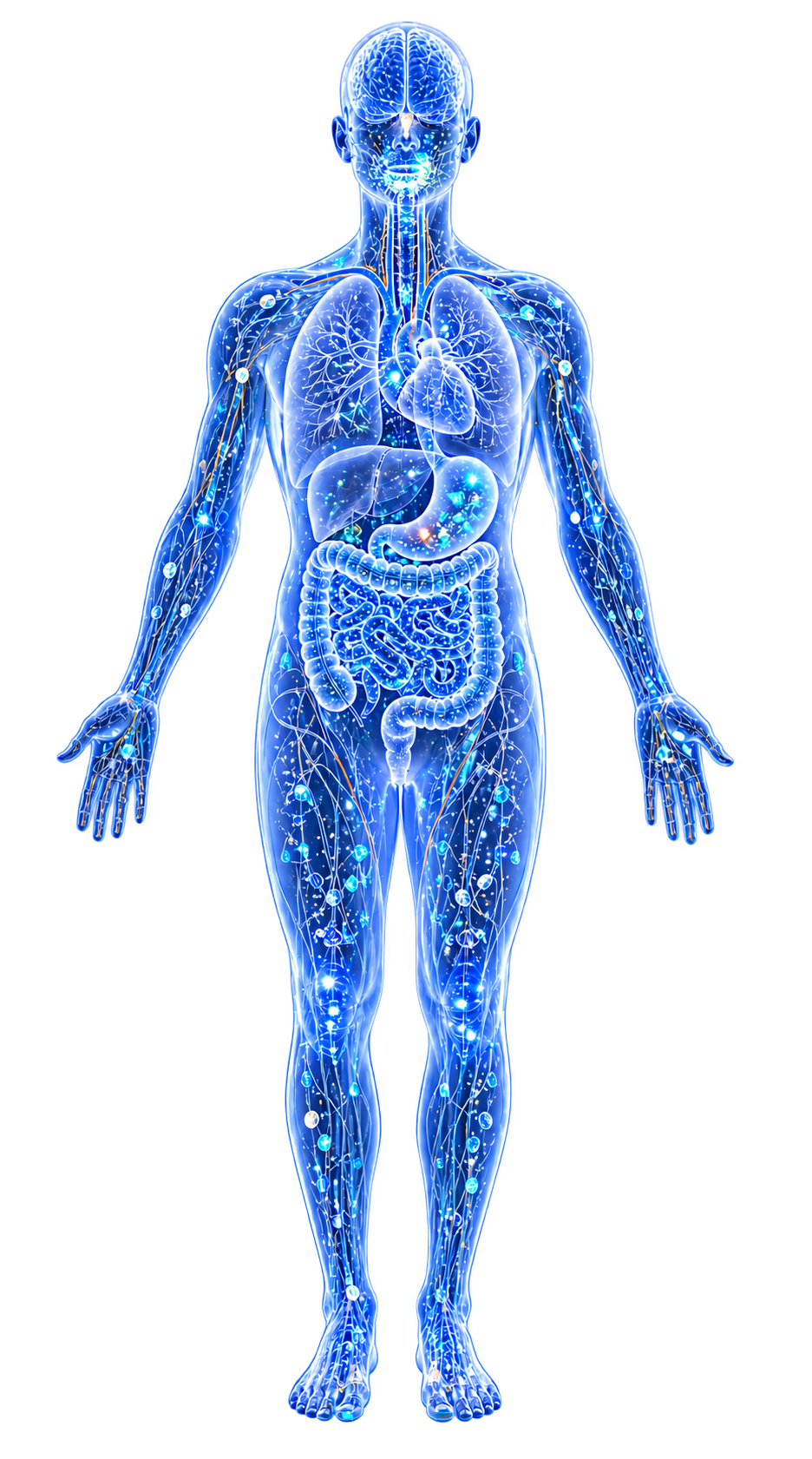
 metals · microbes · host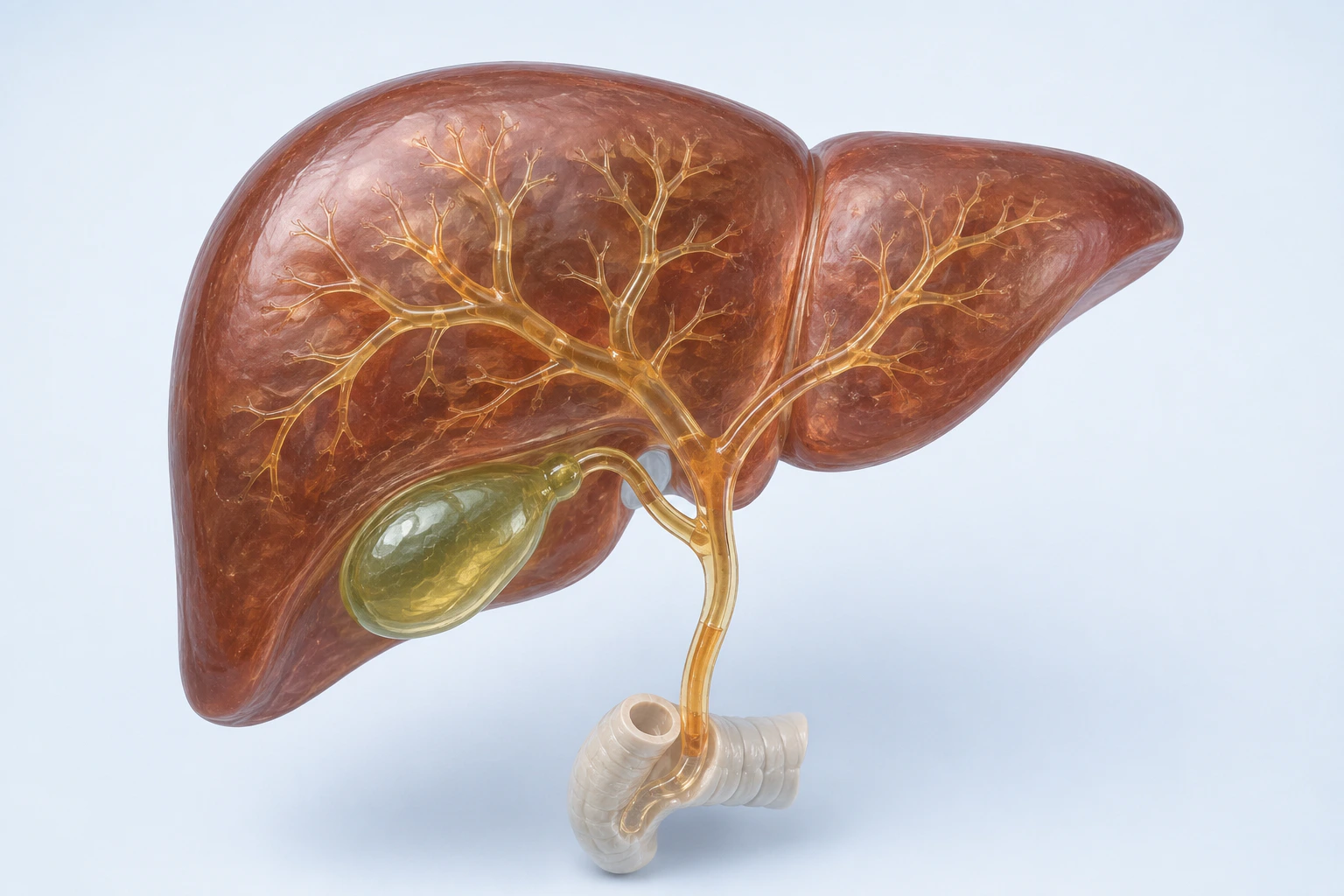
Representative hepatobiliary orientation for cholestasis, showing both small and large bile-duct pathways. The amber material suggests impaired bile flow without asserting a cause, subtype, severity, or diagnosis.
Scientific media record1 verified identifier
- Subject
- Cholestasiscondition
- Identifiers
- MeSH:D002779
- Review
- Editorial review completeIdentifiers authority-verified · Accessibility validated · · cholestasis|cholestasis-pathology-v1.webp
- Digital source
- Trained-algorithmic mediaCreated with a trained generative algorithm and reviewed by WikiBiome for subject identity, scientific framing, identifiers, provenance, and accessibility.
- License
- CC BY-SA 4.0Created
Cholestasis is the impairment or cessation of bile flow from the liver to the duodenum. It can be intrahepatic (hepatocyte or bile ductule dysfunction) or extrahepatic (mechanical obstruction).
Beyond its direct hepatic consequences, cholestasis profoundly disrupts the Gut Microbiome by removing bile acids—a major ecological regulator—from the intestinal environment.
One disease. Five evidence layers.
A generated systems view of the metals, organisms, host sequestration signals, ecological conditions, and microbial functions indexed for Cholestasis.
Evidence layer
Taxonomic signature
Organisms reported as enriched or depleted, with their indexed functional context kept beside the name.No structured taxa indexed yet.
No structured taxa indexed yet.
Evidence layer
Nutritional immunity
Host metal-withholding, inflammatory, antioxidant, and microbial-metabolite signals indexed in the signature.Elevated host signals
0No structured signals indexed yet.
Depleted protective signals
0No structured signals indexed yet.
Evidence layer
Ecological state
The environmental conditions that connect the organism-level observations into a system.No structured ecological features indexed yet.
Evidence layer
Virulence functions
Microbial structures, enzymes, and acquisition systems implicated by the linked evidence.No structured virulence functions indexed yet.
The disease record, in full.
The original WikiBiome disease narrative remains intact beneath the generated signature atlas.
Microbiome Associations#
Bile acids are potent antimicrobial agents that shape gut community composition, particularly suppressing Gram-positive bacteria. When bile flow stops, the gut microbiome undergoes dramatic restructuring: small intestinal bacterial overgrowth (SIBO) develops, bile-tolerant taxa decline, and bile-sensitive organisms expand.
The loss of bile-mediated FXR signaling in the ileum disrupts the enterohepatic feedback loop that normally regulates Bile Acid Metabolism.
Metal Associations#
Cholestatic liver disease leads to copper and manganese accumulation in hepatic tissue, as biliary excretion is the primary elimination route for both metals. Retained copper drives oxidative damage through Fenton-like chemistry, while manganese retention may contribute to the hepatic encephalopathy seen in advanced cholestatic disease.
Iron handling is also disrupted through hepcidin dysregulation.
Associated Conditions#
Cholestasis is a feature of primary-biliary-cholangitis, primary-sclerosing-cholangitis, and drug-induced liver injury. It also occurs in Non-Alcoholic Fatty Liver Disease progression. The shared metal accumulation pattern—particularly copper—across cholestatic conditions suggests a common metallotoxic pathway compounding the primary biliary insult.
Open Questions#
Unresolved questions identified by the current evidence record.
01Whether microbiome restoration (via bile acid supplementation or targeted probiotics) can mitigate hepatic metal accumulation in chronic cholestasis is an emerging research question.+
The current WikiBiome record identifies this as an unresolved evidence gap.
Cross-References#
- Bile Acid Metabolism—disrupted enterohepatic circulation
- Copper—hepatic accumulation in cholestasis
- Manganese—biliary excretion impairment
- gut-liver-axis—bidirectional liver-microbiome signaling
References 8
Numbered by first appearance in the article, then reconciled with its declared source list.
- 1
Yichao Shi, Jianfeng Li, Shuntian Cai et al. (2023). Shi 2023 — PPI-Induced Fungal Dysbiosis in Patients with Gastroesophageal Reflux Disease. Frontiers in Cellular and Infection Microbiology.
- 2
Docimo G, Cangiano A, Romano RM et al. (2020). Docimo et al. 2020 — The Human Microbiota in Endocrinology: Implications for Pathophysiology, Treatment, and Prognosis in Thyroid Diseases. Frontiers in Endocrinology.
- 3
Mendoza L (2019). Potential effect of probiotics in the treatment of breast cancer. Oncology Reviews.
- 4
Hiroki Mizutani, Shunsuke Fukui, Kazuki Oosuka et al. (2025). Biliary microbiome profiling via 16 S rRNA amplicon sequencing in patients with cholangiocarcinoma, pancreatic carcinoma and choledocholithiasis. Scientific Reports.
- 5
Catala-Valentin AR, Mikhail S, Bernard JN et al. (2021). Corruption of Bacterial-Host Homeostasis as a Potential Risk Factor and Biomarker for Upper Gastrointestinal Carcinogenesis. Journal of Gastroenterology and Hepatobiliary Medicine.
- 6
McGregor Brock (2015). McGregor Brock 2015 — The Role of Selenium in Thyroid Autoimmunity: A Review. Journal of Restorative Medicine.
- 7
Rezen T, Rozman D, Kovacs T et al. (2022). Rezen et al. 2022 — The Role of Bile Acids in Carcinogenesis. Cellular and Molecular Life Sciences.
- 8
Elizabeth Half, Nirit Keren, Leah Reshef et al. (2019). Fecal microbiome signatures of pancreatic cancer patients. Scientific Reports.
Article network
Mentioned here 5
Pages linking here 1
Connect the evidence
Publicly readable discussion by ORCID-authenticated researchers. Questions, interpretation, methods, corrections, and new evidence stay attached to this record.
No discussion yet. Start with a precise question or a source-backed observation.
Activity and accepted changes
Accepted researcher context, editorial status, public discussion, and upstream Git revisions are shown together. Pending, declined, and withdrawn proposals remain private.
- published revision
Backfill gut microbiome concept links
Karen Pendergrass · +1 −1
Inspect exact Git diff ↗ - published revision
massive wiki expansion: 149 stubs fixed, 100+ new pages, Rule 15 scan, keystone papers
WikiBiome Deploy Bot · +14 −8
Inspect exact Git diff ↗ - published revision
maintenance: 409 source fixes, 34 entity updates, 17 concept updates, 30 analysis outputs
WikiBiome Deploy Bot · +62 −0
Inspect exact Git diff ↗