
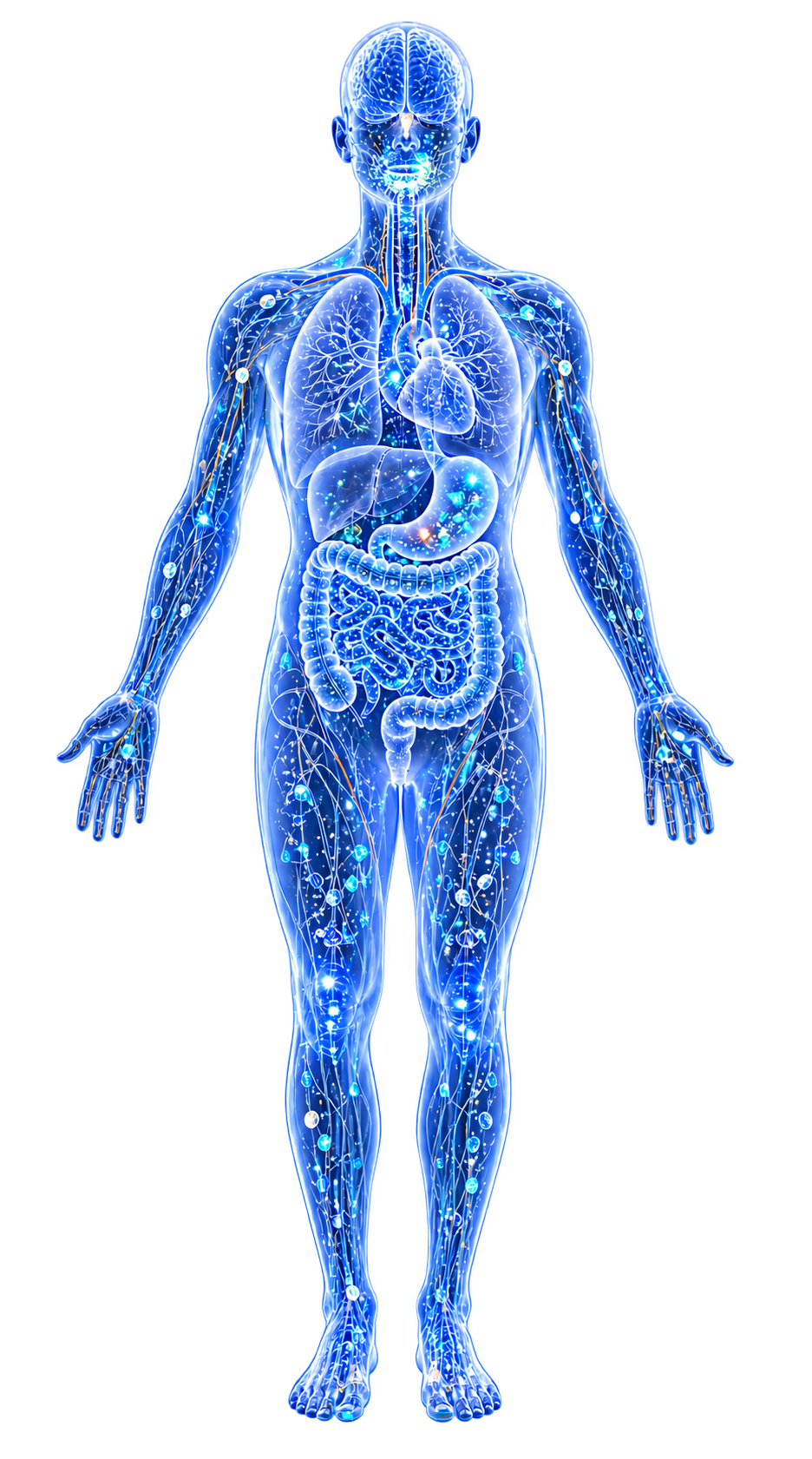
Heavy Metals exert some of their most devastating effects on the nervous system. Lead, Mercury, and Arsenic are the three metals with the most extensively documented neurotoxic mechanisms, but Cadmium, Manganese, Aluminum, and Nickel also contribute to neurological damage through distinct pathways.
What makes the neurotoxicity story especially interesting from a microbiome perspective is that the gut-brain axis provides a second route of injury: metals reshape the Gut Microbiome, and the resulting Dysbiosis produces its own neurotoxic metabolites.
Evidence map11 cited passagesInspect provenance +
Calcium mimicry: Pb mimics Ca in signaling pathways, disrupting neurotransmitter release (GABA, glutamate, dopamine) by competing for Ca binding sites.
Developmental vulnerability: Even low blood Pb at ages 7-8 is associated with more autistic behaviors at ages 11-12, demonstrating the outsized impact during critical developmental windows.
Thiol group binding: Hg depletes glutathione and binds sulfhydryl groups on proteins, disabling antioxidant defenses throughout the CNS.
BBB and placental penetration: MeHg readily crosses both the blood-brain barrier and the placental barrier, making prenatal exposure particularly dangerous.
Hippocampal damage: Hg vapor at 550 ug/m3 causes cognitive impairment and hippocampal damage in rat models.
Microbiome methylation: desulfovibrio species in the gut can convert inorganic mercury to neurotoxic methylmercury, amplifying exposure through the gut brain axis.
Gut microbiome mediation: FMT has alleviated Mn-induced neurotoxicity in rats, demonstrating that Mn-parkinsonism operates partly through the gut microbiome.
Dysbiosis-derived neurotoxins: Metal-driven gut dysbiosis increases production of: - indoxyl sulfate—neurotoxic uremic toxin from Proteobacteria tryptophan metabolism dopamine - Propionic acid (PPA)—elevated in autism spectrum disorder; causes brain morphological changes in rodent models - Quinolinic acid—NMDA receptor agonist generated via the kynu
Cu-amyloid-beta: Copper binds amyloid-beta at histidine residues, catalyzing ROS production and accelerating aggregation in alzheimers disease.
Zn-SHANK3: Zinc displacement from SHANK3 scaffold proteins at synapses disrupts post-synaptic signaling in autism spectrum disorder.
Notably, prenatal Hg exposure was NOT associated with lower cognitive scores in adulthood, suggesting a recovery capacity or critical window specificity.
Contents
1. Metal-Specific Neurotoxic Mechanisms2. The Gut-Brain Axis Amplification3. Mis-metallation in the CNS4. Disease Associations5. Developmental Windows6. Open Questions7. Cross-ReferencesMetal-Specific Neurotoxic Mechanisms#
Lead (Pb)#
Lead is arguably the most consequential neurotoxicant due to its combination of potency, ubiquity, and lack of any safe exposure threshold.
Calcium mimicry: lead (Pb) mimics calcium (Ca) in signaling pathways, disrupting neurotransmitter release (GABA, glutamate, dopamine) by competing for calcium binding sites.[1]Interaction of Heavy Metal Lead with Gut Microbiota: Implications for Autism Spectrum DisorderTizabi Y, Bennani S, El Kouhen N et al. · 2023Open reference 1 ↓
Blood-brain barrier penetration: lead crosses the Blood-Brain Barrier and accumulates in hippocampus, cortex, and cerebellum.
Developmental vulnerability: Even low blood lead at ages 7-8 is associated with more autistic behaviors at ages 11-12, demonstrating the outsized impact during critical developmental windows.[1]Interaction of Heavy Metal Lead with Gut Microbiota: Implications for Autism Spectrum DisorderTizabi Y, Bennani S, El Kouhen N et al. · 2023Open reference 1 ↓
Enzyme inhibition: lead inhibits delta-aminolevulinic acid dehydratase (ALAD), disrupting heme synthesis and causing accumulation of ALA, itself a neurotoxic pro-oxidant.
Mercury (Hg)#
The most toxic heavy metal, with organic methylmercury (methylmercury (MeHg)) as the primary concern for dietary exposure.
Thiol group binding: mercury depletes Glutathione (GSH) and binds sulfhydryl groups on proteins, disabling antioxidant defenses throughout the CNS.[2]Toxicity, Mechanism and Health Effects of Some Heavy MetalsMonisha Jaishankar, Tenzin Tseten, Naresh Anbalagan et al. · 2014Open reference 2 ↓
BBB and placental penetration: methylmercury readily crosses both the blood-brain barrier and the placental barrier, making prenatal exposure particularly dangerous.[2]Toxicity, Mechanism and Health Effects of Some Heavy MetalsMonisha Jaishankar, Tenzin Tseten, Naresh Anbalagan et al. · 2014Open reference 2 ↓
Hippocampal damage: mercury vapor at 550 ug/m3 causes cognitive impairment and hippocampal damage in rat models.[3]Toxic Mechanisms of Five Heavy Metals: Mercury, Lead, Chromium, Cadmium, and ArsenicBalali-Mood M, Naseri K, Tahergorabi Z et al. · 2021Open reference 3 ↓
Microbiome methylation: Desulfovibrio species in the gut can convert inorganic mercury to neurotoxic methylmercury, amplifying exposure through the Gut-Brain Axis.[4]Rezazadegan et al. 2025 — Heavy Metals and Gut Microbiota: A Systematic ReviewFatemeh Rezazadegan, Maryam Mahmoudi, Seyed Mohammad Mousavi · 2025Open reference 4 ↓
Arsenic (As)#
Oxidative Stress cascade: arsenic (As) depletes glutathione and generates reactive oxygen species, causing widespread neuronal apoptosis. Peripheral neuropathy: Chronic arsenic exposure causes both central and peripheral nervous system damage. Cognitive decline: Epidemiological studies link chronic arsenic exposure to reduced IQ scores and impaired executive function in children.
Manganese (Mn)#
Manganism: Chronic manganese (Mn) overexposure produces a Parkinson-like syndrome (manganism) with extrapyramidal motor symptoms. Dopaminergic disruption: manganese accumulates in the globus pallidus and substantia nigra, disrupting dopamine metabolism.
Gut microbiome mediation: FMT has alleviated manganese-induced neurotoxicity in rats, demonstrating that manganese-parkinsonism operates partly through the gut microbiome.[5]Dose-Dependent Progression of Parkinsonism in Manganese-Exposed WeldersBrad A. Racette, Susan Searles Nielsen, Susan R. Criswell et al. · 2017Open reference 5 ↓
Nickel (Ni)#
Behavioral and cognitive effects documented through multiple exposure routes. See Nickel Neurotoxicity for detailed coverage.
The Gut-Brain Axis Amplification#
Heavy metals do not only damage the brain directly. By reshaping the gut microbiome, they trigger a cascade of indirect neurotoxic effects.
Dysbiosis-derived neurotoxins: Metal-driven gut dysbiosis increases production of. Indoxyl Sulfate—neurotoxic uremic toxin from Proteobacteria tryptophan metabolism Dopamine. Propionic acid (PPA)—elevated in Autism Spectrum Disorder; causes brain morphological changes in rodent models.[1]Interaction of Heavy Metal Lead with Gut Microbiota: Implications for Autism Spectrum DisorderTizabi Y, Bennani S, El Kouhen N et al. · 2023Open reference 1 ↓
Quinolinic acid—NMDA receptor agonist generated via the kynurenine pathway when Metal-Driven Inflammation diverts tryptophan from Serotonin synthesis.
Barrier disruption: Metals damage both the gut barrier (increasing LPS translocation) and the Blood-Brain Barrier (permitting neuroinflammatory molecule entry).
SCFA depletion: Metal-driven depletion of Butyrate-producing commensals (Faecalibacterium, Roseburia, Lachnospiraceae) reduces butyrate availability, impairing BBB tight junction maintenance.
Serotonin disruption: Dysbiotic communities divert tryptophan toward Kynurenine and away from Serotonin, simultaneously generating neurotoxic quinolinic acid and depleting a neuroprotective neurotransmitter.
Mis-metallation in the CNS#
A particularly insidious mechanism is Mis-Metallation—toxic metals displacing essential cofactors from neuronal enzymes.
copper (Cu)-amyloid-beta: Copper binds amyloid-beta at Histidine residues, catalyzing ROS production and accelerating aggregation in Alzheimer's Disease.[6]Common and Trace Metals in Alzheimer's and Parkinson's DiseasesDoroszkiewicz J, Farhan JA, Mroczko J et al. · 2023Open reference 6 ↓ lead (Pb)-calcium (Ca) displacement: Lead replaces calcium in NMDA receptors, voltage-gated calcium channels, and protein kinase C—disrupting all three simultaneously.
zinc (Zn)-SHANK3: Zinc displacement from SHANK3 scaffold proteins at synapses disrupts post-synaptic signaling in Autism Spectrum Disorder.[7]Metal Profiles in Autism Spectrum Disorders: A Crosstalk between Toxic and Essential MetalsBlazewicz A, Grabrucker AM · 2023Open reference 7 ↓
Disease Associations#
| Condition | Primary Metals | Key Mechanism |
|---|---|---|
| Alzheimer's Disease | copper (Cu), iron (Fe), zinc (Zn), lead (Pb) | copper-amyloid-beta aggregation; iron-driven Fenton chemistry |
| Parkinson's Disease | manganese (Mn), lead, iron | manganese in substantia nigra; alpha-synuclein metal binding |
| Autism Spectrum Disorder | lead, mercury (Hg), cadmium (Cd) | Metallome disruption; SHANK3 zinc displacement |
| Schizophrenia | copper, zinc, manganese | copper/zinc mis-metallation at NMDA receptor zinc-finger sites |
| Multiple Sclerosis | Under-studied | Gut-brain axis; tryptophan diversion |
| Cerebral Palsy | lead, mercury | Prenatal exposure during critical CNS development |
Developmental Windows#
The developing brain is exquisitely sensitive to metal neurotoxicity. Critical periods include.
Prenatal: lead (Pb) and methylmercury (MeHg) cross the placenta; even low-level prenatal exposure causes measurable cognitive deficits. Infancy (0-2 years): Rapid myelination and synaptogenesis make the infant brain vulnerable. See Infant Exposure.
Early childhood (2-6 years): Hand-to-mouth behavior increases oral exposure; BBB not yet fully mature.
Notably, prenatal mercury exposure was NOT associated with lower cognitive scores in adulthood, suggesting a recovery capacity or critical window specificity.[8]Exposure to heavy metals and neurocognitive function in adults: a systematic reviewAlthomali RH, Abbood MA, Saleh EAM et al. · 2024Open reference 8 ↓
Open Questions#
Unresolved questions identified by the current evidence record.
01Can microbiome-targeted interventions (probiotics, prebiotics, FMT) mitigate metal neurotoxicity by restoring the gut-brain axis?+
The current WikiBiome record identifies this as an unresolved evidence gap.
02What is the relative contribution of direct CNS toxicity versus gut-brain axis mediation for each metal?+
The current WikiBiome record identifies this as an unresolved evidence gap.
03Do metal-driven changes in the gut virome contribute to neuroinflammation?+
The current WikiBiome record identifies this as an unresolved evidence gap.
04Can butyrate supplementation or SCFA-producer restoration protect BBB integrity against metal exposure?+
The current WikiBiome record identifies this as an unresolved evidence gap.
Cross-References#
- Lead—calcium mimicry, developmental neurotoxicity
- Mercury—thiol binding, BBB penetration, methylation by gut bacteria
- Arsenic—oxidative stress cascade, peripheral neuropathy
- Manganese—manganism, dopaminergic disruption
- Nickel Neurotoxicity—behavioral and cognitive effects
- Blood-Brain Barrier—metal penetration and butyrate-dependent maintenance
- Gut-Brain Axis—microbiome-mediated amplification of neurotoxicity
- Mis-Metallation—toxic metal displacement of essential cofactors
- Alzheimer's Disease—copper (Cu)-amyloid-beta; iron (Fe)-driven neurodegeneration
- Parkinson's Disease—manganese (Mn)-parkinsonism; alpha-synuclein
- Autism Spectrum Disorder—metallome disruption; SHANK3 zinc
- Infant Exposure—developmental vulnerability windows
References 8
Numbered by first appearance in the article, then reconciled with its declared source list.
- 1
★Tizabi Y, Bennani S, El Kouhen N et al. (2023). Interaction of Heavy Metal Lead with Gut Microbiota: Implications for Autism Spectrum Disorder. Biomolecules.
- 2
★Monisha Jaishankar, Tenzin Tseten, Naresh Anbalagan et al. (2014). Toxicity, Mechanism and Health Effects of Some Heavy Metals. Interdisciplinary Toxicology.
- 3
★Balali-Mood M, Naseri K, Tahergorabi Z et al. (2021). Toxic Mechanisms of Five Heavy Metals: Mercury, Lead, Chromium, Cadmium, and Arsenic. Frontiers in Pharmacology.
- 4
Fatemeh Rezazadegan, Maryam Mahmoudi, Seyed Mohammad Mousavi (2025). Rezazadegan et al. 2025 — Heavy Metals and Gut Microbiota: A Systematic Review. Journal of Health, Population and Nutrition.
- 5
Brad A. Racette, Susan Searles Nielsen, Susan R. Criswell et al. (2017). Dose-Dependent Progression of Parkinsonism in Manganese-Exposed Welders. Neurology.
- 6
Doroszkiewicz J, Farhan JA, Mroczko J et al. (2023). Common and Trace Metals in Alzheimer's and Parkinson's Diseases. International Journal of Molecular Sciences.
- 7
Blazewicz A, Grabrucker AM (2023). Metal Profiles in Autism Spectrum Disorders: A Crosstalk between Toxic and Essential Metals. International Journal of Molecular Sciences.
- 8
Althomali RH, Abbood MA, Saleh EAM et al. (2024). Exposure to heavy metals and neurocognitive function in adults: a systematic review. Environmental Sciences Europe.
Article network
Connect the evidence
Publicly readable discussion by ORCID-authenticated researchers. Questions, interpretation, methods, corrections, and new evidence stay attached to this record.
No discussion yet. Start with a precise question or a source-backed observation.
Published page changes
This record shows only material changes published on this page, including changes to its content, evidence, conclusions, or author context. Internal processes and discussion activity are excluded. Pending, declined, and withdrawn proposals remain private.
- published revision
Revised “Heavy Metal Neurotoxicity”: now reads “heavy metals exert some of their most”.
Revised “Heavy Metal Neurotoxicity”: changed “Heavy metals exert some of their most” to “heavy metals exert some of their most”. · Karen Pendergrass · +1 −1
Inspect exact Git diff ↗ - published revision
Revised “Arsenic (As)”: now reads “- oxidative stress cascade: As depletes glutathione and”.
Revised “Arsenic (As)”: changed “- Oxidative stress cascade: As depletes glutathione and” to “- oxidative stress cascade: As depletes glutathione and”. · Karen Pendergrass · +1 −1
Inspect exact Git diff ↗ - published revision
Created “Heavy Metal Neurotoxicity”: Heavy metals exert some of their most devastating effects on the nervous system. lead, mercury, and arsenic are the three metals with the most extensively documented neurotoxic mechanisms, but…
Created “Heavy Metal Neurotoxicity”: Heavy metals exert some of their most devastating effects on the nervous system. lead, mercury, and arsenic are the three metals with the most extensively documented neurotoxic mechanisms, but… Published sections: Heavy Metal Neurotoxicity; Lead (Pb); Mercury (Hg); Arsenic (As); Manganese (Mn); Nickel (Ni); The Gut-Brain Axis Amplification; Mis-metallation in the CNS; Disease Associations; Developmental Windows; Open Questions; Cross-References. · WikiBiome Deploy Bot · +120 −0
Inspect exact Git diff ↗