
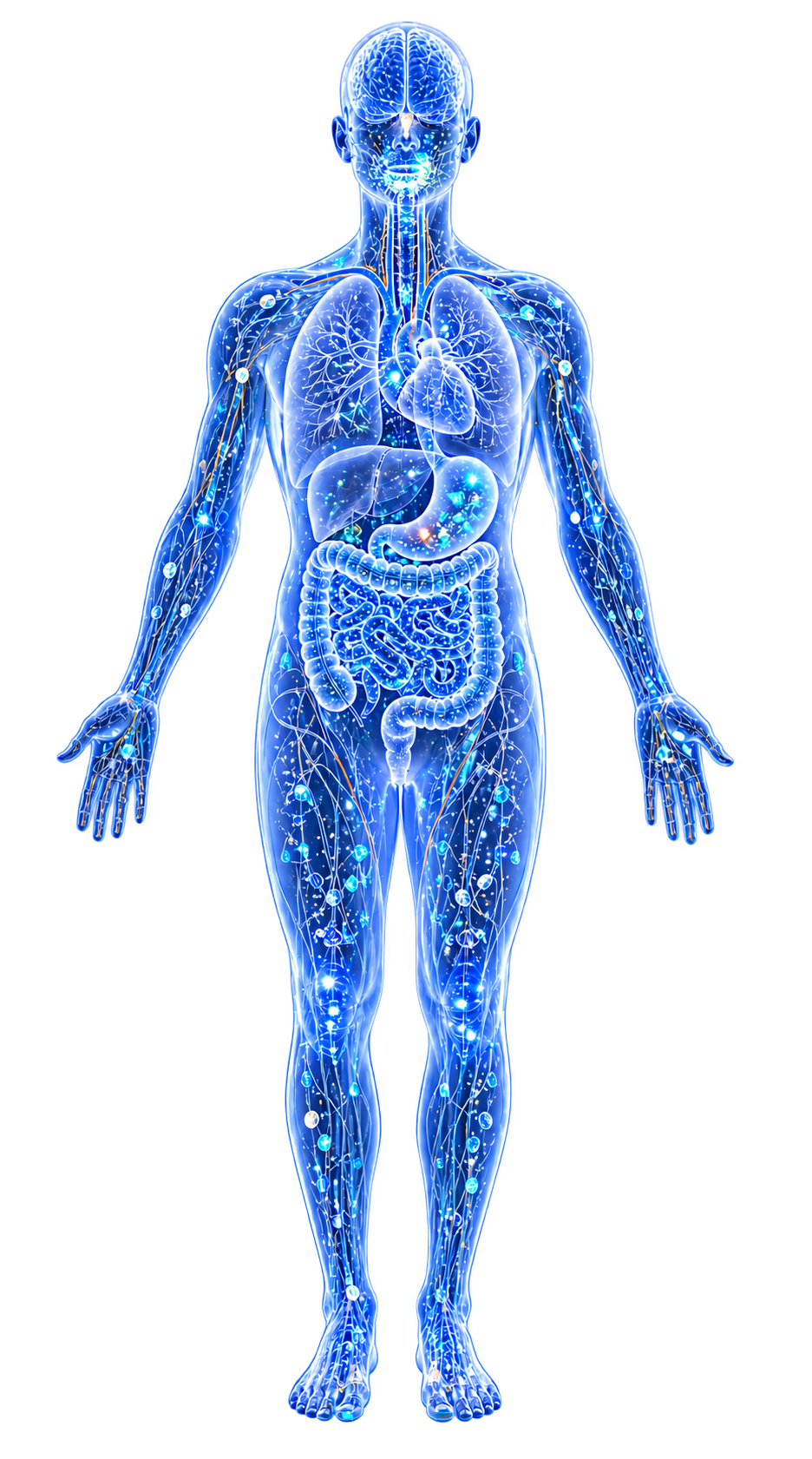
Indoxyl sulfate (IS) is a protein-bound uremic toxin produced through a two-step process: gut bacteria convert dietary tryptophan to indole, which is then absorbed and sulfated by hepatic sulfotransferases (SULT1A1).
IS exemplifies how Dysbiosis-driven metabolite overproduction creates systemic disease—it is both a consequence of gut microbial imbalance and a driver of further organ damage.
Evidence map3 cited passagesInspect provenance +
Creates a vicious cycle: kidney damage → reduced IS clearance → higher IS levels → more kidney damage.
Community shift toward fermentative and proteolytic species (Parabacteroides, Clostridium, Ruminococcus) in CKD stages 3-5D drives IS overproduction.
Shows escalation from dysmetabolism to ischemic heart disease in the MetaCardis cohort trajectory.
Contents
1. Biosynthesis Pathway2. Toxicity Mechanisms3. The Metal Connection4. Counteracting IS Production5. Clinical Significance6. Open Questions7. Cross-ReferencesBiosynthesis Pathway#
`` Dietary tryptophan │ ▼ (bacterial tryptophanase, TnaA) Indole │ ▼ (intestinal absorption → hepatic CYP2E1) Indoxyl │ ▼ (hepatic SULT1A1) Indoxyl sulfate │ ▼ (renal excretion or accumulation) Systemic circulation ``
Key producers: Proteobacteria (Pseudomonadota) (especially Escherichia coli) are the dominant tryptophanase-expressing organisms. Their enrichment in dysbiotic states directly increases IS production. Bacteroides, some Clostridium species, and other indole-producing bacteria also contribute.
Toxicity Mechanisms#
Nephrotoxicity#
IS is one of the most well-characterized uremic toxins in Chronic Kidney Disease. Directly damages renal tubular epithelial cells through Oxidative Stress and NF-kB activation. Promotes renal fibrosis via TGF-beta and SMAD signaling.
Creates a vicious cycle: kidney damage → reduced IS clearance → higher IS levels → more kidney damage.[1]Yasuno 2024 — Dysbiosis of Gut Microbiota in Patients with Chronic Kidney DiseaseTetsuhiko Yasuno, Koji Takahashi, Kazuhiro Tada et al. · 2024Open reference 1 ↓
Community shift toward fermentative and proteolytic species (Parabacteroides, Clostridium, Ruminococcus) in CKD stages 3-5D drives IS overproduction.[1]Yasuno 2024 — Dysbiosis of Gut Microbiota in Patients with Chronic Kidney DiseaseTetsuhiko Yasuno, Koji Takahashi, Kazuhiro Tada et al. · 2024Open reference 1 ↓
Cardiovascular Toxicity#
IS is a significant driver of cardiovascular disease in both CKD and non-CKD populations. Promotes vascular Metal-Driven Inflammation and endothelial dysfunction. Induces a procoagulant state by increasing tissue factor expression.
Inhibits endothelial wound healing.
Shows escalation from dysmetabolism to ischemic heart disease in the MetaCardis cohort trajectory.[2]Microbiota-derived tryptophan metabolites in vascular inflammation and cardiovascular diseaseNadja Paeslack, Maximilian Mimmler, Stefanie Becker et al. · 2022Open reference 2 ↓
Neurotoxicity#
IS is classified as neurotoxic, produced by Proteobacteria (Pseudomonadota) tryptophan metabolism Dopamine. Crosses the blood-brain barrier at elevated concentrations. May contribute to uremic encephalopathy and cognitive decline in CKD.
The Metal Connection#
Cadmium exposure upregulates indoxyl sulfate production, directly connecting metal exposure to the pro-atherogenic tryptophan metabolite pathway Cadmium, Cardiovascular Disease. The mechanism:
- cadmium (Cd) selectively kills metal-sensitive commensals (Lactobacillus, Clostridium Butyrate producers).
- Metal-resistant Proteobacteria (high tryptophanase activity) expand.
- Increased tryptophanase activity converts more tryptophan to indole.
- Hepatic sulfation produces more IS.
- IS accumulates, driving nephrotoxicity and cardiovascular damage.
This chain—metal exposure → dysbiosis → metabolite overproduction → organ damage—is a paradigm example of how metals cause disease through the microbiome rather than through direct toxicity alone.
Counteracting IS Production#
Several microbiome-derived metabolites oppose IS through the same tryptophan pathway:
| Metabolite | Effect | Source Organisms |
|---|---|---|
| Indole-3-acetic acid (IAA) | Anti-inflammatory; AhR activation | Bacteroides, Clostridium |
| Indole-3-aldehyde (3-IAld) | IL-10 promotion via AhR (Aryl Hydrocarbon Receptor) | Lactobacillus |
| Indole-3-propionic acid (IPA) | Barrier protection; antioxidant | Clostridium sporogenes |
| Indolelactic acid (ILA) | AhR-mediated immune regulation | Anaerostipes |
The balance between IS (pro-inflammatory, toxic) and beneficial indole derivatives (anti-inflammatory, protective) is determined by which bacteria dominate tryptophan metabolism. Dysbiosis favoring Proteobacteria tips the balance toward IS; a diverse community with Lactobacillus, Clostridium, and Anaerostipes tips it toward protective metabolites.
Clinical Significance#
IS levels serve as both a biomarker of dysbiosis and a predictor of disease progression. Elevated in CKD, CVD, and metabolic syndrome. Urinary IS correlates with disease stage in CKD.
Part of the uremic toxin triad (with p-cresyl sulfate and TMAO) that drives cardiorenal syndrome.
Open Questions#
Unresolved questions identified by the current evidence record.
01Can targeted reduction of IS-producing bacteria (e.g., Proteobacteria suppression) slow CKD progression?+
The current WikiBiome record identifies this as an unresolved evidence gap.
02Does IS contribute to cognitive decline in non-CKD populations through chronic low-level accumulation?+
The current WikiBiome record identifies this as an unresolved evidence gap.
03What is the quantitative relationship between dietary tryptophan intake and IS production in dysbiotic vs. healthy microbiomes?+
The current WikiBiome record identifies this as an unresolved evidence gap.
04Can oral adsorbents (e.g., AST-120) effectively reduce IS levels when combined with microbiome-targeted therapy?+
The current WikiBiome record identifies this as an unresolved evidence gap.
Cross-References#
- Chronic Kidney Disease—IS as driver of renal progression
- Cardiovascular Disease—IS as pro-atherogenic metabolite
- Cadmium—cadmium (Cd) exposure upregulates IS production
- Proteobacteria (Pseudomonadota)—primary IS-producing phylum
- Escherichia coli—major tryptophanase-expressing species
- Tryptophan Metabolism—broader tryptophan pathway context
- AhR (Aryl Hydrocarbon Receptor)—AhR activation by protective indole derivatives
- Microbiome-Derived Metabolites—broader metabolite framework
- dysbiosis—community disruption driving IS overproduction
- Serotonin—competing tryptophan pathway (serotonin vs. IS)
References 10
Numbered by first appearance in the article, then reconciled with its declared source list.
- 1
Tetsuhiko Yasuno, Koji Takahashi, Kazuhiro Tada et al. (2024). Yasuno 2024 — Dysbiosis of Gut Microbiota in Patients with Chronic Kidney Disease. Internal Medicine.
- 2
Nadja Paeslack, Maximilian Mimmler, Stefanie Becker et al. (2022). Microbiota-derived tryptophan metabolites in vascular inflammation and cardiovascular disease. Amino Acids.
- 3
Natalia A. Borges, Amanda F. Barros, Lia S. Nakao et al. (2016). Protein-Bound Uremic Toxins from Gut Microbiota and Inflammatory Markers in CKD. Journal of Renal Nutrition.
- 4
Juan J. Carrero, Ailema Gonzalez-Ortiz, Carla M. Avesani et al. (2020). Plant-Based Diets to Manage the Risks and Complications of Chronic Kidney Disease. Nature Reviews Nephrology.
- 5
Denise Mafra, Natalia A. Borges, Bo Lindholm et al. (2021). Food as Medicine: Targeting the Uraemic Phenotype in Chronic Kidney Disease. Nature Reviews Nephrology.
- 6
Wehedy, Ghali, Matboli (2022). Wehedy et al. 2022 — The Human Microbiome in CKD: A Double-Edged Sword. Frontiers in Medicine.
- 7
Jie Yu, Yulu Li, Bin Zhu et al. (2025). Research Progress on the Kidney-Gut-Brain Axis in Brain Dysfunction in Maintenance Hemodialysis Patients. Frontiers in Medicine.
- 8
Jean A. Hall, Matthew I. Jackson, Dennis E. Jewell et al. (2020). Hall et al. 2020 — CKD in Cats Alters Response of the Plasma Metabolome and Fecal Microbiome to Dietary Fiber. PLOS ONE.
- 9
Federica Gevi, Lello Zolla, Stefano Gabriele et al. (2016). Gevi 2016 — Urinary Metabolomics of Young Italian Autistic Children Supports Abnormal Tryptophan and Purine Metabolism. Molecular Autism.
- 10
A. Noce, M. Marchetti, G. Marrone et al. (2022). Noce 2022 — Link between Gut Microbiota Dysbiosis and Chronic Kidney Disease. European Review for Medical and Pharmacological Sciences.
Article network
Mentioned here 16
Pages linking here 3
Connect the evidence
Publicly readable discussion by ORCID-authenticated researchers. Questions, interpretation, methods, corrections, and new evidence stay attached to this record.
No discussion yet. Start with a precise question or a source-backed observation.
Published page changes
This record shows only material changes published on this page, including changes to its content, evidence, conclusions, or author context. Internal processes and discussion activity are excluded. Pending, declined, and withdrawn proposals remain private.
- published revision
Added references: borges-2016-uremic-toxins-inflammatory-markers-ckd; carrero-2020-plant-based-diets-ckd; mafra-2021-food-as-medicine-uraemic-phenotype-ckd; wehedy-2022-human-microbiome-ckd-double-edged-sword; yu-2025-kidney-gut-brain-axis-hemodialysis-brain-dysfunction;…
Added references: borges-2016-uremic-toxins-inflammatory-markers-ckd; carrero-2020-plant-based-diets-ckd; mafra-2021-food-as-medicine-uraemic-phenotype-ckd; wehedy-2022-human-microbiome-ckd-double-edged-sword; yu-2025-kidney-gut-brain-axis-hemodialysis-brain-dysfunction; hall-2020-ckd-cats-dietary-fiber-metabolome-microbiome; gevi-2016-urinary-metabolomics-italian-autistic-tryptophan-purine; noce-2022-gut-microbiota-dysbiosis-ckd-link. Removed references: paeslack-2022-tryptophan-metabolites-vascular-inflammation-cvd; yasuno-2024-dysbiosis-gut-microbiota-ckd-stages. · WikiBiome Deploy Bot · +20 −14
Inspect exact Git diff ↗ - published revision
Created “Indoxyl Sulfate”: Indoxyl sulfate (IS) is a protein-bound uremic toxin produced through a two-step process: gut bacteria convert dietary tryptophan to indole, which is then absorbed and sulfated by hepatic…
Created “Indoxyl Sulfate”: Indoxyl sulfate (IS) is a protein-bound uremic toxin produced through a two-step process: gut bacteria convert dietary tryptophan to indole, which is then absorbed and sulfated by hepatic… Published sections: Indoxyl Sulfate; Biosynthesis Pathway; Nephrotoxicity; Cardiovascular Toxicity; Neurotoxicity; The Metal Connection; Counteracting IS Production; Clinical Significance; Open Questions; Cross-References. · WikiBiome Deploy Bot · +116 −0
Inspect exact Git diff ↗