
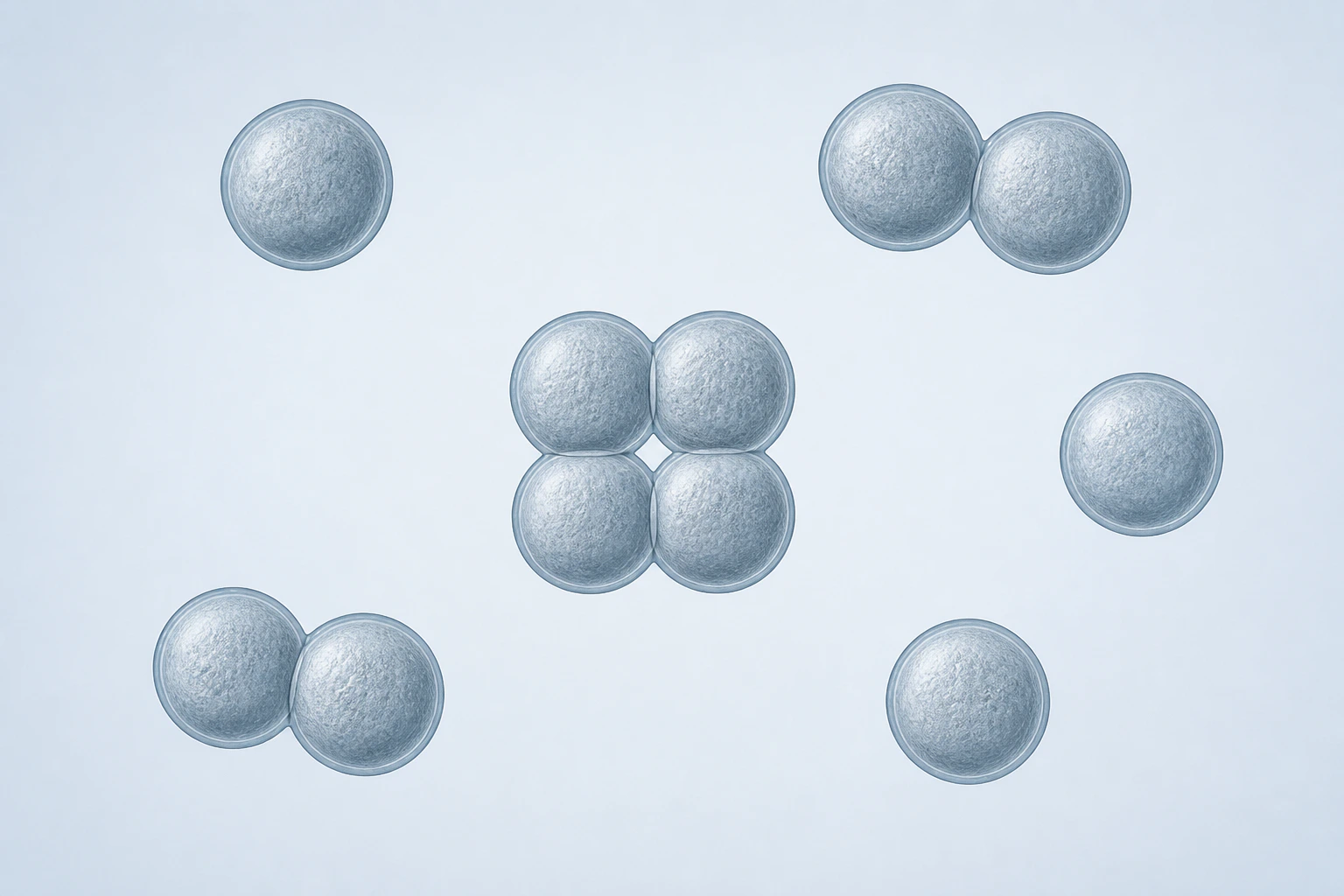
Selected type-species-anchored Deinococcus coccoid forms, shown as eleven bodies in three single, two paired, and one tetrad grouping. This reconstruction is representative, non-diagnostic, and not a micrograph.
Scientific media record1 verified identifier
- Subject
- Deinococcustaxon · genus
- Identifiers
- NCBITaxon:1298
- Review
- Editorial review completeIdentifiers authority-verified · Accessibility validated · · deinococcus|deinococcus-morphology-v1.webp
- Digital source
- Trained-algorithmic mediaCreated with a trained generative algorithm and reviewed by WikiBiome for subject identity, scientific framing, identifiers, provenance, and accessibility.
- Scientific basis
- Deinococcus — NCBI TaxonomyDeinococcus — LPSNDeinococcus gen. nov. primary proposalDeinococcus radiodurans type strain — BacDive
- License
- CC BY-SA 4.0Created
Deinococcus is a genus of extremophilic bacteria famous for extraordinary resistance to ionizing radiation, desiccation, and Oxidative Stress. D. radiodurans—"Conan the Bacterium"—can survive radiation doses 1,000 times greater than those lethal to humans.
This resilience is not primarily due to superior DNA repair, but to its remarkable manganese-based antioxidant system that protects proteins from oxidative damage.
Metal Dependencies#
The key to Deinococcus's radiation resistance lies in its accumulation of manganese in small-molecule complexes (manganese (Mn)-orthophosphate, manganese-peptide) that scavenge reactive oxygen species without enzymatic activity. This manganese-dependent antioxidant system maintains protein function during extreme oxidative stress, allowing DNA repair enzymes to work effectively.
The organism also requires iron for catalase and zinc for metalloregulatory proteins.
Ecological Role#
Deinococcus inhabits extreme environments—irradiated soils, desiccated deserts, high-altitude atmospheres. It is not a gut organism, but its biology illuminates a fundamental principle: the metal a bacterium accumulates determines its stress tolerance profile.
Organisms that shift from iron-centric to manganese-centric antioxidant strategies gain resistance to oxidative damage at the cost of metabolic versatility.
Relevance to WikiBiome#
Deinococcus provides the clearest natural demonstration that metal cofactor choice shapes survival strategy. The manganese-for-iron substitution paradigm it exemplifies—using redox-inert manganese (Mn) where iron (Fe) would generate damaging Fenton chemistry—is observed across gut bacteria facing inflammatory oxidative stress, connecting to Mis-Metallation and Cambialistic Enzymes.
Cross-References#
- Manganese—antioxidant defense system
- Iron—Fenton chemistry vulnerability
- Mis-Metallation—metal substitution under stress
- Cambialistic Enzymes—flexible metal cofactor usage
References 4
Numbered by first appearance in the article, then reconciled with its declared source list.
- 1
Xuening Chang, Yuchen Zhang, Xue Chen et al. (2024). Chang 2024 — Gut Microbiome and Serum Amino Acid Metabolome Alterations in ASD. Nature Scientific Reports.
- 2
Daiana A. Capdevila, Johnma J. Rondon, Katherine A. Edmonds et al. (2024). Capdevila 2024 — Bacterial Metallostasis: Metal Sensing, Metalloproteome Remodeling, and Metal Trafficking. Chemical Reviews.
- 3
Xuening Chang, Yuchen Zhang, Xue Chen et al. (2024). Gut microbiome and serum amino acid metabolome alterations in autism spectrum disorder. Scientific Reports.
- 4
Andres F Londono, Ajay Sharma, Venkatesan Kathiresan et al. (2025). Londono 2025 — EPR Spectroscopy Reveals Antioxidant Manganese Defenses in the Lyme Disease Pathogen Borrelia burgdorferi. mBio.
Article network
Mentioned here 5
Pages linking here 1
Connect the evidence
Publicly readable discussion by ORCID-authenticated researchers. Questions, interpretation, methods, corrections, and new evidence stay attached to this record.
No discussion yet. Start with a precise question or a source-backed observation.
Published page changes
This record shows only material changes published on this page, including changes to its content, evidence, conclusions, or author context. Internal processes and discussion activity are excluded. Pending, declined, and withdrawn proposals remain private.
- published revision
Added references: chang-2024-metabolome-amino-acids-asd; capdevila-2024-bacterial-metallostasis-sensing-trafficking; chang-2024-gut-microbiome-metabolome-asd; londono-2025-epr-manganese-antioxidant-borrelia-burgdorferi.
WikiBiome Deploy Bot · +10 −8
Inspect exact Git diff ↗ - published revision
Created “Deinococcus”: Deinococcus is a genus of extremophilic bacteria famous for extraordinary resistance to ionizing radiation, desiccation, and oxidative stress. D. radiodurans — "Conan the Bacterium" — can survive…
Created “Deinococcus”: Deinococcus is a genus of extremophilic bacteria famous for extraordinary resistance to ionizing radiation, desiccation, and oxidative stress. D. radiodurans — "Conan the Bacterium" — can survive… Published sections: Overview; Metal Dependencies; Ecological Role; Relevance to WikiBiome; Cross-References. · WikiBiome Deploy Bot · +58 −0
Inspect exact Git diff ↗