
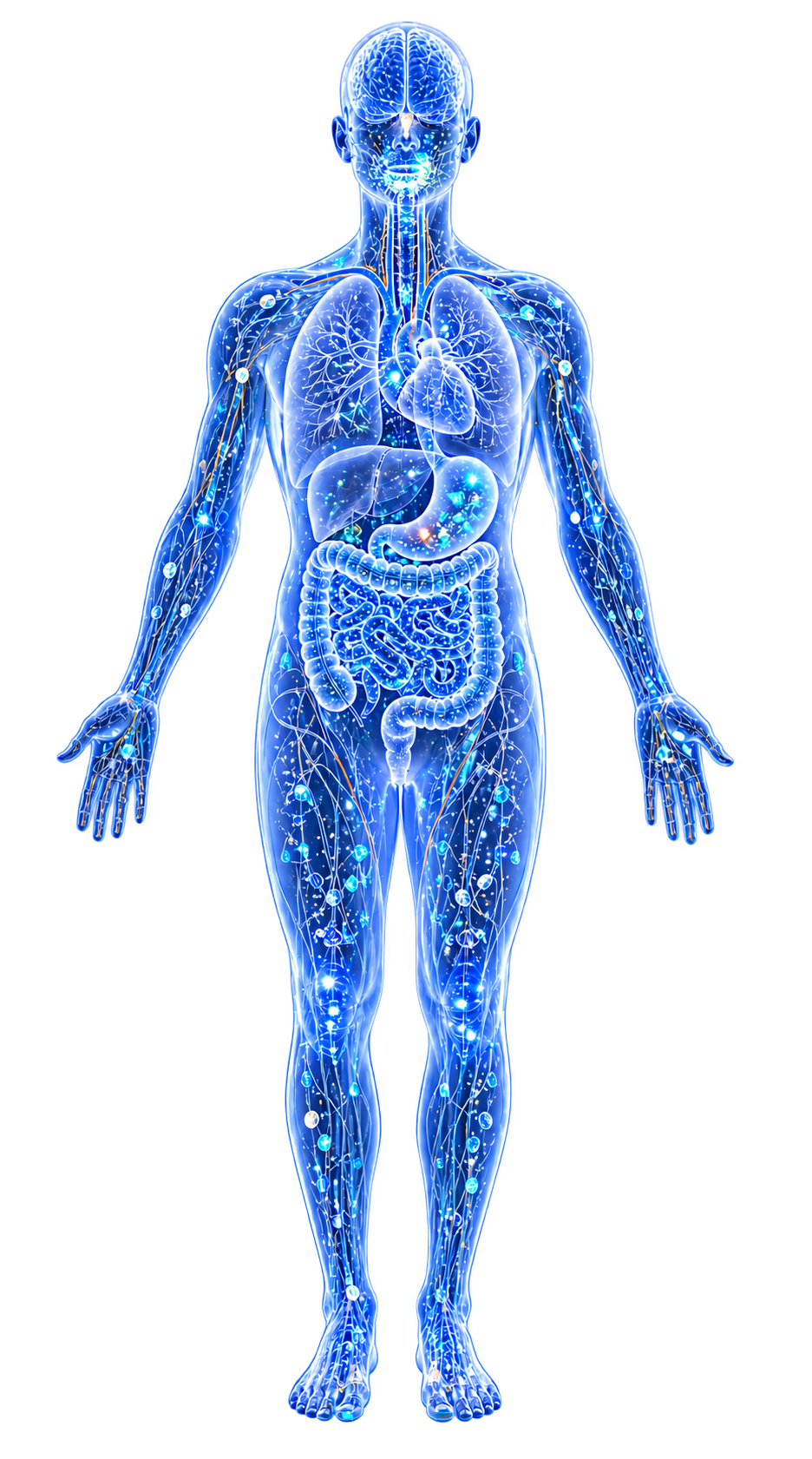
 metals · microbes · host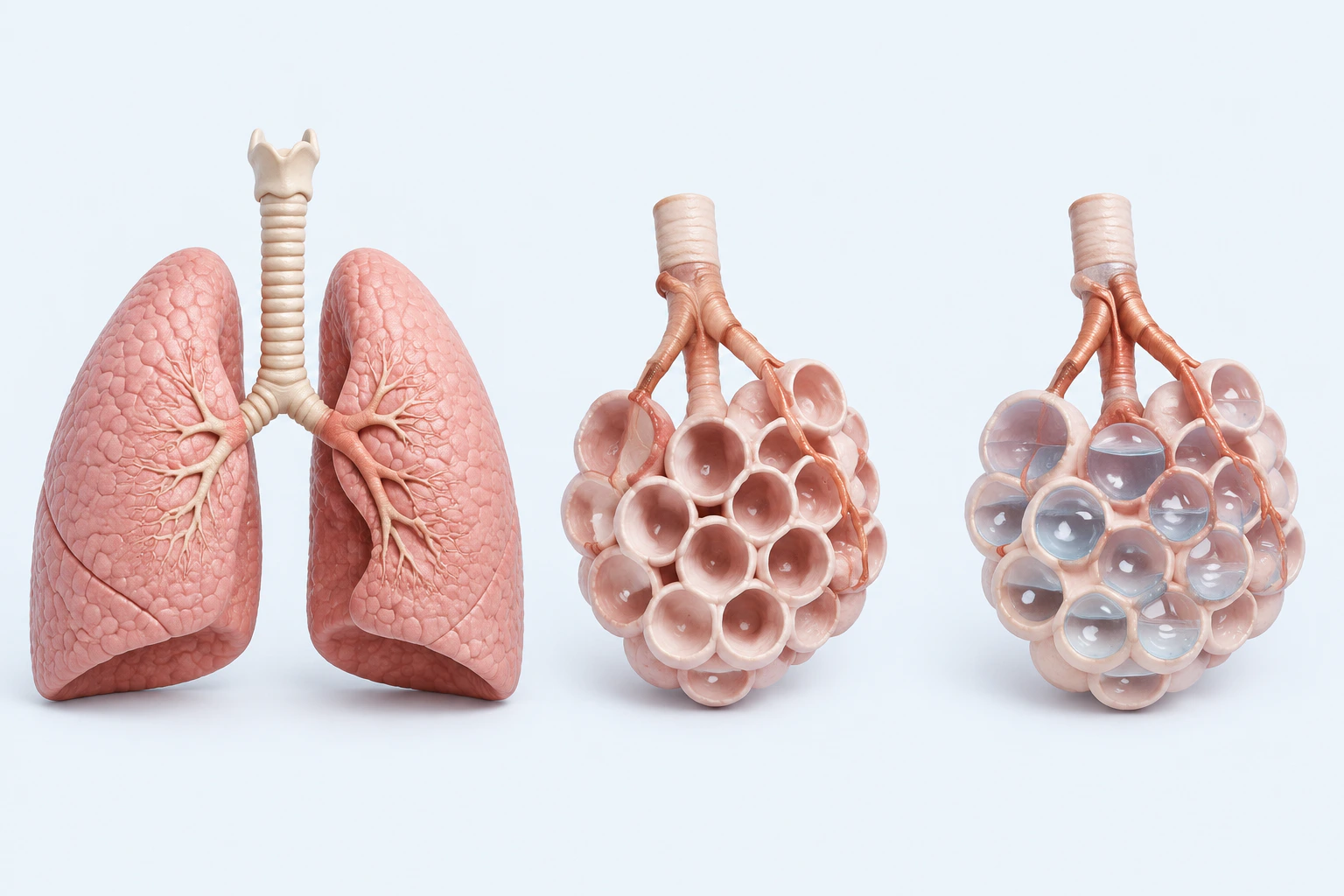
Representative pneumonia orientation without a specific pathogen, subtype, distribution, fluid composition, oxygenation, severity, treatment need, prognosis, or diagnosis.
Scientific media record1 verified identifier
- Subject
- Pneumoniacondition
- Identifiers
- MeSH:D011014
- Review
- Editorial review completeIdentifiers authority-verified · Accessibility validated · · pneumonia|pneumonia-pathology-v1.webp
- Digital source
- Trained-algorithmic mediaCreated with a trained generative algorithm and reviewed by WikiBiome for subject identity, scientific framing, identifiers, provenance, and accessibility.
- Scientific basis
- Pneumonia — MeSHWhat Is Pneumonia?
- License
- CC BY-SA 4.0Created
Pneumonia is infection of the lung parenchyma, most commonly caused by Streptococcus pneumoniae, Klebsiella pneumoniae, Haemophilus influenzae, and viruses (influenza, SARS-CoV-2).
In the WikiBiome framework, pneumonia exemplifies the metal battleground at the host-pathogen interface—the outcome of infection depends on the competition for zinc, manganese, and iron between host nutritional immunity and pathogen metal acquisition systems.
Evidence map4 cited passagesInspect provenance +
Zinc vs. manganese: Host calprotectin sequesters both Zn and Mn at infection sites. S. pneumoniae responds by upregulating high-affinity Mn transporters (PsaA) to maintain Mn-SOD defense against oxidative killing. Zinc can directly inhibit pneumococcal manganese uptake, providing a mechanistic basis for zinc supplementation in pneumonia.
Iron: Pneumonia pathogens deploy siderophores and heme acquisition systems; host hepcidin elevation during infection restricts systemic iron.
Infection metallomics: Siderophore and metallophore detection in patient specimens enables pathogen identification and outcome prediction in critical care.
COVID-19 pneumonia is compounded by gut barrier failure and endotoxemia.
One disease. Five evidence layers.
A generated systems view of the metals, organisms, host sequestration signals, ecological conditions, and microbial functions indexed for Pneumonia.
Evidence layer
Taxonomic signature
Organisms reported as enriched or depleted, with their indexed functional context kept beside the name.No structured taxa indexed yet.
No structured taxa indexed yet.
Evidence layer
Nutritional immunity
Host metal-withholding, inflammatory, antioxidant, and microbial-metabolite signals indexed in the signature.Elevated host signals
0No structured signals indexed yet.
Depleted protective signals
0No structured signals indexed yet.
Evidence layer
Ecological state
The environmental conditions that connect the organism-level observations into a system.No structured ecological features indexed yet.
Evidence layer
Virulence functions
Microbial structures, enzymes, and acquisition systems implicated by the linked evidence.No structured virulence functions indexed yet.
The disease record, in full.
The original WikiBiome disease narrative remains intact beneath the generated signature atlas.
Metal Ecology#
Zinc vs. manganese: Host Calprotectin (S100A8/A9) sequesters both zinc (Zn) and manganese (Mn) at infection sites. S. pneumoniae responds by upregulating high-affinity manganese transporters (PsaA) to maintain manganese-SOD defense against oxidative killing.
Zinc can directly inhibit pneumococcal manganese uptake, providing a mechanistic basis for zinc supplementation in pneumonia.[1]Eijkelkamp et al. 2014 — Extracellular Zinc Competitively Inhibits Manganese Uptake in Streptococcus pneumoniaeBart A. Eijkelkamp, Jacqueline R. Morey, Stephanie L. Neville et al. · 2014Open reference 1 ↓
Iron: Pneumonia pathogens deploy siderophores and heme acquisition systems; host Hepcidin elevation during infection restricts systemic iron.[2]Infection metallomics for critical care in the post-COVID eraPatil RH, Luptakova D, Havlicek V · 2021Open reference 2 ↓
Infection metallomics: Siderophore and metallophore detection in patient specimens enables pathogen identification and outcome prediction in critical care.[2]Infection metallomics for critical care in the post-COVID eraPatil RH, Luptakova D, Havlicek V · 2021Open reference 2 ↓
Gut-Lung Axis#
Gut Dysbiosis increases pneumonia susceptibility via impaired systemic immune priming. COVID-19 pneumonia is compounded by gut barrier failure and Endotoxemia.[3]Brown et al. 2024 — Pathophysiology, Diagnosis, and Management of Neuroinflammation in COVID-19Rachel L Brown, Laura Benjamin, Michael P Lunn et al. · 2024Open reference 3 ↓ Antibiotic treatment of pneumonia disrupts gut Colonization Resistance, enabling secondary infections.
Cross-References#
- Streptococcus pneumoniae—primary bacterial pathogen
- Klebsiella—Gram-negative pneumonia pathogen
- Calprotectin (S100A8/A9)—host zinc (Zn)/manganese (Mn) sequestration at infection site
- Zinc—inhibits pneumococcal manganese uptake
- Nutritional Immunity (Metal Sequestration)—metal restriction as antimicrobial defense
- Sepsis—pneumonia as leading cause of sepsis
References 5
Numbered by first appearance in the article, then reconciled with its declared source list.
- 1
Bart A. Eijkelkamp, Jacqueline R. Morey, Stephanie L. Neville et al. (2014). Eijkelkamp et al. 2014 — Extracellular Zinc Competitively Inhibits Manganese Uptake in Streptococcus pneumoniae. PLoS ONE.
- 2
★Patil RH, Luptakova D, Havlicek V (2021). Infection metallomics for critical care in the post-COVID era. Mass Spectrometry Reviews.
- 3
Rachel L Brown, Laura Benjamin, Michael P Lunn et al. (2024). Brown et al. 2024 — Pathophysiology, Diagnosis, and Management of Neuroinflammation in COVID-19. BMJ (British Medical Journal).
- 4
Srivastava J, Chandra H, Singh N et al. (2016). Understanding the Development of Environmental Resistance Among Microbes: A Review. Clean - Soil, Air, Water.
- 5
Achdout H, Vitner EB, Politi B et al. (2021). Increased lethality in influenza and SARS-CoV-2 coinfection is prevented by influenza immunity but not SARS-CoV-2 immunity. Nature Communications.
Article network
Connect the evidence
Publicly readable discussion by ORCID-authenticated researchers. Questions, interpretation, methods, corrections, and new evidence stay attached to this record.
No discussion yet. Start with a precise question or a source-backed observation.
Activity and accepted changes
Accepted researcher context, editorial status, public discussion, and upstream Git revisions are shown together. Pending, declined, and withdrawn proposals remain private.
- published revision
Complete corpus-wide Dysbiosis linking
Karen Pendergrass · +1 −1
Inspect exact Git diff ↗ - published revision
massive wiki expansion: 149 stubs fixed, 100+ new pages, Rule 15 scan, keystone papers
WikiBiome Deploy Bot · +47 −0
Inspect exact Git diff ↗