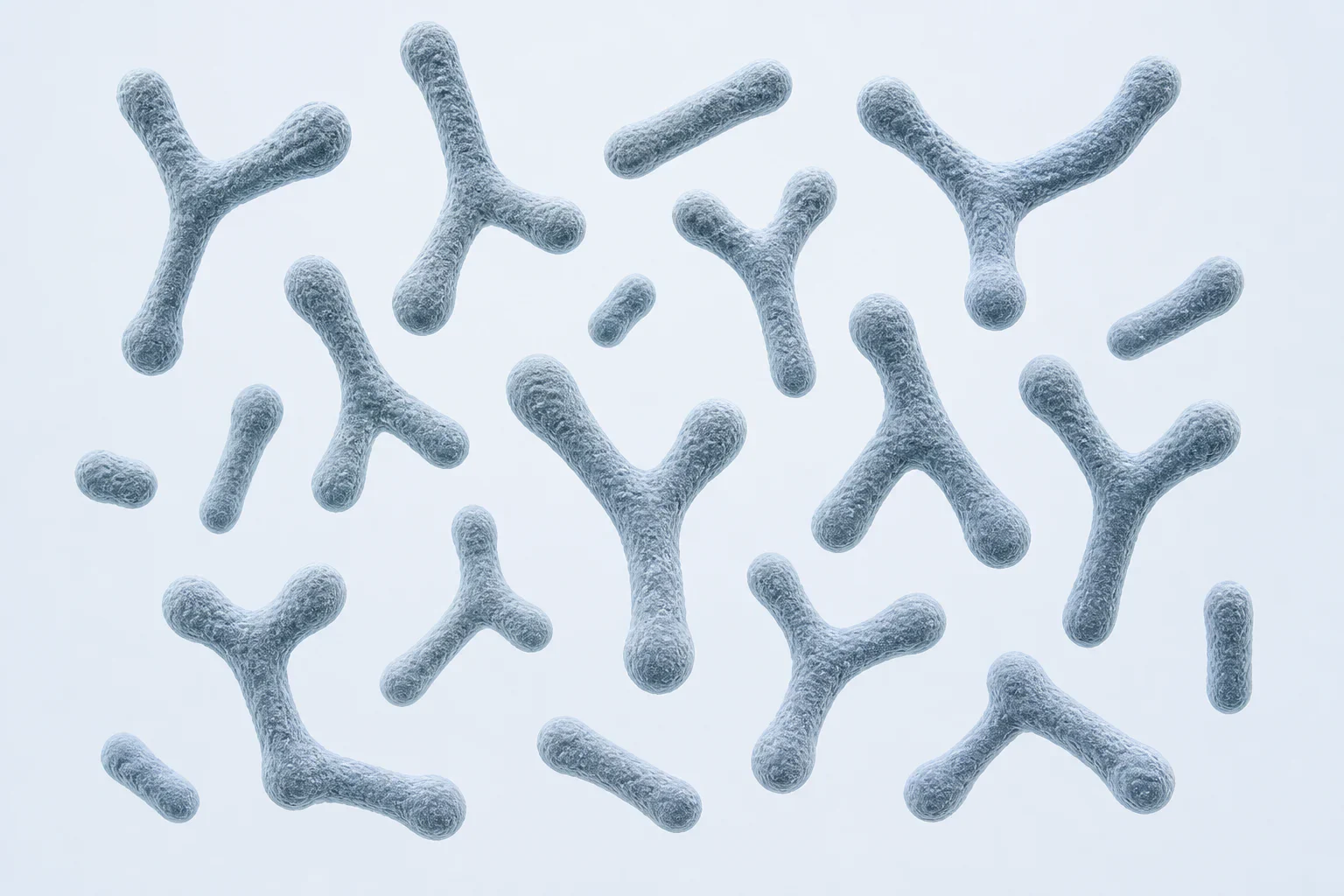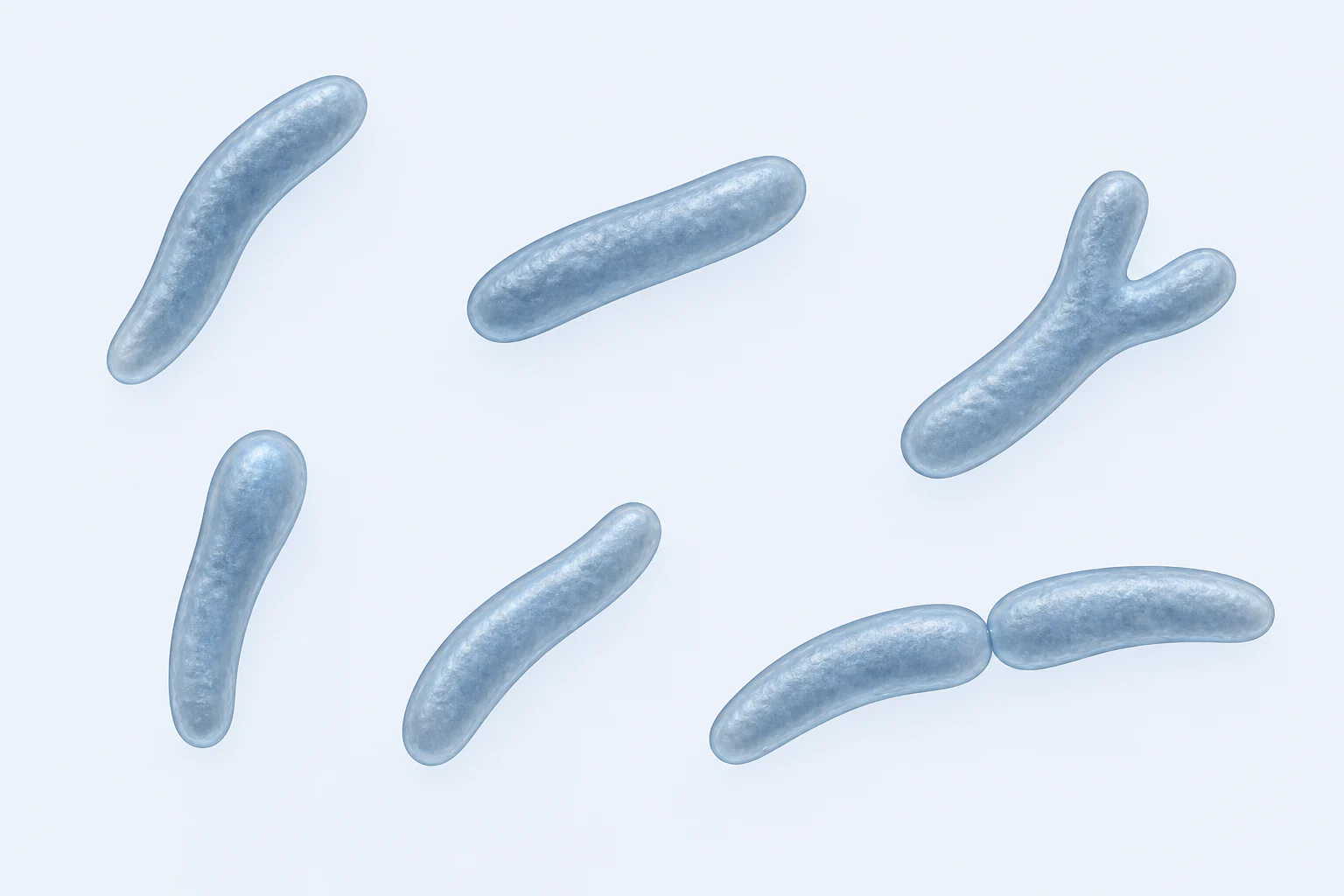
Actinobacteria (Actinomycetota)
This knowledge-base record is being expanded from WikiBiome’s evidence graph.
WikiBiomeThe human microbiome encyclopediaRanked matches across titles, topics, categories, and article introductions, filtered to microbe.
This knowledge-base record is being expanded from WikiBiome’s evidence graph.
Alloprevotella is a genus of Gram-negative, obligate anaerobic bacteria within the family Prevotellaceae that represents a distinct clade from prevotella with specific protective roles in type 2 diabetes prevention and metabolic health. Alloprevotella depletion is one o…
A genus of Gram-positive obligate anaerobes in the family Lachnospiraceae (Clostridium cluster XIVa) that occupy a critical metabolic relay position in gut ecosystem stability: converting lactate to butyrate. Anaerostipes is one of the most consistently depleted genera …
Bacteroidales is an order of obligate anaerobic, Gram-negative bacteria within the phylum Bacteroidetes. It includes the families Bacteroidaceae (bacteroides), Prevotellaceae (prevotella), Rikenellaceae, and Porphyromonadaceae (porphyromonas). Bacteroidales are among th…
A Gram-negative obligate anaerobe that exemplifies the commensal-pathobiont spectrum. B. vulgatus is a common component of the healthy gut microbiota, yet is significantly enriched in colorectal cancer and depression, suggesting a context-dependent pathogenic potential.…
Bifidobacteriaceae is the family containing bifidobacterium and related genera (alloscardovia). It is the dominant family in the healthy infant gut and a significant commensal family in adults. Family-level depletion is documented in ASD (marked reduction of Actinobacte…
This knowledge-base record is being expanded from WikiBiome’s evidence graph.
A genus of Gram-positive, obligate anaerobic bacteria that dominate the infant gut microbiome and remain important commensals throughout life. Bifidobacterium species are distinctive in the metallomics context because some species possess Ni-dependent urease -- an unusu…
Bifidobacterium adolescentis is a Gram-positive, obligate anaerobic species within the phylum Actinobacteria and the dominant Bifidobacterium species in the adult human gut. It is a specialist degrader of resistant starch and dietary fiber, producing acetate and lactate…
Bifidobacterium bifidum is an obligate anaerobic, Gram-positive species that specializes in human milk oligosaccharide (HMO) and mucin glycan degradation. It is one of the earliest colonizers of the infant gut and a widely used probiotic species.
A genus of Gram-positive, obligate anaerobic bacteria within the lachnospiraceae family that produces short chain fatty acids and plays a significant role in bile acid metabolism. Key species include B. obeum, B. wexlerae, B. hydrogenotrophica, and B. producta. While pr…
Christensenellaceae is a family of Gram-negative, strictly anaerobic bacteria within the order Clostridiales (phylum Firmicutes) that has emerged as one of the most consistently health-associated and heritable members of the human gut microbiome. First formally describe…
A class of Gram-positive, obligate anaerobic bacteria within the phylum Firmicutes that represents the most functionally diverse and clinically significant taxonomic class in the human gut microbiome. Clostridia encompasses the dominant butyrate producers sustaining col…
An order of Gram-positive, obligate anaerobic bacteria within the class clostridia (phylum Firmicutes) that represents the single most functionally important taxonomic group in the human gut. Clostridiales encompasses the major butyrate-producing families (lachnospirace…
Clostridium symbiosum is a Gram-positive, obligately anaerobic bacterium within the Clostridium cluster XIVa — a taxonomic group enriched for short-chain fatty acid (SCFA) producers and specialized bile acid metabolizers. Despite its ambiguous name (suggesting symbiotic…
A genus of Gram-positive, obligate anaerobic bacteria within the Firmicutes phylum that includes several of the most important butyrate producers in the human colon. Key species are E. rectale, E. hallii (now reclassified as Anaerobutyricum hallii), and E. limosum. Cons…
This knowledge-base record is being expanded from WikiBiome’s evidence graph.
Eubacterium rectale (recently reclassified as Agathobacter rectalis) is a Gram-positive, strictly anaerobic, non-spore-forming bacterium that belongs to Clostridium cluster XIVa within the lachnospiraceae family. It is one of the most abundant butyrate producers in the …
Faecalibacterium is a genus of obligate anaerobic, Gram-positive bacteria in the family Ruminococcaceae (phylum Firmicutes). It is the most abundant genus in the healthy human colon (5–15% of fecal bacteria) and its depletion is the single most reproducible microbiome f…
This knowledge-base record is being expanded from WikiBiome’s evidence graph.
Lachnoclostridium is a genus of obligate anaerobic, Gram-positive bacteria in the lachnospiraceae family. It is a butyrate-producing commensal with emerging clinical significance as a treatment response biomarker and diagnostic marker.
Lachnospira is a genus of Gram-positive, obligate anaerobic bacteria within the lachnospiraceae family (Firmicutes phylum). L. pectinoschiza, the type species, is a specialist pectin fermenter that produces short chain fatty acids from plant-derived polysaccharides. The…
A family within the Firmicutes phylum (order Clostridiales, formerly Clostridium cluster XIVa) that serves as a sentinel indicator of gut health -- its depletion is the single most consistent microbiome signature across nearly every disease represented in this wiki. The…
This page serves as the family-level hub for Lachnospiraceae, connecting the individual genus and species pages (roseburia, blautia, anaerostipes, eubacterium rectale) with the overarching ecological and metabolic framework that defines the family. For the primary entit…
This knowledge-base record is being expanded from WikiBiome’s evidence graph.
Megasphaera is a genus of obligate anaerobic, Gram-negative bacteria in the family Veillonellaceae (class Negativicutes, phylum Firmicutes). The genus occupies two distinct ecological niches — the vaginal microbiome (where it is a hallmark of bacterial vaginosis) and th…
Odoribacter splanchnicus is a Gram-negative, obligate anaerobic bacterium belonging to the family Odoribacteraceae within the phylum Bacteroidota (formerly Bacteroidetes). It is a commensal resident of the human colon recognized primarily as a producer of short chain fa…
A family of Gram-positive obligate anaerobes (formerly classified as the genus Oscillospira, now reclassified into Oscillibacter and related genera within Oscillospiraceae) that serve as keystone butyrate producers in the healthy human distal colonic microbiota (Konikof…
An order of Gram-positive, obligate anaerobic bacteria within the class Clostridia (phylum Firmicutes) that has emerged as one of the most consistent markers of a healthy gut ecosystem. Oscillospirales members are butyrate producers associated with leanness and metaboli…
A family of Gram-negative, obligate anaerobic bacteria within the phylum Bacteroidota (formerly Bacteroidetes) that includes the genus prevotella and the recently described alloprevotella. Prevotellaceae are specialist fiber fermenters producing short-chain fatty acids,…
A genus of Gram-positive, obligate anaerobic, flagellated bacteria within the lachnospiraceae family that ranks among the most important butyrate producers in the human gut. Key species include R. intestinalis and R. hominis. Roseburia is consistently depleted across in…
Ruminococcaceae is a family of obligate anaerobic, Gram-positive bacteria in the order Clostridiales (phylum Firmicutes) that represents one of the most important butyrate-producing and fiber-degrading families in the human gut. Key genera include faecalibacterium (incl…
Ruminococcus albus is a Gram-positive, obligate anaerobic bacterium that represents one of the primary cellulolytic (fiber-degrading) specialists in the human gut microbiota. This species constructs cellulosomes — extraordinary multi-enzyme complexes organized on bacter…
This knowledge-base record is being expanded from WikiBiome’s evidence graph.
A Gram-positive obligate anaerobe that has emerged as a pro-inflammatory pathobiont enriched across multiple disease states including crohns disease, depression, and multiple sclerosis. R. gnavus produces a species-specific inflammatory polysaccharide that activates int…
<!-- Auto-created stub from Rule 13 scope discovery. 12 source pages mention this taxon. Awaiting content expansion. --
A family of Gram-negative, obligate anaerobic bacteria within the Firmicutes phylum (class Negativicutes) that occupies a unique metabolic niche as specialized lactate utilizers. Veillonellaceae cannot ferment sugars directly -- instead, they cross-feed on lactate produ…