

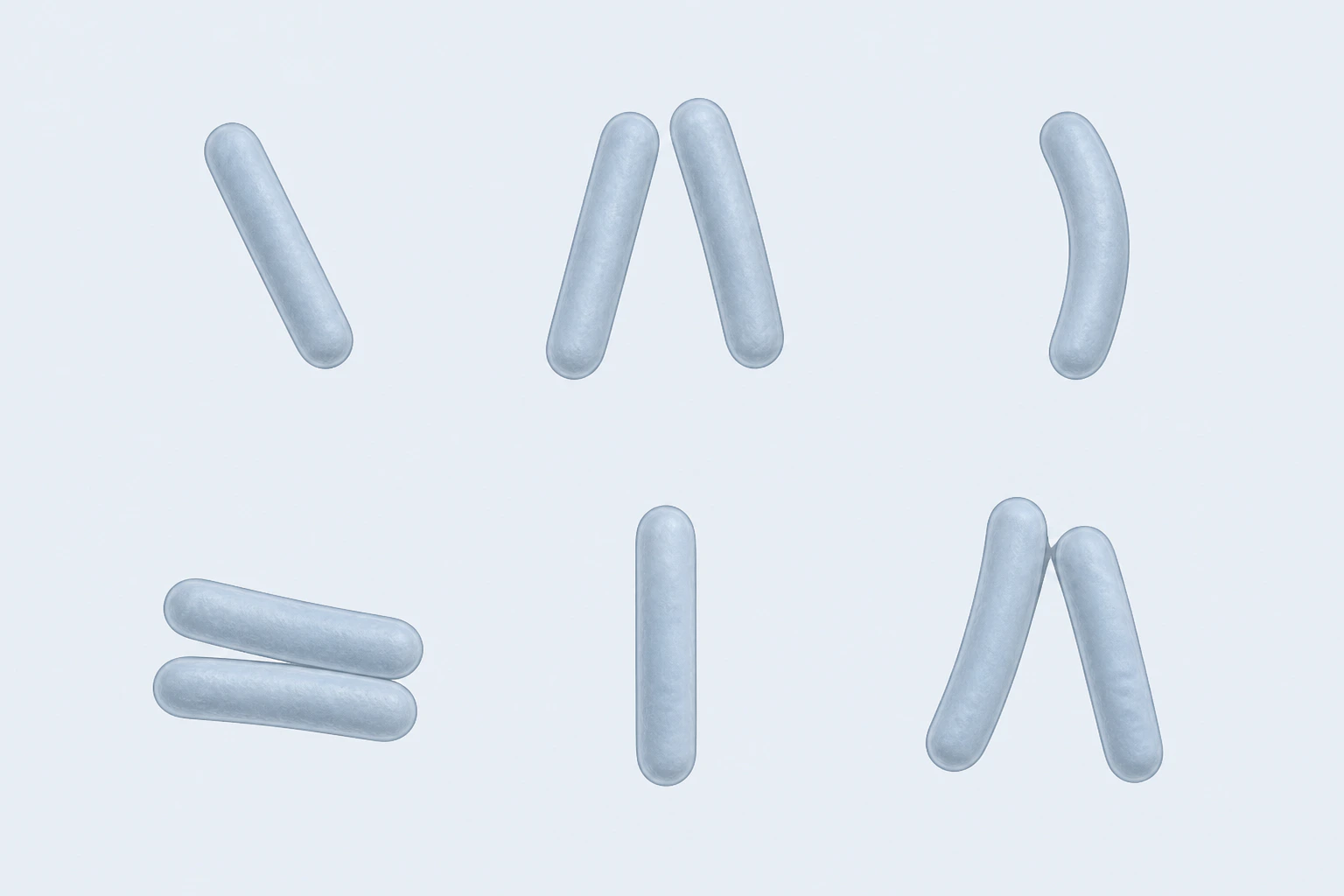
Selected type-genus-anchored rod forms for Clostridia, shown as nine bodies in six groupings. This class-level reconstruction is representative, non-exhaustive, non-diagnostic, and makes no class-wide sporulation or motility claim.
Scientific media record1 verified identifier
- Subject
- Clostridiataxon · class
- Identifiers
- NCBITaxon:186801
- Review
- Editorial review completeIdentifiers authority-verified · Accessibility validated · · clostridia|clostridia-microbial-community-v1.webp
- Digital source
- Trained-algorithmic mediaCreated with a trained generative algorithm and reviewed by WikiBiome for subject identity, scientific framing, identifiers, provenance, and accessibility.
- Scientific basis
- Clostridia — NCBI TaxonomyClostridia — LPSNClostridium butyricum — LPSNClostridium butyricum primary morphology report
- License
- CC BY-SA 4.0Created
A class of Gram-positive, obligate anaerobic bacteria within the phylum Firmicutes that represents the most functionally diverse and clinically significant taxonomic class in the human Gut Microbiome.
Clostridia encompasses the dominant Butyrate producers sustaining colonic health, the spore-forming bacteria regulating 90% of the body's serotonin production, and some of the most dangerous human pathogens (Clostridioides difficile, Clostridium perfringens, C. botulinum, C. tetani).
This extraordinary functional range means class-level statements about Clostridia enrichment or depletion must always be interpreted with sub-class resolution.
Evidence map4 cited passagesInspect provenance +
Class Clostridia is a causal risk factor for schizophrenia (OR = 1.16, 95% CI 1.01-1.33, MR). This class-level signal likely reflects specific sub-lineages rather than all Clostridia, but the directionality is established: genetically determined higher Clostridia abundance increases schizophrenia risk. The finding contrasts with Clostridia's health-promoting
Acute pancreatitis decreases Firmicutes, Tenericutes, Clostridia, and mollicutes, consistent with the broader pattern of Clostridia depletion in acute inflammatory conditions.
(Mendelian randomization, n=148,984)—Established class Clostridia as a causal schizophrenia risk factor (OR 1.16); resolved directionality via bidirectional MR.
(Mendelian randomization)—Clostridia depleted in acute pancreatitis.
Contents
1. Taxonomy2. Metal Dependencies3. Key Functions4. Conditions Associated5. Key Studies6. Cross-ReferencesTaxonomy#
Class Clostridia, phylum Firmicutes. Major orders include Eubacteriales (historically called Clostridiales in many microbiome sources), Oscillospirales, Peptostreptococcales, and Tissierellales; exact membership varies across classification systems. Key health-associated families: Lachnospiraceae, Ruminococcaceae, Christensenellaceae, Oscillospiraceae.
Key pathogenic families: Clostridiaceae, Peptostreptococcaceae.
Taxonomic note: Clostridia has been heavily reclassified in recent years. The original genus Clostridium was polyphyletic, containing over 200 species now distributed across multiple families and orders.
Metal Dependencies#
Iron. Ferredoxin-dependent metabolism is the hallmark of Clostridia biochemistry. Iron-sulfur cluster proteins enable electron transfer in butyrate synthesis, amino acid fermentation, and hydrogen production.
Clostridia's iron requirements are significant but typically met through passive ferrous iron uptake rather than siderophore-mediated scavenging.
Selenium. Selenoproteins (selenocysteine-containing enzymes) are particularly abundant in Clostridia, including glycine reductase and formate dehydrogenase. Host selenium status directly influences the metabolic capacity of Clostridia.
Cobalt. Corrinoid-dependent enzymes support one-carbon metabolism. Several Clostridia synthesize vitamin B12 de novo, contributing to host B12 supply.
Key Functions#
Serotonin Regulation#
Spore-forming Clostridia (primarily clusters IV and XIVa) stimulate enterochromaffin (EC) cells to produce serotonin. Since EC cells produce over 90% of the body's serotonin, Clostridia are arguably the single most important microbial regulator of serotonin biology Serotonin.
This makes Clostridia directly relevant to gut motility, mood regulation, bone metabolism, and pain perception.
Butyrate Production and Immune Regulation#
Clostridia clusters IV and XIVa are the most potent microbial inducers of colonic regulatory T cells (Tregs). Their SCFA production—particularly butyrate—supports. Colonocyte energy metabolism.
Anti-inflammatory signaling via HDAC inhibition. Gut barrier integrity via tight junction protein expression.
Cancer immune surveillance.
Spore Formation#
The ability to form endospores allows Clostridia to survive antibiotic exposure, gastric transit, and environmental extremes. This is clinically relevant: C. difficile spores persist in hospital environments and enable recurrent infection after antibiotic-mediated Dysbiosis.
Conditions Associated#
Schizophrenia (Causal Risk Factor)#
Class Clostridia is a causal risk factor for schizophrenia (OR = 1.16, 95% CI 1.01-1.33, MR).[1]Zhou 2024 — Gut Microbiome and Schizophrenia: Insights from Two-Sample Mendelian RandomizationKeer Zhou, Ancha Baranova, Hongbao Cao et al. · 2024Open reference 1 ↓ This class-level signal likely reflects specific sub-lineages rather than all Clostridia, but the directionality is established: genetically determined higher Clostridia abundance increases schizophrenia risk.
The finding contrasts with Clostridia's health-promoting roles, underscoring the class's functional diversity.
Pancreatitis (Depleted)#
Acute pancreatitis decreases Firmicutes, Tenericutes, Clostridia, and Mollicutes,[2]Causal link between gut microbiota and four types of pancreatitis: a genetic association and bidirectional Mendelian randomization studyKui Wang, Xianzheng Qin, Taojing Ran et al. · 2023Open reference 2 ↓ consistent with the broader pattern of Clostridia depletion in acute inflammatory conditions.
Multiple Sclerosis and Crohn's Disease (Depleted)#
Clostridia clusters IV and XIVa are consistently depleted in MS and CD, representing the loss of Treg-inducing butyrate producers.
Key Studies#
[1]Zhou 2024 — Gut Microbiome and Schizophrenia: Insights from Two-Sample Mendelian RandomizationKeer Zhou, Ancha Baranova, Hongbao Cao et al. · 2024Open reference 1 ↓ (Mendelian randomization, n=148,984)—Established class Clostridia as a causal schizophrenia risk factor (OR 1.16); resolved directionality via bidirectional MR.
[2]Causal link between gut microbiota and four types of pancreatitis: a genetic association and bidirectional Mendelian randomization studyKui Wang, Xianzheng Qin, Taojing Ran et al. · 2023Open reference 2 ↓ (Mendelian randomization)—Clostridia depleted in acute pancreatitis.
Cross-References#
- Eubacteriales—current correct name for NCBITaxon:186802; Clostridiales is retained as a historical synonym
- Lachnospiraceae—the dominant health-associated family
- Ruminococcaceae—a second major butyrate-producing family
- Serotonin—spore-forming Clostridia stimulate EC cell serotonin production
- butyrate—the key beneficial metabolite
- Schizophrenia—Clostridia as causal risk factor via MR
- Clostridioides difficile—the pathogenic counterpart within the class
- Betaproteobacteria—co-identified as schizophrenia risk taxon
- Veillonellaceae—causally protective in the same schizophrenia MR study
References 10
Numbered by first appearance in the article, then reconciled with its declared source list.
- 1
Keer Zhou, Ancha Baranova, Hongbao Cao et al. (2024). Zhou 2024 — Gut Microbiome and Schizophrenia: Insights from Two-Sample Mendelian Randomization. Schizophrenia (Nature Partner Journal).
- 2
Kui Wang, Xianzheng Qin, Taojing Ran et al. (2023). Causal link between gut microbiota and four types of pancreatitis: a genetic association and bidirectional Mendelian randomization study. Frontiers in Microbiology.
- 3
Atabilen B, Akdevelioglu Y (2022). Effects of Different Dietary Interventions in Multiple Sclerosis: A Systematic Review of Evidence from 2018 to 2022. Nutritional Neuroscience.
- 4
Zhuye Jie, Huihua Xia, Shi-Long Zhong et al. (2017). The gut microbiome in atherosclerotic cardiovascular disease. Nature Communications.
- 5
Svensson A, Brunkwall L, Roth B et al. (2021). Associations Between Endometriosis and Gut Microbiota. Reproductive Sciences.
- 6
Natalia A. Borges, Amanda F. Barros, Lia S. Nakao et al. (2016). Protein-Bound Uremic Toxins from Gut Microbiota and Inflammatory Markers in CKD. Journal of Renal Nutrition.
- 7
Lucia N. Peralta-Marzal, David Rojas-Velazquez, Douwe Rigters et al. (2024). Peralta-Marzal 2024 — A Robust Microbiome Signature for Autism Spectrum Disorder Across Different Studies Using Machine Learning. Scientific Reports.
- 8
Docimo G, Cangiano A, Romano RM et al. (2020). Docimo et al. 2020 — The Human Microbiota in Endocrinology: Implications for Pathophysiology, Treatment, and Prognosis in Thyroid Diseases. Frontiers in Endocrinology.
- 9
Adriel Latorre-Pérez, Marta Hernández, Jose Ramón Iglesias et al. (2021). Latorre-Pérez 2021 — The Spanish Gut Microbiome Reveals Links Between Microorganisms and Mediterranean Diet. Scientific Reports.
- 10
Swidsinski A, Dorfel Y, Loening-Baucke V et al. (2017). Reduced Mass and Diversity of the Colonic Microbiome in Patients with Multiple Sclerosis and Their Improvement with Ketogenic Diet. Frontiers in Microbiology.
Article network
Mentioned here 16
Pages linking here 5
Connect the evidence
Publicly readable discussion by ORCID-authenticated researchers. Questions, interpretation, methods, corrections, and new evidence stay attached to this record.
No discussion yet. Start with a precise question or a source-backed observation.
Published page changes
This record shows only material changes published on this page, including changes to its content, evidence, conclusions, or author context. Internal processes and discussion activity are excluded. Pending, declined, and withdrawn proposals remain private.
- published revision
Revised “Clostridia”: now reads “of the most dangerous human pathogens (clostridioides difficile, clostridium perfringens, C. botulinum, C.”.
Revised “Clostridia”: changed “of the most dangerous human pathogens (clostridium difficile, clostridium perfringens, C. botulinum, C.” to “of the most dangerous human pathogens (clostridioides difficile, clostridium perfringens, C. botulinum, C.”. Revised “Cross-References”: changed “causal risk factor via MR - clostridium difficile -- the pathogenic counterpart within” to “causal risk factor via MR - clostridioides difficile -- the pathogenic counterpart within”. · Karen Pendergrass · +2 −2
Inspect exact Git diff ↗ - published revision
Revised “Taxonomy”: now reads “Class Clostridia, phylum Firmicutes. - Major orders include eubacteriales (historically called Clostridiales in many microbiome sources), oscillospirales, Peptostreptococcales, and Tissierellales;…”.
Revised “Taxonomy”: changed “Class Clostridia, phylum Firmicutes. - Major orders: clostridiales (the dominant gut order), oscillospirales (in revised schemes), Peptostreptococcales, Tissierellales. - Key health-associated…” to “Class Clostridia, phylum Firmicutes. - Major orders include eubacteriales (historically called Clostridiales in many microbiome sources), oscillospirales, Peptostreptococcales, and Tissierellales;…”. Revised “Cross-References”: changed “- clostridiales -- the primary order within Clostridia - lachnospiraceae -- the dominant health-associated” to “- eubacteriales -- current correct name for NCBITaxon:186802; Clostridiales is retained as a historical synonym - lachnospiraceae -- the dominant health-associated”. · Karen Pendergrass · +2 −2
Inspect exact Git diff ↗ - published revision
Added references: atabilen-2022-dietary-interventions-ms-systematic-review; jie-2017-gut-microbiome-acvd; svensson-2021-endometriosis-gut-microbiota-associations; borges-2016-uremic-toxins-inflammatory-markers-ckd;…
Added references: atabilen-2022-dietary-interventions-ms-systematic-review; jie-2017-gut-microbiome-acvd; svensson-2021-endometriosis-gut-microbiota-associations; borges-2016-uremic-toxins-inflammatory-markers-ckd; peralta-marzal-2024-robust-microbiome-signature-asd-machine-learning; docimo-2020-human-microbiota-endocrinology-thyroid; latorre-perez-2021-spanish-gut-microbiome-mediterranean-diet; swidsinski-2017-colonic-microbiome-ms-ketogenic. Removed references: zhou-2024-gut-microbiome-schizophrenia-mendelian-randomization; wang-2023-mendelian-randomization-gut-microbiota-pancreatitis. · WikiBiome Deploy Bot · +17 −11
Inspect exact Git diff ↗ - published revision
Created “Clostridia”: A class of Gram-positive, obligate anaerobic bacteria within the phylum Firmicutes that represents the most functionally diverse and clinically significant taxonomic class in the human gut microbiome.…
Created “Clostridia”: A class of Gram-positive, obligate anaerobic bacteria within the phylum Firmicutes that represents the most functionally diverse and clinically significant taxonomic class in the human gut microbiome.… Published sections: Clostridia; Taxonomy; Metal Dependencies; Serotonin Regulation; Butyrate Production and Immune Regulation; Spore Formation; Schizophrenia (Causal Risk Factor); Pancreatitis (Depleted); Multiple Sclerosis and Crohn's Disease (Depleted); Key Studies; Cross-References. · WikiBiome Deploy Bot · +90 −0
Inspect exact Git diff ↗