
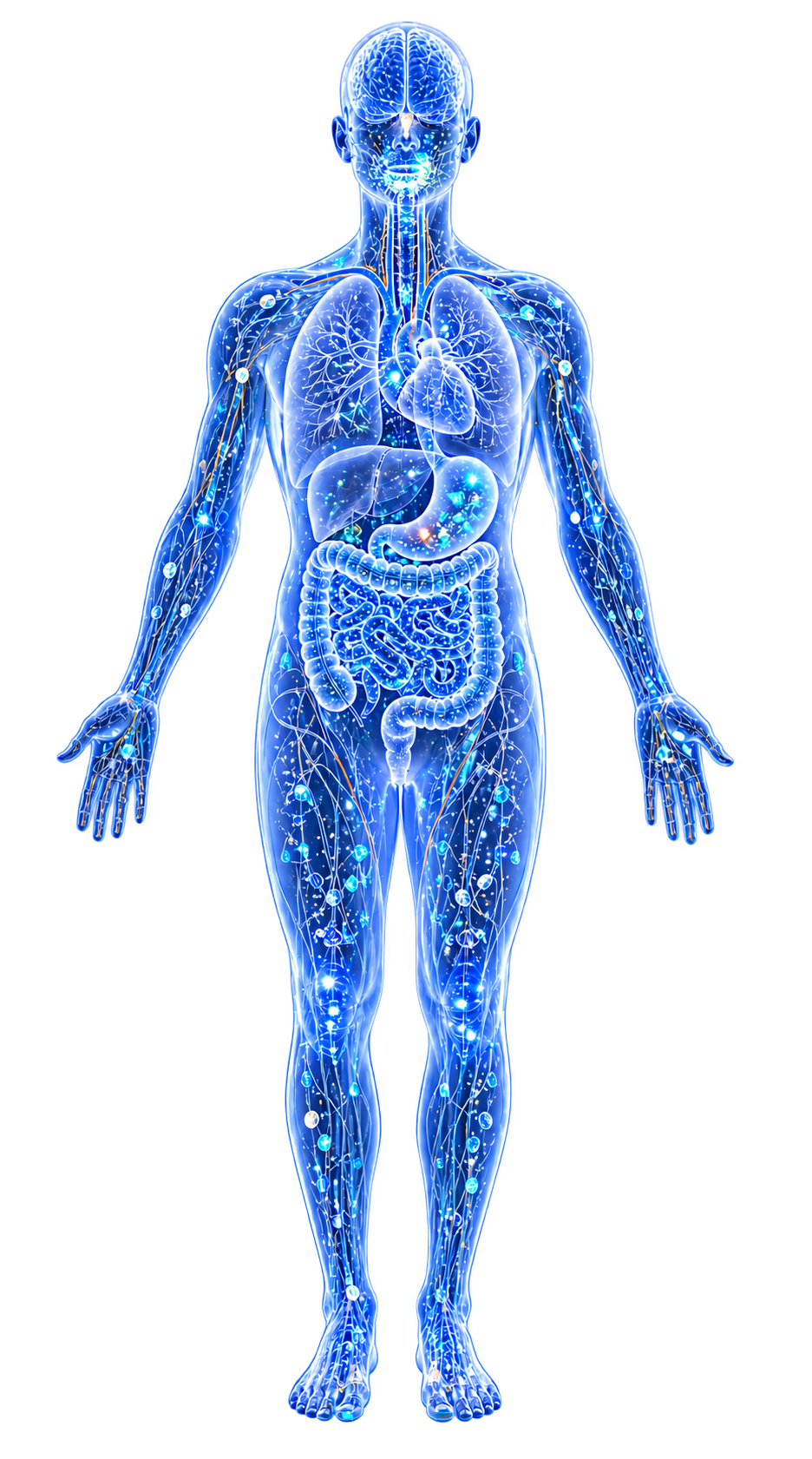
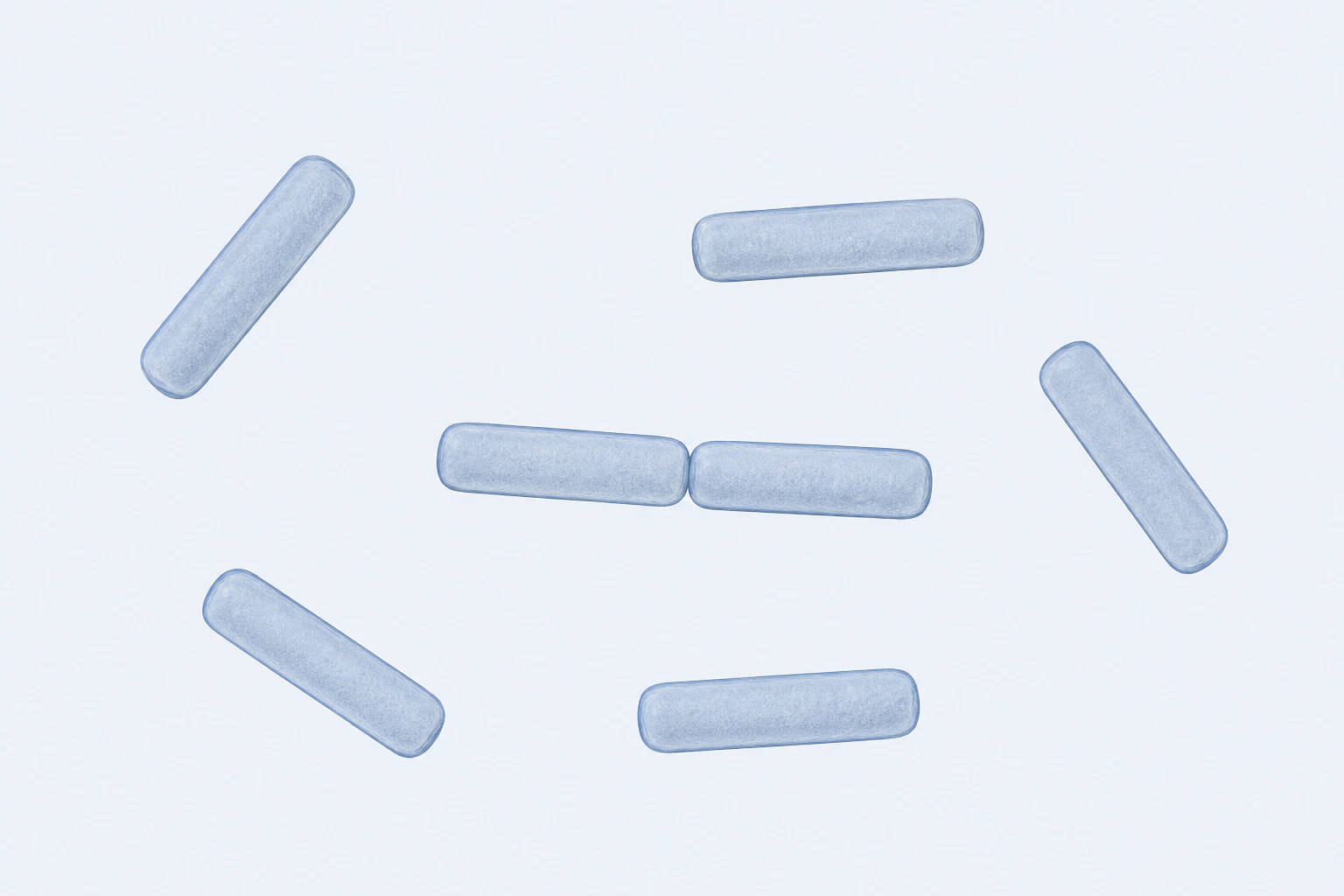
Representative Clostridium perfringens large straight rod forms, shown as seven bodies in six single or paired groupings. This reconstruction is non-diagnostic, shows no visible spores or capsules, and is not a micrograph.
Scientific media record1 verified identifier
- Subject
- Clostridium perfringenstaxon · species
- Identifiers
- NCBITaxon:1502
- Review
- Editorial review completeIdentifiers authority-verified · Accessibility validated · · clostridium-perfringens|clostridium-perfringens-morphology-v1.webp
- Digital source
- Trained-algorithmic mediaCreated with a trained generative algorithm and reviewed by WikiBiome for subject identity, scientific framing, identifiers, provenance, and accessibility.
- Scientific basis
- Clostridium perfringens — NCBI TaxonomyClostridium perfringens — LPSNClostridium perfringens type strain — BacDiveClostridium perfringens microscopy studyClostridium perfringens type-strain taxonomy record
- License
- CC BY-SA 4.0Created
Clostridium perfringens is a Gram-positive, strictly anaerobic, spore-forming bacterium infamous for causing gas gangrene, food poisoning, and necrotizing enterocolitis (NEC) in premature infants. It is one of the most widely distributed pathogenic bacteria in nature, found in soil, sewage, and the intestinal tracts of humans and animals.
C. perfringens is classified into seven toxinotypes (A through G) based on the combination of major toxins produced.
The WikiBiome insight that distinguishes this page from Wikipedia is a strain-level paradigm shift: recent work demonstrates that non-toxigenic C. perfringens strains (pfoA-negative, lacking perfringolysin O) can metabolize human milk oligosaccharides and suppress the very Enterobacteriaceae pathobionts that cause NEC.
The species is not uniformly harmful—toxigenicity is the dividing line between pathogen and potential probiotic.
Evidence map5 cited passagesInspect provenance +
Non-toxigenic strains (pfoA-negative): These metabolize human milk oligosaccharides (HMOs), a capability previously thought to be restricted to Bifidobacterium. Cell-free supernatants from these strains inhibited NEC-associated Enterobacteriaceae (E. coli, Enterobacter, Klebsiella) by 40-90% in vitro. Genomic and proteomic analyses identified distinct HMO ca
Pathogenic C. perfringens diverts tryptophan toward the kynurenine pathway rather than serotonin synthesis. Since ~90% of the body's serotonin is produced in the gut from tryptophan, C. perfringens enrichment may contribute to serotonin depletion and mood dysregulation (, expert-opinion).
Necrotizing enterocolitis: Detected more frequently in NEC stools; part of the anaerobe-dominance-to-facultative-bloom trajectory in preterm infants. Historical NEC literature implicated Clostridium sensu stricto as a pathogen, but strain-level toxigenicity refines this picture (, cross-sectional, n=53;, cross-sectional).
PCOS vaginal dysbiosis: C. perfringens was among pathobionts enriched in PCOS and obese groups and absent or reduced in non-PCOS non-obese controls by shotgun sequencing (, cross-sectional).
| Study | Finding | Evidence Level | |-------|---------|---------------| | | Non-toxigenic pfoA- strains metabolize HMOs, suppress Enterobacteriaceae 40-90% | In vitro | | | Detected in NEC stools; Proteobacteria bloom 2 weeks pre-NEC | Cross-sectional | | | Part of early/late NEC subtypes with distinct taxonomic signatures | Cross-sectional | | | Enriched i
Contents
1. Metal Dependencies2. Key Enzymes and Virulence Factors3. Ecological Role4. Conditions Associated5. Key Studies6. Cross-ReferencesMetal Dependencies#
C. perfringens virulence is deeply tied to metal cofactors. Zinc: The alpha-toxin (phospholipase C), the most potent C. perfringens virulence factor, is a zinc-dependent metalloenzyme. It requires two zinc ions at its active site for phospholipid hydrolysis.
Zinc chelation or depletion can reduce alpha-toxin activity—a potential Achilles' heel.
Iron: Required for growth and metabolic enzymes. C. perfringens possesses iron acquisition systems and proliferates in iron-rich environments such as necrotic tissue with lysed red blood cells.
Calcium: Activates alpha-toxin after zinc-dependent catalysis; calcium binding triggers the membrane-damaging conformational change.
This zinc dependency of the primary toxin positions C. perfringens within the metal-dependent virulence framework: restrict zinc at the site of infection, and the organism's primary weapon is disabled.
Key Enzymes and Virulence Factors#
C. perfringens produces an arsenal of tissue-destructive enzymes. Alpha-toxin (phospholipase C / CPA): Zinc metalloenzyme that hydrolyzes phosphatidylcholine in cell membranes, causing massive cell lysis, vascular damage, and the gas production characteristic of gas gangrene.
Perfringolysin O (PFO, theta-toxin): Cholesterol-dependent cytolysin that forms pores in eukaryotic cell membranes. Critically, non-toxigenic strains lack the pfoA gene—this is the molecular marker distinguishing beneficial from harmful strains.
Collagenase (kappa-toxin): Zinc metalloprotease that degrades connective tissue, facilitating bacterial spread. Hyaluronidase (mu-toxin): Degrades hyaluronic acid in the extracellular matrix. Sialidase (NanI): Cleaves sialic acid from mucin glycoproteins, potentially contributing to mucus barrier degradation.
CPE (Clostridium perfringens enterotoxin): Produced by type A strains during sporulation; causes the watery diarrhea of food poisoning.
Ecological Role#
The Toxigenic-Non-Toxigenic Divide#
The most significant ecological finding for C. perfringens is the functional divergence between toxigenic and non-toxigenic strains.
Non-toxigenic strains (pfoA-negative): These metabolize human milk oligosaccharides (HMOs), a capability previously thought to be restricted to Bifidobacterium. Cell-free supernatants from these strains inhibited NEC-associated Enterobacteriaceae (E. coli, Enterobacter, Klebsiella) by 40-90% in vitro.
Genomic and proteomic analyses identified distinct HMO catabolic pathways absent in toxigenic strains (,[1]Chapman 2026 — Non-toxigenic Clostridia Metabolize HMOs and Suppress Pathobionts in NECChapman et al. · 2026Open reference 1 ↓ in-vitro).
Toxigenic strains: Produce the full toxin repertoire and are associated with NEC, food poisoning, and tissue necrosis. These strains lack the HMO catabolic pathways of non-toxigenic counterparts.
This distinction overturns the historical assumption that all C. perfringens are harmful and proposes non-toxigenic Clostridia as a novel probiotic class for preterm infants.
Tryptophan Metabolism#
Pathogenic C. perfringens diverts tryptophan toward the kynurenine pathway rather than serotonin synthesis. Since ~90% of the body's serotonin is produced in the gut from tryptophan, C. perfringens enrichment may contribute to serotonin depletion and mood dysregulation (,[2]Dafini 2025 — Phytochemical Insights and Neuro-Gut Axis Modulation of Asparagus racemosus (Shatavari) in Postpartum Depression: A Mini ReviewDafini D., Hemavathi Shivapura Krishnarajabhatt, Parvathy Unnikrishnan · 2025Open reference 2 ↓ expert-opinion).
Conditions Associated#
Enriched in:#
Necrotizing enterocolitis: Detected more frequently in NEC stools; part of the anaerobe-dominance-to-facultative-bloom trajectory in preterm infants. Historical NEC literature implicated Clostridium sensu stricto as a pathogen, but strain-level toxigenicity refines this picture (,[3]Torrazza 2013 — Intestinal Microbial Ecology and Environmental Factors Affecting NECTorrazza RM, Ukhanova M, Wang X et al. · 2013Open reference 3 ↓ cross-sectional, n=53;,[4]Zhou 2015 — Premature Infant Microbiome Prior to NECZhou Y, Shan G, Sodergren E et al. · 2015Open reference 4 ↓ cross-sectional).
PCOS vaginal Dysbiosis: C. perfringens was among pathobionts enriched in PCOS and obese groups and absent or reduced in non-PCOS non-obese controls by shotgun sequencing (,[5]Zheng 2024 — Differential enrichment of bacteria and phages in vaginal microbiomes in PCOS and obesity: shotgun sequencing analysisZheng S, Chen H, Yang H et al. · 2024Open reference 5 ↓ cross-sectional).
Food poisoning: Type A CPE-producing strains cause one of the most common forms of bacterial food poisoning worldwide (not covered in existing source pages).
Key Studies#
| Study | Finding | Evidence Level |
|---|---|---|
| [1]Chapman 2026 — Non-toxigenic Clostridia Metabolize HMOs and Suppress Pathobionts in NECChapman et al. · 2026Open reference 1 ↓ | Non-toxigenic pfoA- strains metabolize HMOs, suppress Enterobacteriaceae 40-90% | In vitro |
| [3]Torrazza 2013 — Intestinal Microbial Ecology and Environmental Factors Affecting NECTorrazza RM, Ukhanova M, Wang X et al. · 2013Open reference 3 ↓ | Detected in NEC stools; Proteobacteria bloom 2 weeks pre-NEC | Cross-sectional |
| [4]Zhou 2015 — Premature Infant Microbiome Prior to NECZhou Y, Shan G, Sodergren E et al. · 2015Open reference 4 ↓ | Part of early/late NEC subtypes with distinct taxonomic signatures | Cross-sectional |
| [5]Zheng 2024 — Differential enrichment of bacteria and phages in vaginal microbiomes in PCOS and obesity: shotgun sequencing analysisZheng S, Chen H, Yang H et al. · 2024Open reference 5 ↓ | Enriched in PCOS/obese vaginal microbiome | Cross-sectional |
| [2]Dafini 2025 — Phytochemical Insights and Neuro-Gut Axis Modulation of Asparagus racemosus (Shatavari) in Postpartum Depression: A Mini ReviewDafini D., Hemavathi Shivapura Krishnarajabhatt, Parvathy Unnikrishnan · 2025Open reference 2 ↓ | Diverts tryptophan to kynurenine; depletes serotonin | Expert opinion |
Cross-References#
- Zinc—alpha-toxin zinc dependency as virulence Achilles' heel
- Iron—iron-rich necrotic environments favor proliferation
- Necrotizing Enterocolitis—preterm infant disease association
- Klebsiella pneumoniae—NEC pathobiont suppressed by non-toxigenic strains
- Escherichia coli—NEC pathobiont suppressed by non-toxigenic strains
- Bifidobacterium—co-depleted in NEC; also metabolizes HMOs
- Tryptophan Metabolism—kynurenine diversion reducing serotonin
- Polycystic Ovary Syndrome—vaginal pathobiont enrichment
References 6
Numbered by first appearance in the article, then reconciled with its declared source list.
- 1
Chapman et al. (2026). Chapman 2026 — Non-toxigenic Clostridia Metabolize HMOs and Suppress Pathobionts in NEC. Nature Microbiology.
- 2
Dafini D., Hemavathi Shivapura Krishnarajabhatt, Parvathy Unnikrishnan (2025). Dafini 2025 — Phytochemical Insights and Neuro-Gut Axis Modulation of Asparagus racemosus (Shatavari) in Postpartum Depression: A Mini Review. Frontiers in Nutrition.
- 3
Torrazza RM, Ukhanova M, Wang X et al. (2013). Torrazza 2013 — Intestinal Microbial Ecology and Environmental Factors Affecting NEC. PLoS ONE.
- 4
Zhou Y, Shan G, Sodergren E et al. (2015). Zhou 2015 — Premature Infant Microbiome Prior to NEC. PLoS ONE.
- 5
Zheng S, Chen H, Yang H et al. (2024). Zheng 2024 — Differential enrichment of bacteria and phages in vaginal microbiomes in PCOS and obesity: shotgun sequencing analysis. Frontiers in Microbiomes.
- 6
★Brower-Sinning R, Zhong D, Good M et al. (2014). Brower-Sinning 2014 — Mucosa-Associated Bacterial Diversity in Necrotizing Enterocolitis. PLoS ONE.
Article network
Connect the evidence
Publicly readable discussion by ORCID-authenticated researchers. Questions, interpretation, methods, corrections, and new evidence stay attached to this record.
No discussion yet. Start with a precise question or a source-backed observation.
Published page changes
This record shows only material changes published on this page, including changes to its content, evidence, conclusions, or author context. Internal processes and discussion activity are excluded. Pending, declined, and withdrawn proposals remain private.
- published revision
Added references: brower-sinning-2014-mucosa-bacterial-diversity-nec.
Karen Pendergrass · +2 −2
Inspect exact Git diff ↗ - published revision
Revised “Cross-References”: now reads “-- kynurenine diversion reducing serotonin - pcos -- vaginal pathobiont enrichment”.
Revised “Cross-References”: changed “-- kynurenine diversion reducing serotonin - polycystic ovary syndrome -- vaginal pathobiont enrichment” to “-- kynurenine diversion reducing serotonin - pcos -- vaginal pathobiont enrichment”. · WikiBiome Deploy Bot · +1 −1
Inspect exact Git diff ↗ - published revision
Created “Clostridium perfringens”: Clostridium perfringens is a Gram-positive, strictly anaerobic, spore-forming bacterium infamous for causing gas gangrene, food poisoning, and necrotizing enterocolitis (NEC) in premature infants. It…
Created “Clostridium perfringens”: Clostridium perfringens is a Gram-positive, strictly anaerobic, spore-forming bacterium infamous for causing gas gangrene, food poisoning, and necrotizing enterocolitis (NEC) in premature infants. It… Published sections: Clostridium perfringens; Metal Dependencies; Key Enzymes and Virulence Factors; The Toxigenic-Non-Toxigenic Divide; Tryptophan Metabolism; Enriched in:; Key Studies; Cross-References. · WikiBiome Deploy Bot · +92 −0
Inspect exact Git diff ↗