
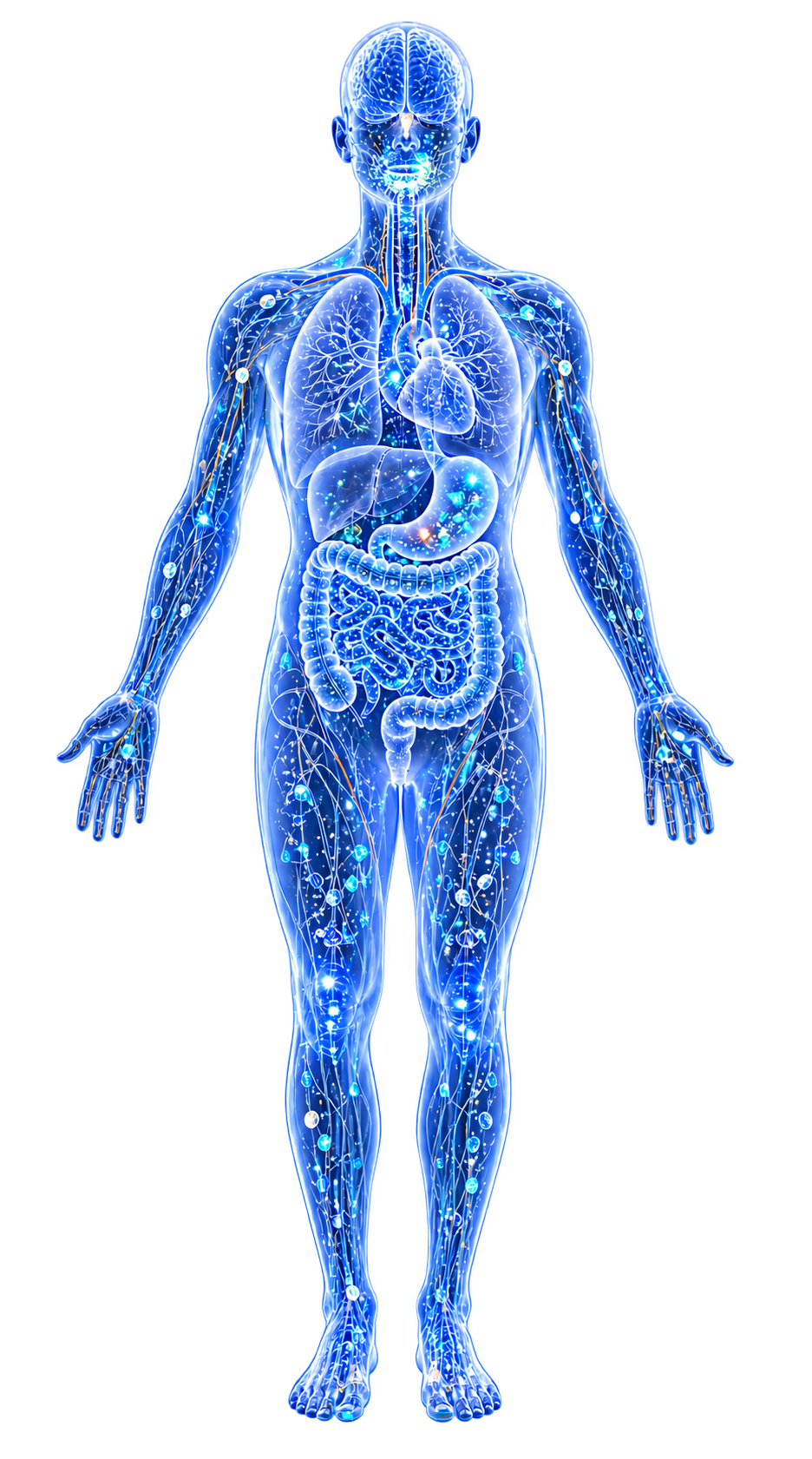
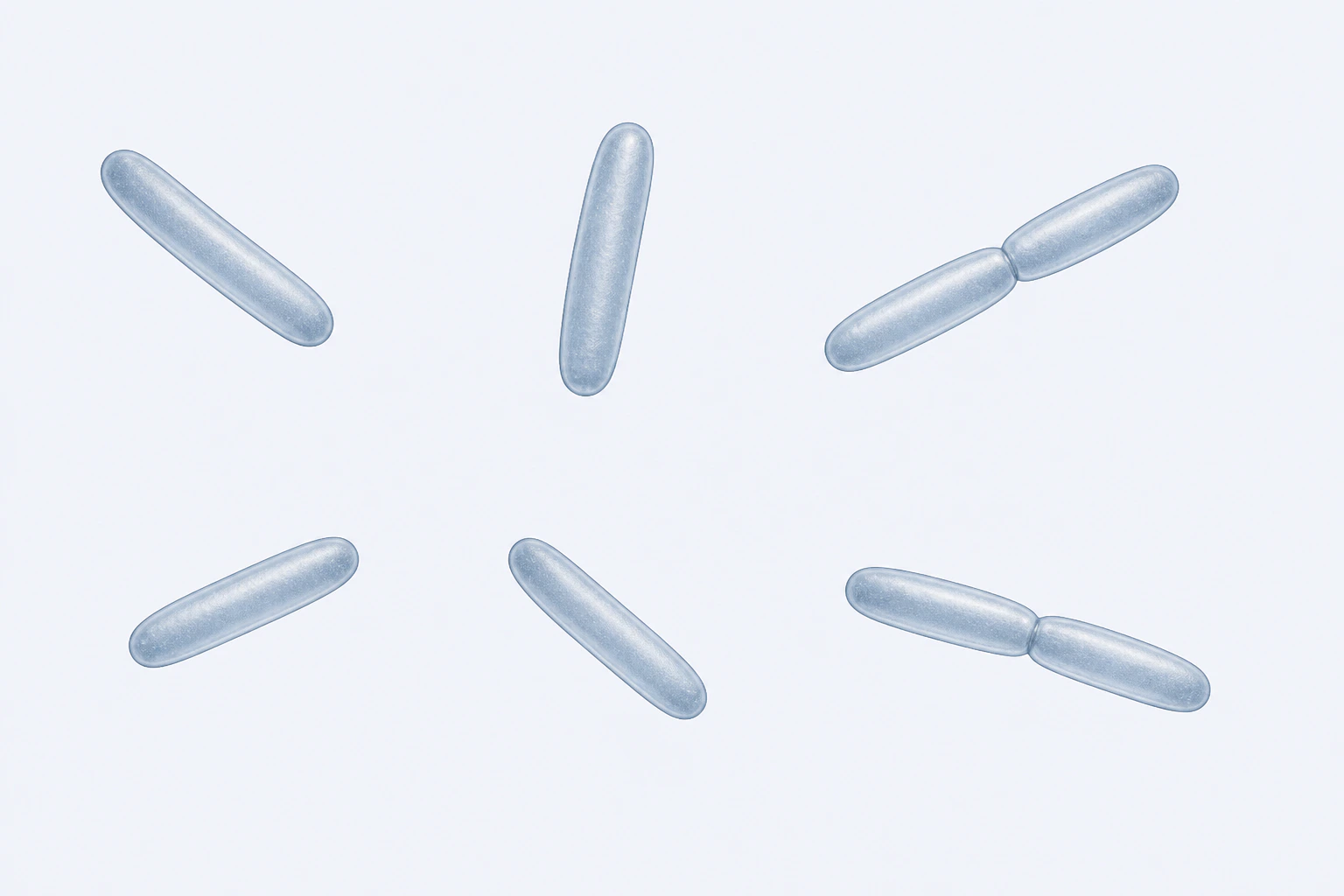
Selected type-genus-anchored rod forms for Christensenellaceae, shown as eight bodies in six groupings. This family-level reconstruction is representative, non-exhaustive, non-diagnostic, and not a micrograph.
Scientific media record1 verified identifier
- Subject
- Christensenellaceaetaxon · family
- Identifiers
- NCBITaxon:990719
- Review
- Editorial review completeIdentifiers authority-verified · Accessibility validated · · christensenellaceae|christensenellaceae-microbial-community-v1.webp
- Digital source
- Trained-algorithmic mediaCreated with a trained generative algorithm and reviewed by WikiBiome for subject identity, scientific framing, identifiers, provenance, and accessibility.
- Scientific basis
- Christensenellaceae — NCBI TaxonomyChristensenellaceae — LPSNDescription of Christensenellaceae fam. nov.Christensenella minuta type-strain microscopy
- License
- CC BY-SA 4.0Created
Christensenellaceae is a family of Gram-negative, strictly anaerobic bacteria within the order Clostridiales (phylum Firmicutes) that has emerged as one of the most consistently health-associated and heritable members of the human Gut Microbiome.
First formally described in 2012, the family's flagship member is the R-7 group, a phylotype that appears across microbiome studies as a reliable indicator of metabolic health.
What makes Christensenellaceae remarkable is a paradox: it is among the most heritable gut taxa (twin studies show host genetics strongly influence its abundance), yet it is also exquisitely sensitive to environmental perturbation.
This combination positions it as a keystone commensal—a family whose depletion signals that the gut ecosystem has been destabilized, whether by Heavy Metals, Metal-Driven Inflammation, or metabolic disease.
Evidence map11 cited passagesInspect provenance +
In cadmium-exposed rats, Christensenellaceae R-7 group became paradoxically dominant in the CdCl2 group alongside other taxa tolerant to the altered environment, suggesting that while some strains tolerate cadmium, the family's response is complex and dose-dependent (, animal-model).
Core microbiota membership: In a multicenter IBD study from Western China, Christensenellaceae R-7 group was identified as part of the healthy core microbiota, consistently depleted in both Crohn's disease and ulcerative colitis. Its loss removes a key commensal function that is not readily replaced (, cross-sectional).
Cancer protection: In breast cancer, Christensenellaceae was enriched in healthy controls versus cancer patients (, case-control, n=86). Mendelian randomization studies identify it as causally protective against ovarian cancer (, computational-prediction).
Colorectal adenoma marker: Christensenellaceae R-7 group was among control-enriched biomarkers in cross-population CRC studies, depleted in both adenoma and carcinoma stages (, cross-sectional).
Graves' disease: Prevalent at the family level in GD patients alongside Lachnospiraceae and Alcaligenaceae (, cross-sectional). This enrichment in hyperthyroidism, contrasting with depletion in other diseases, may reflect the metabolic acceleration of Graves' disease creating favorable fermentation conditions.
Inflammatory bowel disease: Christensenellaceae R-7 group depleted in both CD and UC as part of the lost healthy core microbiota (, cross-sectional). Virulence factor analysis shows that its depletion coincides with enrichment of oxidative stress and iron-acquisition pathways (, cross-sectional).
Breast cancer: Enriched in controls, depleted in BCa patients (20% of cases vs. higher in controls by LEfSe) (, case-control, n=86).
Colorectal cancer: Depleted across French, American, Chinese, and Austrian CRC cohorts; a reliable cross-population control-enriched biomarker (, cross-sectional).
Ovarian cancer: Mendelian randomization identifies Christensenellaceae R-7 group as causally protective against OC (along with Tyzzerella3) (, computational-prediction).
Thyroid cancer: Identified as a risk factor in MR studies when enriched beyond normal levels, though the direction is debated across studies (, expert-opinion).
| Study | Finding | Evidence Level | |-------|---------|---------------| | | Core healthy microbiota member depleted in both CD and UC | Cross-sectional | | | Control-enriched; depleted in breast cancer | Case-control | | | Cross-population control biomarker in CRC | Cross-sectional | | | Causally protective against ovarian cancer (MR) | Computational predic
Contents
1. Metal Dependencies2. Key Enzymes and Virulence Factors3. Ecological Role4. Conditions Associated5. Key Studies6. Cross-ReferencesMetal Dependencies#
Christensenellaceae members require iron for their fermentation enzymes but appear to be sensitive to toxic metal disruption.
In cadmium-exposed rats, Christensenellaceae R-7 group became paradoxically dominant in the CdCl2 group alongside other taxa tolerant to the altered environment, suggesting that while some strains tolerate cadmium, the family's response is complex and dose-dependent (,[1]Environmental cadmium exposure alters the internal microbiota and metabolome of Sprague-Dawley ratsSongqing Liu, Xin Deng, Zheng Li et al. · 2023Open reference 1 ↓ animal-model).
The family's consistent depletion in inflammatory conditions where iron is dysregulated (IBD, cancer) suggests it cannot compete effectively in environments where pathobionts with superior iron-acquisition systems dominate.
Key Enzymes and Virulence Factors#
Christensenellaceae are not pathogenic. Their enzymatic profile reflects a saccharolytic fermentation strategy. Acetate and Butyrate production: The family produces short-chain fatty acids from dietary fiber, contributing to colonic epithelial nutrition and anti-inflammatory signaling.
Hydrogen production: Christensenellaceae members produce H2 during fermentation, which supports syntrophic relationships with methanogens like Methanobrevibacter smithii. This cross-feeding partnership may explain the association between Christensenellaceae abundance and lean body mass—efficient H2 disposal by methanogens optimizes fermentation energy extraction.
Ecological Role#
Christensenellaceae occupies a keystone position in the healthy gut ecosystem. Core microbiota membership: In a multicenter IBD study from Western China, Christensenellaceae R-7 group was identified as part of the healthy core microbiota, consistently depleted in both Crohn's disease and ulcerative colitis.
Its loss removes a key commensal function that is not readily replaced (,[2]Diagnosis of Crohn's Disease and Ulcerative Colitis Using the MicrobiomeKang DY, Park JL, Yeo MK et al. · 2023Open reference 2 ↓ cross-sectional).
Lean phenotype association: Christensenellaceae abundance inversely correlates with BMI across multiple populations. Twin studies demonstrate high heritability, suggesting that host genetic factors supporting Christensenellaceae colonization are under selection pressure.
Cancer protection: In breast cancer, Christensenellaceae was enriched in healthy controls versus cancer patients (,[3]Association between Gut Microbiota and Breast Cancer: Diet as a Potential Modulating FactorAltinok Dindar D, Chun B, Palma A et al. · 2023Open reference 3 ↓ case-control, n=86). Mendelian randomization studies identify it as causally protective against ovarian cancer (,[4]Chen 2025 — Causal Relationships of Gut Microbiota and Blood Metabolites with Ovarian Cancer and Endometrial Cancer: A Mendelian Randomization StudyChen J, Chen X, Ma J · 2025Open reference 4 ↓ computational-prediction).
Colorectal adenoma marker: Christensenellaceae R-7 group was among control-enriched biomarkers in cross-population CRC studies, depleted in both adenoma and carcinoma stages (,[5]Identification of Microbial Markers across Populations in Early Detection of Colorectal CancerWu Y, Jiao N, Zhu R et al. · 2021Open reference 5 ↓ cross-sectional).
Conditions Associated#
Enriched in:#
- Graves' disease: Prevalent at the family level in GD patients alongside Lachnospiraceae and Alcaligenaceae (,[6]Alterations and Mechanism of Gut Microbiota in Graves' Disease and Hashimoto's ThyroiditisZhao H, Yuan L, Zhu D et al. · 2022Open reference 6 ↓ cross-sectional). This enrichment in hyperthyroidism, contrasting with depletion in other diseases, may reflect the metabolic acceleration of Graves' disease creating favorable fermentation conditions.
Depleted in:#
Inflammatory bowel disease: Christensenellaceae R-7 group depleted in both CD and UC as part of the lost healthy core microbiota (,[2]Diagnosis of Crohn's Disease and Ulcerative Colitis Using the MicrobiomeKang DY, Park JL, Yeo MK et al. · 2023Open reference 2 ↓ cross-sectional).
Virulence factor analysis shows that its depletion coincides with enrichment of Oxidative Stress and iron-acquisition pathways (,[7]Wang 2024 — Integrated 16S rRNA sequencing and metagenomics insights into microbial dysbiosis and distinct virulence factors in inflammatory bowel diseaseHaijing Wang, Yuanjun Wang, Libin Yang et al. · 2024Open reference 7 ↓ cross-sectional).
Breast cancer: Enriched in controls, depleted in BCa patients (20% of cases vs. higher in controls by LEfSe) (,[3]Association between Gut Microbiota and Breast Cancer: Diet as a Potential Modulating FactorAltinok Dindar D, Chun B, Palma A et al. · 2023Open reference 3 ↓ case-control, n=86).
Colorectal cancer: Depleted across French, American, Chinese, and Austrian CRC cohorts; a reliable cross-population control-enriched biomarker (,[5]Identification of Microbial Markers across Populations in Early Detection of Colorectal CancerWu Y, Jiao N, Zhu R et al. · 2021Open reference 5 ↓ cross-sectional).
Ovarian cancer: Mendelian randomization identifies Christensenellaceae R-7 group as causally protective against OC (along with Tyzzerella3) (,[4]Chen 2025 — Causal Relationships of Gut Microbiota and Blood Metabolites with Ovarian Cancer and Endometrial Cancer: A Mendelian Randomization StudyChen J, Chen X, Ma J · 2025Open reference 4 ↓ computational-prediction).
Thyroid cancer: Identified as a risk factor in MR studies when enriched beyond normal levels, though the direction is debated across studies (,[8]Wang & Zhu 2025 — Gut Microbiome Versus Thyroid Cancer: Association and Clinical Implications (Review)Wang M, Zhu Y · 2025Open reference 8 ↓ expert-opinion).
Key Studies#
| Study | Finding | Evidence Level |
|---|---|---|
| [2]Diagnosis of Crohn's Disease and Ulcerative Colitis Using the MicrobiomeKang DY, Park JL, Yeo MK et al. · 2023Open reference 2 ↓ | Core healthy microbiota member depleted in both CD and UC | Cross-sectional |
| [3]Association between Gut Microbiota and Breast Cancer: Diet as a Potential Modulating FactorAltinok Dindar D, Chun B, Palma A et al. · 2023Open reference 3 ↓ | Control-enriched; depleted in breast cancer | Case-control |
| [5]Identification of Microbial Markers across Populations in Early Detection of Colorectal CancerWu Y, Jiao N, Zhu R et al. · 2021Open reference 5 ↓ | Cross-population control biomarker in CRC | Cross-sectional |
| [4]Chen 2025 — Causal Relationships of Gut Microbiota and Blood Metabolites with Ovarian Cancer and Endometrial Cancer: A Mendelian Randomization StudyChen J, Chen X, Ma J · 2025Open reference 4 ↓ | Causally protective against ovarian cancer (MR) | Computational prediction |
| [1]Environmental cadmium exposure alters the internal microbiota and metabolome of Sprague-Dawley ratsSongqing Liu, Xin Deng, Zheng Li et al. · 2023Open reference 1 ↓ | Complex response to cadmium exposure | Animal model |
| [6]Alterations and Mechanism of Gut Microbiota in Graves' Disease and Hashimoto's ThyroiditisZhao H, Yuan L, Zhu D et al. · 2022Open reference 6 ↓ | Prevalent in Graves' disease | Cross-sectional |
Cross-References#
- Lachnospiraceae (Family)—co-depleted keystone commensal family
- Faecalibacterium prausnitzii—co-depleted in IBD and cancer
- Cadmium—environmental perturbation affecting Christensenellaceae ecology
- Crohn's Disease—core microbiota loss
- Breast Cancer—control-enriched protective marker
- Colorectal Cancer—cross-population depletion signal
- Short-Chain Fatty Acids (SCFAs)—metabolic output supporting epithelial health
References 8
Numbered by first appearance in the article, then reconciled with its declared source list.
- 1
Songqing Liu, Xin Deng, Zheng Li et al. (2023). Environmental cadmium exposure alters the internal microbiota and metabolome of Sprague-Dawley rats. Frontiers in Veterinary Science.
- 2
Kang DY, Park JL, Yeo MK et al. (2023). Diagnosis of Crohn's Disease and Ulcerative Colitis Using the Microbiome. BMC Microbiology.
- 3
Altinok Dindar D, Chun B, Palma A et al. (2023). Association between Gut Microbiota and Breast Cancer: Diet as a Potential Modulating Factor. Nutrients.
- 4
Chen J, Chen X, Ma J (2025). Chen 2025 — Causal Relationships of Gut Microbiota and Blood Metabolites with Ovarian Cancer and Endometrial Cancer: A Mendelian Randomization Study. Journal of Ovarian Research.
- 5
Wu Y, Jiao N, Zhu R et al. (2021). Identification of Microbial Markers across Populations in Early Detection of Colorectal Cancer. Nature Communications.
- 6
Zhao H, Yuan L, Zhu D et al. (2022). Alterations and Mechanism of Gut Microbiota in Graves' Disease and Hashimoto's Thyroiditis. Polish Journal of Microbiology.
- 7
Haijing Wang, Yuanjun Wang, Libin Yang et al. (2024). Wang 2024 — Integrated 16S rRNA sequencing and metagenomics insights into microbial dysbiosis and distinct virulence factors in inflammatory bowel disease. Frontiers in Microbiology.
- 8
Wang M, Zhu Y (2025). Wang & Zhu 2025 — Gut Microbiome Versus Thyroid Cancer: Association and Clinical Implications (Review). Oncology Letters.
Article network
Mentioned here 12
Pages linking here 6
Connect the evidence
Publicly readable discussion by ORCID-authenticated researchers. Questions, interpretation, methods, corrections, and new evidence stay attached to this record.
No discussion yet. Start with a precise question or a source-backed observation.
Published page changes
This record shows only material changes published on this page, including changes to its content, evidence, conclusions, or author context. Internal processes and discussion activity are excluded. Pending, declined, and withdrawn proposals remain private.
- published revision
Created “Christensenellaceae”: Christensenellaceae is a family of Gram-negative, strictly anaerobic bacteria within the order Clostridiales (phylum Firmicutes) that has emerged as one of the most consistently health-associated and…
Created “Christensenellaceae”: Christensenellaceae is a family of Gram-negative, strictly anaerobic bacteria within the order Clostridiales (phylum Firmicutes) that has emerged as one of the most consistently health-associated and… Published sections: Christensenellaceae; Metal Dependencies; Key Enzymes and Virulence Factors; Ecological Role; Enriched in:; Depleted in:; Key Studies; Cross-References. · WikiBiome Deploy Bot · +85 −0
Inspect exact Git diff ↗