
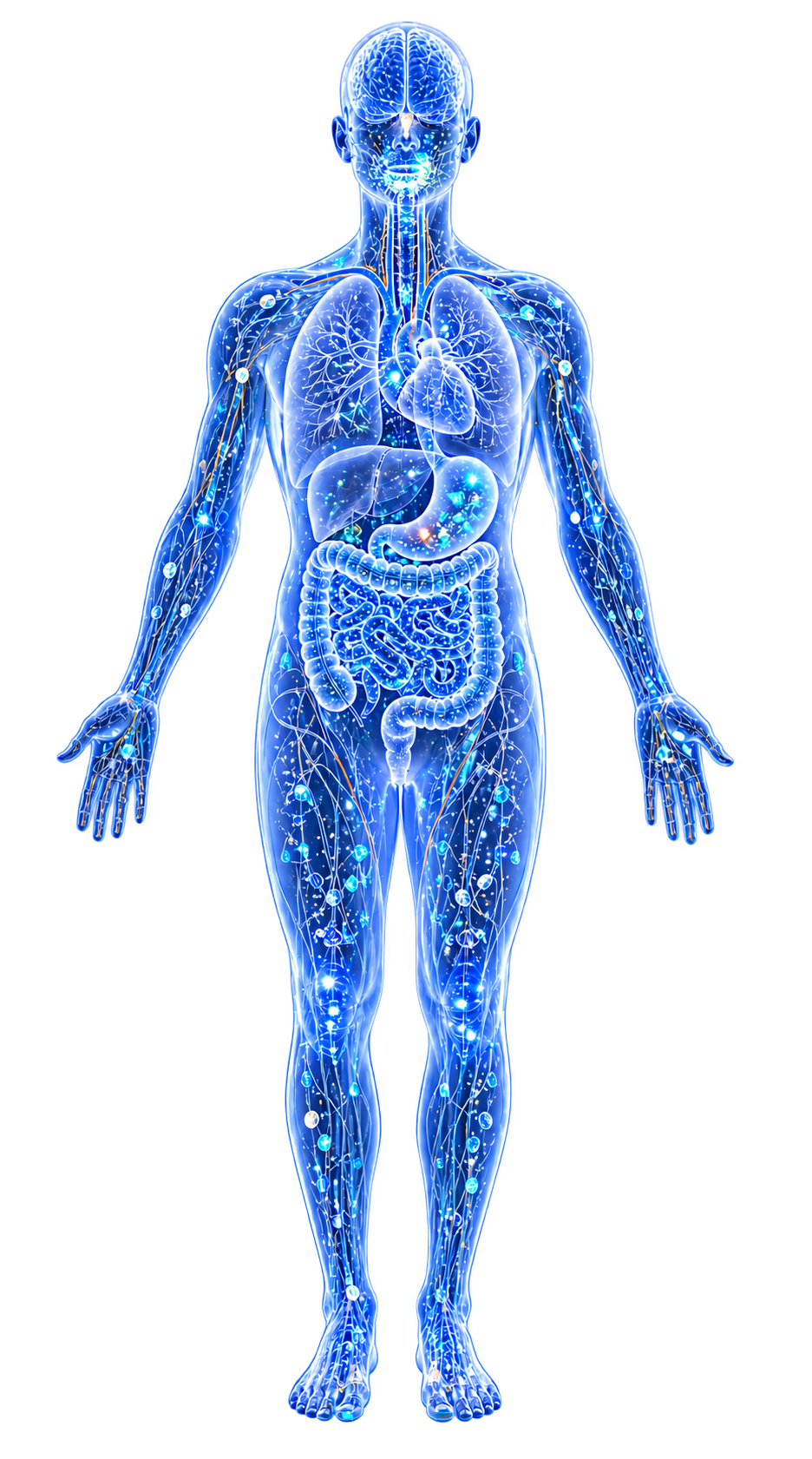
This page serves as the family-level hub for Lachnospiraceae, connecting the individual genus and species pages (Roseburia, Blautia, Anaerostipes, Agathobacter rectalis) with the overarching ecological and metabolic framework that defines the family. For the primary entity page with detailed per-disease depletion data, see Lachnospiraceae.
Evidence map3 cited passagesInspect provenance +
These iron-sulfur clusters are vulnerable to displacement by toxic metals. Lead exposure (100-500 ppm, 8 weeks) in mice significantly decreased Lachnospiraceae alongside Ruminococcaceae and oscillibacter, while increasing oxidative stress defense pathways (, animal-model).
Cadmium exposure similarly depletes Lachnospiraceae members, shifting the community from saccharolytic (SCFA-producing) to proteolytic (toxin-producing) fermentation (, animal-model).
In postpartum depression specifically, Lachnospiraceae UCG-001 was negatively correlated with both EPDS and 17-HAMD severity scores, meaning higher abundance of this subgroup associated with lower depression severity (, cross-sectional).
Contents
1. Why a Family-Level Page?2. The Iron-Sulfur Vulnerability3. Subgroups Commonly Reported4. Cross-Disease Depletion Pattern5. Relationship to Metal Exposure6. Cross-ReferencesWhy a Family-Level Page?#
Lachnospiraceae is the single most frequently referenced family across the entire WikiBiome knowledge base, appearing in 97+ source pages.
Many studies report findings at the family level rather than at genus or species resolution, particularly 16S rRNA studies using V3-V4 amplicons where Lachnospiraceae subgroups (NK4A136, NK4B4, UCG-001, UCG-004, UCG-006, UCG-008, UCG-010) cannot be resolved to named genera. This page captures those family-level findings.
The Iron-Sulfur Vulnerability#
The defining metabolic feature of Lachnospiraceae from a metallomics perspective is the iron-sulfur cluster dependency of their Butyrate synthesis pathway. The butyryl-CoA dehydrogenase complex that converts crotonyl-CoA to butyryl-CoA requires [4Fe-4S] and [2Fe-2S] clusters for electron transfer.
These iron-sulfur clusters are vulnerable to displacement by toxic metals. Lead exposure (100-500 ppm, 8 weeks) in mice significantly decreased Lachnospiraceae alongside Ruminococcaceae and Oscillibacter, while increasing Oxidative Stress defense pathways (,[1]Gut dysbiosis in animals due to environmental chemical exposuresRosenfeld CS · 2017Open reference 1 ↓ animal-model).
Cadmium exposure similarly depletes Lachnospiraceae members, shifting the community from saccharolytic (SCFA-producing) to proteolytic (toxin-producing) fermentation (,[2]Environmental cadmium exposure alters the internal microbiota and metabolome of Sprague-Dawley ratsSongqing Liu, Xin Deng, Zheng Li et al. · 2023Open reference 2 ↓ animal-model).
This molecular vulnerability explains why Lachnospiraceae depletion is the most universal microbiome signal across diseases: any condition involving metal dysregulation, oxidative stress, or Metal-Driven Inflammation will preferentially harm the iron-sulfur-dependent butyrate producers.
Subgroups Commonly Reported#
Many source pages reference Lachnospiraceae subgroups that lack formal genus names:
| Subgroup | Common Associations |
|---|---|
| NK4A136 group | Restored by ketogenic diet in CRC; depleted in CVD |
| NK4B4 group | Altered by cadmium exposure; part of CAD signature |
| UCG-001 | Negatively correlated with PPD severity; negatively correlated with 17-HAMD scores |
| UCG-004 | Depleted in IBD |
| UCG-006 | Positively correlated with anti-cancer cytokines after FMT |
| UCG-008 | Altered in ASD |
| UCG-010 | Depleted in MS |
Cross-Disease Depletion Pattern#
The family's depletion spans virtually every disease category in this knowledge base:
- Neuropsychiatric: Parkinson's, MS, ASD, schizophrenia, postpartum depression
- Cardiometabolic: CVD, CAD, atherosclerosis, hypertension, type 2 diabetes
- Gastrointestinal: IBD (Crohn's and UC), CRC
- Autoimmune: MS, Hashimoto's thyroiditis
In postpartum depression specifically, Lachnospiraceae UCG-001 was negatively correlated with both EPDS and 17-HAMD severity scores, meaning higher abundance of this subgroup associated with lower depression severity (,[3]Zhou 2020 — Fecal Microbiota Changes in Patients With Postpartum Depressive DisorderYumei Zhou, Chen Chen, Haibo Yu et al. · 2020Open reference 3 ↓ cross-sectional).
Relationship to Metal Exposure#
The consistent pattern across animal studies is:
- Heavy metal exposure (lead (Pb), cadmium (Cd), arsenic (As)) → Lachnospiraceae depletion
- Lachnospiraceae depletion → reduced butyrate → impaired epithelial barrier
- Barrier failure → increased translocation → systemic inflammation
- Systemic inflammation → disease progression
This cascade positions Lachnospiraceae as the first domino in metal-driven Dysbiosis, making its abundance a potential biomarker for environmental metal exposure.
Cross-References#
- Lachnospiraceae—primary entity page with detailed disease-specific depletion data
- Roseburia—key butyrate-producing genus within the family
- Blautia—acetate-producing genus; depleted in multiple conditions
- Anaerostipes—lactate-utilizing butyrate producer
- Agathobacter rectalis—major butyrate producer; depleted in CVD and neurodegenerative disease
- butyrate—primary metabolic product
- Iron—iron-sulfur cluster dependency for butyrate synthesis
- Cadmium—toxic metal causing Lachnospiraceae depletion
- Lead—toxic metal causing Lachnospiraceae depletion
- Short-Chain Fatty Acids (SCFAs)—metabolic output of the family
References 10
Numbered by first appearance in the article, then reconciled with its declared source list.
- 1
Rosenfeld CS (2017). Gut dysbiosis in animals due to environmental chemical exposures. Frontiers in Cellular and Infection Microbiology.
- 2
Songqing Liu, Xin Deng, Zheng Li et al. (2023). Environmental cadmium exposure alters the internal microbiota and metabolome of Sprague-Dawley rats. Frontiers in Veterinary Science.
- 3
Yumei Zhou, Chen Chen, Haibo Yu et al. (2020). Zhou 2020 — Fecal Microbiota Changes in Patients With Postpartum Depressive Disorder. Frontiers in Cellular and Infection Microbiology.
- 4
★Karen Pendergrass (2025). Microbial Metallomics and Parkinson's Disease: A Unified Metal-Driven Framework Linking Ferroptosis, Dysbiosis, and alpha-Synuclein Pathology. Conference Presentation.
- 5
Takumi Toya, Michel T. Corban, Eric Marrietta et al. (2020). Coronary artery disease is associated with an altered gut microbiome composition. PLOS ONE.
- 6
Qinhan Gao, Yuwen Liu, Fayu Su et al. (2026). Ketogenic diet suppresses colorectal cancer through reshaping gut microbiota and modulating the intestinal FXR/NF-kB signaling pathway. Food Science and Human Wellness.
- 7
Zhuye Jie, Huihua Xia, Shi-Long Zhong et al. (2017). The gut microbiome in atherosclerotic cardiovascular disease. Nature Communications.
- 8
Tung Hoang, Minjung Kim, Ji Won Park et al. (2023). Dysbiotic microbiome variation in colorectal cancer patients is linked to lifestyles and metabolic diseases. BMC Microbiology.
- 9
Marina Saresella, Ivana Marventano, Monica Barone et al. (2020). Alterations in Circulating Fatty Acid Are Associated With Gut Microbiota Dysbiosis and Inflammation in Multiple Sclerosis. Frontiers in Immunology.
- 10
Alba Troci, Olga Zimmermann, Daniela Esser et al. (2022). B-cell-depletion reverses dysbiosis of the microbiome in multiple sclerosis patients. Scientific Reports.
Article network
Mentioned here 14
Pages linking here 11
Connect the evidence
Publicly readable discussion by ORCID-authenticated researchers. Questions, interpretation, methods, corrections, and new evidence stay attached to this record.
No discussion yet. Start with a precise question or a source-backed observation.
Published page changes
This record shows only material changes published on this page, including changes to its content, evidence, conclusions, or author context. Internal processes and discussion activity are excluded. Pending, declined, and withdrawn proposals remain private.
- published revision
Revised “Lachnospiraceae (Family)”: now reads “and species pages (roseburia, blautia, anaerostipes, agathobacter rectalis) with the overarching ecological and metabolic”.
Revised “Lachnospiraceae (Family)”: changed “and species pages (roseburia, blautia, anaerostipes, eubacterium rectale) with the overarching ecological and metabolic” to “and species pages (roseburia, blautia, anaerostipes, agathobacter rectalis) with the overarching ecological and metabolic”. Revised “Cross-References”: changed “anaerostipes -- lactate-utilizing butyrate producer - eubacterium rectale -- major butyrate producer; depleted in” to “anaerostipes -- lactate-utilizing butyrate producer - agathobacter rectalis -- major butyrate producer; depleted in”. · Karen Pendergrass · +2 −2
Inspect exact Git diff ↗ - published revision
Created “Lachnospiraceae (Family)”: This page serves as the family-level hub for Lachnospiraceae, connecting the individual genus and species pages (roseburia, blautia, anaerostipes, eubacterium rectale) with the overarching ecological…
Created “Lachnospiraceae (Family)”: This page serves as the family-level hub for Lachnospiraceae, connecting the individual genus and species pages (roseburia, blautia, anaerostipes, eubacterium rectale) with the overarching ecological… Published sections: Lachnospiraceae (Family); Why a Family-Level Page?; The Iron-Sulfur Vulnerability; Subgroups Commonly Reported; Cross-Disease Depletion Pattern; Relationship to Metal Exposure; Cross-References. · WikiBiome Deploy Bot · +88 −0
Inspect exact Git diff ↗