

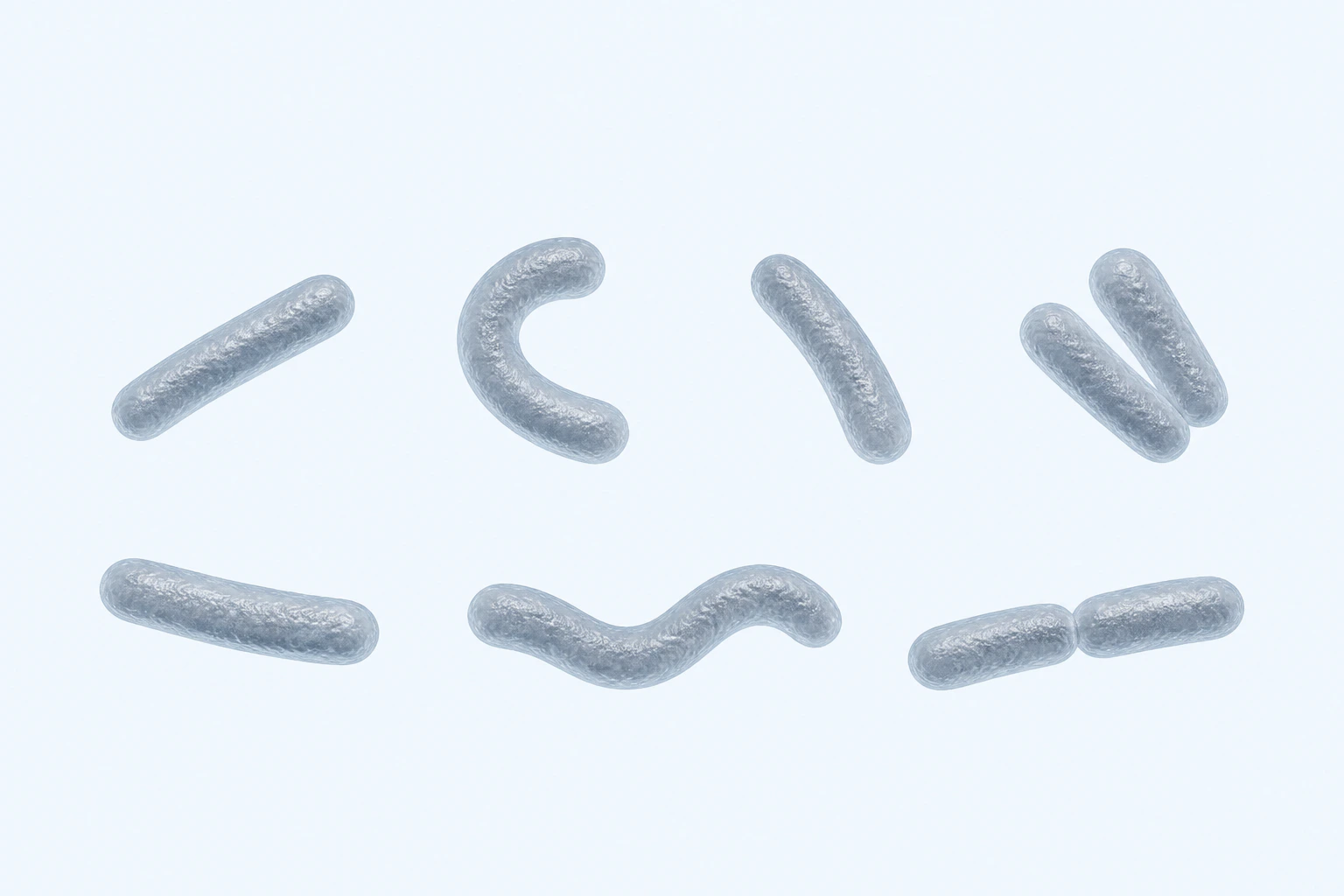
Type-species-anchored Lachnospira straight-to-curved rods, shown as nine bodies in five single and two paired groupings. This genus-level reconstruction is representative, non-diagnostic, does not imply a universal shape or flagellar arrangement, and is not a micrograph.
Scientific media record1 verified identifier
- Subject
- Lachnospirataxon · genus
- Identifiers
- NCBITaxon:28050
- Review
- Editorial review completeIdentifiers authority-verified · Accessibility validated · · lachnospira|lachnospira-morphology-v1.webp
- Digital source
- Trained-algorithmic mediaCreated with a trained generative algorithm and reviewed by WikiBiome for subject identity, scientific framing, identifiers, provenance, and accessibility.
- Scientific basis
- Lachnospira — NCBI TaxonomyLachnospira — LPSNLachnospira multipara — LPSNLachnospira multipara gen. nov., sp. nov.Lachnospira genus treatment
- License
- CC BY-SA 4.0Created
Lachnospira is a genus of Gram-positive, obligate anaerobic bacteria within the Lachnospiraceae family (Firmicutes phylum). L. pectinoschiza, the type species, is a specialist pectin fermenter that produces Short-Chain Fatty Acids (SCFAs) from plant-derived polysaccharides.
The genus exhibits one of the more striking context-dependent profiles in clinical microbiome research—protective and depleted in cardiovascular, renal, and endocrine conditions, yet enriched or risk-associated in colorectal cancer, ASD, and skin Metal-Driven Inflammation.
Evidence map14 cited passagesInspect provenance +
Lachnospira is the earliest-declining Lachnospiraceae genus in CKD progression, with significant reduction detectable at CKD stage 3a—before the declines in blautia, coprococcus, anaerostipes, and roseburia that become evident at stage 3b.
Depleted in acute coronary syndrome (ACS) patients post-STEMI compared to healthy controls, while pathobionts like Escherichia-Shigella and acinetobacter are enriched. The loss of Lachnospira alongside other SCFA producers likely contributes to reduced colonocyte barrier integrity and increased endotoxemia in ACS.
MR evidence identifies Lachnospira as protective against Graves' disease and Plummer disease (toxic nodular goiter), likely through SCFA-mediated immune regulation and propionate/acetate effects on thyroid-immune axis modulation.
In Hashimoto's thyroiditis patients, Lachnospira and Eubacteriumventriosumgroup and Dorea are enriched at the genus level relative to Graves' patients—this enrichment in HT vs. GD suggests that the direction of thyroid immune dysregulation (autoantibody type) differentially modulates Lachnospira abundance.
Significantly decreased (p=0.00008) in women with endometriosis compared to healthy controls, consistent with the broader loss of SCFA-producing commensals in inflammatory gynecological conditions. The loss of acetate production may contribute to reduced epithelial barrier protection and altered estrogen metabolism in the endometriosis gut environment.
Lachnospira shows signals in MR analysis of gut microbiota and menstrual disorders, alongside Anaerotruncus and Haemophilus, implicating SCFA depletion in menstrual cycle disruption.
Strong Mendelian randomization-identified risk association (OR = 4.43) for CRC, mediated through inflammatory pathways. This may reflect:
Causal risk factor (OR = 2.45) via MR analysis for hidradenitis suppurativa, a chronic inflammatory skin disease characterized by recurrent abscesses. The skin-gut axis mechanism may involve SCFA-mediated alteration of cutaneous immune responses or microbiome-driven systemic inflammatory priming.
Significantly more abundant in ASD children in Chinese cohorts and identified as part of the robust ASD microbiome signature in machine-learning analysis. This enrichment in ASD contrasts with its depletion in cardiovascular and renal disease, suggesting context-dependent immune effects.
In reverse MR analysis, schizophrenia causally increases Lachnospira (OR=1.05), establishing that SCZ as a disease state alters the gut microbiome to enrich this genus. This is bidirectional: SCZ enriches Lachnospira as a disease consequence, separate from whatever causal effects Lachnospira may have on SCZ risk.
—earliest-declining Lachnospiraceae genus in CKD
—MR risk association in CRC (OR=4.43)
—protective in Graves' and Plummer disease
—depleted in ACS post-STEMI
Contents
1. Classification and Ecology2. SCFA Production and Fiber Fermentation3. Metal Dependencies4. CKD—Early Biomarker5. Protective Associations in Cardiovascular and Thyroid Disease6. Risk Associations—The Paradox7. Context-Dependent Effects—Interpretive Framework8. What Wikipedia Doesn't Cover9. Cross-ReferencesClassification and Ecology#
Lachnospira belongs to the Lachnospiraceae family (Clostridium cluster XIVa), one of the largest and most functionally diverse bacterial families in the human colon.
Unlike many Lachnospiraceae that broadly degrade diverse fibers, L. pectinoschiza is a pectin specialist, reflecting an ecological niche defined by plant cell wall pectin—a polysaccharide abundant in fruits, vegetables, and legumes. This dietary substrate specificity makes Lachnospira abundance a sensitive readout of plant-rich dietary intake.
SCFA Production and Fiber Fermentation#
L. pectinoschiza ferments pectin (abundant in citrus, apples, carrots, legumes) to acetate, formate, and ethanol. This pectin-degrading specialization links Lachnospira abundance directly to dietary fiber intake and plant-rich diets.
As a member of the Lachnospiraceae family, it contributes to the broader SCFA-producing consortium that maintains gut barrier integrity and modulates systemic immune function.
Produces formate as a key metabolite—a substrate that cross-feeds to methanogens and acetogens in the anaerobic fermentation network.
Unlike Butyrate-dominant Lachnospiraceae members (Roseburia, Anaerostipes, Coprococcus), Lachnospira emphasizes acetate production, which contributes to Th2 immune regulation and colonocyte substrate provisioning through different mechanisms.
Metal Dependencies#
Iron dependency is documented for fermentation enzymes across the Lachnospiraceae family. Iron-sulfur cluster enzymes are required for the anaerobic ferredoxin-dependent electron transport that drives SCFA production.
Iron depletion or heavy metal displacement of iron (Fe) cofactors (by cadmium, lead) would impair Lachnospira fermentation capacity—consistent with the depletion observed in conditions with metal dyshomeostasis.
CKD—Early Biomarker#
The most clinically actionable finding for Lachnospira is its role as an early Dysbiosis biomarker in chronic kidney disease.
Lachnospira is the earliest-declining Lachnospiraceae genus in CKD progression, with significant reduction detectable at CKD stage 3a—before the declines in Blautia, Coprococcus, Anaerostipes, and Roseburia that become evident at stage 3b.[1]Yasuno et al. 2024 — Dysbiosis of Gut Microbiota in CKDYasuno, Nakahama, Kurogi et al. · 2024Open reference 1 ↓
This early decline positions Lachnospira as a potential early warning biomarker for progressive renal disease. Dysbiotic patterns including Lachnospira depletion persist after initiation of renal replacement therapy, indicating that the microbial disruption becomes self-sustaining once established.
The mechanism likely involves uremic toxin accumulation disrupting the colonic anaerobic niche that Lachnospira occupies.
Protective Associations in Cardiovascular and Thyroid Disease#
Cardiovascular Disease#
Depleted in acute coronary syndrome (ACS) patients post-STEMI compared to healthy controls, while pathobionts like Escherichia-Shigella and Acinetobacter are enriched.[2]Gut microbial taxa as potential predictive biomarkers for acute coronary syndrome and post-STEMI cardiovascular eventsJing Gao, Kun-Tao Yan, Ji-Xiang Wang et al. · 2020Open reference 2 ↓ The loss of Lachnospira alongside other SCFA producers likely contributes to reduced colonocyte barrier integrity and increased endotoxemia in ACS.
Thyroid Disease—Graves' and Plummer#
MR evidence identifies Lachnospira as protective against Graves' disease and Plummer disease (toxic nodular goiter), likely through SCFA-mediated immune regulation and propionate/acetate effects on thyroid-immune axis modulation.[3]Uncovering a Causal Connection between Gut Microbiota and Six Thyroid Diseases: A Two-Sample Mendelian Randomization StudyChen J, Wang Y, Yao H et al. · 2024Open reference 3 ↓
In Hashimoto's thyroiditis patients, Lachnospira and Eubacterium_ventriosum_group and Dorea are enriched at the genus level relative to Graves' patients[4]Alterations and Mechanism of Gut Microbiota in Graves' Disease and Hashimoto's ThyroiditisZhao H, Yuan L, Zhu D et al. · 2022Open reference 4 ↓—this enrichment in HT vs. GD suggests that the direction of thyroid immune dysregulation (autoantibody type) differentially modulates Lachnospira abundance.
Endometriosis#
Significantly decreased (p=0.00008) in women with Endometriosis compared to healthy controls, consistent with the broader loss of SCFA-producing commensals in inflammatory gynecological conditions.[5]Gut microbiota imbalance and its correlations with hormone and inflammatory factors in patients with stage 3/4 endometriosisShan J, Ni Z, Cheng W et al. · 2021Open reference 5 ↓
The loss of acetate production may contribute to reduced epithelial barrier protection and altered estrogen metabolism in the endometriosis gut environment.
Menstrual Disorders#
Lachnospira shows signals in MR analysis of gut microbiota and menstrual disorders, alongside Anaerotruncus and Haemophilus, implicating SCFA depletion in menstrual cycle disruption.[6]Yao 2024 — Gut Microbiota and Menstrual Disorders: Two-Sample MR StudyYufan Yao, Haoran Hu, Longhao Chen et al. · 2024Open reference 6 ↓
Risk Associations—The Paradox#
Paradoxically, Lachnospira shows risk associations in several conditions:
Colorectal Cancer—MR Risk#
Strong Mendelian randomization-identified risk association (OR = 4.43) for CRC, mediated through inflammatory pathways.[7]Association between the Gut Microbiota, Inflammatory Factors, and Colorectal Cancer: Evidence from Mendelian Randomization AnalysisMa M, Zheng Z, Li J et al. · 2024Open reference 7 ↓ This may reflect.
Species-level heterogeneity within the genus (different species in CRC vs. protection contexts). A passenger enrichment effect (certain Lachnospira species proliferating in the CRC metabolic environment rather than driving it). Context-specific immune modulation where acetate/formate production has different effects in tumorigenic vs. normal colonic epithelium.
Hidradenitis Suppurativa—Causal Risk#
Causal risk factor (OR = 2.45) via MR analysis for Hidradenitis Suppurativa, a chronic inflammatory skin disease characterized by recurrent abscesses.[8]Causal Relationship Between Gut Microbiota and Hidradenitis Suppurativa: A Two-Sample Mendelian Randomization StudyLiu C, Liu X, Li X · 2024Open reference 8 ↓ The skin-gut axis mechanism may involve SCFA-mediated alteration of cutaneous immune responses or microbiome-driven systemic inflammatory priming.
Autism Spectrum Disorder—Enriched in Some Cohorts#
Significantly more abundant in ASD children in Chinese cohorts[9]Niu 2019 — Intestinal Microbiota and Probiotics Treatment in Chinese ASD ChildrenManman Niu, Qinrui Li, Jishui Zhang et al. · 2019Open reference 9 ↓ and identified as part of the robust ASD microbiome signature in machine-learning analysis.[10]Peralta-Marzal 2024 — A Robust Microbiome Signature for Autism Spectrum Disorder Across Different Studies Using Machine LearningLucia N. Peralta-Marzal, David Rojas-Velazquez, Douwe Rigters et al. · 2024Open reference 10 ↓
This enrichment in ASD contrasts with its depletion in cardiovascular and renal disease, suggesting context-dependent immune effects.
Schizophrenia—Causally Elevated by SCZ#
In reverse MR analysis, schizophrenia causally increases Lachnospira (OR=1.05), establishing that SCZ as a disease state alters the Gut Microbiome to enrich this genus.[11]Zhou 2024 — Gut Microbiome and Schizophrenia: Insights from Two-Sample Mendelian RandomizationKeer Zhou, Ancha Baranova, Hongbao Cao et al. · 2024Open reference 11 ↓
This is bidirectional: SCZ enriches Lachnospira as a disease consequence, separate from whatever causal effects Lachnospira may have on SCZ risk.
Context-Dependent Effects—Interpretive Framework#
The dual nature of Lachnospira—depleted in cardiovascular, renal, and endocrine conditions but enriched or risk-associated in CRC, ASD, and inflammatory skin disease—reflects several overlapping factors:
- Species heterogeneity: The genus contains multiple species with distinct metabolite profiles; genus-level analysis may obscure species-specific protective vs. risk associations.
- Metabolic environment: In cardiovascular/renal disease, Lachnospira depletion is a direct consequence of SCFA niche disruption. In CRC, certain Lachnospira species may thrive in the altered metabolic environment of the tumor-adjacent colon without causing cancer.
- Immune context dependence: Acetate and formate have bidirectional immune effects depending on host Th cell balance—in immunosuppressive disease states, the same SCFA production may accelerate pathology.
What Wikipedia Doesn't Cover#
Wikipedia lacks a Lachnospira species entry.
This page provides: the pectin-degradation specialization linked to plant-rich diet; CKD early biomarker status as the earliest-declining Lachnospiraceae genus detectable at stage 3a; the bidirectional thyroid disease associations (protective in GD, enriched in HT); the causal CRC risk despite SCFA production (OR=4.43); and the schizophrenia reverse-MR evidence establishing SCZ as a cause of Lachnospira enrichment.
Cross-References#
- Short-Chain Fatty Acids (SCFAs)—pectin fermentation to acetate, formate, and ethanol
- Chronic Kidney Disease—earliest-depleted Lachnospiraceae genus; CKD stage 3a biomarker
- Cardiovascular Disease—depleted in ACS; protective metabolic role
- Endometriosis—significantly depleted in endometriosis patients
- Colorectal Cancer—paradoxical MR risk association despite SCFA production
- Autism Spectrum Disorder—enriched in ASD; part of robust ASD microbiome signature
- Graves' Disease—protective via MR; depleted in GD
- Schizophrenia—SCZ causally increases Lachnospira abundance (reverse MR)
- Faecalibacterium prausnitzii—co-member of the SCFA-producing commensal consortium
- Lachnospiraceae—family-level context; shares depletion-in-disease pattern with related genera
- Iron—iron (Fe)-S cluster dependency for anaerobic fermentation enzymes
References 12
Numbered by first appearance in the article, then reconciled with its declared source list.
- 1
Yasuno, Nakahama, Kurogi et al. (2024). Yasuno et al. 2024 — Dysbiosis of Gut Microbiota in CKD. Internal Medicine.
- 2
Jing Gao, Kun-Tao Yan, Ji-Xiang Wang et al. (2020). Gut microbial taxa as potential predictive biomarkers for acute coronary syndrome and post-STEMI cardiovascular events. Scientific Reports.
- 3
Chen J, Wang Y, Yao H et al. (2024). Uncovering a Causal Connection between Gut Microbiota and Six Thyroid Diseases: A Two-Sample Mendelian Randomization Study. Biology.
- 4
Zhao H, Yuan L, Zhu D et al. (2022). Alterations and Mechanism of Gut Microbiota in Graves' Disease and Hashimoto's Thyroiditis. Polish Journal of Microbiology.
- 5
Shan J, Ni Z, Cheng W et al. (2021). Gut microbiota imbalance and its correlations with hormone and inflammatory factors in patients with stage 3/4 endometriosis. Archives of Gynecology and Obstetrics.
- 6
Yufan Yao, Haoran Hu, Longhao Chen et al. (2024). Yao 2024 — Gut Microbiota and Menstrual Disorders: Two-Sample MR Study. Frontiers in Microbiology.
- 7
Ma M, Zheng Z, Li J et al. (2024). Association between the Gut Microbiota, Inflammatory Factors, and Colorectal Cancer: Evidence from Mendelian Randomization Analysis. Frontiers in Microbiology.
- 8
Liu C, Liu X, Li X (2024). Causal Relationship Between Gut Microbiota and Hidradenitis Suppurativa: A Two-Sample Mendelian Randomization Study. Frontiers in Microbiology.
- 9
Manman Niu, Qinrui Li, Jishui Zhang et al. (2019). Niu 2019 — Intestinal Microbiota and Probiotics Treatment in Chinese ASD Children. Frontiers in Neurology.
- 10
Lucia N. Peralta-Marzal, David Rojas-Velazquez, Douwe Rigters et al. (2024). Peralta-Marzal 2024 — A Robust Microbiome Signature for Autism Spectrum Disorder Across Different Studies Using Machine Learning. Scientific Reports.
- 11
Keer Zhou, Ancha Baranova, Hongbao Cao et al. (2024). Zhou 2024 — Gut Microbiome and Schizophrenia: Insights from Two-Sample Mendelian Randomization. Schizophrenia (Nature Partner Journal).
- 12
Iradj Sobhani, Julien Tap, Francoise Roudot-Thoraval et al. (2011). Microbial dysbiosis in colorectal cancer (CRC) patients. PLoS ONE.
Article network
Mentioned here 18
Pages linking here 6
Connect the evidence
Publicly readable discussion by ORCID-authenticated researchers. Questions, interpretation, methods, corrections, and new evidence stay attached to this record.
No discussion yet. Start with a precise question or a source-backed observation.
Activity and accepted changes
Accepted researcher context, editorial status, public discussion, and upstream Git revisions are shown together. Pending, declined, and withdrawn proposals remain private.
- published revision
Backfill gut microbiome concept links
Karen Pendergrass · +1 −1
Inspect exact Git diff ↗ - published revision
Backfill inflammation concept links
Karen Pendergrass · +1 −1
Inspect exact Git diff ↗ - published revision
Complete corpus-wide Dysbiosis linking
Karen Pendergrass · +1 −1
Inspect exact Git diff ↗ - published revision
massive wiki expansion: 149 stubs fixed, 100+ new pages, Rule 15 scan, keystone papers
WikiBiome Deploy Bot · +14 −14
Inspect exact Git diff ↗ - published revision
Deepen schizophrenia/CKD entities + 8 microbe entities; add 6 source pages
WikiBiome Deploy Bot · +88 −35
Inspect exact Git diff ↗ - published revision
WikiBiome update — 2026-04-15 17:23
WikiBiome Deploy Bot · +0 −1
Inspect exact Git diff ↗ - published revision
wiki: bulk entity upgrades, new article pages, and site regeneration
WikiBiome Deploy Bot · +6 −0
Inspect exact Git diff ↗ - published revision
WikiBiome update — integrity fixes, metallomic diet pages, cross-condition analyses
WikiBiome Deploy Bot · +17 −10
Inspect exact Git diff ↗ - published revision
WikiBiome update — 2026-04-10 13:49
WikiBiome Deploy Bot · +54 −0
Inspect exact Git diff ↗