
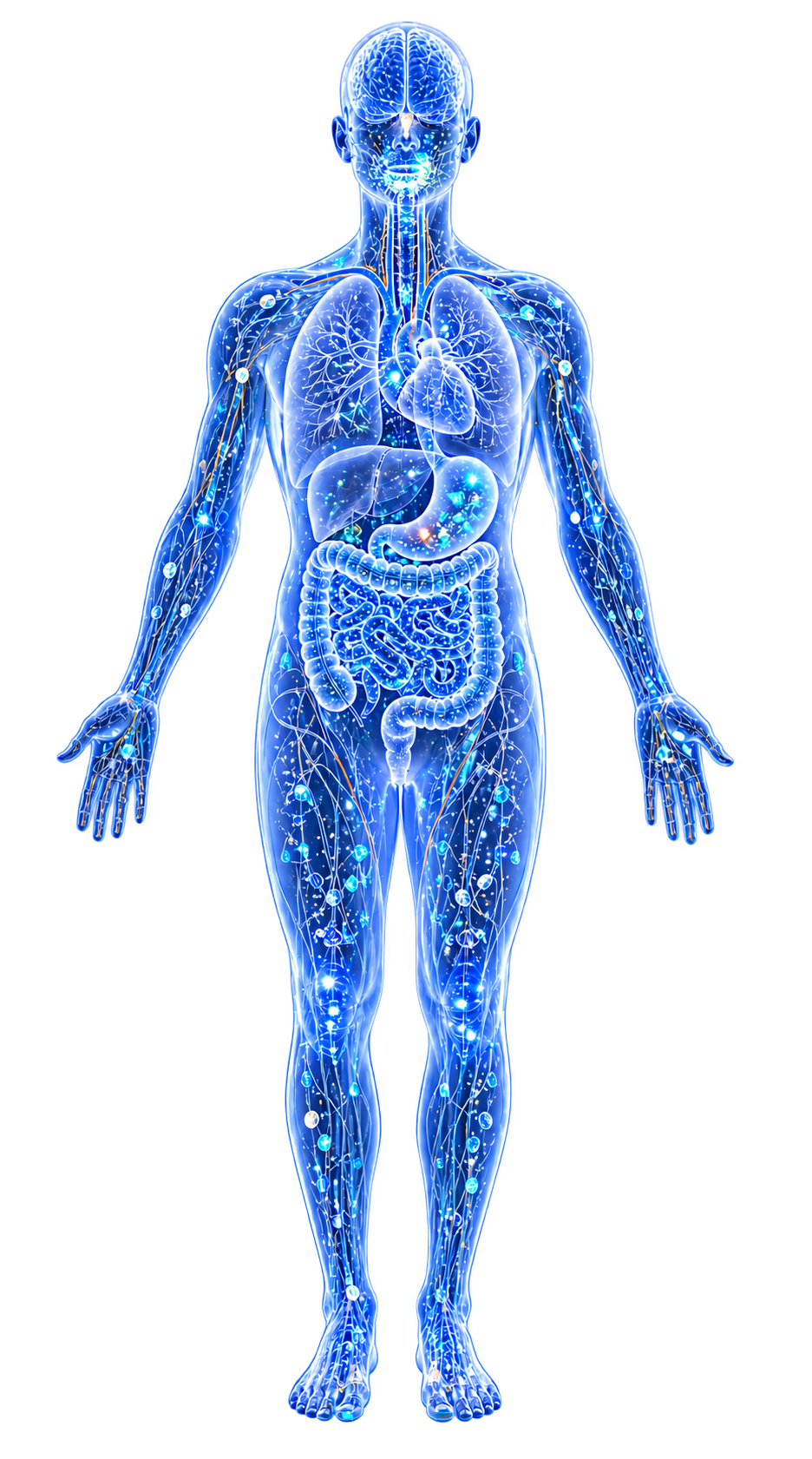
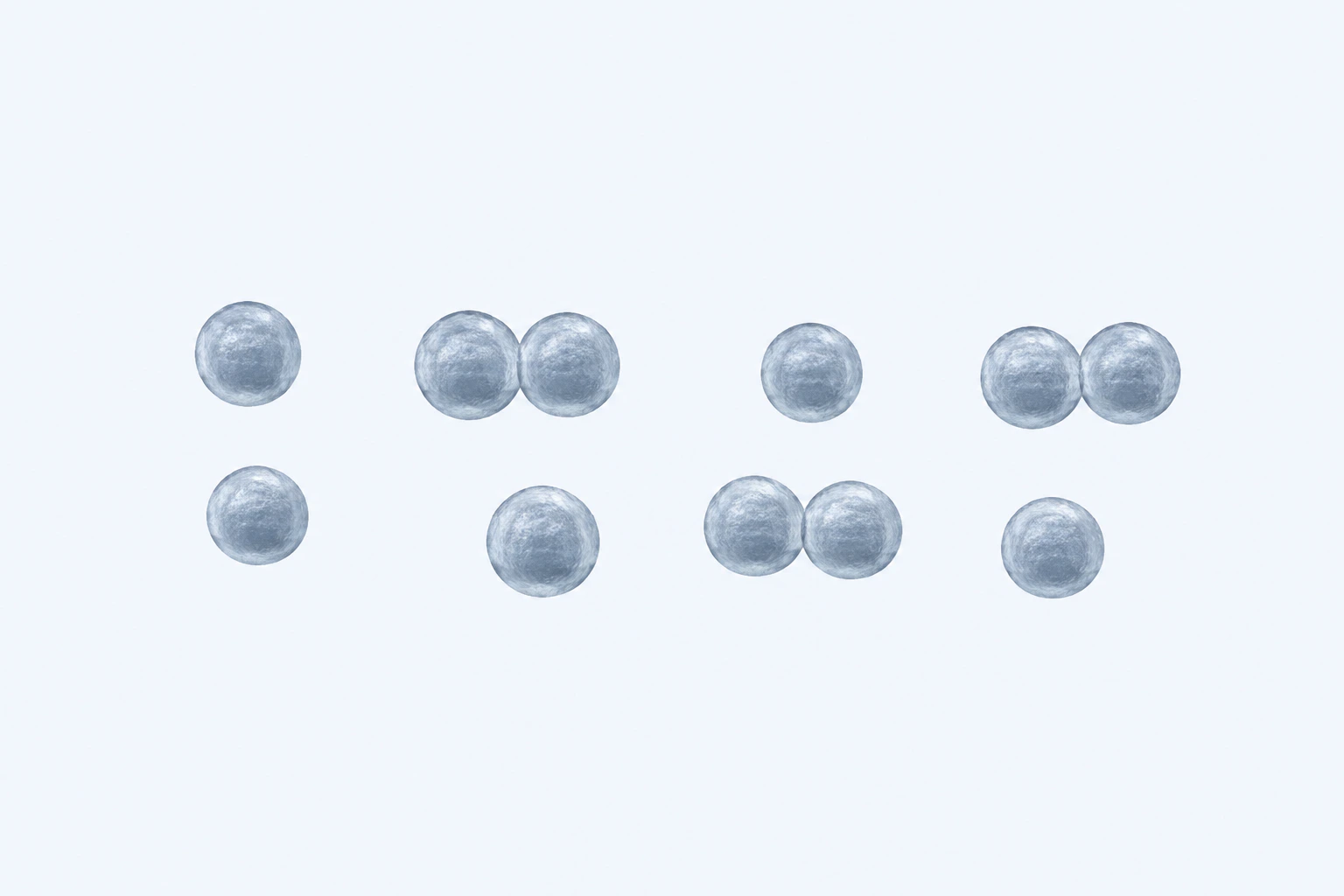
Type-strain-anchored Ruminococcus bromii reconstruction with eleven coccoid bodies in five single and three paired groupings. This species plate is representative, non-diagnostic, not claimed to be visually separable from the genus plate, and not a micrograph.
Scientific media record1 verified identifier
- Subject
- Ruminococcus bromiitaxon · species
- Identifiers
- NCBITaxon:40518
- Review
- Editorial review completeIdentifiers authority-verified · Accessibility validated · · ruminococcus-bromii|ruminococcus-bromii-morphology-v1.webp
- Digital source
- Trained-algorithmic mediaCreated with a trained generative algorithm and reviewed by WikiBiome for subject identity, scientific framing, identifiers, provenance, and accessibility.
- Scientific basis
- Ruminococcus bromii — NCBI TaxonomyRuminococcus bromii — LPSNRuminococcus bromii sp. n.Ruminococcus bromii type strain — BacDive
- License
- CC BY-SA 4.0Created
Ruminococcus bromii is a Gram-positive, obligate anaerobic bacterium within the Ruminococcaceae family and the primary keystone degrader of resistant starch in the human gut.
Without R. bromii, the microbial community cannot efficiently access resistant starch types RS2 and RS3—making this single species the rate-limiting organism for one of the most important prebiotic substrates in the human diet.
Its degradation products fuel an extensive cross-feeding network that ultimately produces Butyrate, positioning R. bromii as an ecological architect whose presence or absence determines the metabolic output of an entire community.
Contents
1. Metal Dependencies2. Key Enzymes and Functional Features3. Ecological Role4. Conditions Associated5. Cross-ReferencesMetal Dependencies#
As a Firmicutes member, R. bromii requires iron for iron-sulfur cluster enzymes in central metabolism.
Its obligate anaerobic lifestyle makes it particularly vulnerable to oxidative damage from Fenton chemistry when excess luminal iron generates reactive oxygen species—a mechanism by which dietary iron overload or metal contamination may suppress this keystone degrader.
Key Enzymes and Functional Features#
Amylosomes—Multiprotein complexes on the cell surface that bind and degrade resistant starch granules. Analogous to cellulosomes in cellulolytic bacteria, these structures represent a specialized starch-degradation machinery not found in most other gut bacteria.
Type IV pili with starch-binding domains—Enable physical attachment to starch granules, a prerequisite for surface-contact enzymatic degradation. Alpha-amylase and pullulanase—Extracellular enzymes that hydrolyze alpha-1,4 and alpha-1,6 glycosidic bonds in resistant starch.
Unlike Bacteroides thetaiotaomicron, which degrades soluble starches using polysaccharide utilization loci (PULs) in the periplasm, R. bromii specializes in the physically challenging task of degrading intact, crystalline starch granules—the form that reaches the colon when cooking has not fully gelatinized the starch.
Ecological Role#
Keystone Degrader#
The keystone degrader concept means that R. bromii performs a function no other abundant gut species can adequately substitute. In human studies, individuals who lack R. bromii fail to degrade resistant starch even when other diverse starch-degrading Bacteroides species are present.
This creates a binary ecological outcome: with R. bromii, resistant starch feeds the community; without it, RS passes through unfermented.
Cross-Feeding Network#
R. bromii's degradation of resistant starch releases oligosaccharides and simple sugars that are consumed by:
- Lachnospira eligens and Agathobacter rectalis—Current-name records for taxa historically discussed as downstream fermenters
- Faecalibacterium prausnitzii—Acetate cross-feeding supports its butyrate production
- Bifidobacterium—Utilizes released maltooligosaccharides
- Other Firmicutes (Bacillota) fermenters—Produce propionate and acetate
This cross-feeding cascade means that R. bromii abundance determines not just resistant starch degradation but the overall SCFA output of the community from RS-containing meals.
Conditions Associated#
Type 2 Diabetes—Depleted; resistant starch supplementation aimed at restoring R. bromii and downstream butyrate production improves glycemic control. Obesity—Depleted; associated with reduced dietary fiber intake and impaired SCFA production. Generally depleted in low-fiber, Western diet-associated Dysbiosis states.
Cross-References#
- Firmicutes (Bacillota)—parent phylum; R. bromii degrades resistant starch for the broader Firmicutes community
- butyrate—downstream metabolic product via cross-feeding
- Faecalibacterium prausnitzii—cross-feeding partner receiving acetate
- Lachnospira eligens—complementary fiber degrader (pectin specialist vs. RS specialist)
- Bacteroides thetaiotaomicron—complementary starch degrader (soluble starches)
- Oxygen State—SCFA production from RS degradation maintains anaerobic lumen
References 7
Numbered by first appearance in the article, then reconciled with its declared source list.
- 1
Abigail L Reens, Damien J Cabral, Xue Liang et al. (2021). Immunomodulation by the Commensal Microbiome During Immune-Targeted Interventions: Focus on Cancer Immune Checkpoint Inhibitor Therapy and Vaccination. Frontiers in Immunology.
- 2
Wang, Li, Zhang et al. (2023). Wang 2023 — Perturbed Gut Microbiome and Metabolomes Across CKD Severity. Microbiome.
- 3
Yangyang Zhang, Weicong Zhong, Wenting Liu et al. (2024). Zhang 2024 — Uncovering Taxonomic and Functional Alteration of Gut Microbiota in CKD through 16S rRNA Data. Frontiers in Cellular and Infection Microbiology.
- 4
J. Wei, Y. Qing, H. Zhou et al. (2022). Wei 2022 — 16S rRNA Gene Amplicon Sequencing of Gut Microbiota in Gestational Diabetes Mellitus. Journal of Endocrinological Investigation.
- 5
Li Y, Zhuang M, Mei S et al. (2025). Gut Microbiota, Immune Cell, Colorectal Cancer Association Mediators: A Mendelian Randomization Study. BMC Cancer.
- 6
Jessica Roelands, Peter J. K. Kuppen, Eiman I. Ahmed et al. (2023). An integrated tumor, immune and microbiome atlas of colon cancer. Nature Medicine.
- 7
Haichao Wang, Aisima Ainiwaer, Yaxiang Song et al. (2023). Wang 2023 — Perturbed Gut Microbiome and Fecal and Serum Metabolomes Are Associated with CKD Severity. Microbiome.
Article network
Connect the evidence
Publicly readable discussion by ORCID-authenticated researchers. Questions, interpretation, methods, corrections, and new evidence stay attached to this record.
No discussion yet. Start with a precise question or a source-backed observation.
Published page changes
This record shows only material changes published on this page, including changes to its content, evidence, conclusions, or author context. Internal processes and discussion activity are excluded. Pending, declined, and withdrawn proposals remain private.
- published revision
Revised “Cross-Feeding Network”: now reads “sugars that are consumed by: - lachnospira eligens and agathobacter rectalis — Current-name records for taxa historically discussed as downstream fermenters - faecalibacterium prausnitzii — Acetate…”.
Revised “Cross-Feeding Network”: changed “sugars that are consumed by: - eubacterium eligens and Eubacterium rectale — Convert released sugars to butyrate - faecalibacterium prausnitzii — Acetate cross-feeding” to “sugars that are consumed by: - lachnospira eligens and agathobacter rectalis — Current-name records for taxa historically discussed as downstream fermenters - faecalibacterium prausnitzii — Acetate…”. Revised “Cross-References”: changed “— cross-feeding partner receiving acetate - eubacterium eligens — complementary fiber degrader (pectin” to “— cross-feeding partner receiving acetate - lachnospira eligens — complementary fiber degrader (pectin”. · Karen Pendergrass · +2 −2
Inspect exact Git diff ↗ - published revision
Added references: reens-2021-immunomodulation-microbiome-checkpoint-inhibitors; wang-2023-perturbed-microbiome-metabolomes-ckd-severity; zhang-2024-taxonomic-functional-gut-microbiota-ckd-16s; wei-2022-16s-rrna-gut-microbiota-gestational-diabetes;…
Added references: reens-2021-immunomodulation-microbiome-checkpoint-inhibitors; wang-2023-perturbed-microbiome-metabolomes-ckd-severity; zhang-2024-taxonomic-functional-gut-microbiota-ckd-16s; wei-2022-16s-rrna-gut-microbiota-gestational-diabetes; li-2025-gut-microbiota-immune-cell-crc-mr-mediation; roelands-2023-integrated-tumor-immune-microbiome-atlas-colon-cancer; wang-2023-perturbed-gut-microbiome-ckd-severity. · WikiBiome Deploy Bot · +20 −15
Inspect exact Git diff ↗ - published revision
Created “Ruminococcus bromii”: Ruminococcus bromii is a Gram-positive, obligate anaerobic bacterium within the ruminococcaceae family and the primary keystone degrader of resistant starch in the human gut. Without R. bromii, the…
Created “Ruminococcus bromii”: Ruminococcus bromii is a Gram-positive, obligate anaerobic bacterium within the ruminococcaceae family and the primary keystone degrader of resistant starch in the human gut. Without R. bromii, the… Published sections: Overview; Metal Dependencies; Key Enzymes and Functional Features; Keystone Degrader; Cross-Feeding Network; Conditions Associated; Cross-References. · WikiBiome Deploy Bot · +88 −0
Inspect exact Git diff ↗