

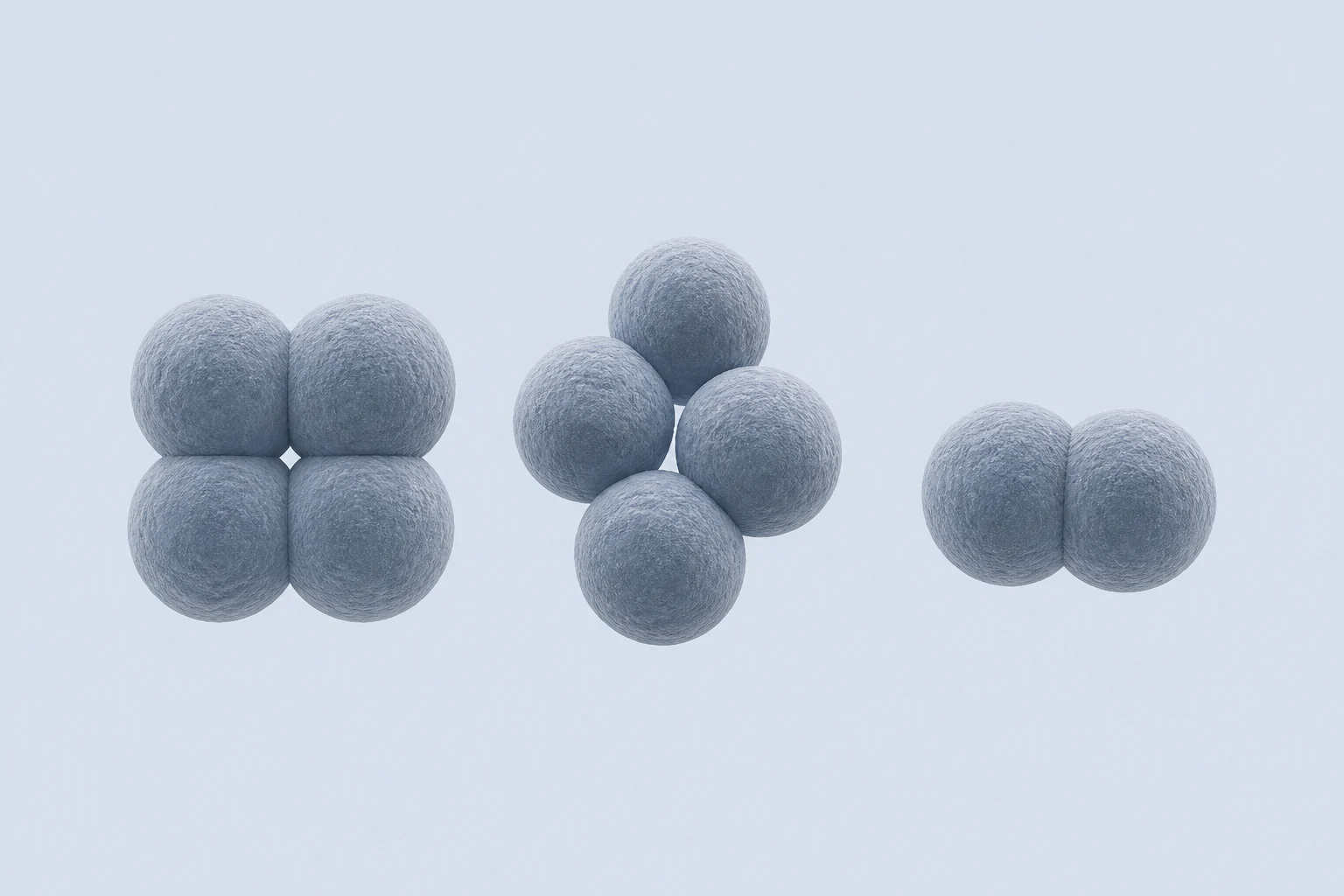
Representative Anaerococcus cellular arrangements. The type species A. prevotii is an obligate anaerobic coccus commonly seen in clumps or tetrads; this reconstruction is genus-level and not diagnostic.
Scientific media record1 verified identifier
- Subject
- Anaerococcustaxon · genus
- Identifiers
- NCBITaxon:165779
- Review
- Editorial review completeIdentifiers authority-verified · Accessibility validated · · anaerococcus|anaerococcus-morphology-v1.webp
- Digital source
- Trained-algorithmic mediaCreated with a trained generative algorithm and reviewed by WikiBiome for subject identity, scientific framing, identifiers, provenance, and accessibility.
- License
- CC BY-SA 4.0Created
Anaerococcus is a genus of Gram-positive, obligate anaerobic cocci within the phylum Firmicutes. It is a normal inhabitant of the human vaginal, skin, and gastrointestinal microbiota, but is recognized as an opportunistic pathogen in dysbiotic states, particularly when Lactobacillus-dominant vaginal communities are disrupted.
Anaerococcus enrichment has been documented in the vaginal microbiome of women with endometriosis, where its increased abundance correlates with non-Lactobacillus-dominant community state types (,[1]The Vaginal Microbiome as a Tool to Predict rASRM Stage of Disease in Endometriosis: a Pilot StudyPerrotta AR, Borrelli GM, Martins CO et al. · 2020Open reference 1 ↓ cross-sectional;,[2]MacSharry 2024 — Endometriosis Specific Vaginal Microbiota Links to Urine and Serum N-GlycomeJohn MacSharry, Zsuzsanna Kovacs, Yongjing Xie et al. · 2024Open reference 2 ↓ cross-sectional).
The genus has also been identified as enriched in HPV-positive cervical cancer, where it contributes to the anaerobic, pro-inflammatory vaginal environment associated with persistent HPV infection and malignant progression (,[3]Rashwan et al. 2025 — Insights into the Tripartite Relationship between Cervical Cancer, HPV, and the Vaginal Microbiome: A Mega-AnalysisRashwan HH, Ali MH, Mostafa MM et al. · 2025Open reference 3 ↓ mega-analysis).
These patterns position Anaerococcus as a marker of vaginal Dysbiosis across gynecological conditions.
Evidence map1 cited passagesInspect provenance +
Anaerococcus enrichment has been documented in the vaginal microbiome of women with endometriosis, where its increased abundance correlates with non-Lactobacillus-dominant community state types (, cross-sectional;, cross-sectional). The genus has also been identified as enriched in HPV-positive cervical cancer, where it contributes to the anaerobic, pro-infl
Contents
1. Cross-ReferencesCross-References#
- Bacterial Vaginosis—associated dysbiotic state
- Endometriosis—condition of enrichment
- cervical cancer—condition of enrichment
- Lactobacillus—inversely correlated in vaginal communities
References 3
Numbered by first appearance in the article, then reconciled with its declared source list.
- 1
Perrotta AR, Borrelli GM, Martins CO et al. (2020). The Vaginal Microbiome as a Tool to Predict rASRM Stage of Disease in Endometriosis: a Pilot Study. Reproductive Sciences.
- 2
John MacSharry, Zsuzsanna Kovacs, Yongjing Xie et al. (2024). MacSharry 2024 — Endometriosis Specific Vaginal Microbiota Links to Urine and Serum N-Glycome. Scientific Reports.
- 3
Rashwan HH, Ali MH, Mostafa MM et al. (2025). Rashwan et al. 2025 — Insights into the Tripartite Relationship between Cervical Cancer, HPV, and the Vaginal Microbiome: A Mega-Analysis. Human Genomics.
Article network
Mentioned here 4
Connect the evidence
Publicly readable discussion by ORCID-authenticated researchers. Questions, interpretation, methods, corrections, and new evidence stay attached to this record.
No discussion yet. Start with a precise question or a source-backed observation.
Published page changes
This record shows only material changes published on this page, including changes to its content, evidence, conclusions, or author context. Internal processes and discussion activity are excluded. Pending, declined, and withdrawn proposals remain private.
- published revision
Created “Anaerococcus”: Anaerococcus is a genus of Gram-positive, obligate anaerobic cocci within the phylum Firmicutes. It is a normal inhabitant of the human vaginal, skin, and gastrointestinal microbiota, but is…
Created “Anaerococcus”: Anaerococcus is a genus of Gram-positive, obligate anaerobic cocci within the phylum Firmicutes. It is a normal inhabitant of the human vaginal, skin, and gastrointestinal microbiota, but is… Published sections: Anaerococcus; Cross-References. · WikiBiome Deploy Bot · +37 −0
Inspect exact Git diff ↗