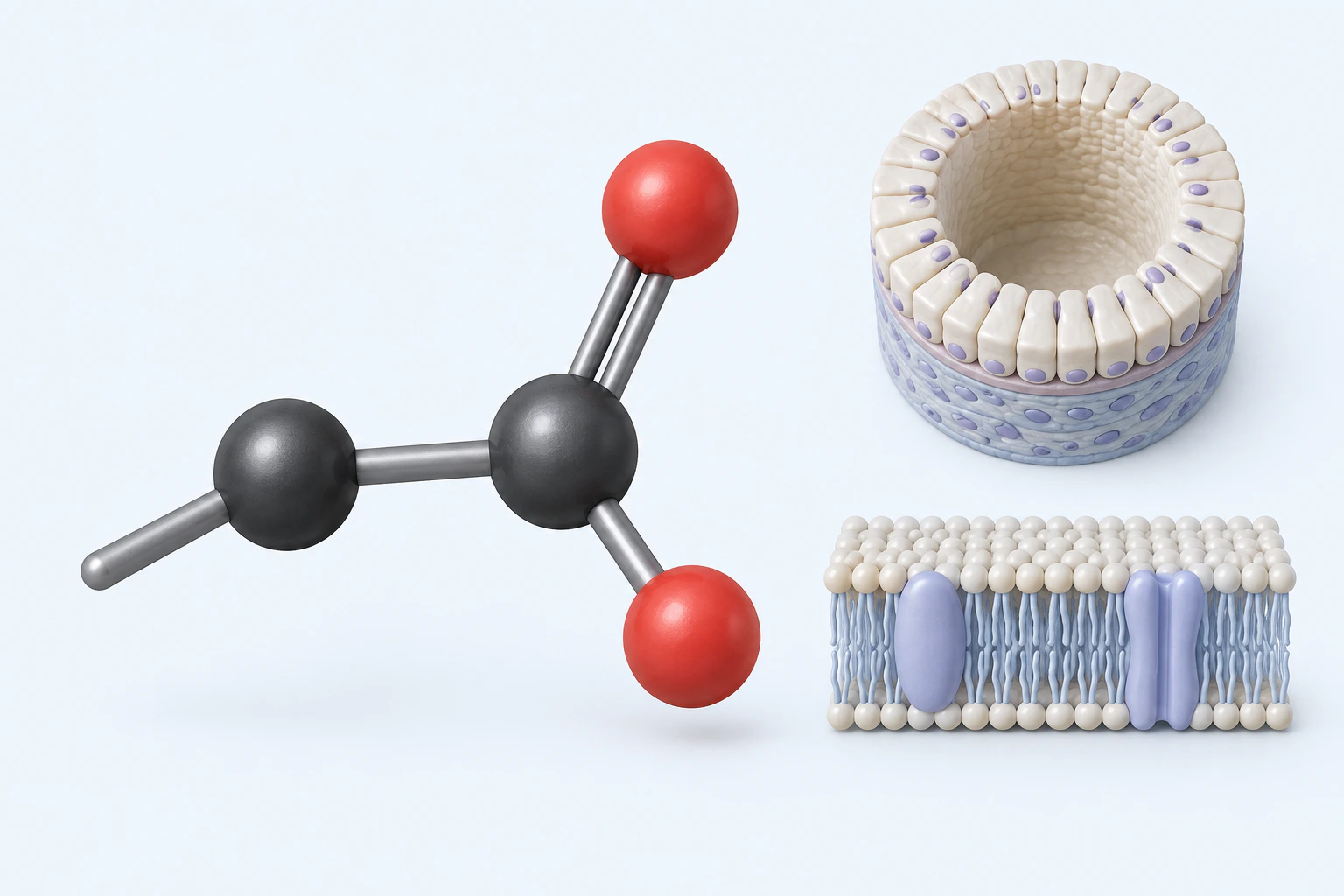
Acetate (acetic acid, C2) is the most abundant SCFA in the colon (~60% of total SCFAs) and the primary cross-feeding substrate for butyrate production. Produced by Bacteroides, Bifidobacterium, Prevotella, and acetogens from dietary fiber fermentation, acetate reaches p…
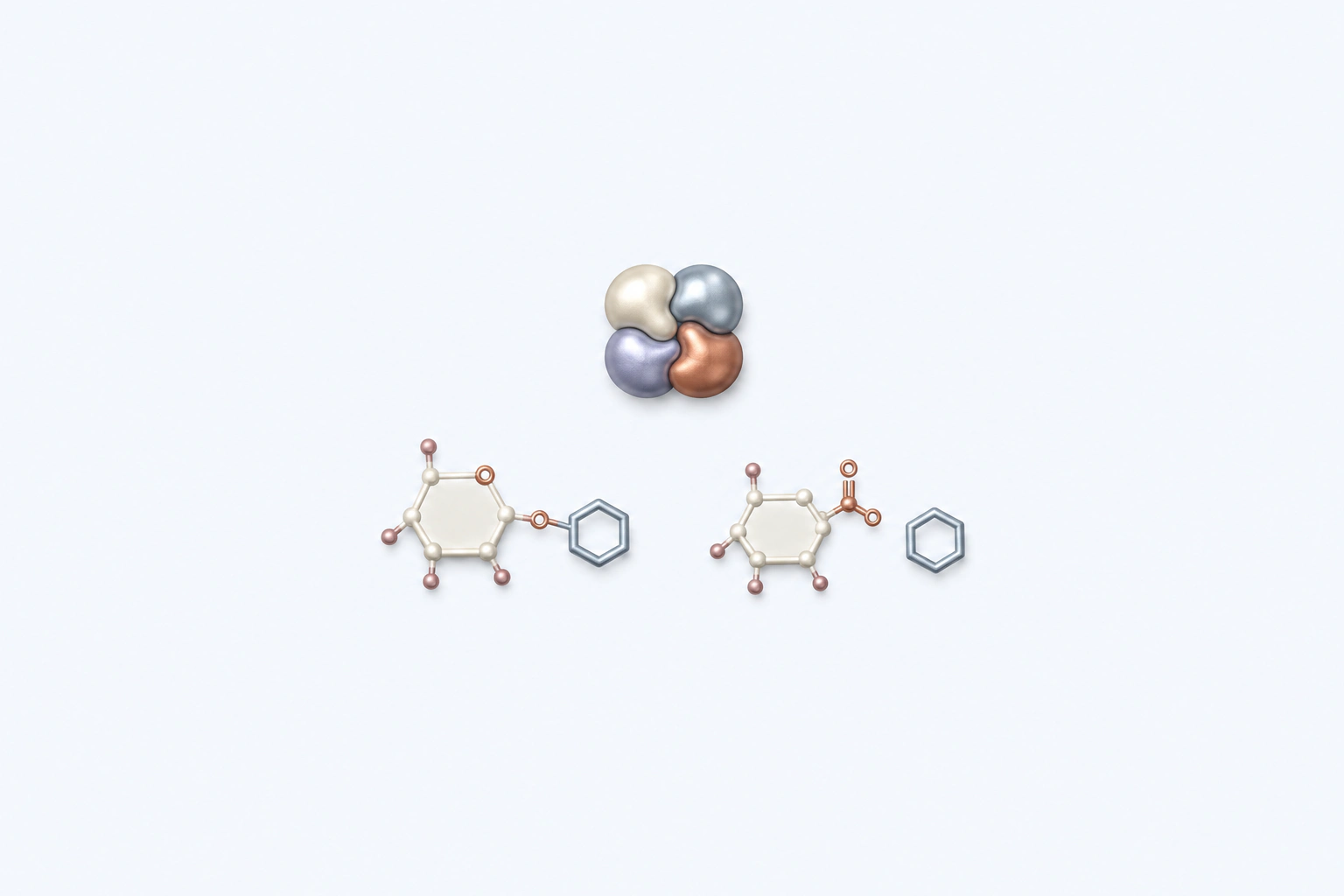
Beta-glucuronidase (β-glucuronidase, EC 3.2.1.31) is an enzyme that catalyzes the hydrolysis of glucuronidated compounds, cleaving the β-1,4-glycosidic bond between a sugar and a glucuronic acid group. In the microbiome, beta-glucuronidase is the key enzyme of the estro…
Bile salt hydrolase (BSH) is the microbial enzyme that deconjugates primary bile acids (taurocholate, glycocholate) by cleaving the amino acid (taurine or glycine) from the steroid core. This is the first and rate-limiting step in microbial bile acid transformation — wi…
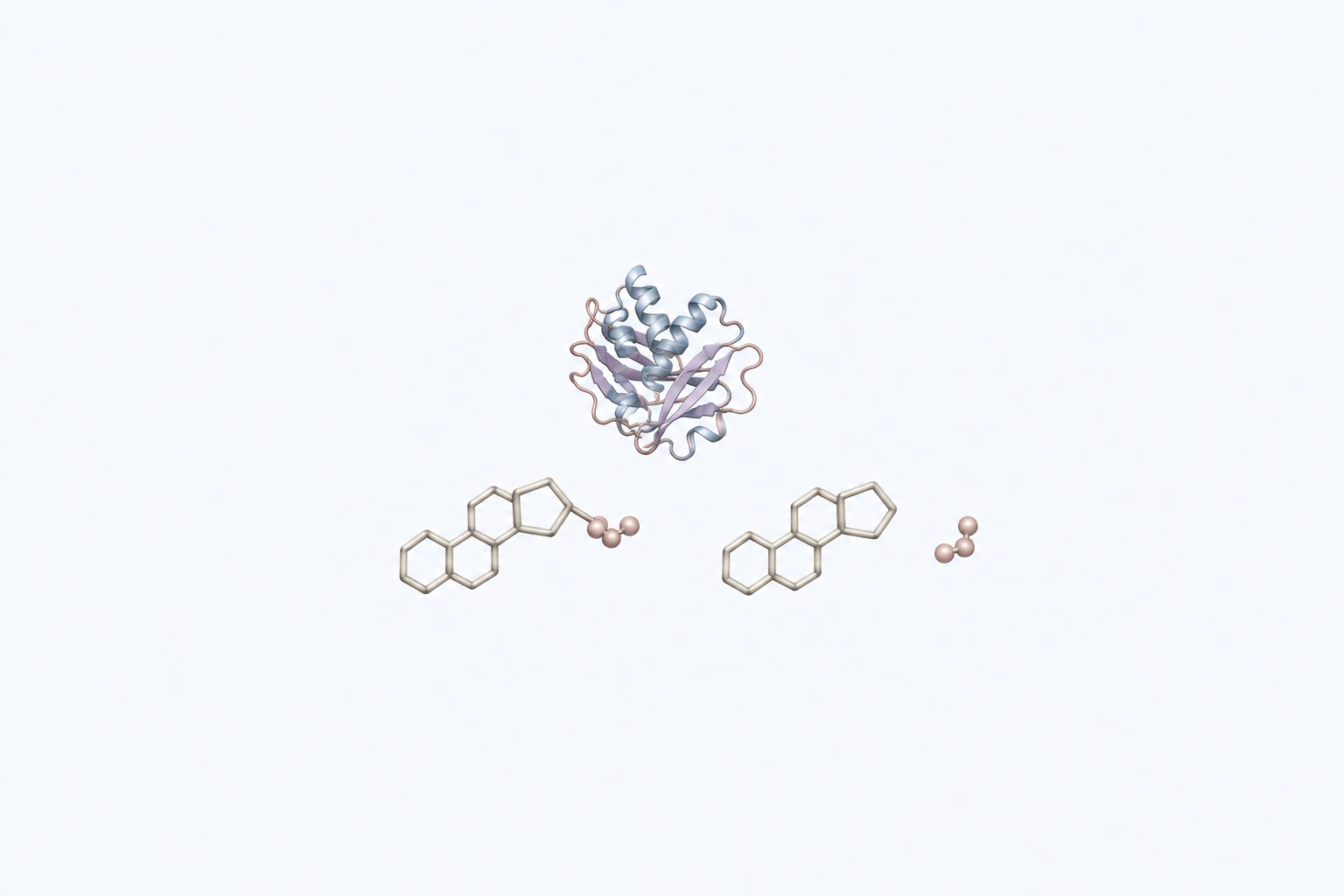
Estrogen recirculation is the recycling loop by which conjugated estrogens excreted in bile are deconjugated by gut bacterial beta glucuronidase, reabsorbed across the intestinal epithelium, and returned to systemic circulation uzuner 2023 bidirectional relationship end…
A three-carbon short-chain fatty acid (SCFA) produced primarily by Bacteroidetes and certain Firmicutes through anaerobic fermentation of dietary substrates. At physiological concentrations in healthy gut microbiomes, propionic acid (PPA) is a normal fermentation produc…
Saccharolytic fermentation is the microbial breakdown of carbohydrates (dietary fiber, resistant starch, host glycans) to produce short chain fatty acids (acetate, propionate, butyrate) and gases (H₂, CO₂, CH₄). It is the beneficial fermentation mode — the metabolic act…
Succinate is a Krebs cycle intermediate and a microbial metabolite produced by dialister, Bacteroides, Prevotella, and other gut bacteria. Beyond its role in energy metabolism, succinate is a signaling molecule that activates GPR91 (SUCNR1) on immune cells and neurons, …
Toll-like receptor 4 (TLR4) is a cell-surface pattern-recognition receptor in the toll like receptors family. It is best known for detecting particular forms of bacterial lipopolysaccharide (LPS) through a receptor complex and converting that detection into innate immun…
Zinc-metalloproteases are a large and functionally diverse family of proteolytic enzymes requiring zinc (Zn²⁺) in the active site for catalytic activity. They cleave peptide bonds in proteins, causing tissue destruction, immune evasion, and bacterial dissemination. Majo…