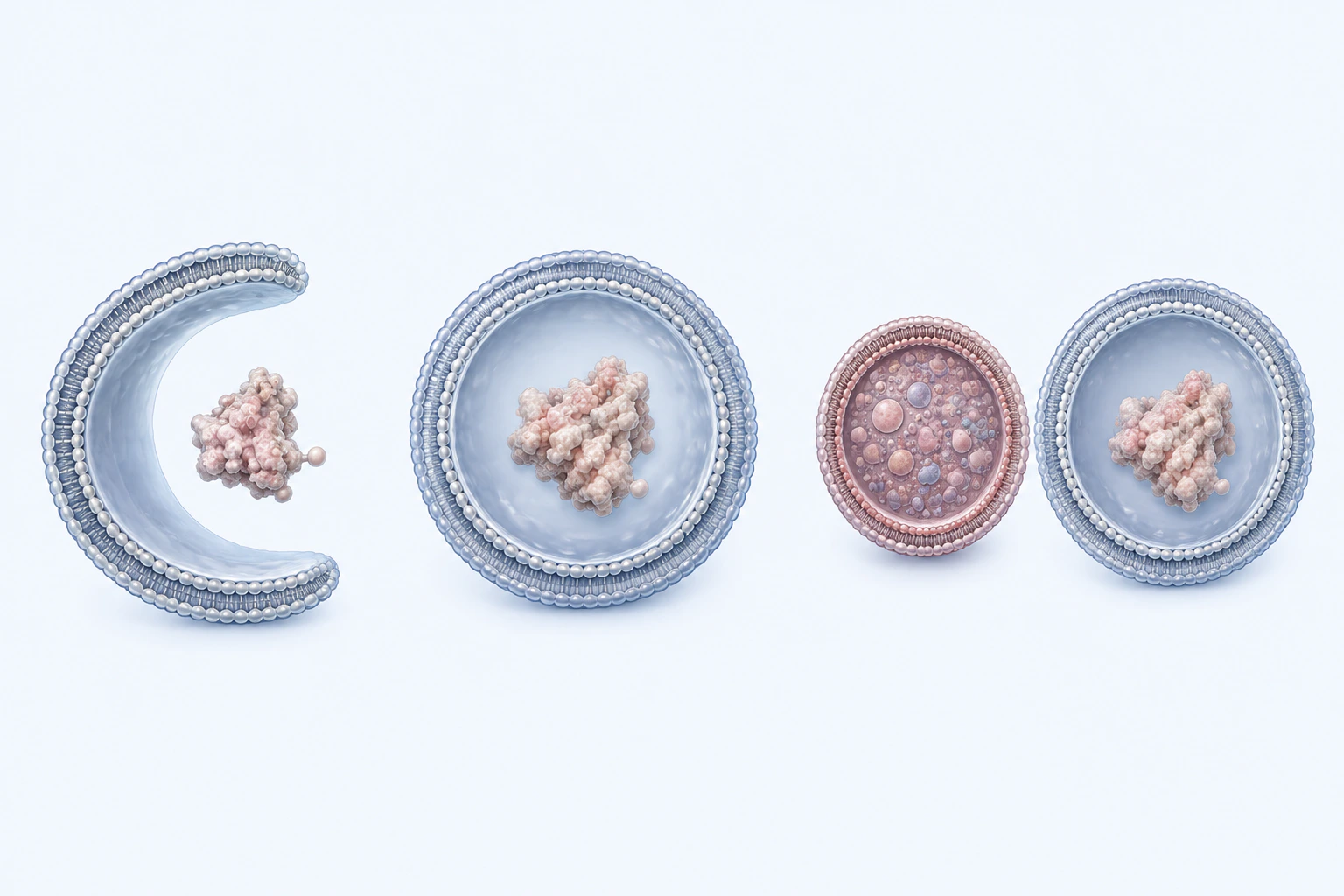
Autophagy (from Greek, "self-eating") is the cellular process of degrading and recycling damaged organelles, misfolded proteins, and intracellular pathogens through lysosomal digestion. It is the cell's primary quality control mechanism -- a housekeeping system that bec…
Defensins are small (29–45 amino acid) cationic antimicrobial peptides that form the first line of chemical defense at mucosal surfaces. Alpha-defensins (HD5, HD6) are produced by Paneth cells in the small intestinal crypts; beta-defensins (hBD1-4) are produced by epith…
Hypoxia refers to a state of low oxygen tension (partial pressure of O₂ < 5% in tissue, vs. ~21% in air). In the context of microbiome metallomics, hypoxia is a critical ecological determinant that reshapes bacterial community structure by favoring obligate and facultat…
Peptidoglycan (murein) is the polymer of N-acetylglucosamine and N-acetylmuramic acid cross-linked by short peptides that forms the bacterial cell wall. It is a major pathogen-associated molecular pattern (PAMP) recognized by host TLR2 (intact peptidoglycan), NOD1 (meso…
A synbiotic is a combination of a probiotic (live beneficial microorganism) and a prebiotic (substrate that selectively feeds beneficial microbes), designed to work synergistically — the prebiotic supports the survival and colonization of the probiotic organism. Synbiot…