
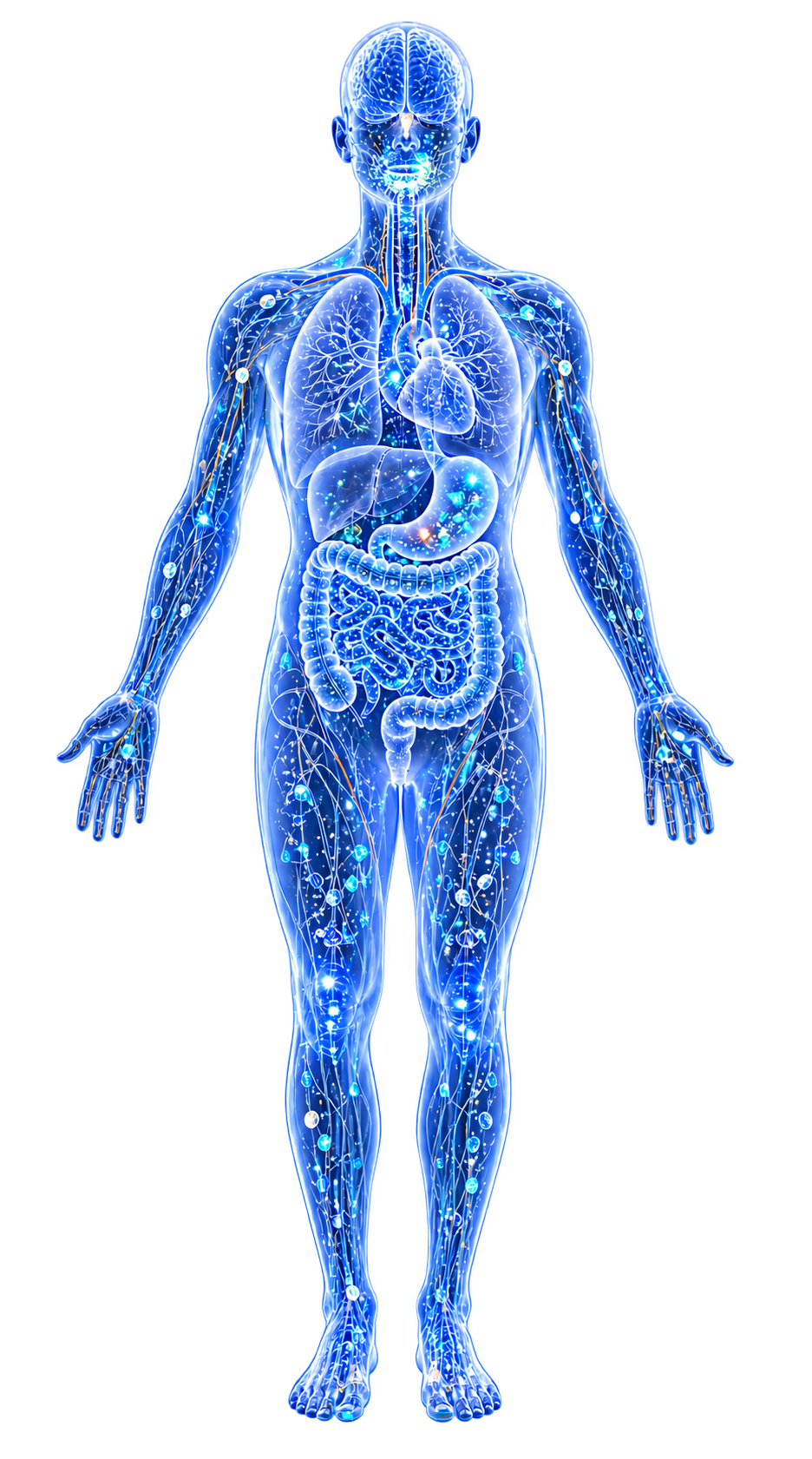
Hypoxia refers to a state of low oxygen tension (partial pressure of O₂ < 5% in tissue, vs. ~21% in air).
In the context of microbiome metallomics, hypoxia is a critical ecological determinant that reshapes bacterial community structure by favoring obligate and facultative anaerobes, altering metal utilization patterns, and enabling virulent metabolic states.
Hypoxia in two key disease contexts:
- Intestinal mucosal hypoxia in Crohn's Disease, ulcerative colitis, Colorectal Cancer
- Tumor microenvironment hypoxia in solid cancers (Colorectal Cancer, Breast Cancer)
Mechanism#
Oxygen diffusion limitation: In normal mucosa, oxygen diffuses from capillaries through the epithelium. When mucosal Metal-Driven Inflammation increases epithelial permeability, infiltrating immune cells consume oxygen faster than it can be replenished. Epithelial tight-junction disruption (e.g., from ZO-1 loss) exacerbates the gradient.
HIF-1α signaling: Hypoxia-inducible factor 1-alpha (HIF-1α) is the master transcription factor sensing low oxygen. At pO₂ < 5%. HIF-1α is stabilized (normally hydroxylated and degraded at normoxia).
HIF-1α dimerizes with HIF-1β and binds hypoxia response elements (HREs). Upregulates genes for: angiogenesis (VEGF), glycolytic enzymes (PKM2, LDHA), immune evasion pd-l1.
Metabolic consequences. Obligate aerobes (e.g., faecalibacterium) cannot survive; population crashes. Facultative anaerobes (E. coli, salmonella) switch to fermentation; survive and proliferate.
Obligate anaerobes (bacteroides, Clostridium) thrive; no competitive pressure from aerobes.
Metal metabolism shifts: Under anaerobiosis. Iron becomes the limiting nutrient (oxygen-dependent siderophore synthesis is partially blocked; alternative anaerobic iron uptake pathways activate). Nickel-dependent Urease (H. pylori archetype) becomes selectively advantageous in low-pH/low-O₂ niches. Sulfate reduction (Desulfovibrio et al.) increases; produces H₂S, which modulates Zinc bioavailability and creates additional anaerobic micro-domains.
Role in Disease#
Gut diseases with mucosal hypoxia. Crohn's Disease: Chronic inflammation → epithelial barrier disruption → anoxic mucosa → AIEC-dominant Dysbiosis. ulcerative colitis: Similar mechanism; hypoxia enables C. difficile proliferation in severe cases. Colorectal Cancer: Dysplastic lesions are hypoxic; HIF-1α activates pd-l1, enabling immune evasion; tumors select for Fusobacterium and other anaerobes.
Obesity: Metabolic endotoxemia from Gram-negative bacteria correlates with local adipose tissue hypoxia.
Tumor microenvironments. Solid tumors grow faster than their vascular supply; central tumor regions are severely hypoxic (pO₂ < 1%). Hypoxia selects for anaerobic metabolism and tolerance to metabolic stress.
HIF-1α drives metastatic potential, immune evasion (pd-l1, tim-3).
Metal Connections#
Hypoxia reshapes metal utilization hierarchies. Iron ecology: Anaerobic bacteria rely more heavily on siderophore-mediated iron acquisition because oxygen-dependent iron uptake (ferroxidase activity) is impaired. Lipocalin-2 sequestration becomes more potent as a selective pressure.
Nickel dependence: Anaerobic pathogens like H. pylori and oral Porphyromonas gingivalis activate nickel-urease as an energy source; urease-driven Ammonia production raises local pH and protects against acids in hypoxic, low-pH niches.
Zinc and sulfide: Sulfate-reducing bacteria produce H₂S; excess H₂S precipitates bioavailable Zinc, shifting zinc speciation and potentially reducing Zinc-dependent immune functions (Metallothionein, zinc-finger transcription factors).
Connections#
Related pathways. signaling—master regulator of hypoxia response.—neovascularization attempting to restore oxygen delivery.—immune checkpoint upregulated by HIF-1α; enables tumor immune evasion.
Related organisms. Escherichia coli—facultative anaerobe; thrives in hypoxic dysbiosis. bacteroides—obligate anaerobe; dominates in low-oxygen states. Fusobacterium nucleatum—anaerobic pathobiont; selected in colorectal cancer.
Helicobacter pylori—microaerophile; requires low oxygen and nickel-urease.
Related concepts. Nutritional Immunity (Metal Sequestration)—oxygen-dependent defense mechanisms are compromised in hypoxia. Biofilm—hypoxic micro-environments facilitate biofilm formation. Estrogen Recirculation—hypoxic dysbiosis with E. coli and B. fragilis enrichment increases Beta-Glucuronidase.
Disease pages. Crohn's Disease, ulcerative colitis, Colorectal Cancer, Obesity—conditions with mucosal/tissue hypoxia.
References 8
Numbered by first appearance in the article, then reconciled with its declared source list.
- 1
George Tetz, Victor Tetz (2022). Tetz 2022 -- The Effects of Gut Dysbiosis via Bacteriophages and Its Role in Parkinson's Disease. Pathogens.
- 2
Englert-Golon M, Sajdak S, Plagens-Rotman KM et al. (2025). Englert-Golon 2025 — Potential Role of Microbiota in Ovarian Cancer Treatment. Archives of Medical Science.
- 3
Thorleif Etgen, Michel Chonchol, Hans Forstl et al. (2012). Chronic Kidney Disease and Cognitive Impairment: A Systematic Review and Meta-Analysis. American Journal of Nephrology.
- 4
Giorgio Casaburi, Jingjing Wei, Sufyan Kazi et al. (2022). Casaburi 2022 — Formate as a metabolic driver of NEC: integrated metagenomics and targeted metabolomics. Frontiers in Pediatrics.
- 5
Qinwen Wang, Qianyue Yang, Xingyin Liu (2023). Wang 2023 — The Microbiota–Gut–Brain Axis and Neurodevelopmental Disorders. Protein & Cell.
- 6
Ji Sung Shim, Dae Hee Kim, Jae Hyun Bae et al. (2016). Shim 2016 — Omega-3 Fatty Acids Improve Erectile Function in Atherosclerosis-induced Chronic Pelvic Ischemia Rat Model. Journal of Korean Medical Science.
- 7
Zachary D Wallen, Mary B Makarious, Cornelis Blauwendraat et al. (2022). Wallen 2022 -- Metagenomics of Parkinson's Disease Implicates the Gut Microbiome. Nature Communications.
- 8
Denkhaus E, Salnikov K (2002). Nickel essentiality, toxicity, and carcinogenicity. Critical Reviews in Oncology/Hematology.
Article network
Mentioned here 18
Pages linking here 6
Connect the evidence
Publicly readable discussion by ORCID-authenticated researchers. Questions, interpretation, methods, corrections, and new evidence stay attached to this record.
No discussion yet. Start with a precise question or a source-backed observation.
Activity and accepted changes
Accepted researcher context, editorial status, public discussion, and upstream Git revisions are shown together. Pending, declined, and withdrawn proposals remain private.
- published revision
Backfill inflammation concept links
Karen Pendergrass · +4 −4
Inspect exact Git diff ↗ - published revision
Complete corpus-wide Dysbiosis linking
Karen Pendergrass · +1 −1
Inspect exact Git diff ↗ - published revision
Complete Ammonia contextual coverage
Karen Pendergrass · +1 −1
Inspect exact Git diff ↗ - published revision
Complete reviewed Urease contextual coverage
Karen Pendergrass · +3 −3
Inspect exact Git diff ↗ - published revision
massive wiki expansion: 149 stubs fixed, 100+ new pages, Rule 15 scan, keystone papers
WikiBiome Deploy Bot · +28 −22
Inspect exact Git diff ↗ - published revision
nightly maintenance: 94 stub demotions, 181 source_count fixes, 22 auto-discovered stubs, 5 adversarial audits, 3 boundary fixes, 3 evidence-level corrections
WikiBiome Deploy Bot · +3 −0
Inspect exact Git diff ↗ - published revision
pre-overnight checkpoint 2026-04-18
WikiBiome Deploy Bot · +8 −6
Inspect exact Git diff ↗ - published revision
Deep content + citation pass: 10 entities enriched, 7 new sources, DOI integrity
WikiBiome Deploy Bot · +1 −1
Inspect exact Git diff ↗ - published revision
WikiBiome update — 2026-04-15 17:23
WikiBiome Deploy Bot · +6 −6
Inspect exact Git diff ↗ - published revision
WikiBiome update — integrity fixes, metallomic diet pages, cross-condition analyses
WikiBiome Deploy Bot · +28 −26
Inspect exact Git diff ↗ - published revision
WikiBiome update — 2026-04-10 17:16
WikiBiome Deploy Bot · +81 −0
Inspect exact Git diff ↗