
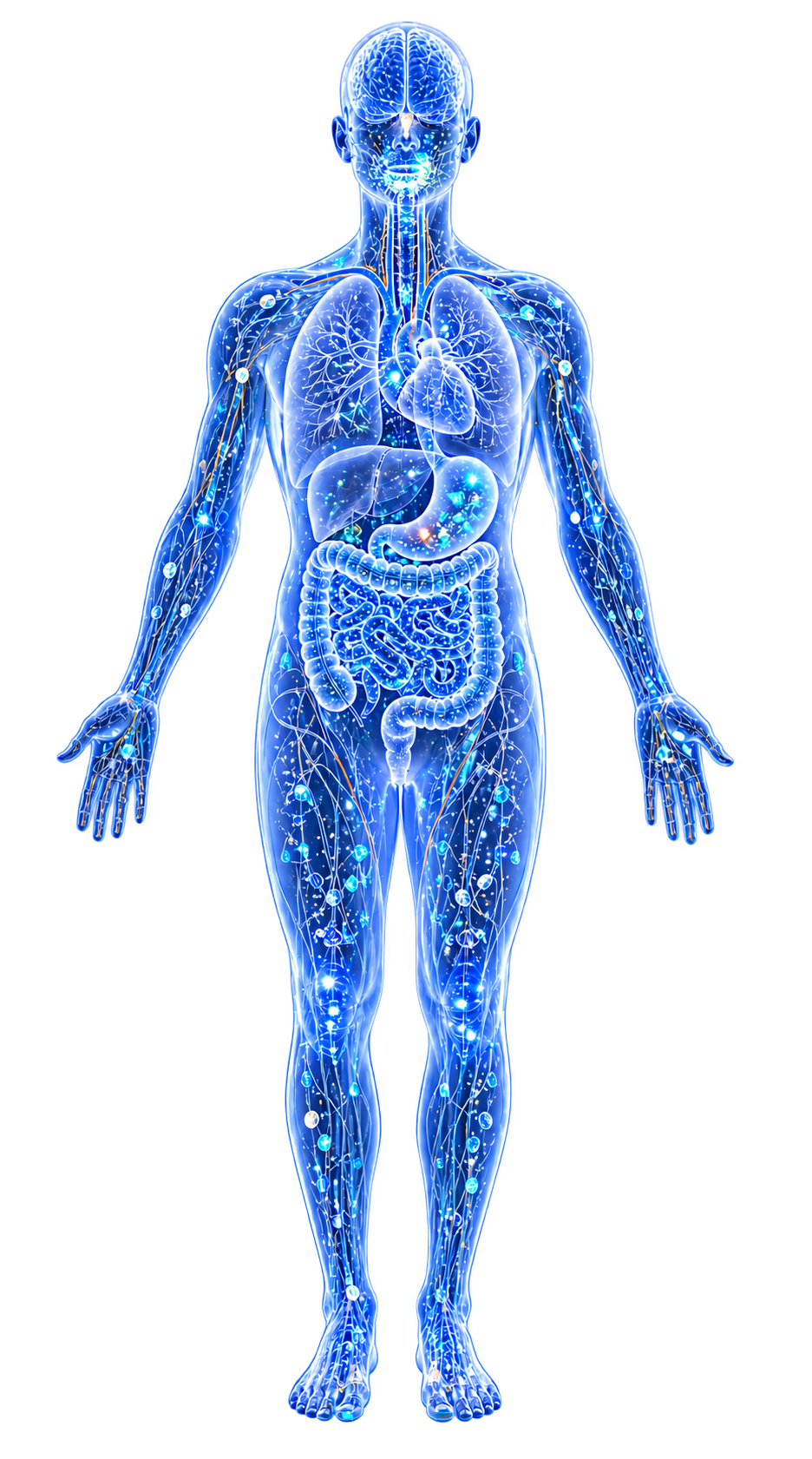
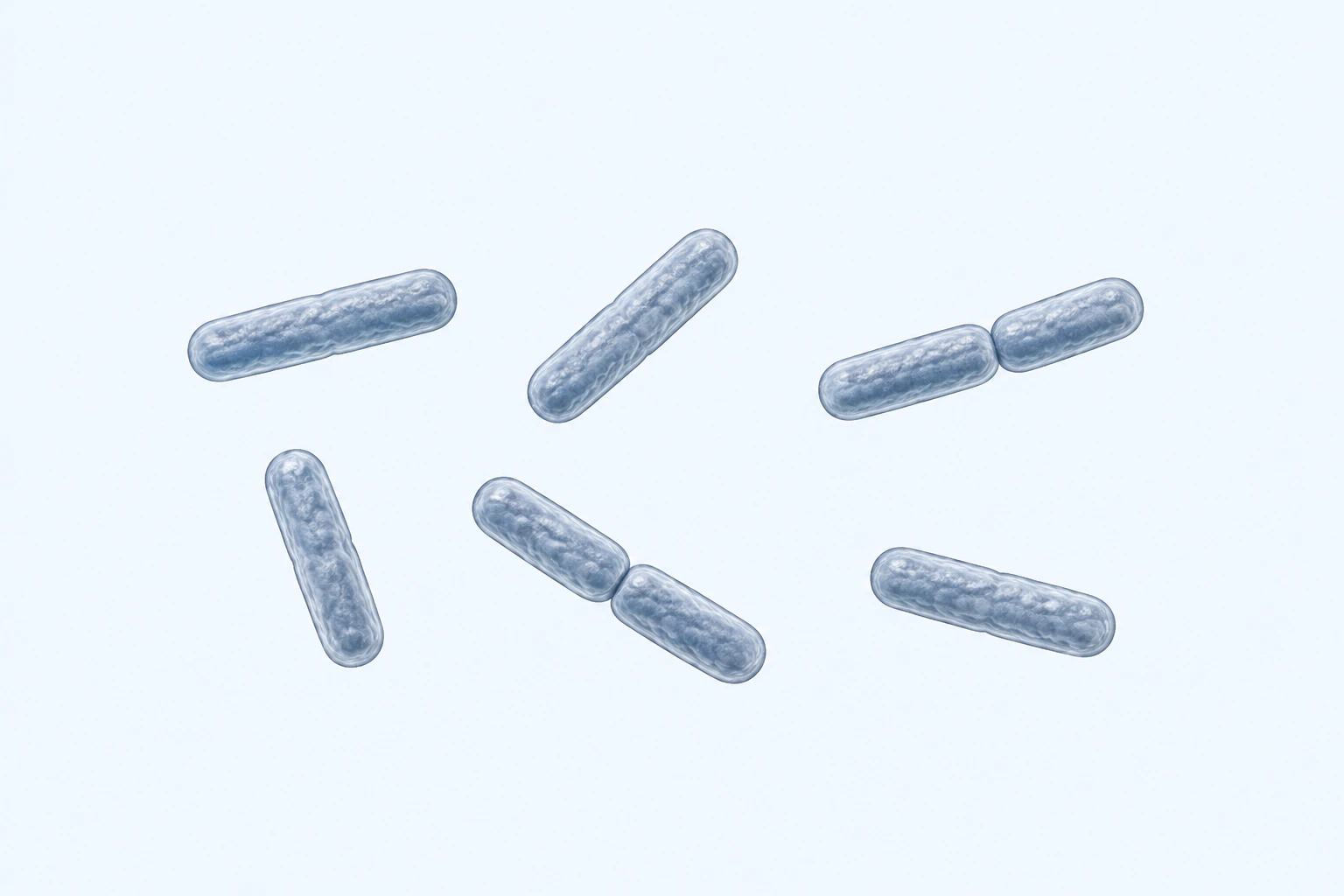
Reference-strain-anchored Salmonella enterica serovar Typhimurium reconstruction with eight straight rods. This plate is representative, non-diagnostic, not visually separable from a genus plate, and not a micrograph.
Scientific media record1 verified identifier
- Subject
- Salmonella enterica subsp. enterica serovar Typhimuriumtaxon · serovar
- Identifiers
- NCBITaxon:90371
- Review
- Editorial review completeIdentifiers authority-verified · Accessibility validated · · salmonella-typhimurium|salmonella-typhimurium-morphology-v1.webp
- Digital source
- Trained-algorithmic mediaCreated with a trained generative algorithm and reviewed by WikiBiome for subject identity, scientific framing, identifiers, provenance, and accessibility.
- Scientific basis
- Salmonella enterica serovar Typhimurium — NCBI TaxonomySalmonella Typhimurium ATCC 13311 genomeSalmonella Typhimurium comparative genomics
- License
- CC BY-SA 4.0Created
A Gram-negative enteric pathogen that possesses four distinct hydrogenases of the [NiFe] class—the most of any well-characterized human pathogen.
These hydrogenases are critical for intracellular survival within macrophages, and a triple hydrogenase mutant is 100% avirulent in mouse typhoid models, making nickel-dependent hydrogen metabolism a central pillar of Salmonella virulence.
Evidence map2 cited passagesInspect provenance +
S. Typhimurium encodes four distinct [NiFe] hydrogenases, each with different roles:
Triple mutant (DeltahyaDeltahybDeltahyd): 100% survival in a mouse typhoid fever model—completely avirulent.
Contents
1. Metal-Dependent Virulence Factors2. Metal Acquisition Systems3. Nutritional Immunity Evasion4. Disease Associations5. Connection to Environmental Metal Exposure6. ConnectionsMetal-Dependent Virulence Factors#
[NiFe] Hydrogenases—The Core of Ni-Dependent Virulence#
S. Typhimurium encodes four distinct [NiFe] hydrogenases, each with different roles:[1]Role of Nickel in Microbial PathogenesisRobert J. Maier, Stéphane L. Benoit · 2019Open reference 1 ↓
- Hya (hydrogenase-1): membrane-bound, H2-uptake. Contributes to respiratory H2 oxidation.
- Hyb (hydrogenase-2): membrane-bound, H2-uptake. Most important for virulence. Primary contributor to macrophage survival and systemic infection.
- Hyc (hydrogenase-3): cytoplasmic, part of the formate hydrogenlyase (FHL) complex. Produces H2 under fermentative conditions. Likely important for anaerobic gut survival.
- Hyd (hydrogenase-4): second FHL-associated hydrogenase.
Avirulence of Hydrogenase Mutants#
Triple mutant (DeltahyaDeltahybDeltahyd): 100% survival in a mouse typhoid fever model—completely avirulent.[1]Role of Nickel in Microbial PathogenesisRobert J. Maier, Stéphane L. Benoit · 2019Open reference 1 ↓ This demonstrates that H2 metabolism is not merely advantageous but essential for Salmonella systemic virulence. Hyb is the single most important hydrogenase: Hyb mutants alone show significant attenuation.
Hydrogenase Function in Macrophage Survival#
After phagocytosis, S. Typhimurium resides in the Salmonella-containing vacuole (SCV). H2 oxidation by Hyb provides electrons to the respiratory chain, generating PMF for ATP synthesis inside the nutrient-limited SCV.
This H2-powered energy source allows survival in the hostile intracellular environment where carbon sources are scarce.
Fe-Dependent Systems#
Enterobactin: primary siderophore for iron acquisition in iron-limited host environments. Salmochelin: glycosylated enterobactin derivative that evades host lipocalin-2 (which sequesters enterobactin). SitABCD: manganese (Mn)/iron (Fe) ABC transporter required for full virulence.
Fur regulon: iron-responsive regulation of virulence genes.
Metal Acquisition Systems#
Nickel Import#
NikABCDE: ABC-type nickel transporter homologous to the E. coli system. Nickel import is essential for metalation of all four hydrogenase active sites. Nickel import likely upregulated during intracellular infection to support hydrogenase-dependent energy generation.
Hydrogenase Maturation#
HypABCDEF accessory proteins: required for [NiFe] active site assembly in all four hydrogenases. The maturation machinery must supply nickel to four separate enzyme complexes—a significant metabolic investment reflecting the importance of H2 metabolism.
Iron Acquisition#
Multiple redundant systems: enterobactin, salmochelin, SitABCD, FeoABC (ferrous iron). Redundancy ensures iron access across diverse host niches (gut lumen, macrophage SCV, bloodstream).
Nutritional Immunity Evasion#
Host calprotectin: released by neutrophils at gut infection sites; sequesters zinc (Zn) and manganese (Mn) (and likely nickel (Ni)). Lipocalin-2: sequesters enterobactin; S. Typhimurium evades this with salmochelin.
NRAMP1 (SLC11A1): macrophage phagosomal metal exporter. Restricts iron (Fe), manganese, and nickel availability within the SCV. NRAMP1-deficient mice are highly susceptible to Salmonella, demonstrating the importance of metal restriction.
S. Typhimurium counters NRAMP1 by upregulating high-affinity metal transporters and relying on H2 as an alternative energy source.
Disease Associations#
- Gastroenteritis (non-typhoidal salmonellosis): most common manifestation in humans
- Typhoid-like systemic disease in mice (model for S. Typhi typhoid fever)
- Bacteremia in immunocompromised patients (HIV/AIDS, sickle cell)
- Osteomyelitis (especially in sickle cell disease)
- Reactive arthritis (post-infection complication)
Connection to Environmental Metal Exposure#
Gut H2 is produced by commensal microbiota during fermentation of dietary fiber—dietary patterns that increase colonic H2 production could theoretically provide more energy substrate for Salmonella hydrogenases.
Environmental nickel in drinking water or food may increase nickel availability for hydrogenase metalation during gut colonization. Agricultural use of Heavy Metals in livestock operations promotes metal-tolerant Salmonella populations.
Connections#
- Metal-Dependent Virulence—four [NiFe] hydrogenases; triple mutant 100% avirulent
- Nickel—essential cofactor for all four [NiFe] hydrogenases
- Iron—acquired via enterobactin/salmochelin; regulated by Fur
- Helicobacter pylori—both use [NiFe] hydrogenases for virulence, but H. pylori has one while Salmonella has four
- Nutritional Immunity (Metal Sequestration)—NRAMP1-mediated metal export from SCV is critical host defense
- Escherichia coli—closely related; shares NikABCDE transporter architecture
- Staphylococcus aureus—both face calprotectin-mediated metal restriction
References 6
Numbered by first appearance in the article, then reconciled with its declared source list.
- 1
★Robert J. Maier, Stéphane L. Benoit (2019). Role of Nickel in Microbial Pathogenesis. Inorganics.
- 2
★Stéphane L. Benoit, Alan A. Schmalstig, John Glushka et al. (2019). Benoit et al. 2019 — Nickel Chelation Therapy as an Approach to Combat Multi-Drug Resistant Enteric Pathogens. Scientific Reports.
- 3
Reda R. Mabrouk, Amani Magdy Beshbishy, Waad Mohamed Elmalah et al. (2026). Mabrouk 2026 -- Repurposing Gut Microbiota Modulators: Insights into Current and Novel Applications. Beni-Suef University Journal of Basic and Applied Sciences.
- 4
Breton J, Daniel C, Vignal C et al. (2016). Does oral exposure to cadmium and lead mediate susceptibility to colitis? The dark-and-bright sides of heavy metals in gut ecology. Scientific Reports.
- 5
Alastair G. McEwan (2024). McEwan 2024 — Metalloproteome Plasticity: A Factor in Bacterial Pathogen Adaptive Responses?. Emerging Topics in Life Sciences.
- 6
Shaun Trecarten, Michael A. Liss, Jill Hamilton-Reeves et al. (2025). Trecarten 2025 — Obesity, Dietary Interventions and Microbiome Alterations in Prostate Cancer. Frontiers in Immunology.
Article network
Mentioned here 9
Pages linking here 17
Connect the evidence
Publicly readable discussion by ORCID-authenticated researchers. Questions, interpretation, methods, corrections, and new evidence stay attached to this record.
No discussion yet. Start with a precise question or a source-backed observation.
Activity and accepted changes
Accepted researcher context, editorial status, public discussion, and upstream Git revisions are shown together. Pending, declined, and withdrawn proposals remain private.
- published revision
Backfill heavy metals concept links
Karen Pendergrass · +1 −1
Inspect exact Git diff ↗ - published revision
Complete Hydrogenase contextual coverage
Karen Pendergrass · +1 −1
Inspect exact Git diff ↗ - published revision
massive wiki expansion: 149 stubs fixed, 100+ new pages, Rule 15 scan, keystone papers
WikiBiome Deploy Bot · +29 −26
Inspect exact Git diff ↗ - published revision
nightly maintenance: 94 stub demotions, 181 source_count fixes, 22 auto-discovered stubs, 5 adversarial audits, 3 boundary fixes, 3 evidence-level corrections
WikiBiome Deploy Bot · +3 −0
Inspect exact Git diff ↗ - published revision
v2 migration Priority 3: 17 metal + 82 microbe entities upgraded with seo_target, wikipedia_differentiation, conditions data
WikiBiome Deploy Bot · +6 −0
Inspect exact Git diff ↗ - published revision
WikiBiome update — integrity fixes, metallomic diet pages, cross-condition analyses
WikiBiome Deploy Bot · +8 −3
Inspect exact Git diff ↗ - published revision
WikiBiome update — 2026-04-10 23:44
WikiBiome Deploy Bot · +1 −1
Inspect exact Git diff ↗ - published revision
WikiBiome v7 — interactive microbiome metallomics encyclopedia
Karen Pendergrass · +84 −0
Inspect exact Git diff ↗